 Glenhaven Siding
 Cedar Has Real Appeal — We're Not Pretending Otherwise
Cedar siding has been used on homes in Whatcom County for generations, and it's easy to see why. The grain, the warmth of the color, the way it ages — cedar has a natural character that manufactured products spend a lot of marketing money trying to imitate. If a homeowner in Glenhaven asks us about cedar, we don't tell them it's a bad-looking material or that it doesn't belong here. It absolutely can look beautiful on the right home.
What we tell them instead is what we tell every homeowner who asks us to install a product we don't carry: we stopped installing cedar siding because of what it takes to keep it looking that way for the next 20 or 30 years in this specific climate, on this specific coastline. This page is our honest explanation of that decision — not a takedown of cedar as a material, but a plain account of the maintenance math that led us to stop.
What Glenhaven's Climate Actually Does to Wood Siding
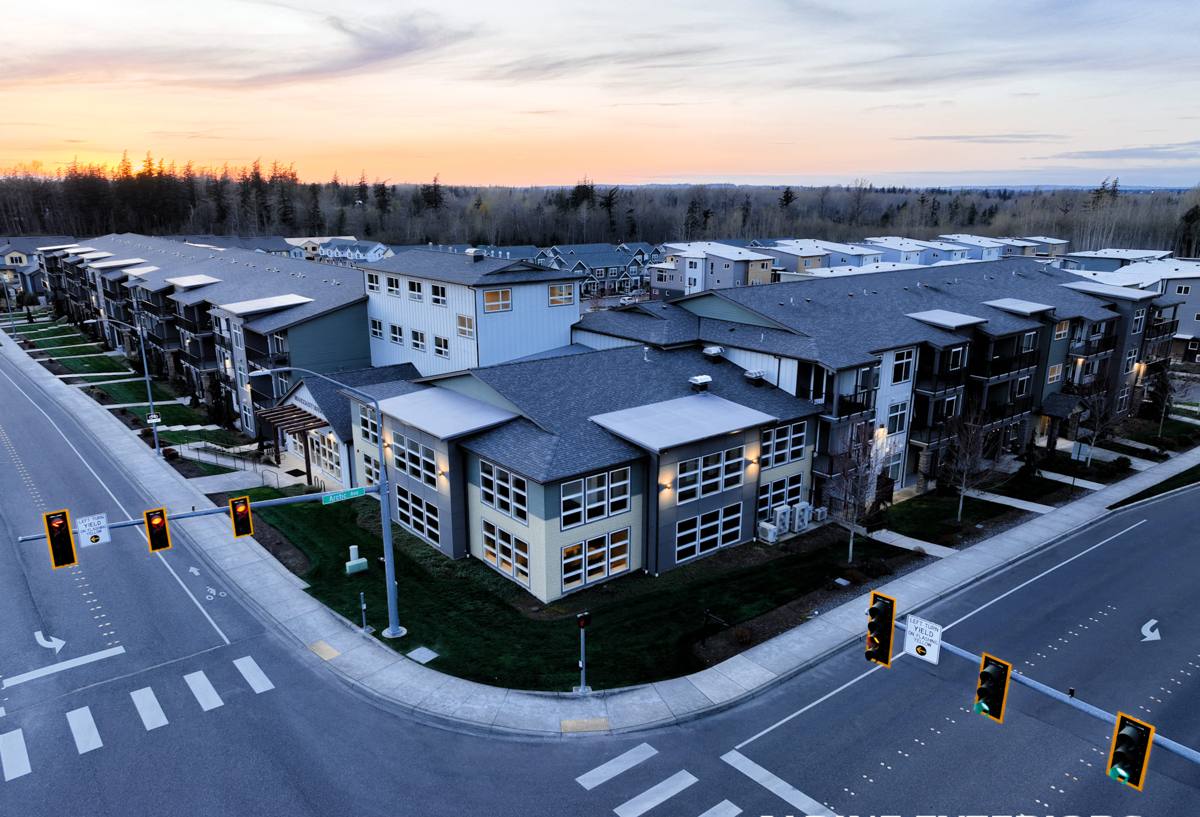
Glenhaven sits close enough to Puget Sound that salt-laden air is a regular part of the weather, not an occasional event. Combine that with Whatcom County's long, wet fall-through-spring stretch — driving rain that comes in sideways off the water, weeks where surfaces barely get a chance to dry — and you get a set of conditions that are genuinely hard on any organic building material.
Three factors working against wood siding here
- Salt air: accelerates the breakdown of exterior wood finishes and draws moisture into the wood fiber itself, even on siding that's been properly sealed.
- Driving rain: forces water into seams, end grain, and fastener holes — the exact spots where a coating is thinnest and most likely to fail first.
- Moss season: the long stretch of cool, damp, low-sun months when north- and west-facing walls stay wet for days at a time, giving moss and mildew the conditions they need to take hold.
None of this means cedar "fails" here. It means cedar needs consistent, competent maintenance to perform here — and that maintenance is the part most homeowners underestimate when they're comparing siding options.
The Maintenance Cedar Actually Requires
Cedar siding is a finished wood product, and the finish is doing almost all of the protective work. Once that finish starts to break down — from UV exposure, from standing moisture, from salt air — the wood underneath is exposed to exactly the conditions it's least equipped to handle.
What ongoing cedar maintenance looks like
- Re-staining or re-sealing on a recurring cycle, typically every 3 to 5 years depending on exposure — sooner on walls that face prevailing wind and rain
- Regular washing to remove moss, algae, and mildew growth before it stains or holds moisture against the wood
- Caulking and sealing checks at seams, corners, and trim intersections where water intrusion typically starts
- Prompt replacement of any board showing soft spots, cupping, or rot before it spreads to fasteners and sheathing
- Careful attention to ground clearance and vegetation clearance, since splashback and trapped moisture at the base of a wall are common failure points
Skip a cycle or two — which happens easily, since most homeowners aren't tracking a siding maintenance calendar — and the finish degradation compounds. Bare wood absorbs moisture faster than sealed wood, and once a board is saturated, it takes a lot longer to dry out in a climate that doesn't offer much drying weather. That's the trap: the exact conditions that make maintenance most necessary here are the same conditions that make it easiest to fall behind on.
Why This Isn't Just a "Some Upkeep" Product
Every siding material needs some level of care. The distinction we draw with cedar is that its maintenance is load-bearing — miss it, and you're not just risking a cosmetic issue, you're risking the structural integrity of individual boards and potentially the sheathing behind them. That's a different category of risk than, say, a color that fades slightly faster than expected.
We've found that the real-world maintenance commitment cedar requires in a coastal, high-moisture climate is more than most homeowners want to sign up for once they understand what it actually involves. That's not a knock on any homeowner — it's a realistic read on how busy life gets, and how easy it is for a 3-year re-staining schedule to quietly become a 6-year one.
How Cedar Compares to What We Install
| Factor | Cedar Siding | James Hardie Fiber Cement |
|---|---|---|
| Base material | Organic wood — absorbs and releases moisture | Cement, sand, and cellulose fiber — dimensionally stable |
| Finish | Stain/sealant, must be reapplied on a cycle | Factory-applied ColorPlus finish, baked on, not field-mixed |
| Moisture behavior | Can absorb, swell, cup, and rot if finish fails | Engineered to resist moisture intrusion and won't rot |
| Combustibility | Combustible | Non-combustible |
| Pest vulnerability | Susceptible to insect and woodpecker damage | Not a food or nesting source for pests |
| Recurring maintenance | Re-staining/sealing every 3-5 years, ongoing washing | Periodic washing; no re-coating cycle required |
| Warranty structure | Varies by installer/finish; often limited | Strong manufacturer-backed, transferable warranty |
This isn't a claim that cedar is defective or that Hardie is flawless — every product has trade-offs, and fiber cement has its own installation requirements that have to be done correctly. But when we weigh the two side by side for what a Glenhaven home actually experiences over a few decades, the maintenance gap is significant enough that it shaped our whole business around one product line.
Why We Standardized on James Hardie
We made a decision a while back to stop installing several products — cedar among them — and install only James Hardie fiber cement siding. That's not because Hardie is the cheapest option or the fastest to install. It's because, installed to spec, it holds up to the specific combination of salt air, driving rain, and moss-season dampness that defines this part of Whatcom County without asking the homeowner to run a maintenance program just to keep it intact.
What that standardization means in practice
- Non-combustible material, which matters for both safety and, in many cases, insurance considerations
- A factory-applied ColorPlus finish that's engineered to hold color and resist the elements far longer than field-applied stain
- HZ5 and climate-engineered product lines built specifically for wet, cold, coastal-adjacent conditions like ours
- A warranty backed by the manufacturer and structured to be transferable if the home is sold
- One product system, installed one way, by a crew that knows that system inside and out — instead of juggling installation methods across several different materials
That last point matters more than it sounds. Fiber cement has its own installation sensitivities — proper flashing, correct fastening, clearances, joint treatment. A crew that specializes in one system and installs it the same way on every job tends to make fewer of the mistakes that cause problems ten years down the road, regardless of which material is on the wall.
What This Means If You're Comparing Options
If cedar is on your list because you love the look, that's a legitimate reason to want it — and we'd rather be straight with you about the upkeep than sell you something we know we won't stand behind for the long haul. If what you actually want is the low-maintenance, durable performance that made you consider re-siding in the first place, that's the conversation where we'll walk you through how Hardie's color and board options can get you a similar look with a very different maintenance reality.
Questions worth asking before you commit to any siding material
- What's the realistic maintenance schedule for this material in a coastal, high-rainfall climate — not the manufacturer's minimum, but what it actually takes here?
- Who is responsible for that maintenance, and what happens if it's skipped for a few years?
- What does the warranty actually cover, and does it survive a sale of the home?
- Is the material combustible, and does that affect insurance?
- How sensitive is correct installation to the specific crew doing the work?
Those questions apply no matter who you hire or what material you're leaning toward. We'd rather you ask them upfront than find out the answers the hard way.
Let's Talk About Your Home Specifically
Every house on every lot in Glenhaven sits a little differently — sun exposure, wind direction, tree cover, and proximity to the water all change how hard a siding material has to work. If you'd like a straight, no-pressure look at what we'd recommend for your specific home and why, we're happy to come take a look and walk you through it. Reach out for a free estimate — there's no obligation, and we'll tell you what we'd actually do if it were our own house.