 Glenhaven Siding
 Siding Built for Life on Lake Whatcom
Homes around Lake Whatcom face a version of Pacific Northwest weather that's a little more demanding than what you'd find on a dry, open lot in town. The lake itself keeps humidity higher at ground level, the tree canopy that lines much of the shoreline holds shade and moisture against exterior walls, and the marine air moving through Whatcom County off the Strait carries a fine load of salt that settles on siding, trim, and metal fasteners over time. Add a rainy season that can stretch for months and you get a long moss season — the kind where north-facing walls and shaded siding stay damp far longer than the sunny side of the house.
None of that is unusual for this part of Washington. But it does mean the exterior products and installation choices that work fine in a drier climate zone don't always hold up the same way out here. That's the lens we use when we talk to Lake Whatcom homeowners about siding: not what's cheapest or fastest to install, but what actually survives this specific mix of driving rain, moss pressure, and salt-tinged air year after year.
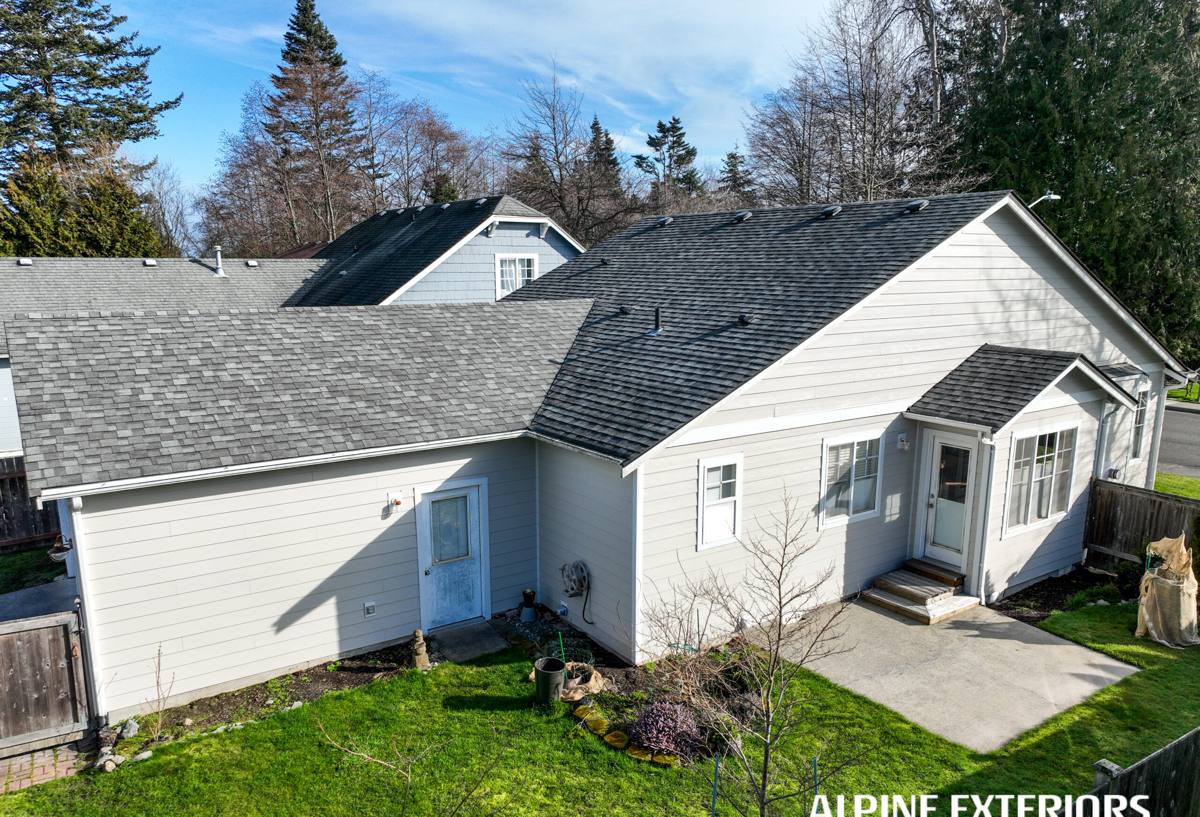
Why a Local Crew Matters Here
A contractor based somewhere else can sell you siding. What's harder to get from an out-of-area crew is the judgment that comes from working this specific stretch of Whatcom County season after season — knowing which walls on a lakefront lot stay wet longest, how much moss buildup is normal versus a sign of a bigger moisture problem, and how flashing details need to be handled differently on a shaded, tree-lined property than on an open one across town.
We're a Glenhaven-area crew. We're not driving in from another county to knock out a job and leave — we're back in this area regularly, which means callbacks are easy, warranty work doesn't require a special trip, and we've already seen how our own installations hold up on homes like yours a few years down the road. That feedback loop is part of why we standardized on the products we use.
What We Handle
- James Hardie fiber cement siding — installation and full replacement
- Roofing — repair and replacement
- Windows — replacement for failed seals, drafts, and old wood or vinyl frames
- Decks — new builds and rebuilds suited to lake-area moisture exposure
Handling all four means we're looking at the whole envelope of your home, not just one product in isolation. Siding failures often start at a window flashing detail or a roofline transition, and a deck built without the right ledger flashing can send moisture straight into a wall assembly. Treating these as separate trades, handled by separate companies who never talk to each other, is how a lot of moisture problems get missed until they're expensive.
Why We Only Install James Hardie
We get asked fairly often why we don't offer vinyl, LP SmartSide, or one of the other fiber cement brands like Allura or Cemplank. It's a fair question, and the honest answer is that we made a call as a company to install one product system well rather than several products adequately.
Vinyl siding is inexpensive and easy to install, and for a lot of climates it does fine. In a high-moisture, moss-heavy environment like Lake Whatcom, though, vinyl's weak points show up: it expands and contracts with temperature swings, seams and laps give moisture a path behind the panel, and it doesn't hold paint if you ever want to change the color. It's a legitimate product — it's just not the one we'd put our name behind here.
Engineered wood products like LP SmartSide use a treated wood-strand substrate. When installation is done exactly to spec — caulking every cut edge, maintaining ground clearance, keeping paint film intact — it performs reasonably well. The margin for error is thin, though, and in a climate with this much sustained moisture and moss pressure, any lapse in maintenance or a missed caulk joint gives water a way into the wood fiber. We've chosen not to carry that risk on behalf of our customers.
Other fiber cement brands are chemically similar to James Hardie — cement, sand, and cellulose fiber, pressed and cured. The differences that matter to us are the factory finish, the product engineering for specific climate zones, and the warranty structure standing behind it. James Hardie's ColorPlus finish is baked on at the factory under controlled conditions, which gives more consistent, longer-lasting color than field-applied paint. Hardie also engineers its HZ5 product line specifically for regions that see a lot of moisture and freeze-thaw cycling — which describes Whatcom County well. And the warranty is transferable, which matters to homeowners who may sell before the siding's service life is up.
None of this means other products are junk. It means that after years of installing exteriors in this specific climate, James Hardie is the system we trust enough to stand behind with our own labor warranty.
James Hardie Product Lines We Install
| Product | Best Use | Why It Fits Lake Whatcom |
|---|---|---|
| HardiePlank lap siding | Most homes, traditional lap look | HZ5 engineered zone rating for wet, freeze-thaw climates |
| HardiePanel vertical siding | Modern facades, accent walls | Clean lines, fewer horizontal laps for water to track along |
| HardieShingle | Cottage and craftsman styles | Popular look for lakefront and wooded lots |
| HardieTrim boards | Corners, fascia, window trim | Resists the swelling and rot that plagues wood trim in shade |
What a Siding Project Looks Like
Every project starts with a walk-around of the house, not just a look at the siding itself. We're checking flashing at windows and rooflines, ground clearance, any soft spots in the existing wall sheathing, and how much moss or biological growth is present and where. On a lake-adjacent or heavily treed lot, we pay particular attention to north- and east-facing walls, since those tend to hold shade and moisture the longest.
From there:
- Removal of old siding and inspection of the sheathing underneath for rot or water damage
- Repair of any compromised sheathing before new siding goes on — never siding over a problem
- Installation of a weather-resistive barrier and correct flashing at every penetration
- James Hardie siding installed to manufacturer spec — fastener pattern, gapping, and clearances
- Trim, caulking, and final detail work
- Walkthrough so you know what was found and what was done
That sheathing inspection step is where a lot of the real value of a full siding replacement shows up. If moisture has been getting behind old siding for years — which is common on shaded, moss-prone walls — you want to know before new siding goes back over it, not after.
Roofing, Windows, and Decks for the Same Conditions
The same climate factors that shape our siding approach apply across the rest of the exterior. A roof under heavy tree cover collects moss and debris faster and needs a maintenance rhythm to match. Windows on a shaded, humid lot are more prone to seal failure and frame rot if they're older wood or lower-grade vinyl. Decks near the lake, especially ones with limited sun exposure, need the right ledger flashing and decking material choice to avoid trapping moisture against the house.
Because we handle all four trades, we can flag an issue in one area while we're working on another — a roof valley that's channeling water onto a wall, a deck ledger that's not flashed correctly, a window that's the real source of the water staining you assumed was a siding problem.
Maintenance for a Moss-Heavy Climate
James Hardie siding is low-maintenance compared to wood, but "low-maintenance" isn't "no-maintenance" in an area with this much sustained moisture. A short annual routine goes a long way:
- Rinse siding with a garden hose and soft brush once or twice a year, more often on shaded walls
- Keep gutters clear so overflow doesn't run down the siding face
- Trim back vegetation and tree limbs that keep walls in shade and slow drying time
- Check caulking at trim joints and window edges annually and touch up as needed
- Watch for dark streaking or persistent moss on north-facing walls — it's a sign that spot is staying wet longer than the rest of the house
- Address any moss or algae early with a gentle wash rather than pressure-washing, which can drive water behind panels
Signs Your Current Siding Is Falling Behind
A few things we commonly find on older homes around the lake when we go out for an estimate:
- Soft or spongy spots when you press on the siding, especially near the bottom courses
- Paint that's peeling or bubbling rather than just fading
- Persistent moss or dark staining that comes back within weeks of cleaning
- Visible gaps or warping at seams and corners
- Higher heating bills that suggest the wall assembly isn't performing the way it should
Any one of these is worth a look. Combined, they usually mean moisture has been getting past the siding for a while, and the sooner that's addressed the less of the underlying structure it takes with it.
Cost Factors to Expect
| Factor | How It Affects the Job |
|---|---|
| Home size and wall complexity | More corners, dormers, and trim detail add labor time |
| Sheathing condition | Rot repair found during tear-off adds cost but prevents a repeat job |
| Siding profile chosen | Lap, panel, and shingle styles vary in material and labor cost |
| Access and site conditions | Sloped, wooded, or lakefront lots can affect staging and scaffolding needs |
| Trim and detail scope | Full trim replacement versus reusing sound existing trim |
If your home is near Lake Whatcom and the siding, roof, windows, or deck are showing their age, we're happy to come take a look and give you a straightforward, no-pressure estimate — just fill out the form below.