 Glenhaven Siding
 Why This Decision Trips Up So Many Homeowners
Every siding call starts the same way: a homeowner in Glenhaven notices a soft spot near a downspout, a cracked board after a windstorm, or paint that won't stop peeling, and they want to know whether they need a patch job or a whole new exterior. The honest answer is that it depends on what's happening underneath the siding, not just what you can see from the driveway. A contractor who tells you "replacement" before actually inspecting the wall assembly, or one who tells you "just patch it" without checking for moisture intrusion, isn't doing you any favors either way.
This guide walks through how to tell the difference, what drives the cost on each side, and why the material you choose matters just as much as the repair-or-replace decision itself.
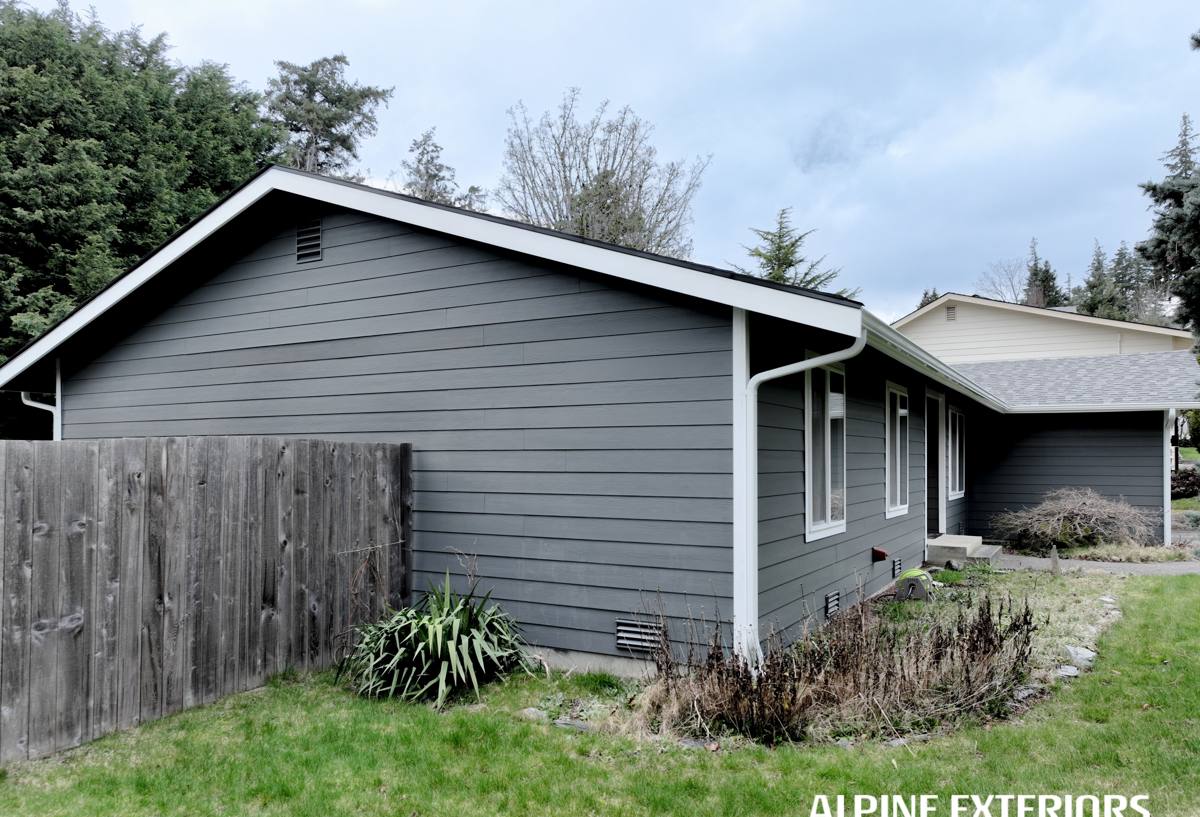
Start With What the Siding Is Actually Protecting
Siding is a weather shield, not the wall itself. Behind it sits a water-resistive barrier, sheathing, framing, and insulation. Small, isolated damage — a cracked panel, a dented section, a few feet of trim rot from a leaky gutter — is often a true repair situation, especially if you catch it early and the wall behind it is dry. Widespread damage, or damage that keeps recurring in the same spots, usually means the siding has been letting water past it for a while, and the question shifts from "how do we fix the outside" to "what has it already done to the inside."
That distinction is the whole ballgame. A repair fixes the visible symptom. A replacement addresses both the symptom and, ideally, whatever let the problem happen in the first place — flashing details, house wrap laps, trim gaps, and the material's own ability to shed water long-term.
Signs a Repair Is Genuinely Enough
- Damage is limited to one or two boards or a small section, not spread across a wall
- The damage has an obvious, one-time cause — impact damage, a fallen branch, a single hard freeze
- No soft, spongy, or discolored sheathing when the damaged piece is pulled back
- The rest of the siding is under 15-20 years old and holding paint or finish well
- You're not seeing the same type of failure repeating in multiple locations on the house
If your siding checks these boxes, a competent repair — matching material, proper flashing at the repair seam, and correct fastening — can genuinely buy you years without touching the rest of the house.
Signs You're Looking at Replacement, Not Repair
Some situations look small on the surface but point to a system-wide problem:
- Recurring soft spots in different areas of the house, especially near butt joints, corners, or window trim
- Bubbling or peeling paint across multiple walls rather than one sun-exposed side
- Visible cupping, warping, or delamination on more than a few boards
- Musty smell or interior staining on walls that back up to the affected siding
- Siding original to a house 25-30+ years old, where the material is simply at the end of its practical service life
- A pattern of "just one more repair" — if you've patched the same wall two or three times in a decade, the underlying material or installation has a problem repair can't solve
None of these on their own is an automatic verdict. But two or three together, especially with any sign of moisture behind the cladding, usually means the smarter money is a planned replacement rather than another round of patches.
How Glenhaven's Climate Shortens the Runway
Whatcom County doesn't give siding an easy life. Glenhaven sits close enough to the water that salt-laden air is a real factor on fasteners, trim, and any exposed metal — corrosion shows up faster here than it does further inland. Add in driving rain that comes sideways off winter storms, which pushes water into seams and laps that would stay dry in a calmer climate, and you've got two forces working against any siding that isn't detailed correctly.
Then there's moss. The long, wet, mild-temperature stretch of the Pacific Northwest's shoulder seasons is close to ideal moss-growing weather, and moss doesn't just look bad — it holds moisture against the siding surface for weeks at a time, especially on north-facing walls and anywhere shaded by trees. On materials that are sensitive to sustained moisture contact, that's a slow, steady drain on service life. It's a big part of why we see repair needs cluster on certain sides of a house rather than spread evenly.
None of this means siding here is doomed — it means installation details (flashing, gaps, drainage planes) and material choice matter more in this climate than they do in a drier one, and it's worth being honest with yourself about that when deciding whether to repair or replace.
What Repair and Replacement Actually Cost — and Why
Every house is different, so we won't quote numbers that don't mean anything without seeing your walls. What we can do is lay out the factors that move the price in each direction, so you know what questions to ask when you get a quote.
| Factor | Repair | Replacement |
|---|---|---|
| Scope | Limited to damaged boards/sections | Entire wall or full exterior |
| Material matching | Can be a real challenge on older or discontinued siding | No matching needed — everything is new and uniform |
| Hidden damage risk | Low upfront cost, but risk is deferred if sheathing is already compromised | Sheathing and moisture barrier get inspected and addressed during the job |
| Labor intensity | Lower total labor, but detail work around a small patch can be fussy | Higher total labor, but more efficient per square foot |
| Long-term value | Best when damage is truly isolated and recent | Resets the clock on warranty, appearance, and weather performance |
| Disruption | Minimal — usually a day or two | Days to a couple weeks depending on house size |
The trap we see most often is a homeowner choosing repair because it's cheaper today, without anyone checking whether the sheathing behind the damaged section is still sound. If it isn't, that "cheap" repair gets torn out again in two or three years when the same spot fails — and now you're paying for the repair twice plus whatever additional rot spread in the meantime.
The Material Question: What You Repair or Replace With Matters
Repair-or-replace isn't just a labor decision — it's also a material decision, and the two are connected. If your home is currently sided in a wood composite or vinyl product and you're facing a full replacement, that's the moment to ask whether the material itself is part of why you're in this position.
We install James Hardie fiber cement exclusively, and we don't offer vinyl, LP SmartSide, primed spruce, cedar, or other fiber cement brands as installation options. That's a deliberate standard, not a sales pitch we recite — it comes from what we've seen hold up in this climate and what we're willing to warranty our labor against. Hardie is non-combustible fiber cement engineered for moisture resistance, it comes pre-finished with a factory-baked ColorPlus finish rather than relying on field-applied paint, and Hardie's HZ5 product line is specifically engineered for the freeze-thaw and moisture conditions common in the Pacific Northwest. For a house dealing with salt air, driving rain, and months of moss pressure every year, that combination matters more than it would somewhere drier and milder.
If you're only repairing a small section and the existing siding isn't Hardie, we'll tell you honestly whether a matching repair makes sense or whether you're better off planning ahead for a full replacement rather than throwing good money at a material we wouldn't install new.
A Practical Decision Checklist
- Is the damage limited to one area, or showing up in multiple spots around the house?
- When you pull back the damaged siding, is the sheathing dry and solid, or soft and discolored?
- How old is the current siding, and is it near the end of its expected service life?
- Have you repaired this same wall or area before?
- Is the current material one we'd still be willing to match, or is it a product we've moved away from?
- Does the house have chronic moss buildup on any walls that's been left untreated?
If most of your answers point toward isolated, recent, dry damage, a repair is a reasonable call. If they point toward recurring problems, old age, or hidden moisture, it's worth budgeting for replacement rather than deferring it.
Getting an Honest Assessment
The most useful thing a contractor can do for you at this stage isn't a sales pitch — it's an honest inspection that includes actually opening up the damaged area to look at what's behind it, not just eyeballing the surface from the ground. Ask whoever you're talking to what they found underneath, not just what they recommend. A straight answer about sheathing condition, moisture readings, and the age of the existing material will tell you more than any quote number will.
It's also worth asking how a contractor handles the situation where a repair turns into more than expected once the wall is opened up. A crew that has a clear plan for that scenario — rather than surprise change orders — is a good sign you're dealing with people who've done this enough times to know what they're likely to find in a Whatcom County wall.
Get a No-Pressure Look at Your Siding
If you're staring at a soft spot, a cracked board, or siding that's just starting to show its age and you're not sure which side of this decision you're on, we're happy to take a look and give you a straight answer — repair, replace, or wait and watch. Reach out for a free estimate and we'll walk the house with you, no pressure either way.