 Glenhaven Siding
 Siding Built for Geneva's Weather, Not Just Any Weather
Geneva sits inside the stretch of Whatcom County where the weather isn't dramatic so much as relentless. It rarely gets extreme here, but it also rarely lets up. Homes in this area deal with a long stretch of the year where siding is wet, shaded, or both, and where salt-laden air off the nearby water works its way into anything that isn't built to shed it. That combination is quietly harder on an exterior than a handful of big storms would be. It's the slow, cumulative kind of wear that shows up years later as soft trim, streaked paint, or siding that's swollen at the seams.
We've worked on enough homes in and around Glenhaven to know that "siding that looks fine in the showroom" and "siding that holds up in Geneva" are two different questions. Salt air corrodes fasteners and dulls finishes faster than it does further inland. Driving rain, especially when it comes in sideways off a storm, finds every gap in a poorly flashed installation. And moss doesn't just grow on roofs here — it colonizes any siding surface that stays damp and shaded long enough, which in this climate can be most of the year on a north-facing wall.
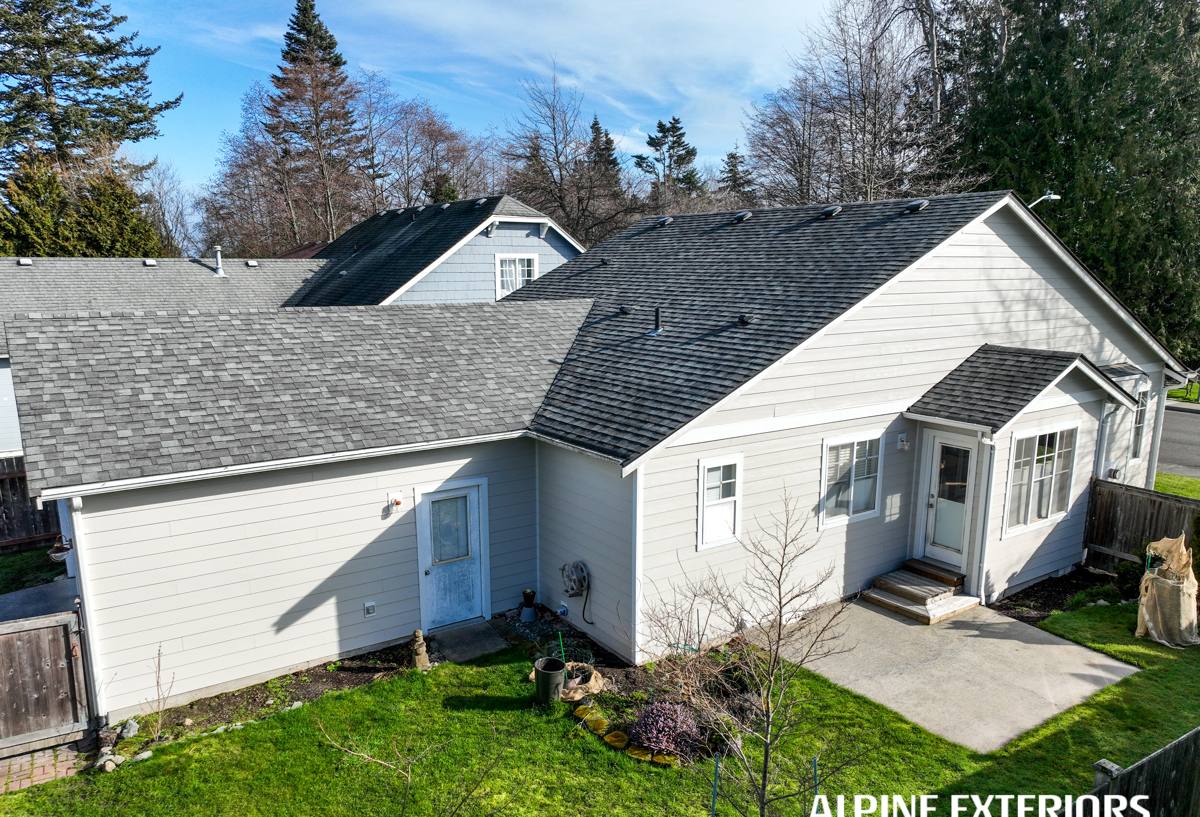
What Geneva Homes Actually Face
Salt Air and Metal Fatigue
Proximity to marine air means faster corrosion on exposed fasteners, hinges, and any metal trim that isn't properly coated or protected. Over time, corroding fasteners can loosen siding panels or leave rust streaks bleeding down the face of a wall. This is less about any single product failing and more about installation details — fastener choice, flashing, and how edges are sealed — mattering more here than they would in a drier inland town.
Driving Rain and Wind-Driven Moisture
Rain that falls straight down is easy to manage. Rain that gets pushed sideways by wind off open water is a different problem — it finds horizontal laps, window trim, and any place where two materials meet. A siding system that isn't dimensionally stable, or that wasn't installed with the right overlaps and clearances, is where that moisture gets in. Once it's behind the siding, the real damage — to sheathing, framing, and insulation — happens out of sight.
The Long Moss Season
Whatcom County's mild, wet stretch of the year is exactly what moss and algae need to establish themselves. On siding, that usually shows up first on shaded north and west walls, in the grain texture of wood-based products, or in any spot where water sits instead of running off. Moss holds moisture against the surface underneath it, which shortens the life of whatever it's growing on — and it's a maintenance chore that never really goes away once it takes hold.
Why We Only Install James Hardie Fiber Cement
We get asked fairly often why we don't offer vinyl, LP SmartSide, or a cedar look. The honest answer is that we made a call, based on years of doing exterior work in this exact climate, that James Hardie fiber cement is the product that holds up best against what Geneva throws at a house. That's not a knock on every alternative — it's a statement about what we're willing to put our name behind and warranty.
Fiber cement is non-combustible, which matters in a region where wildfire smoke and dry-season fire risk have become a bigger part of the conversation in the Pacific Northwest. It doesn't swell, rot, or delaminate the way wood-based products can when they take on repeated moisture. And it doesn't chalk, fade, or go brittle in UV and salt air the way vinyl can over a couple of decades. James Hardie's HZ5 product line is specifically engineered for the Pacific Northwest's freeze-thaw and moisture cycle, which is the same climate zone Geneva sits in.
What We Won't Install, and Why
- Vinyl siding — lightweight and inexpensive, but it expands and contracts with temperature swings, can crack in cold snaps, and fades unevenly over time in coastal UV and salt exposure.
- LP SmartSide and other wood-strand products — engineered wood is more moisture-resistant than raw lumber, but it's still wood at its core, and Geneva's wet season is a tough long-term test for any wood-based product's edges and cut ends.
- Primed spruce or cedar — beautiful when new, but they demand a repainting and caulking schedule that most homeowners underestimate, especially in a climate that barely gives the exterior time to dry out between rain events.
ColorPlus Finish: Less Maintenance in a Wet Climate
One detail that matters more in Geneva than it would in a drier climate is how the color finish is applied. James Hardie's ColorPlus technology is baked on at the factory in a controlled environment, rather than field-painted on-site after installation. That produces a more consistent, durable bond than site-applied paint, and it holds up better against the fading and chalking that constant moisture and salt air accelerate. It also means touch-ups are simpler and less frequent — a real advantage in a place where scaffolding a house to repaint it isn't something anyone wants to do every few years.
| Factor | James Hardie Fiber Cement | Vinyl / Wood-Based Alternatives |
|---|---|---|
| Moisture behavior | Dimensionally stable, resists swelling | Can swell, warp, or crack over time |
| Fire rating | Non-combustible | Combustible (vinyl melts; wood burns) |
| Finish durability | Factory-baked ColorPlus finish | Field-painted or prone to UV fading |
| Maintenance | Periodic washing, minimal repainting | Regular repainting or caulk maintenance |
| Typical lifespan (installed to spec) | Multiple decades | Often shorter, product-dependent |
How We Approach a Geneva Siding Project
Every project starts with a walk-around of the house, paying close attention to the sides that take the worst of the weather — usually whichever face gets the most wind-driven rain and the least sun. We look at existing moisture damage, flashing condition around windows and doors, and how the current siding has held up, because that tells us a lot about what the house actually needs versus what a generic spec sheet would recommend.
Installation details matter as much as the product itself. Proper fastener spacing, correct overlap on horizontal laps, sealed and flashed penetrations, and rainscreen or drainage planning behind the siding where it's called for — these are the things that determine whether a fiber cement installation performs for decades or develops problems in five years. We follow manufacturer installation specs closely, because doing so is also what keeps the Hardie warranty intact.
What to Expect From an Estimate Visit
- An honest assessment of your current siding's condition, not just a sales pitch
- A look at moisture-prone areas: north-facing walls, window trim, deck ledger connections
- A explanation of which James Hardie product line and profile fits your home
- A written scope covering flashing, fasteners, and drainage details — not just square footage
- A realistic timeline that accounts for Whatcom County's weather windows
Beyond Siding: Roofing, Windows, and Decks
Siding doesn't work in isolation. A house's exterior is a system, and in a climate like Geneva's, the roofline, window flashing, and siding all need to work together to keep water moving away from the structure instead of into it. We handle roofing, windows, and decks alongside siding work for exactly that reason — it's easier to get the details right, like how a deck ledger board is flashed against the wall or how window trim ties into the siding plane, when one crew is responsible for the whole picture instead of coordinating between separate contractors.
Decks in particular take a beating from the same moss and moisture cycle that affects siding, and window seals are often where driving rain first finds its way into a wall system. If you're already planning a siding project, it's worth having those areas looked at at the same time.
Why a Local Crew Matters
A crew that works Whatcom County regularly understands things that don't show up in a product brochure: which walls in this area take the worst weathering, how long moss actually takes to establish on a shaded wall here, and what installation adjustments actually matter for homes exposed to salt air. That local knowledge shapes decisions on flashing, drainage planning, and even the order of operations on a job — details that are easy to get wrong if a crew is unfamiliar with how this specific stretch of coastline behaves through the year.
We also stand behind our work with a company that's local and reachable, not a name that shows up for one job and disappears. James Hardie's warranty is strong on its own, but pairing it with a local installer who knows the product and the climate is what actually protects the investment over the long run.
Ready to Talk About Your Home?
If your Geneva home's siding is showing streaking, moss buildup, soft spots, or just looks tired after years of Whatcom County weather, we're happy to take a look. Reach out for a free, no-pressure estimate — we'll walk the exterior with you, explain what we see, and give you a straightforward recommendation, whether that's a full re-side or targeted repairs.