 Glenhaven Siding
 Why Siding Fails Faster in Whatcom County
Siding is the single largest weatherproofing system on your house, and in Glenhaven it works harder than it does almost anywhere else in the state. You've got salt-laden air coming off the water, driving rain that hits walls sideways instead of falling straight down, and a moss season that can stretch from October well into May. None of those things destroy siding overnight. What they do is find every weak point — a nail hole, a caulk gap, a hairline crack — and slowly turn it into a real problem.
That's the part homeowners usually miss. Siding failure is rarely sudden. It's a progression, and if you know what to look for, you can catch it while it's still a repair instead of a full replacement. This page walks through the actual signs, what they mean, and what to do about them.
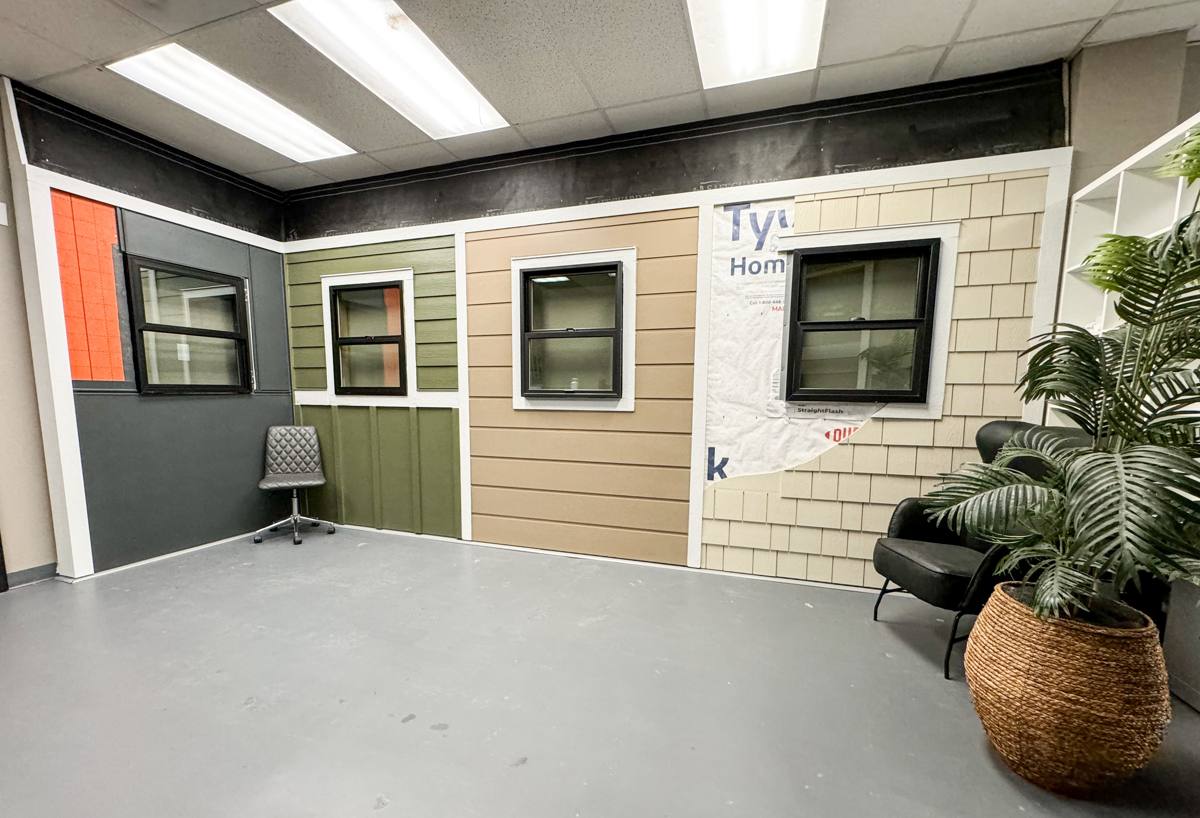
Visual Warning Signs You Can See From the Ground
You don't need to get on a ladder to catch most early failure signs. A slow walk around the exterior twice a year — once after the wet season, once before it — will tell you almost everything you need to know.
Cracking and Splitting
Wood-based products (solid wood, primed spruce, LP SmartSide, OSB-based panels) expand and contract with moisture cycles. In a climate with as many wet-to-dry swings as Whatcom County sees, that movement eventually splits the material along the grain or at panel seams. Cracks let water in behind the siding, which is worse than water sitting on top of it.
Bubbling, Peeling, or Chalky Paint
Paint failure is almost always a moisture symptom, not a paint problem. If paint is bubbling, peeling in sheets, or the surface has gone chalky and dull, the siding underneath is absorbing water it shouldn't be. Factory-applied finishes behave very differently here than field-applied paint, which is one reason it matters what finish system your siding came with.
Warping, Buckling, or Waviness
Run your eye down a wall at a low angle in late-day light. Waviness or buckling means the substrate has absorbed moisture and lost its shape — and once wood-based siding warps, it does not flatten back out.
Visible Mold, Algae, or Moss Growth
Some surface algae is cosmetic and just needs a gentle wash. But moss that's gaining a foothold in siding seams, at butt joints, or along the bottom courses is a different story — it holds moisture against the material around the clock. Given how long the moss season runs here, siding that can't shed water quickly is fighting an uphill battle for most of the year.
Signs You Can Feel or Hear
Some failure signs don't show up visually until they're advanced. A hands-on check catches them earlier.
- Press firmly on siding near the bottom courses, around windows, and near any penetration (hose bib, dryer vent, light fixture). Soft or spongy spots mean the substrate is breaking down.
- Listen for rattling or looseness in wind — it usually means fasteners have backed out or the panel has lost its grip.
- Check for gaps you can fit a fingernail into at seams and corners, especially on walls that catch the prevailing wind and rain.
- Tap lightly along a wall — a hollow or crumbly sound where you'd expect solid resistance is a red flag.
Signs Hiding Behind the Siding
By the time siding failure shows up inside the house, it's usually been developing outside for a while. These interior clues are worth taking seriously:
- Musty smell in a room along an exterior wall, especially after rain
- Peeling paint, bubbling, or dark staining on interior drywall near exterior walls
- Soft or spongy drywall or trim near windows and doors
- A noticeable jump in heating costs with no other explanation — wet insulation loses much of its R-value
- Visible warping in interior door or window trim on exterior walls
If you're seeing any of these, don't wait for the exterior symptoms to catch up. Moisture that's reached the framing is doing damage every week it's ignored.
Material-Specific Failure Patterns
Different siding materials fail in different ways, and knowing which pattern applies to your house helps you judge how urgent the situation is.
| Material | Typical Failure Mode | How It Shows Up Locally |
|---|---|---|
| Solid wood / primed spruce | Moisture absorption at end grain and seams, rot, cupping | Fails fastest on rain-exposed and shaded, moss-prone walls |
| LP SmartSide / OSB-based panels | Edge swelling, delamination if the factory seal is compromised | Swelling shows first at butt joints and cut edges facing weather |
| Vinyl siding | Cracking in cold snaps, warping from heat/sun, fastener pull-through in wind | Salt air accelerates fastener corrosion over time |
| Fiber cement (uncoated or field-painted) | Coating failure, moisture wicking at cut edges if not properly sealed | Performs well if detailed correctly; problems trace to installation, not the material |
| James Hardie fiber cement (ColorPlus) | Failure is rare when installed to spec; factory finish resists the coating breakdown seen above | Engineered HZ product lines are formulated for wet, marine-influenced climates like this one |
How Fast Does Failing Siding Actually Get Worse?
This is the question most homeowners actually want answered: is this urgent, or can it wait? The honest answer is that it depends on where the failure is and what's behind it.
Surface issues — chalky paint, minor algae, a hairline crack in one board — can usually wait for a normal maintenance cycle if you keep an eye on them. But once water has a path behind the siding, the timeline changes. Sheathing and framing that stay wet through repeated Whatcom County rain cycles can develop rot within a single wet season, and once rot sets in, it spreads faster than most people expect because it's happening out of sight. A small leak you catch in month one might be a two-board repair. The same leak ignored through a full winter can mean replacing sheathing, insulation, and interior finishes as well as siding.
A Rough Timeline
Use this as a general guide, not a guarantee — actual timelines depend on exposure, wall orientation, and how much water is actually getting behind the material:
- Immediate attention: soft/spongy siding, interior staining, musty smell, visible gaps at penetrations
- Within a season: cracking, warping, heavy moss buildup at seams, paint failure over more than a small area
- Routine monitoring: light surface algae, minor color fade, isolated small cracks with no softness underneath
What to Do When You Spot These Signs
A checklist for handling what you find:
- Document what you see with dated notes — photos are for your own comparison over time, not for anyone to interpret without seeing the wall in person
- Press-test any suspicious area rather than guessing from a distance
- Check the interior wall on the same side of the house for matching symptoms
- Don't caulk over an active moisture problem — sealing the surface without addressing what's happening underneath traps water in rather than keeping it out
- Get a professional opinion before a small repair becomes a structural one, especially if you find soft framing or sheathing
Repair, Recoat, or Replace?
Not every warning sign means a full re-side. A single damaged board, a failed caulk joint, or isolated paint failure can often be repaired in place. But there's a point where patching stops making financial sense — usually when failure is showing up in multiple, unrelated areas of the house, when the underlying material itself (not just the finish) is compromised, or when the siding is old enough that matching materials and colors is no longer realistic.
At that point, the conversation shifts from "how do we fix this" to "what do we replace it with" — and that's where the material you choose determines whether you're having this same conversation again in ten years.
Why We Only Install James Hardie
When Glenhaven Siding Company gets called out to look at failing siding, the pattern is consistent: wood-based and OSB-based products struggle most on the walls that take the worst of the local weather — direct rain exposure, shaded moss-prone corners, and areas that get hit by salt-carrying wind. That's not a knock on those products in every application; it's why we made the call, years ago, to install James Hardie exclusively and stop installing wood siding, LP SmartSide, and other fiber cement alternatives.
James Hardie fiber cement is non-combustible, holds a factory-applied ColorPlus finish that isn't relying on field paint to do the moisture-resistance work, and its HZ product lines are engineered specifically for climates with sustained moisture exposure like ours. It comes with a strong transferable warranty, and — most importantly to us — it holds up on the walls that fail first on other materials. When correct installation practices are followed (proper clearances, sealed cut edges, correct fastening), it's the product we trust to not have this conversation again in a decade.
If you're seeing any of the warning signs above, or you just want an honest read on where your siding actually stands, we're happy to take a look. Reach out for a free, no-pressure estimate using the form below.