 Glenhaven Siding
 Sudden Valley homeowners deal with a specific mix of weather that most siding products simply weren't built to handle over the long haul. Sitting near Lake Whatcom in Whatcom County, this area gets a steady diet of moisture-laden air, wind-driven rain off the water, and long stretches of overcast, humid conditions that keep exterior surfaces damp far longer than homes just a few miles inland. Add in the moss and algae growth that thrives in the Pacific Northwest's shoulder seasons, and you've got an exterior envelope that's under near-constant pressure from the day it's installed. Glenhaven Siding Co. works this area regularly, and we've built our approach around what actually holds up here — not what looks good on a spec sheet in a dry climate.
What Sudden Valley's Climate Does to a Home's Exterior
The combination of lake-effect moisture, tree cover, and the region's long wet season creates conditions that accelerate wear on almost every exterior material. It's worth understanding the specific mechanisms at play before you decide what to put on your walls.
Driving Rain and Wind Exposure
Homes closer to the lake and in more open or elevated spots around Sudden Valley catch wind-driven rain that doesn't just fall straight down — it gets pushed sideways into seams, laps, and trim junctions. Over years, that repeated wetting cycle is where poorly installed or moisture-sensitive siding starts to fail, usually at the joints and corners first, long before the field of the wall shows any obvious problem.
Moss, Algae, and Prolonged Dampness
Whatcom County's tree canopy and shaded lots mean a lot of Sudden Valley homes don't get much direct sun on their north- and west-facing walls for much of the year. That shade, combined with regional humidity, is exactly what moss and algae need to establish themselves on exterior surfaces. Once organic growth takes hold, it holds moisture directly against the material underneath — which matters a lot depending on what that material actually is.
Salt Air and Corrosion
Proximity to the Puget Sound region means a mild but real salt-air component in the local climate, which accelerates corrosion on fasteners, flashing, and any metal components in the building envelope. It's a slower process than what you'd see on the immediate coastline, but it's a factor that adds up over a couple of decades, especially on homes with cheaper or improperly coated hardware.
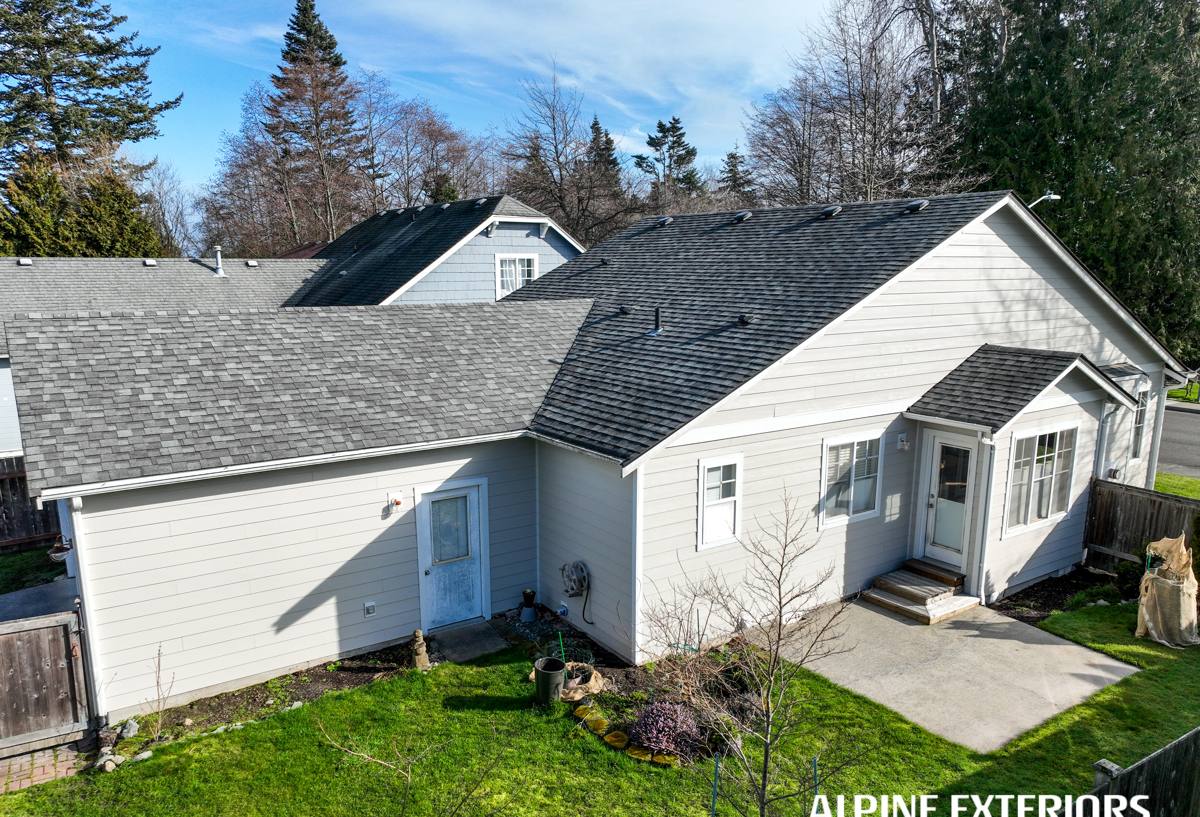
Why We Only Install James Hardie Fiber Cement
Glenhaven Siding Co. made a deliberate decision to standardize on James Hardie fiber cement siding for every home we side, including here in Sudden Valley. We don't install vinyl, LP SmartSide, cedar, primed spruce, or other fiber cement brands. That's not a marketing position — it's a practical one, based on how these materials actually perform in exactly the conditions described above.
- Non-combustible core: Fiber cement won't ignite or contribute fuel to a fire the way wood-based products can, which matters increasingly across the region.
- Moisture stability: Hardie's fiber cement doesn't swell, rot, or delaminate the way wood-based composite siding can when it stays wet for extended periods — a real concern given how long Sudden Valley walls can stay damp in shaded, wooded lots.
- Factory-applied ColorPlus finish: The finish is baked on under controlled conditions, which gives it far better resistance to fading, chipping, and moisture intrusion at the surface than a field-applied paint job on wood or primed siding.
- Climate-engineered product lines: Hardie makes region-specific HZ formulations, and the line rated for this climate zone accounts for the freeze-thaw and moisture cycling the Pacific Northwest sees.
- Warranty structure: Hardie backs its product with a strong, transferable warranty — which matters both for your own ownership and for resale value down the line.
We're upfront that other products have their place and their advocates. Vinyl is inexpensive and low-maintenance in mild climates. Cedar has real aesthetic appeal for people who want a natural look and are willing to maintain it. LP SmartSide and other engineered wood products have improved over the years. But when we weigh long-term moisture performance, fire safety, and how a product ages over 20-30 years in this specific climate, fiber cement from Hardie is what we're willing to put our name behind and warranty our installation on.
Our Services in Sudden Valley
We handle the full exterior envelope, not just siding, because these systems all work together to keep water out of a home.
Siding Installation and Replacement
Full siding replacement, re-siding over existing sheathing where conditions allow, and repair work on existing Hardie installations. We assess the current wall assembly, including sheathing condition and existing moisture damage, before quoting any job — that inspection step matters more here than in drier climates because hidden rot behind failing siding is common on older Sudden Valley homes.
Roofing
Roofing and siding failures are often connected — a roof leak at a valley or a poorly flashed transition can show up as siding damage two stories down. We look at both systems together, especially at the roof-to-wall intersections where most water intrusion problems actually originate.
Windows
Window replacement and re-flashing, done with attention to how the new window integrates with the surrounding siding's water management system. A window installed without proper flashing integration is one of the most common sources of hidden moisture damage we find when we open up a wall.
Decks
Deck construction and replacement built for the same wet-climate realities — proper ledger flashing, drainage, and material choices that hold up to the region's moisture exposure rather than fighting it.
What Correct Installation Looks Like
Fiber cement siding is only as good as its installation. Hardie's own installation guidelines are specific about clearances, fastening patterns, and flashing details, and skipping steps is where most siding failures — regardless of brand — actually originate.
- Proper starter strip and clearance from grade, decks, and roof lines to keep the bottom edge of the siding from sitting in standing water or splash-back
- Correct fastener type, spacing, and embedment depth per Hardie's specifications for this climate zone
- Weather-resistive barrier and flashing integration at every window, door, and penetration
- Proper joint treatment and caulking at butt joints, corners, and trim intersections
- Field-cut edges sealed or primed per manufacturer specification to prevent moisture wicking
- Adequate ventilation behind the siding assembly where the wall design calls for it
Comparing Exterior Siding Options for This Climate
| Material | Moisture Performance Here | Maintenance Burden | Fire Resistance |
|---|---|---|---|
| James Hardie Fiber Cement | Strong — engineered for wet, humid climates | Low — factory finish, periodic washing | Non-combustible |
| Vinyl Siding | Moderate — can warp, doesn't rot but seams can allow water behind | Low, but limited repair options if damaged | Can melt/deform under heat |
| Cedar | Weaker without diligent upkeep — prone to moisture absorption, rot, moss | High — regular staining/sealing required | Combustible |
| LP SmartSide / Engineered Wood | Moderate — improved but still wood-based, moisture-sensitive at cut edges | Moderate — finish maintenance over time | Combustible |
Cost Factors for Sudden Valley Homes
Every home is different, but a few factors consistently drive the scope and cost of siding work in this specific area:
| Factor | Why It Matters Here |
|---|---|
| Existing moisture damage | Homes with prior siding failures often need sheathing repair before new siding goes on |
| Home size and wall complexity | More corners, dormers, and trim details mean more labor and material |
| Access and lot conditions | Wooded, sloped, or lakeside lots common in Sudden Valley can affect staging and scaffolding needs |
| Trim and siding profile choice | Lap width, shingle-style panels, and trim detail all affect material cost |
| Tear-off vs. re-side | Removing old siding entirely versus siding over existing material where conditions allow |
Why a Local Crew Matters
A crew that works Whatcom County regularly knows which details actually matter here — where wind-driven rain tends to hit hardest, which lot conditions call for extra flashing attention, and how the moss season affects material choices and finish colors. That local knowledge shows up in the small decisions made on the job site, not just in the materials list. We're not applying a generic install process; we're applying one shaped by years of seeing how homes in this specific area age.
Signs Your Sudden Valley Home May Need Attention
- Visible moss or algae buildup on north- or west-facing walls
- Soft spots, bubbling, or discoloration near the bottom edge of siding panels
- Gaps or separation at seams, corners, or trim joints
- Peeling or chalking paint on wood-based or previously painted siding
- Water staining on interior walls near exterior corners or window openings
- Visible warping or cupping on cedar or engineered wood panels
If you're weighing a siding, roofing, window, or deck project for a Sudden Valley home, we're glad to take a look and walk you through what we're seeing and why. Reach out for a free, no-pressure estimate — there's a form right below.