 Glenhaven Siding
 What ColorPlus Technology Actually Is
ColorPlus is James Hardie's factory-applied finish system. Instead of a color being sprayed on siding after it's hung on your house — which is how field-painted fiber cement, wood, and most trim work is finished — ColorPlus color is baked onto each plank, panel, or shingle inside a climate-controlled factory, in multiple coats, before it ever ships to Glenhaven. The finish cures under conditions no job site can replicate: consistent temperature, no wind-blown dust or pollen, no humidity swings, no rain interruption.
That matters more here than in a lot of the country. Whatcom County sits close enough to the water that siding deals with salt-laden air, long stretches of driving rain off the Strait, and a moss and algae season that can run most of the year on shaded or north-facing walls. A finish that was properly cured in a factory holds up to that environment differently than a finish that had to cure outdoors on your house, at the mercy of whatever the weather was doing that week.
Why Factory Application Beats Field Painting
Field-applied paint depends heavily on the day it went on — humidity, temperature, how long between coats, how much dust settled into wet paint. ColorPlus removes almost all of that variability. Every board gets the same number of coats, the same cure time, and the same quality control before it leaves the plant. The result is a more even finish and a coating that's less likely to develop the early chalking or fading that field-painted siding sometimes shows in year two or three.
The Color Collections and What They're Built For
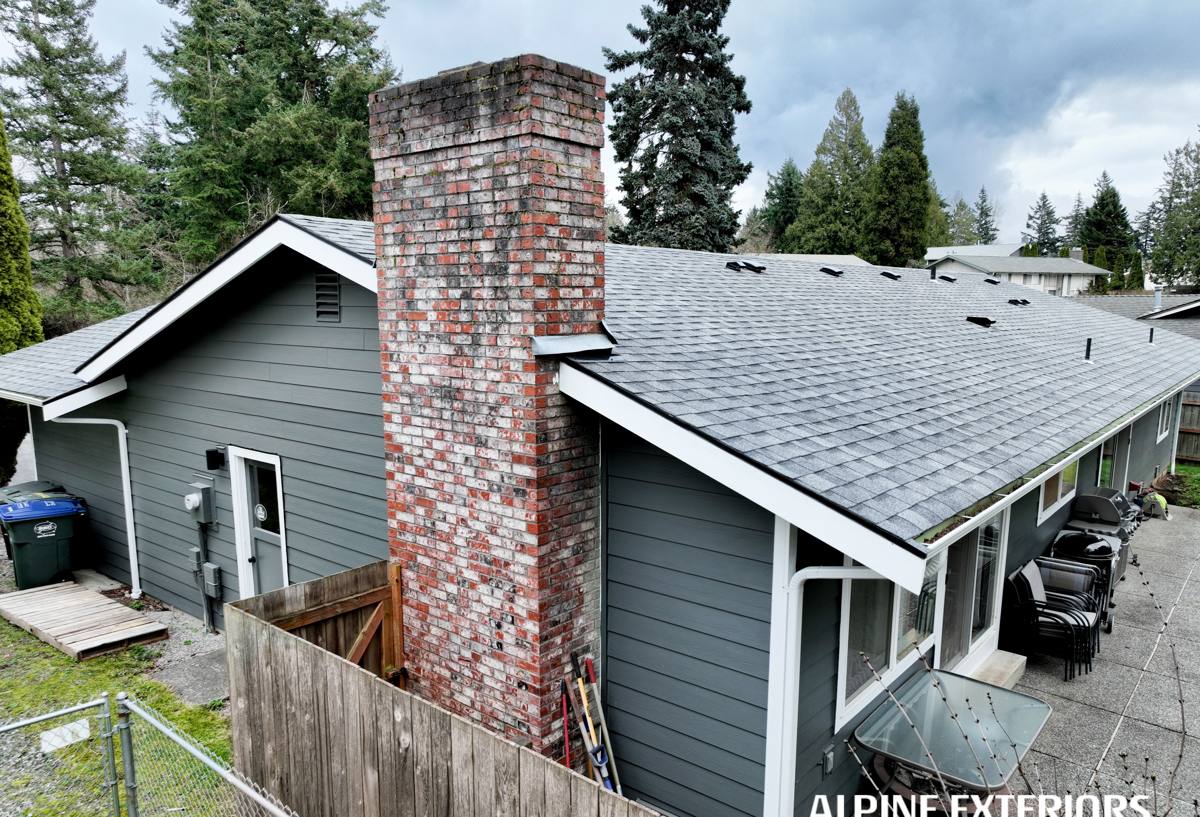
James Hardie organizes its ColorPlus palette into a few different collections, generally split between a curated set of standard colors designed to work across most architectural styles, and a broader custom-order collection for homeowners who want a more specific or regionally distinct shade. The standard collection covers the range most homeowners actually use — warm neutrals, grays, deep charcoals, muted blues and greens — chosen to pair well with common trim, roofing, and stone or brick accents in the Pacific Northwest.
Availability varies by product line and by region, and the exact lineup shifts over time as Hardie updates offerings. Rather than lock in on a specific list here, the more useful approach is to pull current swatches and confirm what's actually stocked for delivery to Whatcom County before you fall in love with a color on a screen — factory finish colors can look noticeably different in overcast Pacific Northwest light than they do in a sunnier product photo.
Matching Color to Product Line
Not every ColorPlus color is available on every Hardie product. Lap siding (HardiePlank), panel siding (HardiePanel), shingle-style siding (HardieShingle), and trim (HardieTrim) each ship with their own available color ranges, and some colors that look great on a lap board aren't offered — or don't read the same way — on a shingle profile. If you're mixing products, like lap siding with a shingle accent gable, we check color availability across both products early, before design decisions get locked in.
Reading Colors for Whatcom County's Climate
Color choice here isn't purely aesthetic — it interacts with how the house actually weathers.
- North and shaded walls hold moisture longer. Light and mid-tone colors on these elevations show moss, algae, and mildew staining more visibly than they would on a sun-exposed south wall. This isn't a defect in the finish; it's biology finding a damp surface to grow on, and it shows up faster on lighter colors simply because the contrast is more visible.
- Dark colors absorb more heat and show dust and pollen less. They also make hairline settling or minor surface imperfections less visible, but they can telegraph more heat-related expansion stress at trim joints if flashing and gapping weren't done to spec.
- Salt air affects metal fasteners and flashing before it affects the finish itself. ColorPlus resists fading and chalking well, but the coastal air in this part of Washington is still a reason to insist on corrosion-resistant fastening and properly detailed flashing regardless of color.
- Glare and visibility matter on street-facing elevations if your lot gets more direct sun exposure than typical for the area — very light colors can look washed out under our specific gray-sky light for much of the year, where they'd read differently in a sunnier climate.
The Warranty Structure — What ColorPlus Actually Protects
James Hardie's warranty coverage has two separate layers, and understanding the difference matters when you're choosing between factory finish and a field-applied color later.
| Coverage | What it protects | Applies to |
|---|---|---|
| Substrate warranty | The fiber cement board itself — cracking, rotting, and non-combustibility performance | All Hardie siding, factory-finished or field-painted, when installed to spec |
| ColorPlus finish warranty | The factory-applied color coat — fading, chipping, cracking, and peeling of that specific finish | Only siding that keeps its original factory ColorPlus finish |
If you later paint over ColorPlus with a different color, the substrate warranty on the board itself generally stays intact, but the separate finish warranty tied to the factory coat no longer applies to that repainted surface — you're now relying on the field-applied paint's own performance. That's a reasonable trade-off if you want a custom color down the road, but it's worth knowing going in rather than discovering it later.
Field-Painted Custom Colors: The Trade-Off
Some homeowners want a color outside the ColorPlus palette entirely — a specific match to an HOA requirement, a heritage color, or something entirely custom. Hardie siding can be special-ordered primed rather than factory-finished, and painted on site with a quality 100% acrylic exterior paint. This is a legitimate option, but it comes with real trade-offs:
- You lose the factory finish warranty and take on the maintenance cycle of a standard painted exterior — likely repainting within 7-10 years in this climate rather than the much longer factory finish life.
- Field painting quality depends entirely on prep, weather at time of application, and the painter's process — variables ColorPlus removes.
- Cost isn't necessarily lower once you account for the paint job itself and future repaint cycles, even though the material cost up front may look similar.
For most homeowners, staying within the ColorPlus palette and picking carefully is the better long-term value. But if a specific custom color matters enough to you, it's a legitimate choice — just go in knowing what you're trading for it.
What Correct Installation Has to Do With Color Performance
A great color choice on siding that's installed wrong will still fail early, and it usually fails at the cut edges and joints first. Every field cut on Hardie board exposes unfinished substrate that needs to be sealed with Hardie-approved touch-up product — skip that step and you get a visible line of moisture intrusion and color mismatch at every butt joint, typically showing up as staining or a slightly different sheen within a year or two. Proper gapping, flashing behind every joint, and correct fastener placement matter just as much for how the color holds up as the finish itself does. This is also why manufacturer certification for installers exists — it's less about the tools and more about consistently getting these details right on every house.
A Practical Checklist Before You Commit to a Color
- Pull physical swatches, not just screen images — factory finish color reads differently under Whatcom County's overcast light than in marketing photos
- View swatches on-site, in daylight, against your actual roof and trim colors
- Confirm the color you want is available on every product line you're using (lap, panel, shingle, trim)
- Ask which elevations of your home get shade and moisture, and consider how a lighter color will show moss there over time
- Decide up front whether you might want a custom color later, and understand the warranty trade-off if you do
- Confirm your installer follows Hardie's fastening, gapping, and cut-edge sealing specifications — the color performance depends on it
Cost Considerations by Approach
| Factor | Factory ColorPlus Finish | Primed + Field-Painted |
|---|---|---|
| Upfront material cost | Slightly higher per board | Slightly lower per board, plus paint labor |
| Repaint cycle | Typically none needed for many years | Repaint every 7-10 years in this climate |
| Warranty on finish | Dedicated finish warranty from Hardie | Substrate warranty only; finish relies on paint product/installer |
| Color flexibility | Limited to current ColorPlus palette | Any custom color |
Getting It Right the First Time
Color is one of the few siding decisions that's genuinely hard to undo cheaply once the house is finished. Between the factory finish, the product line differences, and how Glenhaven's salt air, rain, and moss season interact with different tones, it's worth having an honest walk-through of your actual house — its exposure, shading, and existing trim and roof colors — before settling on a swatch. We're happy to bring physical ColorPlus samples to your property, walk the elevations with you, and put together a free, no-pressure estimate for the project.