 Glenhaven Siding
 Siding in Puget: A Whatcom County Neighborhood That Earns Its Reputation
Puget sits in one of the tougher stretches of Whatcom County when it comes to what a house exterior has to put up with year after year. Between the salt air drifting off the water, driving rain that comes in sideways more often than straight down, and a moss season that seems to stretch longer every year, the siding on a Puget home is under more or less constant low-grade attack. Most of the damage isn't dramatic. It's slow. A little swelling here, a little discoloration there, a caulk joint that opens up a hair wider each winter. By the time it's obvious from the street, the problem has usually been building for years.
We work on homes throughout the Glenhaven area, and Puget is one of the neighborhoods where we see the clearest pattern: houses sided with the wrong product for this climate age fast, and houses sided correctly hold their look and their protection for decades. That pattern is the whole reason this company only installs one siding product.
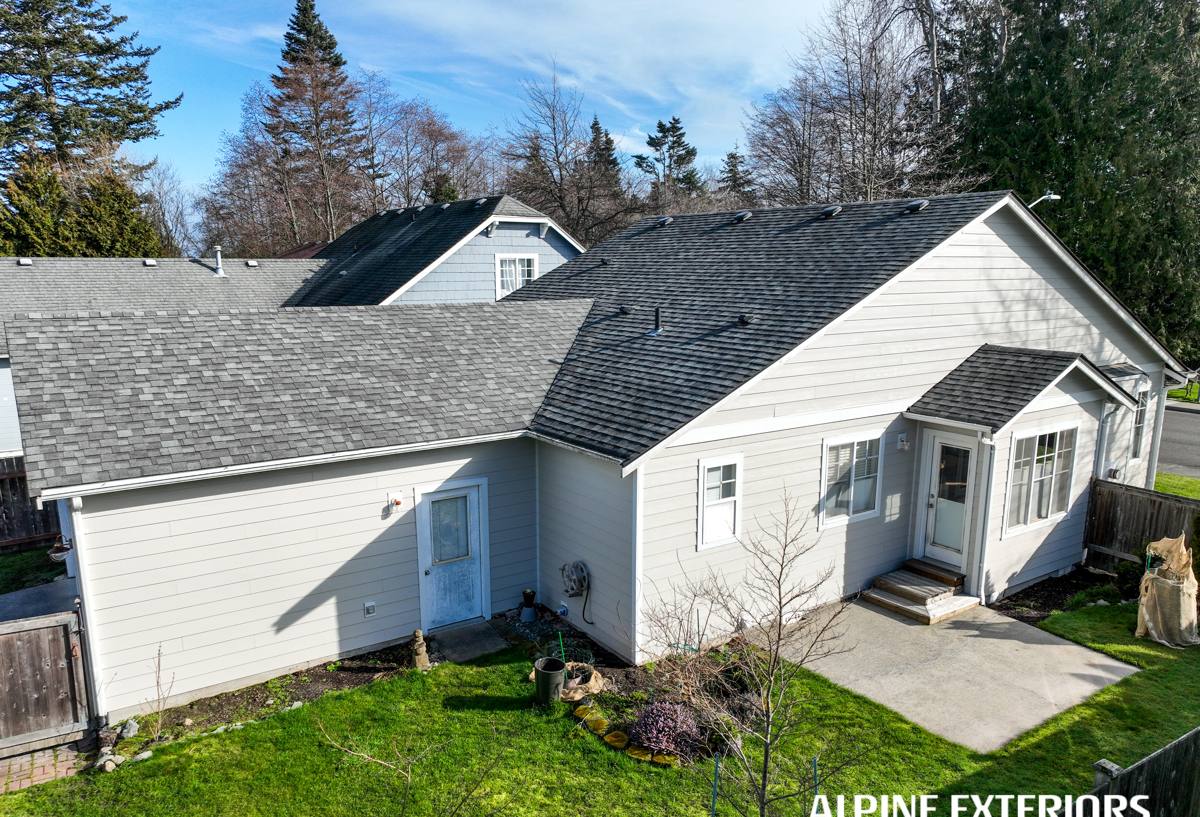
What the Coastal Climate Actually Does to a House
Salt Air
Salt-laden air doesn't just affect metal fasteners and flashing near the shoreline — it settles on siding surfaces, works into seams and fastener heads, and accelerates the breakdown of paint films and any wood-based product. Over time it contributes to fading, chalking, and corrosion at every point where metal meets the exterior.
Driving Rain
Puget's exposure means wind-driven rain hits walls at an angle, not just straight on. That matters because it drives moisture into laps, seams, and butt joints that a calmer climate would never test. Any siding product with a weak point in its moisture handling — whether that's an engineered wood core, a vinyl panel that can bow and let water track behind it, or a field-applied finish that's thinner than a factory finish — gets found out here faster than almost anywhere else in the county.
Moss and Sustained Dampness
Long, cool, wet stretches mean moss and algae get a real foothold on north-facing walls, under eaves, and anywhere airflow is limited. Moss holds moisture directly against the siding surface for extended periods, which is a slow but steady stress test on whatever material is underneath it.
Why This Company Installs Only James Hardie Fiber Cement
We get asked fairly often why we don't offer more options. The honest answer is that we've made a professional call: in a climate like Puget's, fiber cement is the material that holds up the way homeowners expect siding to hold up, and James Hardie is the fiber cement manufacturer whose products, engineering, and warranty backing we're willing to put our name behind.
James Hardie siding is non-combustible fiber cement — it doesn't rot, swell, or delaminate the way wood-based products can when they take on moisture repeatedly over years. It's engineered in regional formulations (Hardie's HZ5 product line is built for climates like ours) specifically to handle freeze-thaw cycling, sustained moisture, and temperature swings. The ColorPlus factory-applied finish is baked on under controlled conditions, which gives it better fade and wear resistance than a coat of paint applied on site in variable weather — a real advantage when a job might see rain on and off across the install window.
We're not going to tell a homeowner that other siding materials are junk — that's not honest and it's not our call to make about a whole industry. What we will say is that after years of doing exterior work in this exact climate, we stopped installing the alternatives because we didn't want to be back at a house in eight or ten years dealing with problems that were largely preventable with a different product choice up front. Fiber cement, installed correctly, is the product we're comfortable standing behind long-term.
How We Approach a Puget Siding Project
- On-site assessment — we look at current siding condition, moisture damage, trim and flashing details, and how the home is oriented relative to prevailing wind and rain.
- Moisture and structural check — sheathing and framing get inspected wherever old siding comes off, since hidden water damage is common on homes that have gone a long time with an underperforming exterior.
- Weather barrier and flashing detail — proper house wrap, flashing at windows and doors, and correct lap sequencing matter more in a driving-rain climate than almost anywhere else, and this is where a lot of installation quality problems actually originate, regardless of which siding brand is used.
- Hardie installation to manufacturer spec — correct fastening, clearances, and caulking, following James Hardie's published installation requirements rather than shortcuts.
- Final walkthrough — we go over the finished work with the homeowner before calling the job done.
Choosing a Hardie Line and Color for a Marine Climate
Most Puget homes work well with either HardiePlank lap siding for a traditional look or a combination of lap siding with HardieShingle or HardiePanel accents for architectural interest. Because salt air and UV exposure both play a role in how a finish ages, ColorPlus factory finishes are worth the modest premium over a job-site-primed option — they're formulated to resist fading and are backed by a separate finish warranty from Hardie in addition to the product warranty. Darker colors show dust and pollen streaking a bit more in a damp climate, but the finish itself holds up regardless of shade.
Trim and Detail Work
Corner boards, window trim, and fascia are all available in matching Hardie trim products, which keeps the whole exterior working as one moisture-managed system rather than mixing materials with different expansion rates and different failure points.
Cost Factors for a Puget Siding Project
| Factor | Why It Matters Here |
|---|---|
| Home size and wall complexity | More corners, dormers, and trim details increase both material and labor time |
| Extent of hidden damage | Homes with old wood-based or vinyl siding sometimes reveal sheathing repairs once removed |
| Siding profile and accent mix | Straight lap siding is more economical than shingle-style accents or panel combinations |
| ColorPlus vs. primed finish | Factory finish costs more up front but reduces repainting needs in a UV- and salt-exposed climate |
| Access and site conditions | Sloped lots, limited driveway access, or landscaping near the foundation can add labor time |
We don't quote a job over the phone — accurate numbers depend on an on-site look at the specific house.
What to Ask Before Hiring an Exterior Contractor
- Are they licensed and insured to work in Washington, and can they show proof without hesitation?
- Do they install to the manufacturer's published specifications, not just "how we've always done it"?
- Will they inspect and address sheathing or moisture damage before closing up the wall?
- Do they use proper flashing and house wrap details, not just rely on the siding itself to keep water out?
- Is the warranty — both material and workmanship — explained clearly and in writing?
- Are they familiar with this specific climate, or is this an unfamiliar region for them?
Beyond Siding: Roofing, Windows, and Decks
Siding is only one piece of how a Puget home handles this climate. Roofing takes the first hit from driving rain and moss growth, and a roof in poor condition undermines even the best siding job by pushing water where it shouldn't go. Windows are another common weak point — old or poorly flashed windows are a major source of the moisture intrusion that shows up as siding and trim damage nearby. Decks, being fully exposed to sun, rain, and moss, need materials and maintenance schedules suited to the same conditions. We handle all four — siding, roofing, windows, and decks — because treating the exterior as one connected system, rather than four unrelated projects, is how a home actually stays dry and holds its value.
Maintenance in a Salt Air, High-Moisture Climate
Even the right siding product benefits from basic upkeep in this environment. A yearly rinse-down knocks back moss and salt residue before they establish. Keeping gutters clear prevents overflow from running down wall surfaces repeatedly. Trimming back vegetation near walls improves airflow and cuts down on the damp, shaded conditions moss favors. None of this is heavy maintenance — it's the kind of light annual attention that keeps a fiber cement exterior looking close to new for a very long time.
Working With a Local Crew
A contractor who works Whatcom County regularly knows how Puget's exposure differs from a more sheltered inland property a few miles away, understands which flashing and detailing choices actually matter here, and isn't guessing at how the climate behaves over a full year. That local knowledge shows up in the small decisions made throughout a project, not just the finished look.
If you're weighing a siding, roofing, window, or deck project for a home in Puget, we're glad to come take a look and talk through what your house actually needs — no pressure, no obligation. Use the form below to request a free estimate.