 Glenhaven Siding
 Exterior Work in Columbia: A Different Kind of Climate Test
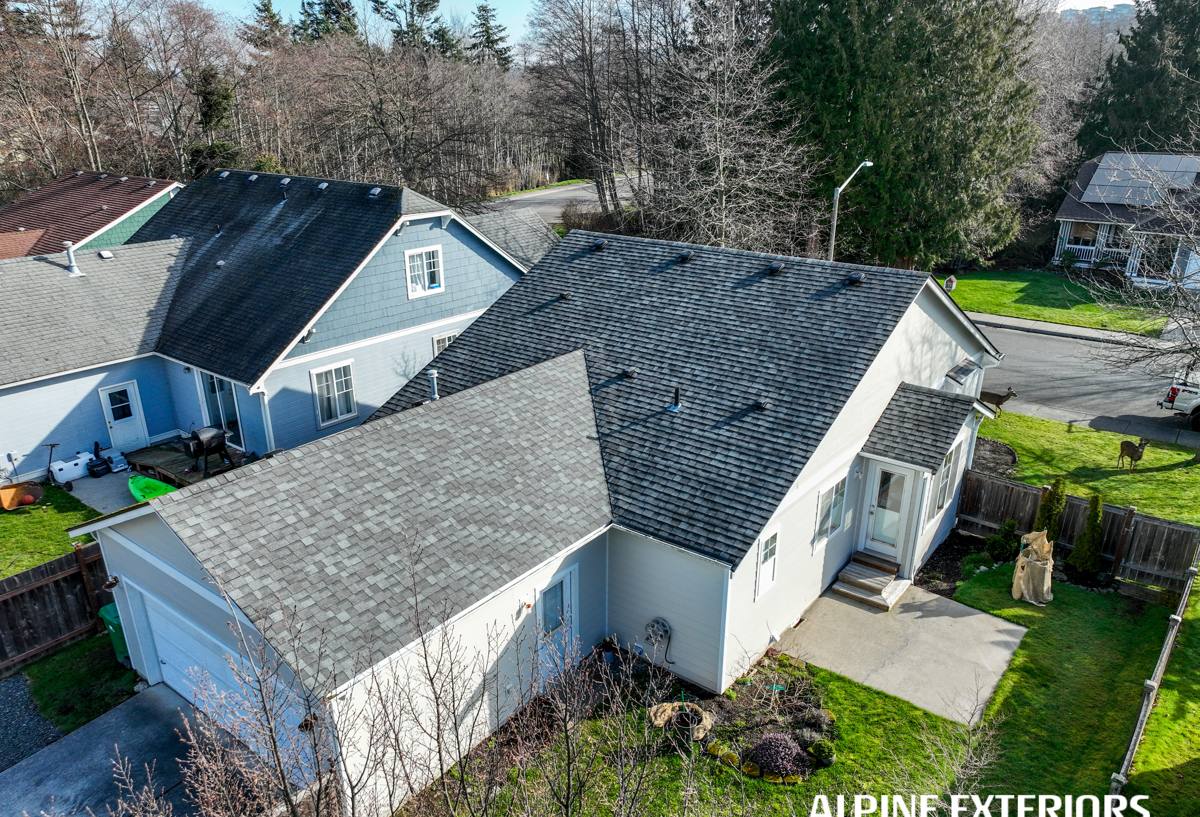
Homes in the Columbia area of Glenhaven sit in a part of Whatcom County where the exterior of a house works harder than most homeowners realize. Salt-laden air moving in off the water, driving rain that comes in sideways during winter storms, and a moss season that can stretch for most of the year all put steady pressure on siding, trim, roofing, and anything wood-based on the outside of a home. None of this is dramatic on its own. It's cumulative. A house that looks fine in year three can show real wear by year eight if the exterior materials and the installation weren't matched to this environment from the start.
We work on homes throughout Columbia and the surrounding Glenhaven area, and the patterns repeat: paint failing early on south and west-facing walls, moisture finding its way behind trim boards, moss creeping across roof edges and shaded siding, and caulk joints that dried out and cracked faster than they should have. These aren't signs of bad luck. They're signs of an exterior that was built for a milder, drier climate than the one it's actually sitting in.
What Salt Air, Rain, and Moss Actually Do
Salt Air
Proximity to marine air means airborne salt settles on every exterior surface, including siding, fasteners, and flashing. Over time it accelerates corrosion on unprotected metal components and works into the surface of porous materials, contributing to premature paint and coating breakdown.
Driving Rain
Wind-driven rain doesn't just fall on a wall, it gets pushed into it. Lap siding, trim joints, and window flashing all need to shed that water and keep it out of the wall assembly. Any gap, poor caulk joint, or wrong-material choice becomes an entry point, and moisture trapped behind siding is one of the most common causes of hidden rot.
Moss and Sustained Moisture
A long, damp season means anything shaded or slow to dry stays wet longer. Moss and algae take hold on roofing, siding, and decking that don't get much direct sun, and constant low-grade moisture is exactly the condition that swells wood, breaks down cheap coatings, and shortens the life of caulking and sealants.
Why We Standardized on James Hardie Fiber Cement
We install James Hardie fiber cement siding exclusively. We don't install vinyl, LP SmartSide, Cemplank, Allura, or primed wood products like spruce or cedar lap siding. That's a deliberate standard, not a limitation we apologize for, and it comes directly from what we see on homes in this climate.
Fiber cement is non-combustible and dimensionally stable, meaning it doesn't expand and contract with moisture the way wood-based products do. Hardie's ColorPlus finish is baked on at the factory under controlled conditions, which gives it better adhesion and UV resistance than field-applied paint. Hardie also engineers specific product lines (their HZ5 line, for example) for wetter, harsher climates, which matters directly for a location dealing with sustained rain and salt exposure. The backing warranty is transferable to a new owner if the home sells, which is worth something to homeowners thinking about resale.
None of this means other products are worthless. Vinyl is inexpensive and low-maintenance in mild climates. Wood has a look some homeowners genuinely prefer. Engineered wood products like LP SmartSide perform well in many parts of the country. Our decision isn't that those products are bad, it's that for the specific conditions homes face in Columbia and across Glenhaven, we've concluded fiber cement gives homeowners the best long-term balance of durability, appearance, and maintenance, and we'd rather install one product well than several products at a compromise.
How Different Siding Materials Hold Up Locally
| Material | Moisture / Rain Behavior | Salt Air Exposure | Moss / Algae Resistance | Typical Maintenance |
|---|---|---|---|---|
| James Hardie fiber cement | Dimensionally stable, doesn't swell or warp | Factory finish holds up well; trim and fasteners still need attention | Surface can still host moss/algae in shaded areas but material itself doesn't degrade | Occasional wash, caulk checks |
| Vinyl siding | Sheds water well but can warp under heat/cold cycling | Generally inert but seams and J-channels can trap moisture | Surface growth possible in damp shaded spots | Low, but panels can crack and aren't repaired individually as cleanly |
| Engineered wood (LP SmartSide) | Treated to resist moisture but still wood-based; edge sealing is critical | Coating can wear faster under salt exposure | More susceptible if moisture gets past the coating | Repainting/recaulking on a regular cycle |
| Untreated/primed wood (cedar, spruce) | Absorbs moisture, prone to swelling and cupping | Coatings break down faster in salt air | Most susceptible to moss, algae, and rot if not maintained closely | Frequent repainting, caulking, and spot repair |
This table is a general guide, not a guarantee for any specific product line or installation. Every material's real-world performance depends heavily on how it was installed and how consistently a home is maintained.
What Correct Installation Actually Involves
Fiber cement siding performs the way it's designed to only when it's installed to spec. Most of the siding failures we get called out to inspect trace back to installation shortcuts, not the material itself. In a climate like this one, a few details matter more than usual:
- Proper water-resistive barrier and flashing behind every siding course, especially around windows and doors where wind-driven rain concentrates
- Correct fastener spacing and type, since the wrong fastener can corrode faster in salt air and compromise the panel's hold
- Adequate clearance at the bottom of the siding from grade, decks, and roof lines so water has somewhere to go
- Factory-cut and factory-primed edges wherever possible, since field-cut edges need to be properly sealed to prevent moisture wicking
- Correct caulking at joints and penetrations, using products rated for the exposure, not whatever was on hand
- Ventilation behind the siding so any moisture that does get in has a way to dry out
This is the level of detail we build into every siding job in Columbia, because in this climate, an installation shortcut doesn't just shorten the lifespan of the siding, it can create moisture problems in the wall itself.
Siding Services We Provide in Columbia
We handle the full range of siding work, not just full-home replacement:
- Full siding replacement when the existing exterior has reached the end of its useful life or is trapping moisture
- Siding repair for storm damage, impact damage, or isolated rot before it spreads
- Trim, fascia, and soffit replacement, since these are often the first areas to show wear from rain and moss
- New construction and addition siding matched to existing color and profile where possible
Before we recommend a full tear-off, we look at whether the underlying sheathing and framing are sound. Sometimes what looks like a siding problem is really a moisture problem that's been masked by the old siding for years, and that changes the scope of the job.
Beyond Siding: The Rest of the Exterior
Siding doesn't work in isolation. A roof that's shedding water poorly, windows that leak at the flashing, or a deck that's holding moisture against the house will undermine even a well-installed siding job. We also handle roofing, window replacement, and deck construction and repair, which lets us look at a home's exterior as one connected system rather than a series of unrelated projects. When we're on-site for a siding estimate in Columbia, we'll flag other issues we notice, like a roof edge losing granules or window flashing that's failing, even if that's not what the visit was originally about.
Why a Local Crew Matters Here
A crew that works throughout Glenhaven and the surrounding Whatcom County area sees the same climate patterns repeatedly: which sides of a house take the worst weather, where moss tends to establish first, which details fail first when a previous installation cut corners. That familiarity shapes how we plan a job, from where we pay extra attention to flashing to how we sequence work around the wetter months. It's a different starting point than a crew unfamiliar with the specific conditions homes here face.
What Affects the Cost of a Siding Project
| Factor | Why It Matters |
|---|---|
| Home size and complexity | More corners, gables, and dormers mean more cutting, flashing, and labor time |
| Condition of existing sheathing | Hidden rot or moisture damage found during tear-off adds repair scope |
| Siding profile and finish | Lap, shingle, and panel styles vary in material and labor cost |
| Trim and accessory work | Fascia, soffit, and trim replacement alongside siding adds to the total |
| Access and site conditions | Steep lots, limited access, or multi-story sections affect labor and equipment needs |
We give homeowners a real number after seeing the home in person, not a rough guess over the phone, since so much of the cost depends on what's actually happening at the wall and roofline.
If you're weighing a siding project in Columbia, or you're not sure yet whether you need a repair or a full replacement, we're happy to take a look and give you a straightforward, no-pressure estimate. Use the form below to get started.