 Glenhaven Siding
 Whatcom Falls Is a Tough Place to Own Wood Trim
If you live in Whatcom Falls, you already know the weather doesn't take a season off. Whatcom County sits in a corner of Washington where marine air off the water, frequent rain, and long stretches of gray, damp weather are just the normal backdrop of life. That's great for the scenery. It's hard on a house.
Three things in particular chip away at exterior surfaces here: salt-laden air moving in off the water, driving rain that gets pushed sideways into siding and trim by wind, and a moss season that can stretch for most of the year in shaded, north-facing, or tree-covered lots. None of these are dramatic events. They're slow, steady pressure — and slow, steady pressure is exactly what wears out the wrong siding material years before it should fail.
We're a Glenhaven-based crew, and Whatcom Falls is part of our regular service area. We're not driving in from out of the county to bid a job and disappear. We see how houses in this specific area actually age, which matters when you're deciding what to put on the outside of yours.
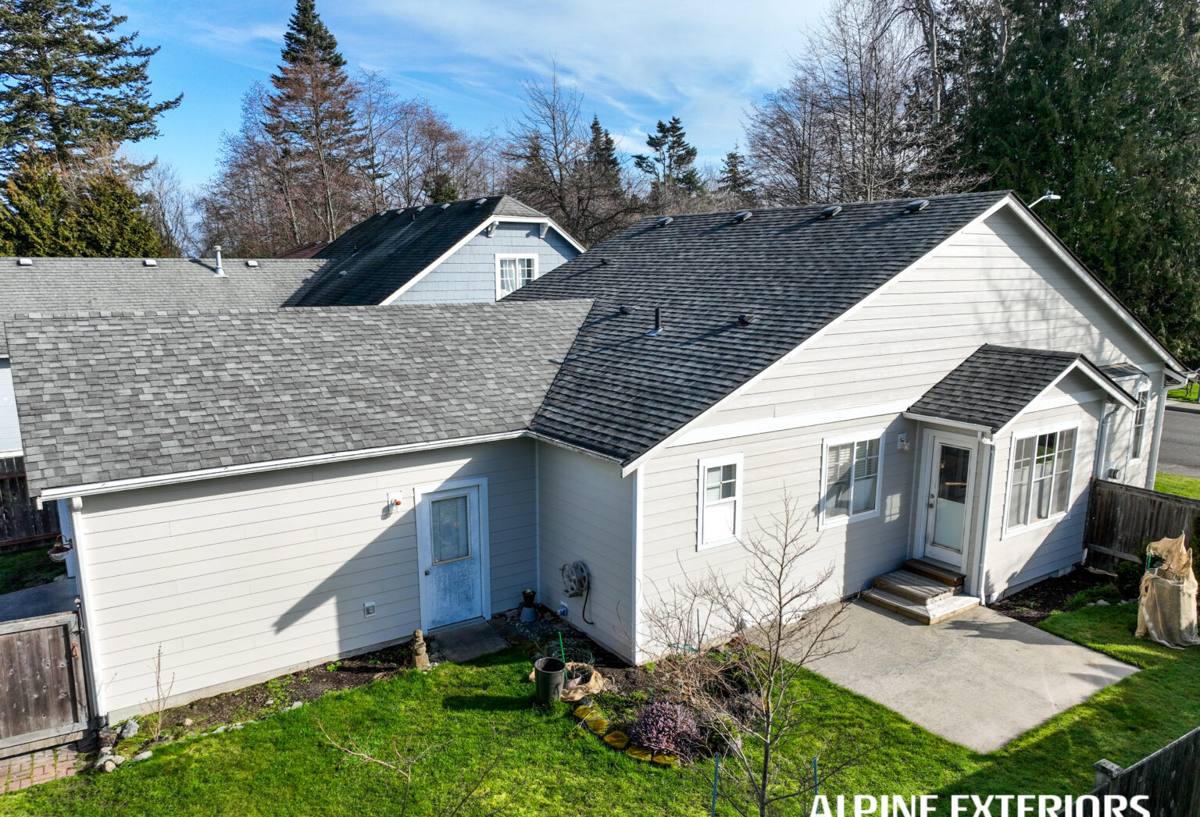
What Salt Air, Rain, and Moss Actually Do to Siding
Salt Air
Airborne salt is corrosive and it's persistent. It settles into fastener heads, seams, and any exposed metal trim, and it slowly degrades paint film and caulk adhesion. On wood-based products, salt exposure combined with moisture speeds up the cycle of swelling, cracking, and rot at the most vulnerable points — corners, butt joints, and anywhere water can sit.
Driving Rain
Whatcom Falls doesn't just get rain — it gets wind-driven rain that finds its way under poorly lapped siding, around window trim, and behind loose caulk joints. Once moisture gets behind a wall assembly, it doesn't dry out quickly in a climate where the air itself stays damp for weeks at a time. That's when you start seeing soft spots, staining, and eventually structural rot in sheathing.
Moss and Algae
Shade, moisture, and mild temperatures are exactly what moss and algae need to thrive, and much of Whatcom County offers all three for a good part of the year. Moss holds moisture directly against a surface, which accelerates whatever damage is already happening underneath. On some siding materials, moss and algae also physically root into the surface texture, making it harder to clean without damaging the finish.
Why We Only Install James Hardie Fiber Cement
We made a decision early on to install one siding system: James Hardie fiber cement. We don't install vinyl, LP SmartSide, Cemplank, Allura, primed spruce, or cedar. That's not a marketing angle — it's a standard we hold ourselves to because of what we've seen happen to other products in exactly this kind of climate.
Wood-based siding, including engineered wood products, is organic material. Even with modern treatments, it's vulnerable to moisture absorption at cut edges, fastener penetrations, and joints — the same spots that take the worst of the driving rain here. Once water gets in, wood-based products can swell, delaminate at the edges, or develop rot, and the repair usually means replacing whole sections rather than a quick fix.
Vinyl siding handles moisture differently — it doesn't rot — but it's a thin, flexible material that expands and contracts significantly with temperature swings, can warp or crack under impact, and its color is baked into the material itself, so it fades unevenly over time with no way to refinish it short of replacement. It also isn't fire-resistant, which matters more each year in Washington.
James Hardie fiber cement is made from cement, sand, and cellulose fibers. It doesn't rot, it's non-combustible, and it holds up to swelling and shrinking far better than wood or wood-composite products because it isn't organic material reacting to moisture the same way. Hardie's ColorPlus finish is baked on at the factory in a controlled environment, which gives a more consistent, durable finish than field-applied paint and comes with its own finish warranty. For a climate that throws salt air, hard rain, and moss at a house nearly year-round, it's the product we're willing to stand behind.
How James Hardie Siding Handles This Specific Climate
Hardie makes climate-engineered product lines (HZ5 and HZ10) specifically because the same siding doesn't perform identically in Arizona and in coastal Washington. The HZ5 line is engineered for wetter, cooler climates like ours, with formulations meant to resist moisture-related damage in exactly the conditions Whatcom Falls sees most: sustained dampness, freeze-thaw cycling in colder snaps, and constant humidity.
Beyond the material itself, correct installation is what actually keeps water out over the long run — and this is where a lot of siding jobs, on any brand, quietly fail. Proper flashing at windows, doors, and roof-to-wall intersections; correct nailing patterns and fastener spacing; proper clearance from grade, decks, and roof lines; and correctly lapped and caulked joints are what stop wind-driven rain from getting behind the wall in the first place. Hardie's own installation specifications exist for a reason, and skipping them is one of the most common ways any siding job — including Hardie — ends up with moisture problems down the road.
What Correct Installation Looks Like
- Proper starter strip and clearance at the foundation so siding isn't wicking up moisture from grade
- Weather-resistant barrier installed and lapped correctly behind the siding
- Flashing integrated at every window, door, and roof intersection — not just caulk covering a gap
- Correct fastener type, spacing, and depth per Hardie's published specs
- Properly sized gaps at butt joints and trim, caulked with a product rated for the exposure
- Adequate clearance from decks, patios, and roof lines to avoid standing water and splash-back
Our Process on a Whatcom Falls Home
Every job starts with an honest look at what's actually going on with your current siding, not just a quote written from the driveway. We check for soft spots, trapped moisture, failed caulk joints, and how the existing trim and flashing were handled, because that tells us what we're really dealing with underneath.
From there, the job generally follows the same sequence: removal of failing siding and trim, inspection and repair of any damaged sheathing underneath (this is common once we open up a wall that's had a hidden leak for a while), correct installation of the weather barrier and flashing details, then the Hardie panels or planks themselves, followed by trim and caulking. We don't cover over rot — if we find it, we tell you before we close the wall back up, not after.
Comparing Siding Options for Coastal Whatcom County Conditions
| Factor | Vinyl | Wood / Engineered Wood | James Hardie Fiber Cement |
|---|---|---|---|
| Moisture / rot resistance | Doesn't rot, but seams can trap water | Vulnerable at cuts, joints, and fastener points | Non-organic, doesn't rot |
| Fire resistance | Combustible | Combustible | Non-combustible |
| Finish durability | Color molded in, fades over time, can't refinish | Field-applied paint, needs recoating | Factory-baked ColorPlus finish |
| Impact / warping resistance | Can crack or warp with temperature swings | Can swell or split with moisture cycling | Rigid, stable in wide temperature range |
| Typical warranty structure | Varies by manufacturer, often prorated | Varies, often shorter on finish | Long-term product warranty, transferable finish warranty |
Beyond Siding: Roofing, Windows, and Decks
Siding doesn't work in isolation. The same driving rain and moss pressure that affects your siding also hits your roof, window seals, and any exterior decking. We handle roofing, windows, and decks alongside siding because these systems have to work together to actually keep a house dry — a perfect siding job can still leak if the roof-to-wall flashing above it is neglected, or if window seals have failed and are feeding moisture into the wall cavity from the inside out.
When we're on-site for a siding project, we're also looking at how your roof edges, window flashing, and any attached deck ledger boards tie into the wall system, because that's usually where the real leaks originate — not the open field of the siding itself.
Maintenance That Actually Matters Here
Even the right siding benefits from a little regular attention in a climate like this. None of it is complicated, but skipping it lets moss and moisture problems get a head start.
- Rinse siding annually to knock down algae and moss buildup before it gets established, especially on shaded or north-facing walls
- Keep gutters clear so overflow isn't running down the face of the siding
- Trim back vegetation and tree limbs that keep siding shaded and damp longer than it needs to be
- Check caulk joints at trim and window edges every year or two and recaulk if it's cracked or pulling away
- Have a look at flashing above windows and doors after major storms if you notice any staining below them
Why a Local Crew Is Worth Something Here
Whatcom Falls isn't a generic climate zone on a spec sheet — it's a specific mix of exposure, moisture, and tree cover that varies block to block. A crew that works this area regularly knows which lots hold moss longer, which exposures take the worst of the wind-driven rain, and where flashing details tend to get shortcut on older homes. That local knowledge shows up in the details: where we pay extra attention to flashing, how we sequence a job around the weather, and what we flag during an inspection that an out-of-area crew might miss entirely.
If your siding is showing its age — soft spots, peeling paint, persistent moss, or caulk that's cracked and pulling away — it's worth having a straightforward, no-pressure conversation about what's actually going on and what your options are. We're happy to take a look, walk you through what we find, and put together a free estimate with no obligation.