 Glenhaven Siding
 Exterior Contractor for Sehome Homeowners
Sehome homes sit in one of the more demanding stretches of climate exposure in Whatcom County. Between the salt-laden air moving inland, the driving rain that comes sideways off winter storms, and a moss season that seems to stretch longer every year, exterior surfaces here take a beating that homeowners further inland simply don't deal with. Glenhaven Siding Company works this area regularly, and we've built our approach around what actually holds up under these specific conditions — not a generic install that happens to be located nearby.
We install James Hardie fiber cement siding exclusively, along with roofing, windows, and decking, and every job we quote in Sehome accounts for the moisture and organic growth pressures that define this part of Whatcom County.
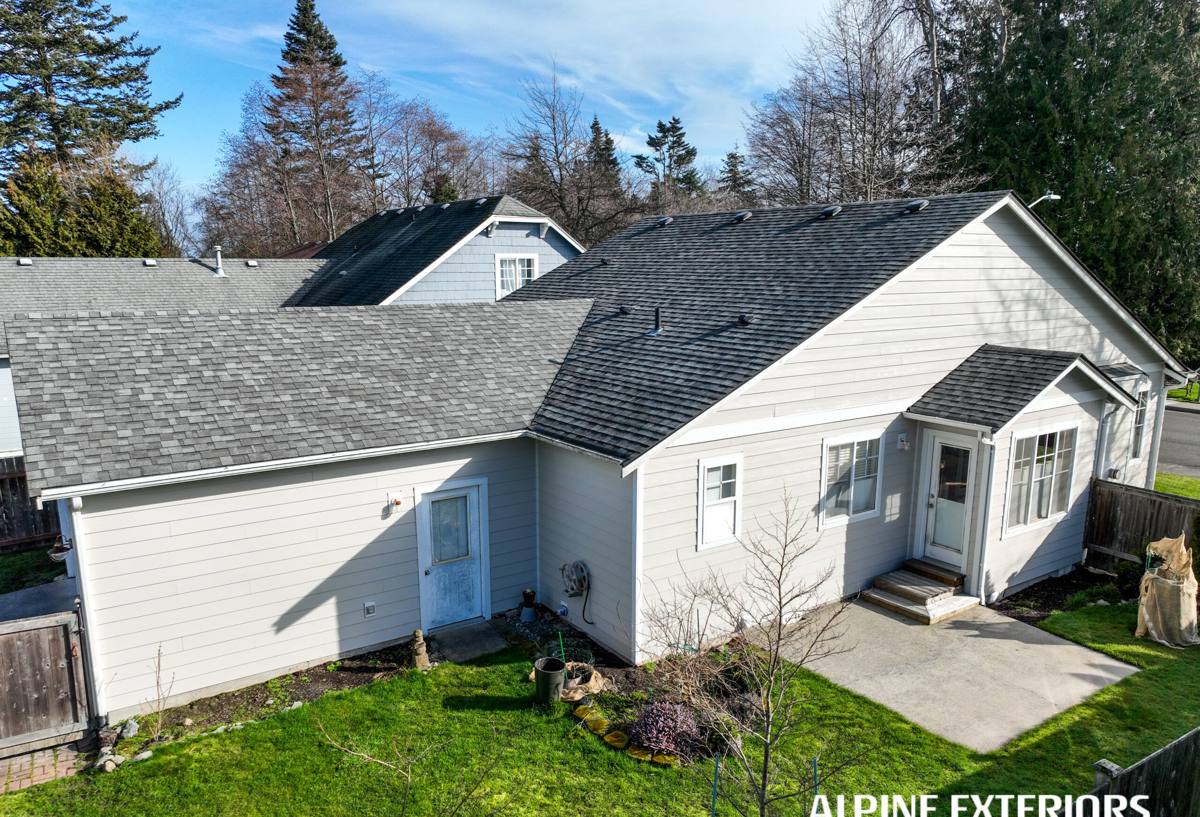
What Sehome's Climate Does to a Home's Exterior
Salt Air and Coastal Moisture
Proximity to the water means a steady, low-level exposure to salt-carrying air. Over years, that salt content accelerates corrosion on fasteners, trim hardware, and any exposed metal, and it speeds up the breakdown of paint films and lower-grade siding materials. It's not dramatic damage in any single season — it's cumulative, and it shows up as premature fading, chalking, and edge deterioration on products that weren't engineered with coastal exposure in mind.
Driving Rain
Whatcom County doesn't just get a lot of rain — it gets a lot of wind-driven rain, which behaves very differently against a wall assembly than a straight vertical downpour. Wind-driven rain gets forced up and under laps, into seams, and behind trim that isn't properly flashed. A siding system's water-shedding detail — how the laps, joints, and penetrations are built and sealed — matters more here than in a drier, calmer climate.
Moss, Algae, and a Long Growing Season
The cool, wet stretch that Whatcom County sees for much of the year is close to ideal growing conditions for moss and algae. On siding, that growth doesn't just look bad — it holds moisture against the surface, which is exactly what accelerates rot in wood-based products and paint failure on lower-quality finishes. Roofs, especially north-facing slopes and shaded areas near trees, see the same pressure.
What Homeowners Can Watch For
- Green or black streaking on siding, especially on north-facing or shaded walls
- Soft or spongy spots near the bottom of siding boards, around window trim, or at deck ledger connections
- Rust staining below nail heads or metal trim pieces
- Paint that's chalking, peeling, or fading unevenly across a wall
- Moss buildup on roofing, especially valleys and north slopes
- Gaps opening up at siding joints or caulk lines pulling away from the surface
Why We Install Only James Hardie Fiber Cement
We get asked fairly often why we don't offer vinyl, LP SmartSide, or the other fiber cement brands like Cemplank or Allura. The honest answer is that in a climate like Sehome's, the material choice isn't a minor detail — it's the difference between a wall system that shrugs off decades of coastal rain and moss and one that needs constant intervention.
Vinyl siding is inexpensive and easy to install, and for a lot of drier climates it does a reasonable job. But it's a thin plastic product that expands and contracts significantly with temperature swings, and its seams and butt joints are a permanent maintenance point in a wind-driven-rain environment. It also doesn't hold up well to impact in colder temperatures, and its appearance — however improved in recent years — still reads as vinyl up close.
LP SmartSide is an engineered wood product, and engineered wood, no matter how well treated, is still wood at its core. Wood-based siding depends on an intact factory coating and careful field sealing of every cut edge to keep water out. In a climate with this much sustained moisture and moss pressure, any breach in that coating — a missed cut-edge seal, a fastener that backs out, a spot where caulk fails — gives water a path into the substrate. Once that happens, the deterioration can move fast, and by the time it's visible from the outside, there's often more damage behind the surface than homeowners expect.
Other fiber cement brands, including Cemplank and Allura, are legitimate fiber cement products in the same general category as James Hardie. Our decision to standardize on Hardie isn't a claim that those products are defective — it's that Hardie's HardiePlank and HardieShingle lines were engineered specifically with regional climate zones in mind, their ColorPlus factory finish carries a stronger, better-documented track record in wet coastal climates, and their warranty structure and manufacturer support give us more confidence backing the install for the long term. Standardizing on one system also means our crews install it the same correct way every time, rather than switching techniques between product lines.
James Hardie: What It Actually Offers
- Fiber cement composition that is non-combustible and doesn't rot, swell, or attract insects the way wood-based products can
- ColorPlus factory-applied finish, engineered to resist fading and hold color longer than field-applied paint
- HZ climate-engineered product lines suited to the Pacific Northwest's wet weather pattern
- A strong, transferable manufacturer warranty that adds resale value when a home changes hands
- A dense, stable material that holds paint and caulk better over time than thinner composite or vinyl products
Siding Installation Done Right for This Climate
Material choice is half the equation — installation is the other half, and in a high-moisture area like Sehome, installation quality is often what separates a siding job that lasts 30-plus years from one that starts failing at year eight. Correct James Hardie installation includes proper flashing at every window, door, and penetration; correct fastener spacing and type; the right gap and sealant detail at butt joints; and a drainage plane behind the siding that lets any incidental moisture escape rather than get trapped against the wall sheathing.
We also pay close attention to bottom clearance — how far the siding sits above grade, decks, patios, and roof lines — because that clearance is one of the most common places we see problems on homes that had siding installed without local climate conditions in mind.
Roofing, Windows, and Decks in Sehome
Roofing
A roof in this area needs to manage sustained rain volume and resist moss buildup over years of shaded, damp conditions. We look at ventilation, underlayment quality, and valley and flashing detail as closely as the roofing material itself, since those details determine how well a roof actually performs once the wet season sets in.
Windows
Window replacement is also a moisture-management job as much as an energy-efficiency one. Proper flashing integration between the window and the siding system is critical — a window that's beautifully installed but poorly flashed can become the exact point of entry that leads to hidden water damage in the wall cavity.
Decks
Decks in Sehome face constant wet-dry cycling and moss growth on horizontal surfaces, plus ledger board connections that need careful flashing where the deck meets the house. We build and repair decks with that moisture cycle in mind, from framing and fastener choice down to the ledger flashing detail.
Comparing Siding Options for Sehome Homes
| Factor | Vinyl | LP SmartSide (Wood-Based) | James Hardie Fiber Cement |
|---|---|---|---|
| Moisture resistance | Doesn't absorb water, but seams leak under driving rain | Depends entirely on intact coating and sealed edges | Dense fiber cement, engineered for wet climates |
| Coastal/salt air durability | Fades and becomes brittle over time | Coating breakdown accelerates near salt air | ColorPlus finish holds up well long-term |
| Moss/algae resistance | Surface growth, easy to clean but recurs | Growth can trap moisture against wood substrate | Surface growth cleans off without substrate risk |
| Fire resistance | Can melt or deform | Combustible wood-based core | Non-combustible |
| Typical lifespan when properly installed | 20-30 years | 20-30 years with diligent maintenance | 30-50+ years |
| Warranty | Prorated, varies by manufacturer | Prorated, varies by manufacturer | Strong, transferable manufacturer warranty |
Why a Local Crew Matters
Exterior work in Whatcom County isn't the same job as exterior work in a dry inland climate, and a crew that mostly works other regions can miss the details that matter here — flashing sequencing for driving rain, bottom clearance for a long wet season, or where moss is likely to accumulate and cause problems down the road. A crew that works Sehome and the surrounding Glenhaven area regularly has already seen what happens when those details get skipped, and builds around avoiding it the first time.
Local presence also matters for follow-up. If a warranty question comes up or something needs a look years down the road, you're working with a company that's still local and still reachable, not chasing down a contractor who moved on to other regions.
What to Expect From a Project
- An on-site assessment of your home's current exterior condition, including any moisture, moss, or rot issues already present
- A clear, itemized estimate that spells out material, labor, and any repair work needed before new siding, roofing, or windows go on
- A realistic timeline that accounts for Whatcom County's weather windows
- Proper flashing, drainage plane, and fastener detail on every install — not just material swapped in
- A walkthrough at completion so you understand what was done and what maintenance, if any, to expect
If your Sehome home is showing signs of moss buildup, fading, soft spots, or aging siding, roofing, windows, or decking, we're happy to take a look and put together a straightforward estimate. There's no pressure and no obligation — just an honest read on what your home actually needs.