 Glenhaven Siding
 Siding in Cordata: A Local Job, Not a Drive-By
Cordata sits in the kind of Whatcom County microclimate that punishes cheap exterior work. Homes here deal with a marine layer that keeps humidity high for months at a time, wind-driven rain that finds every gap in a poorly flashed wall, and a moss and algae season that can stretch from October well into spring. None of that is exotic to us. It's the same set of conditions our crew deals with on every job in this part of Washington, and it shapes how we spec, flash, and finish every siding project we take on in the area.
A lot of siding problems in Cordata aren't really "siding problems" at all — they're moisture management problems that show up on the siding first. Paint bubbling, soft trim boards, streaking below window sills, and dark growth on north-facing walls are all downstream symptoms of water getting where it shouldn't and staying there too long. Fixing that requires more than swapping old boards for new ones; it requires understanding how water moves around a house in this specific climate.
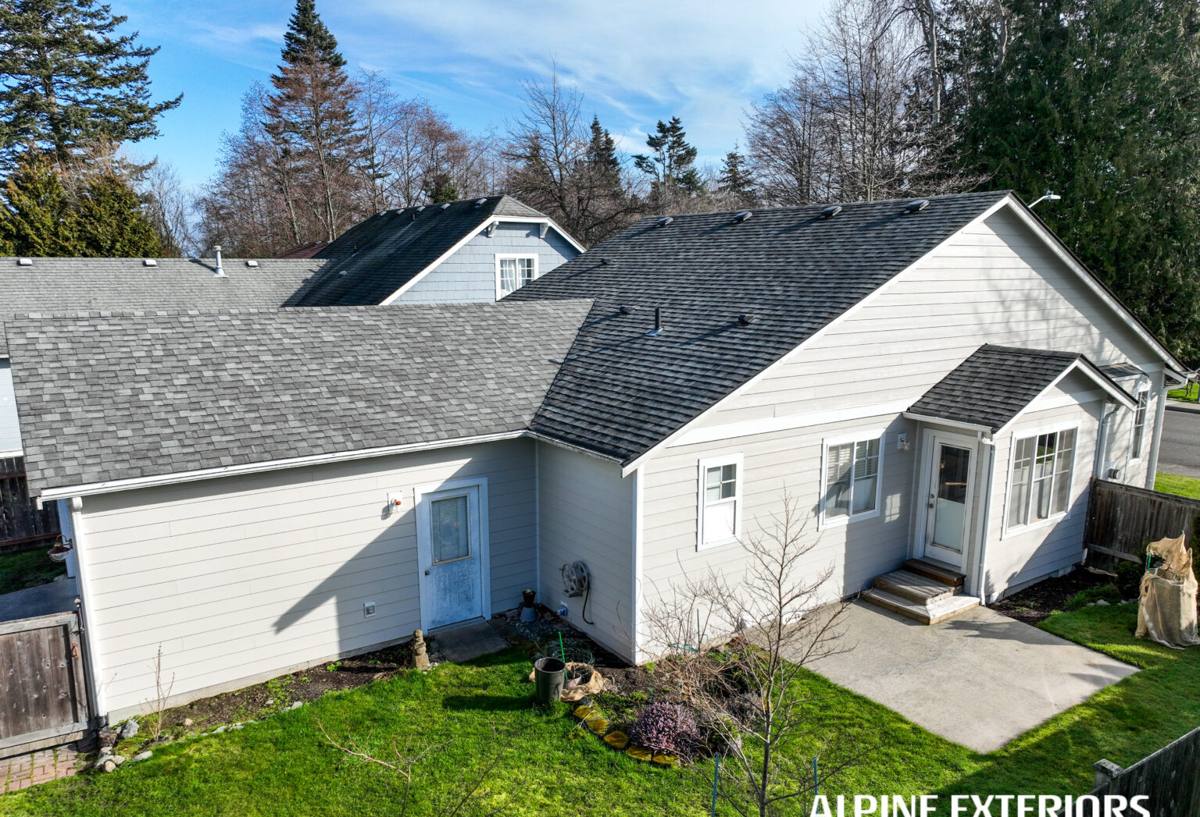
What Cordata Homes Are Up Against
Salt Air and Coastal Moisture
Proximity to Puget Sound and Bellingham Bay means salt-laden air reaches inland further than most homeowners assume. Salt air accelerates corrosion on fasteners, staples, and any metal flashing that isn't properly rated for coastal exposure. It also speeds up the breakdown of lower-quality paint films, which is one of the reasons factory-applied finishes hold up so much better here than field-applied paint.
Driving Rain
Whatcom County doesn't just get a lot of rain — it gets a lot of wind-driven rain, which behaves very differently than a straight vertical downpour. Driving rain pushes water sideways and upward into laps, seams, and butt joints that would stay dry in a calmer climate. Siding systems and installation details that aren't built for that kind of exposure tend to fail at the seams long before the field of the siding shows any wear.
The Long Moss Season
Shaded lots, tree cover, and persistent damp conditions give moss, algae, and mildew a long runway on north- and east-facing walls. Some siding materials resist this better than others, and how a wall is detailed — starter strips, ground clearance, roof-to-wall flashing — matters as much as the siding product itself.
Why We Only Install James Hardie
We made a deliberate decision to install one siding system: James Hardie fiber cement. We don't carry LP SmartSide, vinyl, Cemplank, Allura, primed spruce, or cedar, and that's worth explaining rather than just stating.
Vinyl
Vinyl is inexpensive and low-maintenance in mild climates, but it's a petroleum-based product that expands and contracts significantly with temperature swings, and it can warp or crack under impact in cold weather. In a climate with persistent moisture, vinyl's biggest weakness is what happens behind it — trapped moisture against sheathing is a slower, quieter problem than a bad paint job, and it's harder to spot until real damage has been done.
LP SmartSide, Cemplank, and Allura
These are legitimate engineered wood or fiber cement competitors, and we don't claim otherwise. Our reasoning is narrower: we standardized our crews, our flashing details, our warranty conversations, and our color program around one manufacturer so we can guarantee consistent results. Mixing product lines across jobs increases the chance of installation mistakes, and in this climate, installation mistakes are what cause callbacks.
Primed Spruce and Cedar
Real wood siding has genuine appeal, and cedar in particular has a long track record in the Pacific Northwest. But both require an ongoing maintenance commitment — recoating, caulking, and monitoring for rot — that most homeowners underestimate when they buy the house, not when they install the siding. In a moss-heavy, high-moisture area like Cordata, that maintenance burden compounds fast.
Why Hardie
James Hardie fiber cement is non-combustible, dimensionally stable, and resistant to moisture-driven swelling in a way that wood-based and vinyl products aren't. The ColorPlus factory finish is baked on under controlled conditions, which gives it better UV and color-fade resistance than most field-applied paint, and it comes with its own finish warranty separate from the substrate warranty. Hardie also engineers specific product lines — HZ5 for this climate zone — for exactly the freeze-thaw and moisture exposure Whatcom County sees.
| Material | Moisture Behavior | Maintenance | Fire Rating |
|---|---|---|---|
| James Hardie fiber cement | Dimensionally stable, resists moisture-driven warping | Low — factory finish, occasional wash | Non-combustible |
| Vinyl | Can trap moisture behind panels; warps under heat/cold | Low, but limited repair options | Combustible |
| Cedar / primed spruce | Absorbs moisture; prone to rot without upkeep | High — recoat/caulk on a cycle | Combustible |
| LP SmartSide / engineered wood | Treated for moisture resistance, edge sealing is critical | Moderate | Combustible |
The Local Crew Difference
A crew that works Cordata and the rest of Whatcom County regularly builds an intuition you can't get from a spec sheet: which walls take the worst of the wind-driven rain, where moss tends to establish first, which older homes in the area were built with flashing details that don't hold up anymore. That local knowledge shows up in small decisions — how far starter strip sits off grade, how flashing is lapped at window heads, where kick-out flashing gets added at roof-to-wall intersections — that make the difference between siding that lasts and siding that fails early in exactly the spots you'd expect for this climate.
It also means faster response if something needs a look after the job is done. A crew based nearby isn't juggling a multi-county route to get back out to a punch-list item or a warranty question.
How a Cordata Siding Project Typically Runs
- On-site assessment — checking existing siding, sheathing condition, and any signs of moisture intrusion before quoting anything.
- Tear-off and inspection — old siding comes off and the sheathing and framing underneath get a real look, not a guess.
- Weather barrier and flashing — house wrap, window and door flashing, and kick-out flashing at roof lines get addressed to current best practice, not just replaced in kind.
- Hardie installation — panels, lap siding, or shingle-style products installed to manufacturer spec, including proper fastener spacing and clearance from grade and hard surfaces.
- Trim, caulking, and final finish — factory-finished ColorPlus product means minimal field painting, mostly caulk and touch-up at cut edges.
- Walkthrough — going over the finished work and warranty paperwork with the homeowner.
Beyond Siding: The Full Exterior Envelope
Siding doesn't work in isolation. Roofing, windows, and decks all interact with the same moisture and weather exposure, which is why we handle all four rather than treating siding as a standalone product.
- Roofing — the roof-to-wall transition is one of the most common leak points on older Whatcom County homes, and it directly affects how siding performs below it.
- Windows — window flashing integration is one of the most failure-prone details in any siding job; doing siding and window work together closes that gap.
- Decks — ledger board attachment and deck-to-wall flashing are another spot where water intrusion often starts, especially on older construction.
Addressing these together, rather than as separate contractors working around each other, reduces the number of seams and handoffs where something can be missed.
Cost Factors for a Cordata Siding Project
| Factor | Why It Matters |
|---|---|
| Home size and wall complexity | More corners, gables, and dormers mean more cutting, flashing detail, and labor time. |
| Existing sheathing condition | Rot or moisture damage found during tear-off adds repair scope before new siding goes on. |
| Product line and profile | Lap siding, panel systems, and shingle-style Hardie products carry different material and labor costs. |
| Color program | Factory ColorPlus finishes vs. primed-for-paint product affect both cost and long-term maintenance. |
| Access and site conditions | Tight lots, mature landscaping, or multi-story walls affect staging and labor time. |
What to Ask Before Hiring Anyone for This Kind of Work
- Are you a certified or factory-trained installer for the siding product you're proposing?
- Will you inspect and address sheathing and flashing issues, not just install new siding over existing conditions?
- What's covered under the material warranty versus the workmanship warranty, and who backs each one?
- Do you carry current liability insurance and workers' comp coverage?
- Can you walk me through how you'll detail moisture-prone spots like roof-to-wall intersections and window heads?
If you're weighing options for a home in Cordata, we're glad to take a look and give you a straightforward, no-pressure estimate on what your home actually needs — no upsell, just an honest read on your siding, roofing, windows, or decks.