 Glenhaven Siding
 Siding in Ferndale: Built for What This Corner of Whatcom County Actually Deals With
Ferndale sits close enough to the water and the marine air pattern that comes with it that siding decisions here can't be made the same way they'd be made for a house forty miles inland. Between the salt-tinged air rolling in off the Strait, the long stretches of driving rain that define a Whatcom County winter, and a moss season that can run the better part of the year on a shaded north wall, the exterior of a Ferndale home is under more or less constant low-grade pressure. Most of that pressure is invisible day to day. It shows up years later as swollen seams, peeling paint, soft trim, or moss creeping up from the bottom courses of a wall that never quite dries out.
Glenhaven Siding Company works this area regularly, and we've built our whole approach around the fact that a house here needs an exterior system that can shed water fast, resist the salt and moisture in the air, and not give moss a foothold. That's not a marketing angle — it's just what holds up in this specific climate.
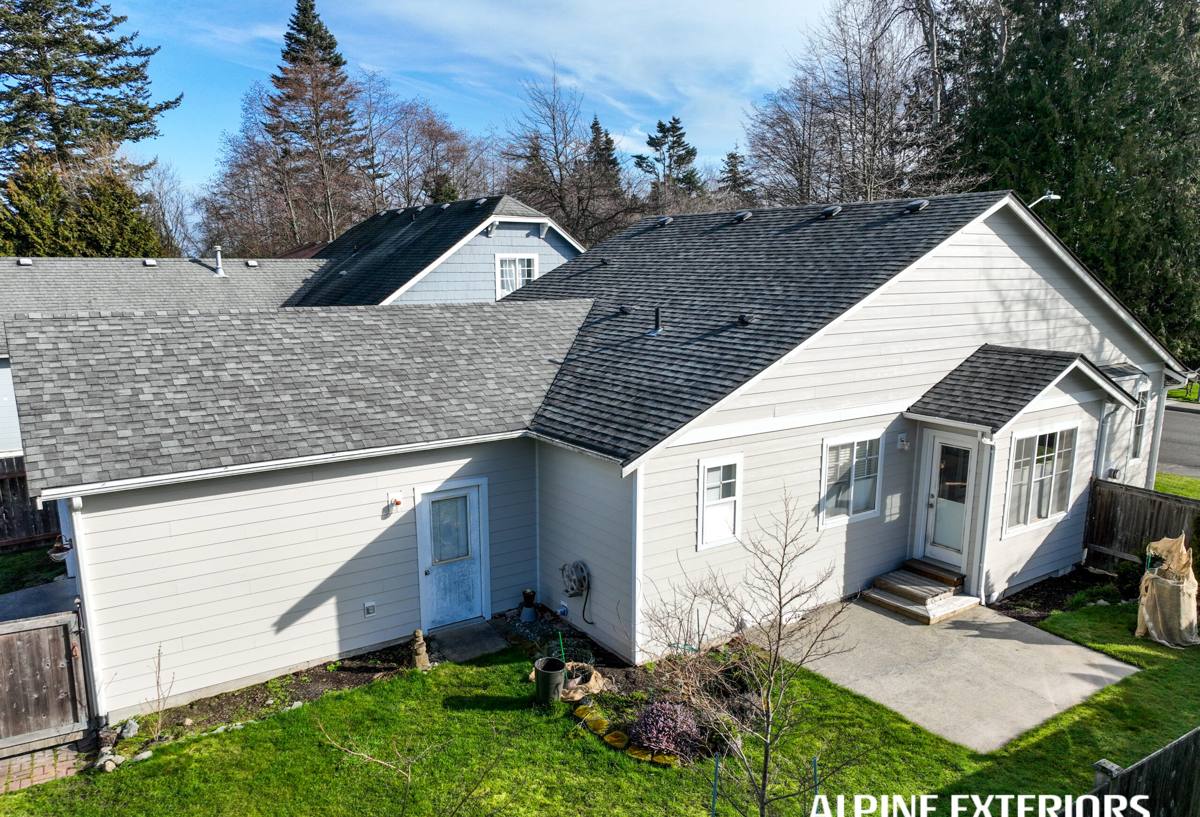
What Ferndale's Climate Does to a House Over Time
Salt Air
Ferndale's proximity to the water means airborne salt is a real factor, not a coastal-town cliché. Salt-laden moisture accelerates corrosion on exposed metal fasteners, flashing, and hardware, and it speeds up the breakdown of lower-quality paint films and wood surfaces. Siding materials and finishes that aren't engineered to handle that exposure tend to chalk, fade, or fail at the fastener points years ahead of schedule.
Driving Rain
Wind-driven rain off the water doesn't just wet a wall — it pushes water sideways and upward into laps, joints, and butt seams that a calmer rain would never reach. Siding systems and installation details that work fine in a dry climate can let water in here, and once water gets behind the cladding, it's the sheathing and framing that pay the price, usually invisibly, for years.
Moss Season
Shaded, north-facing walls and anything near overhanging trees can stay damp for extended stretches, especially through fall and winter. Moss and algae take hold on porous or textured surfaces that retain moisture, and once established, moss holds water against the siding face, which compounds every other problem on this list. A material's surface texture and moisture behavior matter as much as its raw durability rating.
Our Siding Standard: James Hardie Fiber Cement, Exclusively
Glenhaven Siding Company installs James Hardie fiber cement siding and nothing else. We don't install vinyl, LP SmartSide, Cemplank, Allura, primed spruce, or cedar. That's a deliberate standard, not a limitation on what we're capable of installing — we've simply concluded that for the climate we work in, Hardie is the product that holds up with the least amount of long-term homeowner headache, and we'd rather build our business around one system we trust completely than offer several we have reservations about.
Fiber cement is non-combustible, which matters given wildfire-season smoke and ember exposure that's become a more regular part of Pacific Northwest summers. It's dimensionally stable, meaning it doesn't expand and contract with moisture the way wood-based products can, which is a real advantage in a climate that cycles through wet and dry as often as this one does. And James Hardie's ColorPlus factory-applied finish is baked on and warrantied against fading and peeling, which takes the weakest link — field-applied paint — out of the equation entirely.
James Hardie also engineers regional product lines (HZ5 for the Pacific Northwest's cold, wet conditions) specifically for climates like ours, rather than shipping one generic formulation everywhere. That regional engineering is part of why we standardized on the brand instead of treating fiber cement as a commodity and buying whichever version is cheapest that week.
Why We Don't Install the Alternatives
| Product | Where it's a reasonable product | Why it's not what we put on Ferndale homes |
|---|---|---|
| Vinyl siding | Budget-driven projects, dry inland climates | Panels can warp or crack under temperature swings and don't stand up as well to sustained wind-driven rain intrusion at the laps |
| LP SmartSide | Engineered wood strand product, treated for moisture resistance | It's still wood-based; edge and cut-end sealing has to be nearly perfect to keep water out long-term, and any lapse shows up as swelling |
| Cemplank / Allura | Other fiber cement manufacturers | We standardized on one manufacturer's engineering, factory finish, and warranty structure rather than mixing suppliers |
| Primed spruce / cedar | Traditional look, historic-match projects | Solid wood needs consistent repainting and caulk maintenance to survive our rain and moss exposure — the upkeep burden is real |
Roofing, Windows, and Decks in the Same Climate
Siding doesn't work in isolation, and neither do we. We also handle roofing, window replacement, and deck construction, because a home's exterior envelope only performs as well as its weakest component. A new fiber cement facade paired with a roof that's shedding water into the wall assembly, or windows with failing seals letting moisture track into the framing, undermines the whole point of upgrading the siding in the first place.
- Roofing: proper roof-to-wall flashing and adequate overhangs matter directly to how much wind-driven rain your siding has to deal with
- Windows: window flashing integration is one of the most common failure points we find when we open up a wall — it's a detail that has to be right, not just caulked over
- Decks: ledger board attachment and flashing where a deck meets the house is a frequent source of hidden rot if it wasn't built to shed water correctly the first time
Having one crew responsible for how these systems tie together, instead of coordinating separate contractors who never talk to each other, tends to produce a tighter, longer-lasting result.
What Correct Installation Looks Like in This Climate
Fiber cement siding is only as good as the installation behind it. In a climate with this much sustained moisture exposure, a few details matter more here than they might in a drier region:
- Proper rainscreen or drainage gap behind the siding so any moisture that does get past the cladding can drain and dry instead of sitting against the sheathing
- Correct flashing at every window, door, and roofline penetration — the places water actually finds its way in
- Manufacturer-specified fastener patterns and clearances, including gaps at the bottom of the wall so siding isn't wicking moisture up from grade or a concrete foundation
- Factory-cut and factory-primed edges used wherever possible, with any field cuts properly sealed, since a raw cut edge is the one place ColorPlus protection doesn't already exist
- Adequate clearance from roof lines, decks, and grade so the siding isn't sitting in a permanently damp microclimate that invites moss
These aren't exotic techniques — they're just details that get skipped when a crew is moving fast or isn't used to installing to manufacturer spec in a demanding climate.
Signs a Ferndale Home's Siding Needs Attention
A lot of siding failure in this area is gradual enough that homeowners don't notice until it's advanced. Some things worth checking, especially on north- and west-facing walls:
| What you see | What it usually means |
|---|---|
| Moss or dark streaking building up on lower courses | Moisture retention at the surface — worth checking whether it's cosmetic or has spread into the material |
| Paint peeling or bubbling in patches | Moisture is likely getting behind the finish, not just weathering it from outside |
| Soft spots when pressed, especially near the bottom of walls | Possible moisture intrusion into the substrate — worth a closer inspection |
| Visible gaps or separation at seams and corners | Failed caulking or movement in the material, both entry points for water |
| Rust streaking from fastener heads | Corrosion consistent with salt-air exposure on lower-grade fasteners |
Why a Local Crew Matters Here
A contractor who doesn't work this specific stretch of Whatcom County regularly can miss the details that actually matter — how far the salt air reaches inland on a given lot, which wall orientations hold moss the longest, or how much overhang a roofline needs to keep driving rain off a wall. We're on jobs in and around Ferndale often enough to know what a house here is actually up against, not just what a spec sheet says in general terms. That local familiarity shows up in the small decisions — flashing details, drainage planning, fastener choice — that determine whether a siding job holds up for twenty-plus years or starts showing problems in five.
What to Expect From a Project
Every home is different, but a typical siding project follows a consistent sequence: an on-site evaluation of the existing exterior and any moisture damage, a discussion of Hardie product lines and colors that fit the home, removal of the old siding with an inspection of the sheathing underneath, correction of any rot or flashing issues found, installation of the new fiber cement system to manufacturer spec, and a final walkthrough. If roofing, windows, or a deck are part of the scope, we sequence that work so flashing and drainage details tie together correctly rather than being handled as disconnected trades.
If you're weighing a siding project in Ferndale — whether it's a full replacement, storm or moisture damage repair, or you're just trying to understand what condition your current siding is really in — we're happy to come take a look. Reach out for a free, no-pressure estimate using the form below.