 Glenhaven Siding
 Board & Batten Siding in Blaine: Built for the Coast, Not Just Styled for It
Board and batten is one of the most requested siding profiles we install in the Blaine area, and for good reason. The vertical lines read as clean, modern farmhouse from the street, they work well on everything from a modest ranch to a larger custom build, and they give a home real depth and shadow line that flat lap siding can't match. But Blaine sits close enough to the water that the same wide, flat battens and recessed panel gaps that make this profile attractive can also become the exact spots where moisture, salt, and moss get a foothold if the material and the installation aren't matched to the climate.
This page is about board and batten specifically for homes in and around Blaine, not a generic rundown of the style. If you're comparing bids for this exact job in this exact area, the details below are the ones that actually separate a siding job that looks good for two years from one that looks good for twenty.
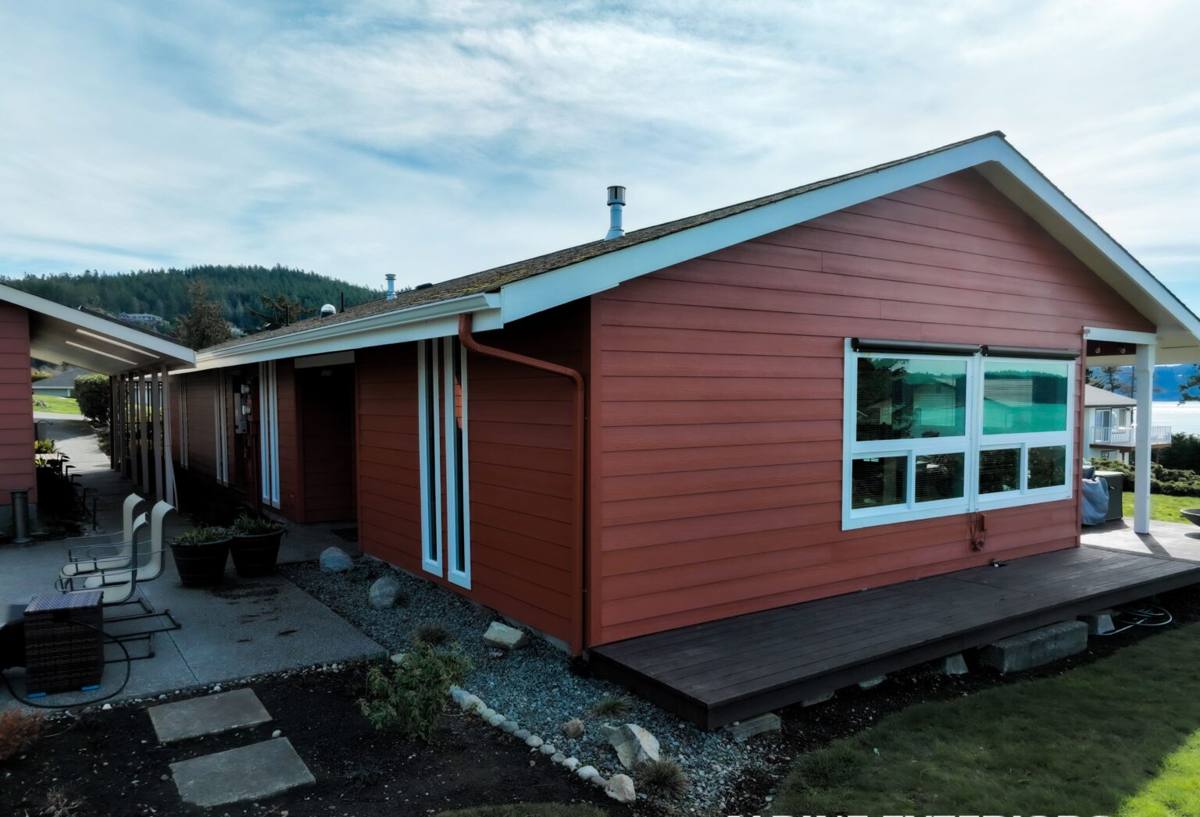
What Blaine's Climate Actually Does to Board & Batten Siding
Whatcom County's northwest corner gets a specific combination of conditions that board and batten siding has to stand up to over decades, not just survive one wet season.
Salt Air
Being close to Puget Sound and the Strait of Georgia means airborne salt is a real, ongoing factor here, even a mile or two inland. Salt-laden moisture accelerates corrosion on fasteners and trim hardware, and it can degrade paint films and cheaper composite substrates faster than manufacturers' general climate ratings assume. This is one of the reasons fastener choice and finish quality matter more in Blaine than they would in a drier, inland part of the state.
Driving Rain
Storms coming off the water don't just fall straight down here, they come in sideways. Board and batten's vertical battens create a series of narrow channels and butt joints running up the wall. If those joints, the batten-to-board overlaps, and the trim transitions aren't flashed and caulked correctly, driving rain will find the seams and push water behind the siding rather than shedding off the face of it.
A Long Moss Season
Northwest Washington's damp, shaded conditions extend the growing season for moss and algae well beyond what most siding warranties are written around. Board and batten's recessed batten shadows and horizontal ledges at trim boards are natural spots for organic growth to establish if the siding surface doesn't resist moisture absorption. Once moss takes hold on a porous or under-primed surface, it holds moisture against the wall long after the rain has stopped.
Why We Only Install James Hardie for This Application
Board and batten in particular is a profile where the underlying material matters more than the look. The batten strips and gaps concentrate water exposure in specific places, and some common siding materials handle that concentrated exposure poorly over time.
We don't install vinyl board and batten, LP SmartSide, primed spruce, cedar, Cemplank, or Allura. Each has legitimate uses elsewhere, but for Blaine's combination of salt air and sustained moisture, we've standardized on James Hardie fiber cement for every board and batten job we take on. Hardie's HZ5 product line is engineered specifically for the wetter, harsher climate zones the Pacific Northwest falls into, its ColorPlus finish is baked on at the factory rather than field-applied, and fiber cement doesn't absorb water the way wood-based or wood-composite substrates can. It's non-combustible, holds paint and color far longer than site-primed wood, and comes with a strong transferable warranty when installed to Hardie's published specifications.
That last part, installed to spec, is the part that actually determines how the siding performs. The material is only half the equation.
What a Correct Board & Batten Installation Involves
Board and batten looks simple from the ground, but it has more failure points than standard horizontal lap siding because of the vertical seams and the double layer of material at every batten. A correct install addresses each of these:
- Weather-resistive barrier installed and lapped correctly behind the entire wall assembly, with all penetrations sealed before any siding goes up
- Proper rainscreen or furring strategy so water that does get behind the battens has a path to drain and dry rather than sitting against the sheathing
- Hardie panel and batten strips fastened per manufacturer spacing and edge-distance requirements, using corrosion-resistant fasteners rated for coastal exposure
- Correct gapping at every board-to-board and batten-to-board joint, sized to the manufacturer's expansion tolerances rather than eyeballed
- Flashing integrated at every window, door, and roofline transition before the siding is set, not caulked in as an afterthought
- Factory-cut and factory-primed edges used wherever possible, with any field cuts back-primed before installation
- Final caulking done with a product compatible with ColorPlus finish and rated for the joint movement board and batten sees
Skip any one of these steps and the profile still looks correct on installation day. The problems, trapped moisture, streaking, fastener bleed, moss establishing in the batten shadow lines, show up years later, usually after the crew that installed it is long gone.
Our Process for Blaine Board & Batten Projects
1. On-Site Assessment
We look at the specific exposures on your home: which walls take the most weather, how the existing water management is performing, and what's driving the replacement (aging siding, moisture damage, or a style change to board and batten from something else).
2. Product and Layout Plan
We spec the Hardie panel and batten combination, trim profile, and ColorPlus color, and lay out batten spacing to work with your home's window and door openings rather than forcing an even grid that fights the architecture.
3. Tear-Off and Water Management Check
Existing siding comes off, and we inspect the sheathing and barrier underneath before anything new goes up. Any moisture damage or barrier issues get addressed at this stage, not covered over.
4. Installation to Manufacturer Spec
Barrier, flashing, fastening, and gapping are done to James Hardie's published fastening and clearance schedules, not general contractor habit. This is the step that determines whether the warranty is actually valid if you ever need it.
5. Final Walkthrough
We walk the finished job with you, check caulking and trim details up close, and go over care and maintenance expectations specific to a coastal, moss-prone property.
Board & Batten Material Comparison for This Climate
| Material | Behavior in Salt Air / Driving Rain | Moss & Moisture Resistance | Typical Warranty Structure |
|---|---|---|---|
| James Hardie fiber cement (HZ5) | Engineered for harsh, wet climate zones; resists warping and corrosion-driven fastener failure | Non-porous surface resists moisture absorption; factory finish holds up to sustained damp conditions | Strong transferable limited warranty when installed to spec |
| Vinyl board and batten | Can distort or loosen in wind-driven rain; seams rely on lap-fit rather than sealed joints | Moss can establish in overlaps and J-channel; limited breathability | Generally prorated, shorter effective coverage |
| Primed spruce / cedar | Absorbs moisture at cut ends and joints; salt air accelerates finish breakdown | Organic material is a food source for moss and mildew if finish fails | Typically material-only, shorter duration |
| LP SmartSide / engineered wood | Requires diligent edge sealing; vulnerable at unsealed cuts and joints | Can swell or delaminate if moisture reaches the substrate | Conditional on maintenance schedule being followed |
Why a Crew That Already Works Blaine Matters Here
Board and batten's failure points are location-specific. A crew that mostly works drier, inland regions may not default to rainscreen detailing or coastal-rated fasteners because they don't need to on most of their jobs. A crew that regularly works Blaine and the surrounding Whatcom County coastline builds those decisions into every quote by default, because we've seen what skipping them costs a homeowner five or ten years down the road.
We also know how Blaine's moss season actually behaves against different batten spacings and trim details, which shapes small layout decisions, like where to break panels and how tight to run batten shadow lines, that a first-time-in-the-area crew is more likely to get wrong.
Maintenance Expectations for This Profile in This Climate
Board and batten with James Hardie ColorPlus finish is low-maintenance, not no-maintenance. In a coastal, moss-prone area like Blaine, plan on:
- An annual visual check of caulked joints, especially at window and door trim, for cracking or separation
- Periodic gentle rinsing to clear settled salt residue and organic buildup before it establishes
- Prompt attention to any gutter or downspout issues that could be dumping extra water onto a wall section
- Avoiding pressure washing directly into batten seams, which can force water behind the siding rather than remove growth from the surface
None of this is unusual upkeep, it's the same short list we'd give any homeowner on this stretch of coastline, regardless of siding profile.
Get a Straight Answer for Your Home
If you're weighing board and batten for a home in Blaine, the right next step is having someone look at your specific walls, exposures, and existing water management before quoting anything. We'll give you a straightforward assessment, a real product recommendation, and a free, no-pressure estimate using the form below.