 Glenhaven Siding
 Siding Built for Blaine's Coastline
Blaine sits right on the water at the northern edge of Whatcom County, and that location shapes everything about how a house ages here. Homes close to the Salish Sea take on salt-laden air almost daily, driving rain rolls in off the water for months at a time, and the shoulder seasons stay damp and shaded long enough for moss and algae to get a real foothold on north- and west-facing walls. A siding product that works fine forty miles inland can struggle here. We've built our whole approach around what actually holds up in this specific stretch of coastline.
This page is about our work in Blaine specifically, not a generic service-area listing. If you own a home there, the climate factors below are the ones we think about before we ever talk about color or trim.
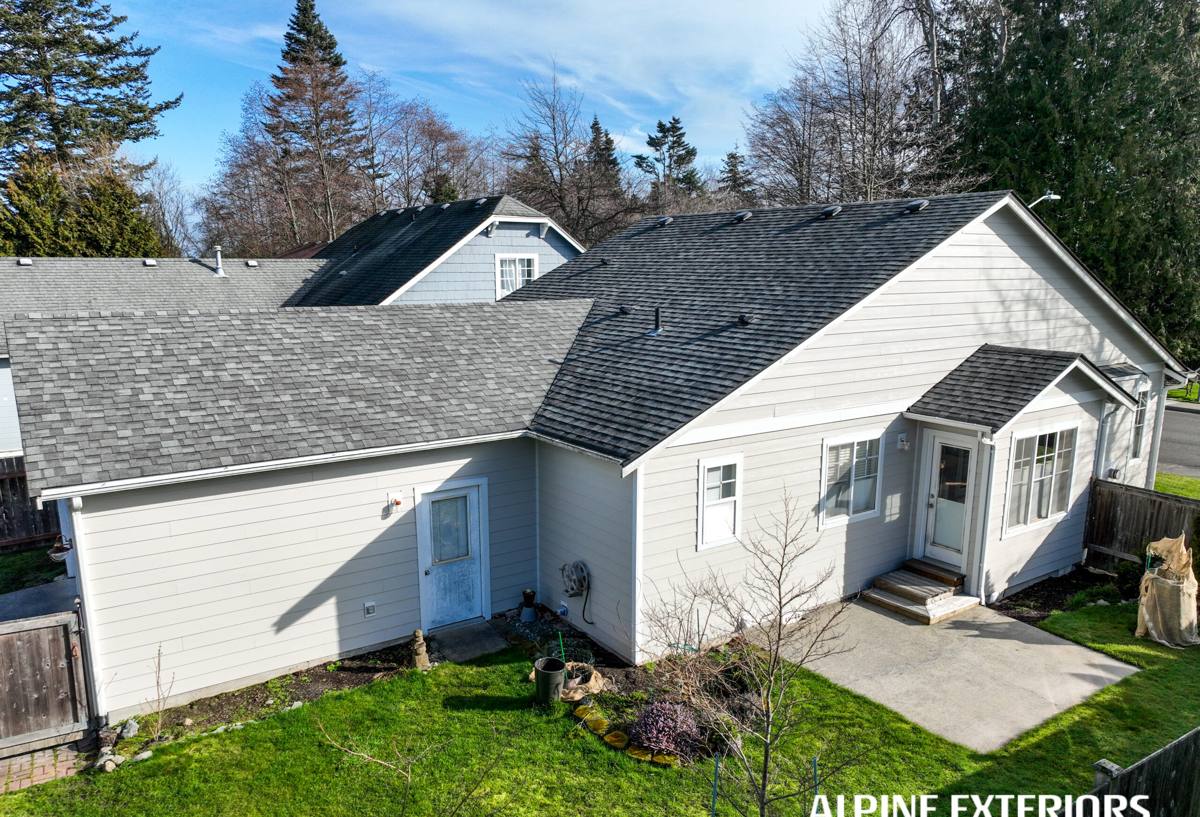
What Blaine's Climate Does to Exterior Siding
Salt Air and Corrosion
Airborne salt is corrosive to metal fasteners, flashing, and trim, and it accelerates the breakdown of some paint and coating systems over time. It doesn't take a house sitting directly on the beach to feel this — salt air travels well inland on prevailing coastal winds, and Blaine homes across a wide radius get some exposure. Products and fastening systems that aren't rated for a marine-influenced environment tend to show their age faster here than the same materials would in a drier, inland Washington town.
Driving Rain
Blaine gets the same wet Pacific Northwest weather pattern as the rest of Whatcom County, but its exposed, waterfront-adjacent position means wind-driven rain hits siding at an angle more often, not just straight down. That matters because horizontal siding, seams, and butt joints are far more vulnerable to wind-driven rain than to rain falling straight down. Poor flashing detail or a siding product that swells and gaps at the joints will let water in over time, and once moisture gets behind the cladding, the sheathing and framing underneath are what actually pay the price.
The Long Moss Season
Between the rainfall, the marine humidity, and the amount of tree cover on many Blaine lots, moss and algae growth on siding, roofing, and decking isn't a seasonal nuisance here — it's close to a year-round condition on shaded surfaces. Moss holds moisture against the material it's growing on, which is a slow but steady problem for wood-based products in particular. It also just looks bad and is genuinely hard to remove without damaging some siding types.
Why a Local Crew Matters
None of the above is exotic information, but it does mean a crew that primarily works inland or in a different climate zone may not automatically account for it. A local crew that works this stretch of Whatcom County regularly builds habits around it without having to think twice: flashing details sized for wind-driven rain, fastener choices that hold up to salt exposure, and installation sequencing that doesn't leave a house exposed to a wet spell longer than necessary. We're not claiming any secret technique — it's just the difference between a crew that treats Blaine like every other job and one that treats it like the coastal town it is.
It also means we're available for the follow-up. If a homeowner in Blaine has a warranty question, a maintenance question, or wants a second look at a spot they're worried about, they're calling a crew that's local to the county, not a call center.
Our Services in Blaine
We work on the full exterior envelope, not just siding, because on a coastal property these systems interact. Roofing, siding, windows, and decks all take the same weather, and problems in one often show up as damage in another — a failing roof valley shows up as siding stains, a bad window flashing shows up as trim rot.
- Siding: Full siding replacement and repair, installed to manufacturer specifications with attention to the flashing and water-management details that matter most in a wet, salt-influenced climate.
- Roofing: Roof installation and repair, including the flashing and ventilation details that keep moss growth and moisture from working their way into the roof deck.
- Windows: Replacement windows and the correct flashing and sealing work around them, since a window opening is one of the most common places water finds its way into a wall system.
- Decks: Deck construction and repair, built with materials and fasteners suited to sustained outdoor moisture exposure.
Why We Install Only James Hardie Fiber Cement Siding
We made a deliberate decision to install James Hardie fiber cement exclusively, and we don't install vinyl, LP SmartSide, Cemplank, Allura, or bare wood siding like primed spruce or cedar. That's not a marketing position — it's a standard we set because of what we've seen matters most in a climate like Blaine's.
Fiber cement is non-combustible and dimensionally stable, meaning it doesn't expand, contract, warp, or absorb water the way engineered wood or solid wood products can. In a place with this much sustained moisture and a long moss season, that stability matters. Hardie's ColorPlus factory-applied finish is baked on under controlled conditions and backed by its own finish warranty, which reduces the repainting cycle homeowners deal with compared to field-applied paint on wood-based siding. Hardie also engineers regional HZ5 product lines specifically for wetter, harsher climate zones, which is directly relevant to a coastal Whatcom County property.
We're not saying every other product is unusable — vinyl, LP SmartSide, and the rest all have legitimate uses and reasonable installations elsewhere. We're saying that after weighing moisture behavior, long-term maintenance, appearance retention, and warranty structure against what Blaine's climate actually demands, Hardie is the product we're willing to put our name behind and back with our own installation standards.
How the Products Compare on the Factors That Matter Here
| Factor | James Hardie Fiber Cement | Vinyl / Engineered Wood |
|---|---|---|
| Moisture & swelling resistance | Dimensionally stable, does not absorb and swell | Vinyl can warp with heat; engineered wood can swell if moisture reaches raw edges |
| Salt air / coastal exposure | Engineered HZ5 lines built for harsher climate zones | Varies by product; not typically climate-zone engineered |
| Finish longevity | Factory-baked ColorPlus finish, warrantied separately | Field-applied or molded-in color; fading and chalking vary |
| Combustibility | Non-combustible | Combustible (wood-based) or heat-sensitive (vinyl) |
| Typical maintenance | Occasional wash; repaint cycle stretched by factory finish | Regular cleaning; repainting or edge-sealing needed sooner |
What Correct Installation Actually Involves
Fiber cement siding performs the way it's rated to perform only when it's installed correctly, and installation quality is where a lot of the real-world difference between a good siding job and a problem job comes from — regardless of the product. Correct installation on a Blaine home means:
- Proper weather-resistive barrier and flashing at every window, door, and penetration, sized for wind-driven rain rather than just vertical rain
- Correct fastener spacing, type, and embedment per manufacturer specification
- Appropriate clearance between siding and grade, decks, and roof lines to avoid moisture wicking
- Properly caulked and sealed joints, with attention to expansion gaps where required
- Ventilation behind the cladding where the assembly calls for it, so incidental moisture can dry out
Skipping any of these doesn't usually cause an immediate visible problem — it shows up two, five, or ten years later as staining, rot, or a warranty claim that gets denied because the installation didn't meet spec. That's why we treat installation detail as seriously as the product choice itself.
Cost Factors for a Blaine Siding Project
We don't publish blanket pricing because every home is different, but the factors that move the number for a Blaine property are fairly consistent:
| Factor | Why It Matters |
|---|---|
| Home size and wall complexity | More corners, gables, and dormers mean more cutting, flashing, and labor |
| Current siding removal | Tear-off of failing wood or vinyl adds labor versus a bare-wall install |
| Underlying damage | Rot or moisture damage found once old siding comes off needs repair before new siding goes on |
| Trim and accessory work | Fascia, soffits, and trim replacement alongside siding affects total scope |
| Product line and profile | Hardie offers multiple plank widths, textures, and panel styles at different price points |
Signs a Blaine Home May Need Siding Attention
- Persistent moss or dark algae streaking on shaded or north-facing walls
- Soft spots, bubbling, or visible warping, especially near ground level or under windows
- Cracked, peeling, or chalking paint that keeps returning within a year or two of repainting
- Gaps opening up at siding joints or corners
- Rust staining below fasteners or trim, a common sign of corrosion in salt-exposed metal
- Rising utility bills that may point to compromised insulation behind failing siding
Maintenance That Actually Helps in This Climate
No siding is entirely maintenance-free, but the maintenance burden is very different between products. On a Hardie installation in Blaine, we generally recommend an occasional gentle wash to keep moss and algae from establishing, prompt attention to any caulking that starts to fail around windows and trim, and a visual check after major storms for any impact damage. Because the factory finish is baked on rather than field-applied, homeowners typically aren't looking at the same repainting cycle that wood siding demands in a climate this wet.
Ready for a Straightforward Look at Your Home
If you're dealing with moss buildup, aging siding, or you're just planning ahead for a coastal Whatcom County property, we're happy to take a look and give you an honest, no-pressure assessment of what your home actually needs. Use the form below to request a free estimate for siding, roofing, window, or deck work in Blaine.