 Glenhaven Siding
 Ferndale's Roofs Fight a Different Battle Than Inland Homes
Ferndale sits close enough to the water that homes here deal with a roofing environment inland Whatcom County properties simply don't. Salt-laden marine air moves in off the water and settles on every exposed surface, accelerating corrosion on fasteners, flashing, and metal components that weren't specified to handle it. Add wind-driven rain that comes in sideways during winter storms, and a moss and algae season that can run from October through April in a shaded, damp yard, and you have a roof that's under near-constant stress for most of the year. A new roof installed here needs to be built for that reality from the first nail, not treated like a generic install with a Ferndale mailing address.
We work on roofs throughout this part of Whatcom County regularly, and the patterns are consistent: premature fastener corrosion on roofs that used standard hardware, moss colonies that took hold within a couple of wet seasons on shaded north-facing slopes, and flashing failures where water found its way in at valleys, chimneys, and wall intersections. None of that is inevitable. It's a function of whether the original install accounted for the climate or just followed a generic spec sheet.
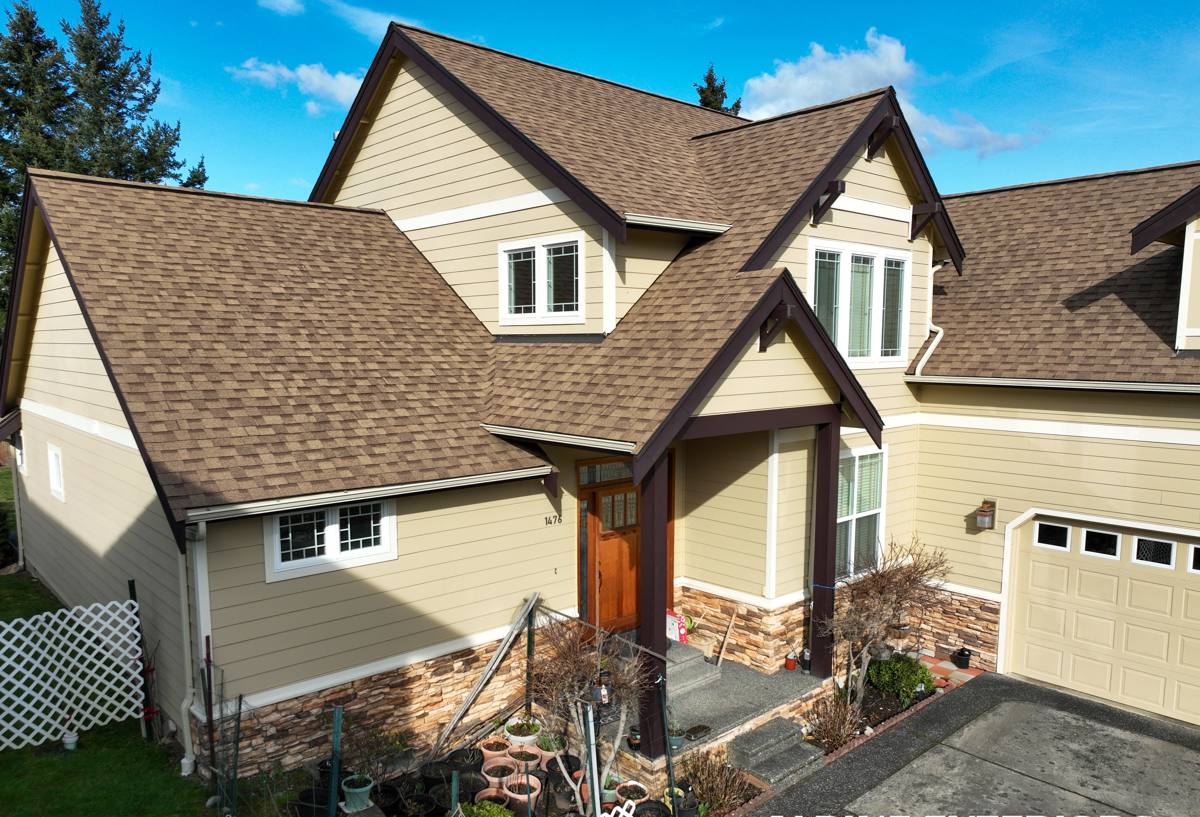
What a Correct Installation Actually Involves Here
"New roof" sounds like a single job, but it's really a stack of individual decisions, each of which matters more in Ferndale's climate than it would somewhere drier and further from the coast.
Underlayment and Water Barrier
Given how much wind-driven rain this area sees, we don't treat underlayment as an afterthought. A synthetic underlayment with strong tear resistance, backed by self-adhered ice-and-water barrier at eaves, valleys, and any low-slope transitions, gives the roof a real second line of defense if wind ever pushes water up and under the primary roofing material. That redundancy is what keeps a hard winter storm from becoming an interior leak.
Ventilation
A roof deck that can't breathe traps moisture underneath the roofing material, which speeds up rot, encourages mold, and shortens the life of everything above it. In a climate this wet, balanced intake and exhaust ventilation isn't optional — it's part of what keeps the deck dry from below while the roofing material sheds water from above.
Flashing and Fasteners
This is where salt air does the most damage over time if it's ignored. We use corrosion-resistant flashing and fastener materials at chimneys, skylights, sidewalls, and valleys — the points where two roof planes or a roof and a wall meet, and where the vast majority of roof leaks actually originate. Standard-grade hardware that would hold up fine twenty miles inland can start showing rust streaks and early degradation here within a few years.
Fastening for Wind
Proper nailing pattern and fastener placement, following manufacturer specification and local code, keeps roofing material locked down through the gusty storms that come through in fall and winter. Under-fastened roofs are one of the most common causes of shingles lifting, cracking, or blowing off entirely in a bad storm.
Choosing the Right Material for This Climate
There's no single "best" roofing material for every home — the right choice depends on your roof's exposure, your budget, and how much long-term maintenance you're willing to take on. Here's how the common options compare for a Ferndale property specifically.
| Material | Moss/Algae Resistance | Salt Air Durability | Typical Lifespan | Relative Cost |
|---|---|---|---|---|
| Standard asphalt composition shingle | Moderate — benefits from algae-resistant granules | Good with corrosion-resistant flashing/fasteners | 20-30 years | Lower |
| Architectural/dimensional asphalt shingle | Moderate to good with algae-resistant granules | Good with corrosion-resistant flashing/fasteners | 25-35 years | Mid |
| Standing seam metal | Excellent — little surface for moss to grip | Very good with marine-grade coatings and fasteners | 40-60+ years | Higher |
| Synthetic/composite shake | Good, non-porous surface | Good with proper hardware | 30-50 years | Mid to higher |
Asphalt shingle remains the most common choice because it balances upfront cost with solid performance, especially when you spec algae-resistant granules and pair it with the flashing and ventilation details above. Metal roofing costs more initially but sheds moss and moisture more effectively over the long run and holds up well against wind. We'll walk through the honest trade-offs for your specific roof rather than pushing one material across the board.
Moss, Algae, and the Long Wet Season
Moss doesn't just look bad — it holds moisture against the roofing surface, works its way under shingle edges, and can lift material enough to let water in. In a climate where north-facing and tree-shaded slopes stay damp for months at a stretch, moss prevention has to be part of the installation, not an afterthought you deal with later.
A few things make a real difference: zinc or copper strips near the ridge that release trace metal ions when it rains, which inhibits moss and algae growth down-slope; algae-resistant shingle granules; adequate roof ventilation so the deck and underside of the roofing material dry out between rain events instead of staying damp; and keeping overhanging tree limbs trimmed back so shaded areas get more light and air. None of these eliminate the need for periodic roof cleaning, but together they meaningfully slow how fast moss takes hold.
Our New Roof Installation Process
- Roof and attic inspection. We assess the existing roof, deck condition, ventilation, and any signs of past leaks or moisture damage before we quote anything.
- Written estimate and material selection. You get a clear breakdown of scope, materials, and cost — no vague allowances that turn into surprise change orders.
- Tear-off. Complete removal of the old roofing material down to the deck, with the deck inspected for rot, soft spots, or damage that needs repair before anything new goes on.
- Deck repair as needed. Any compromised sheathing gets replaced — installing new roofing over a bad deck just guarantees problems later.
- Underlayment and water barrier installation. Ice-and-water barrier at vulnerable points, synthetic underlayment across the field.
- Flashing, ventilation, and roofing material installation. Installed per manufacturer specification and fastened for local wind exposure.
- Cleanup and magnetic sweep. Full site cleanup, including a check for stray fasteners and debris around the property.
- Final walkthrough. We go over the finished roof with you, explain what was done, and answer questions before we consider the job complete.
Why a Crew That Already Works Ferndale Matters
A roofing crew that regularly works in and around Ferndale and Whatcom County brings more than general roofing knowledge — they know how to read this area's weather windows, which matters when you're scheduling tear-off during a season with frequent rain. They're familiar with the housing stock common to this part of the county, from older homes that may have outdated ventilation or decking to newer builds with different structural requirements. And they understand local permitting and the wind and snow load requirements that apply under Washington building code, so the job gets done right the first time instead of getting flagged during inspection.
That local familiarity also shows up in material decisions. A crew that's watched how different shingle lines and flashing hold up against a few Whatcom County winters has real, observed experience to draw on — not just a manufacturer's marketing sheet.
What to Check Before You Hire a Roofing Contractor
- Current Washington state contractor license and proof of liability insurance
- A written estimate that itemizes materials, labor, and scope — not a single lump number
- Manufacturer certification for the specific roofing system being installed, if applicable
- A clear explanation of the warranty on both materials and workmanship, and what each one actually covers
- Willingness to explain why they're recommending a specific material or ventilation approach for your roof
- A realistic timeline that accounts for weather delays rather than a rushed promise
What Affects the Cost of a New Roof
Every roof is different, so we won't quote a number without seeing yours, but the factors that typically move the price are consistent: the size and pitch of the roof, how many layers of old roofing need to be removed, the condition of the deck underneath, the complexity of the roofline (valleys, dormers, chimneys, and skylights all add labor), the material you choose, and any ventilation or structural upgrades needed. A straightforward asphalt shingle replacement on a simple roofline will run less than a complex roof with multiple penetrations or a switch to standing seam metal. We'll break all of this down in writing so you know exactly what you're paying for and why.
Protecting the Investment After Installation
A well-installed roof still needs basic upkeep to reach its full lifespan in this climate. That means periodic gutter cleaning so water isn't backing up under the eaves, keeping an eye out for moss regrowth even with preventive measures in place, and having flashing and fasteners checked every few years since salt air continues working on exposed metal long after installation day. We're upfront about manufacturer warranty terms and our own workmanship warranty at the time of installation, so there's no confusion later about what's covered.
If you're weighing a new roof for your Ferndale home, we're happy to take a look and walk you through what your roof actually needs — no pressure, no upsell, just a straight assessment. Use the form below to request a free estimate.