 Glenhaven Siding
 Roof Replacement in Nooksack: What Whatcom County Weather Demands
Nooksack sits in a part of Whatcom County where the roof over your head works harder than it does almost anywhere else in the state. Moist air moving in off the water, near-constant winter rain, and a moss season that can stretch from fall through spring all put steady pressure on roofing materials. A roof that would hold up fine in a drier climate can fail early here if it wasn't built, ventilated, or flashed with this specific weather in mind. When we talk about roof replacement for Nooksack homes, we're not describing a generic service — we're describing a job that has to account for salt-laden moisture, driving rain that hits shingles at an angle instead of straight down, and moss that takes hold anywhere shade and dampness linger.
Glenhaven Siding Company works throughout this part of Whatcom County, and Nooksack is a community we know well. That familiarity matters more with roofing than almost any other exterior trade, because so much of what makes a roof last comes down to decisions that aren't visible once the job is done — underlayment choice, ventilation balance, fastener pattern, flashing detail. Get those wrong and a homeowner won't find out until years later, usually during a wet winter.
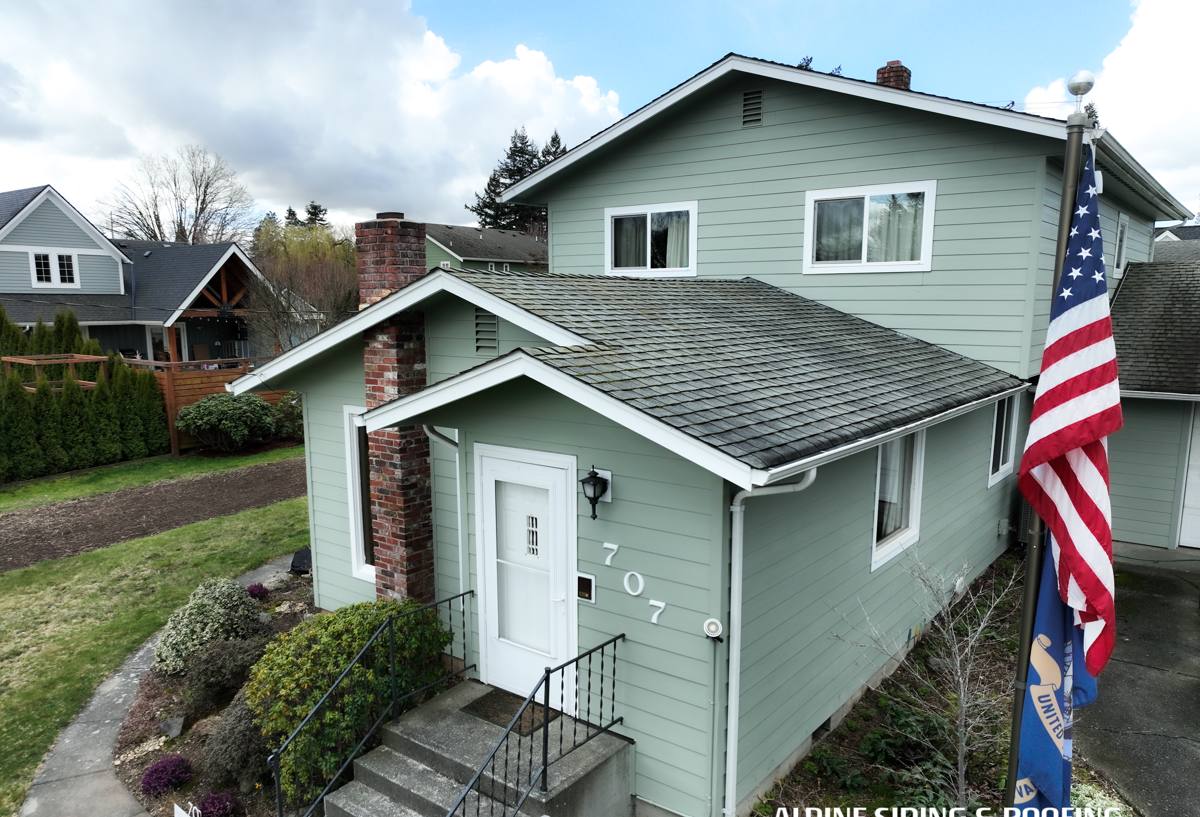
Why Roofs Wear Out Faster in This Climate
Salt Air and Corrosion
Even well inland from the coast, salt-bearing moisture travels on the wind and settles on roofing metal, fasteners, and flashing. Over time it accelerates corrosion on anything that isn't rated for it — exposed nail heads, cheap flashing, and lower-grade gutter hardware are usually the first things to show rust. A correct roof replacement uses corrosion-resistant fasteners and flashing throughout, not just on the parts that are easy to see.
Driving Rain and Wind-Driven Moisture
Storms in this area rarely drop rain straight down. Wind pushes it sideways and up under roof edges, which is exactly the scenario that exposes weak underlayment, short flashing laps, and poorly sealed valleys. Roofs built for calmer climates often skimp on these details because they can get away with it elsewhere. Here, that shortcut shows up as a leak within a few seasons.
Moss, Shade, and Slow-Drying Roofs
Moss needs three things to take hold: moisture, shade, and time to sit undisturbed. Nooksack's tree cover and long damp stretches give moss all three. Left alone, moss lifts shingle edges, holds water against the roof deck, and shortens the life of the roofing material significantly. Roof replacement is the right time to address moss risk at the source — with material choice, attic ventilation, and preventive treatment — rather than fighting it year after year on an aging roof.
Signs a Nooksack Home Needs Roof Replacement, Not Another Repair
- Granules collecting in gutters or at downspout outlets — a sign shingles are breaking down, not just aging cosmetically
- Moss or dark streaking that keeps returning within months of cleaning
- Soft spots, sagging, or visible unevenness across roof planes
- Daylight visible through the attic, or damp insulation after storms
- Multiple past repairs in different areas rather than one isolated issue
- Roof is at or past the manufacturer's expected service life for this climate
- Rising energy bills tied to poor attic ventilation or insulation performance
A single missing shingle or an isolated leak is usually a repair. A roof showing several of the signs above, especially on a home that's due for replacement age-wise, is a different conversation — one where patching becomes a short-term fix for a longer-term problem.
What a Correct Roof Replacement Actually Involves
Roof replacement is more than swapping old shingles for new ones. Done right, it's a sequence of steps where each one protects the next:
- Tear-off and deck inspection. Old material comes off completely so the roof deck can be checked for rot, soft spots, or damage hidden under the old roofing. Any bad decking gets replaced before anything new goes down.
- Underlayment. In a climate with this much wind-driven rain, underlayment quality and coverage matter as much as the shingle on top. Ice-and-water shield or synthetic underlayment goes in critical zones — eaves, valleys, and around penetrations — where wind-driven moisture is most likely to find a way in.
- Flashing. Chimneys, skylights, walls, and valleys all need properly lapped, corrosion-resistant flashing. This is the single most common place cheap roof jobs fail in this region.
- Ventilation. Balanced intake and exhaust ventilation keeps the attic dry and temperature-regulated, which slows moss growth on the roof surface and prevents moisture buildup that rots decking from underneath.
- Roofing material installation. Installed to manufacturer spec with the fastening pattern and exposure this climate calls for — not the minimum the material allows.
- Cleanup and final inspection. Site cleared of debris and nails, then a walk-through so the homeowner understands what was done and why.
Choosing the Right Roofing Material for Nooksack
There's no single "best" roofing material for every home — the right choice depends on budget, roof pitch, tree cover, and how much long-term maintenance a homeowner wants to take on. Here's how the common options compare for this specific climate:
| Material | Moisture & Moss Resistance | Maintenance | Typical Lifespan Here |
|---|---|---|---|
| Architectural asphalt shingle | Good with proper ventilation; algae-resistant options help slow moss | Periodic moss treatment recommended | 20-30 years |
| Standard 3-tab shingle | Fair; wears faster under constant moisture | More frequent moss/algae treatment | 15-20 years |
| Metal roofing | Very good; sheds moisture and resists moss growth on most profiles | Low; occasional fastener/seam check | 40-plus years |
| Wood shake | Poor without diligent upkeep; holds moisture and favors moss | High; regular cleaning and treatment required | Varies widely with maintenance |
We're upfront when a material isn't a good fit for a particular roof or budget rather than pushing whatever has the best margin. For most Nooksack homes, a quality architectural shingle with proper underlayment and ventilation, or a metal roof for homeowners wanting to minimize long-term maintenance, are the two options that make the most sense.
How Our Roof Replacement Process Works
1. On-Site Assessment
We walk the roof and attic, not just look from the ground. That's the only way to catch deck damage, ventilation problems, and flashing issues before they become part of a surprise change order mid-project.
2. Straight Answers on Scope and Cost
We explain what's driving the price — material, roof complexity, deck repairs, ventilation upgrades — so a homeowner understands the estimate instead of just seeing a number. Broad cost ranges for a full tear-off and replacement on a typical single-family home in this area generally run from the mid-teens into the mid-twenty-thousands, though pitch, size, layout, and material chosen move that considerably in either direction.
3. Scheduled Around Weather
Roofing in a wet climate means watching forecasts closely and sequencing work — tear-off, dry-in, and finish — to minimize how long a roof deck is exposed. We don't start a tear-off we can't get dried in before rain arrives.
4. Clear Communication During the Job
Homeowners know what's happening each day and are told immediately if the tear-off reveals something the original assessment couldn't see, like hidden deck rot, before we proceed.
5. Final Walk-Through
We go over the finished roof together, review what was installed and why, and make sure everything matches what was scoped.
Why a Crew That Already Works Nooksack Matters
Roofing crews unfamiliar with this specific stretch of Whatcom County sometimes underestimate how aggressive the moss and moisture pressure really is, and spec materials or ventilation the way they would for a drier region. A crew that already works in and around Nooksack has seen which roof designs hold up here and which ones cause callbacks. That experience shows up in the details — flashing choices, underlayment coverage, how ventilation gets balanced — long before it would ever show up in a sales pitch.
It also matters for accountability. A local company has a reputation in the community to stand behind, and is easy to reach if a question comes up after the job is finished.
Maintaining a New Roof in a Moss-Prone Climate
- Keep gutters clear so water isn't backing up under roof edges
- Trim overhanging branches to reduce shade and let the roof surface dry between rains
- Schedule moss treatment before it takes hold, not after it's visibly spread
- Check attic ventilation isn't blocked by insulation or debris
- Have flashing and penetrations inspected every few years, especially after major storms
A new roof still needs basic upkeep to hit its full expected lifespan in this climate — the maintenance burden is much lower than an aging roof, but it isn't zero.
Get a Straight Answer on Your Nooksack Roof
If your roof is showing wear, has had repeated repairs, or you're just not sure whether it's got years left in it, we're happy to take a look. We'll give you a free, no-pressure estimate and an honest read on whether replacement makes sense now or can reasonably wait. Fill out the form below to get started.