 Glenhaven Siding
 Why Bellingham Homes Wear Out Their Siding Faster Than the Manual Says
Every siding product ships with a warranty booklet that assumes fairly average weather. Bellingham doesn't get average weather. Sitting close to the water in Whatcom County means homes here deal with salt-laden air moving in off the bay, long stretches of driving rain pushed sideways by wind, and a wet season that stretches for months rather than weeks. Add the shade from mature trees on many older lots and you get a moss season that can run nearly year-round on north-facing walls. None of that is exotic weather. It's just relentless, and relentless is what breaks down siding that wasn't built or installed with this climate in mind.
We install siding in and around Bellingham regularly enough to know which walls fail first, which details get skipped by crews unfamiliar with the area, and which siding systems actually hold up. This page is about one job specifically: installing new siding on a Bellingham home, done the way this climate requires.
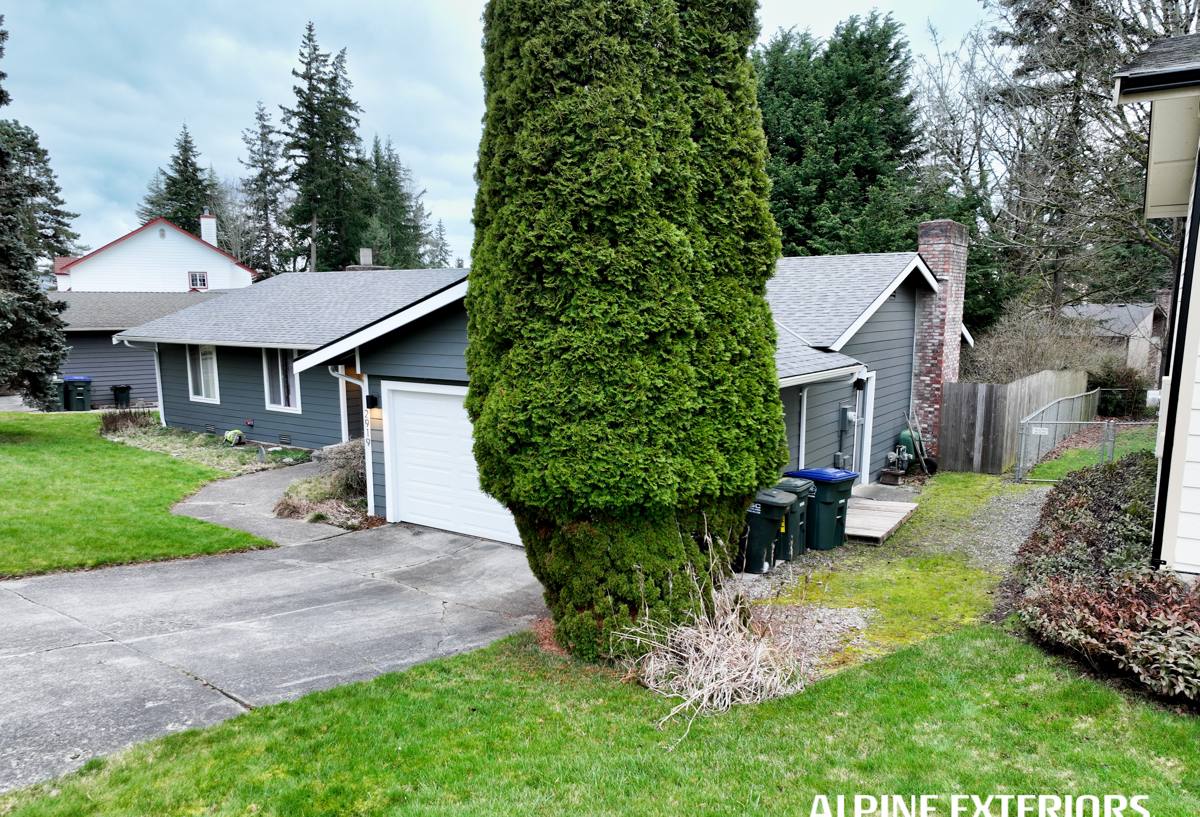
What Salt Air, Rain, and Moss Actually Do to Siding
Salt Air
Proximity to salt water accelerates corrosion on anything metal — fasteners, flashing, trim edges — and it can degrade lower-quality paint finishes faster than inland areas ever see. Siding that isn't factory-finished to resist UV and moisture cycling will chalk, fade, and crack sooner near the water.
Driving Rain
Wind-driven rain doesn't just run down a wall — it gets pushed sideways and upward into laps, seams, and penetrations. A siding system with weak water management at the joints will let moisture behind the cladding, where it doesn't dry out quickly in our climate. That's when sheathing rot and hidden mold problems start, usually invisible until the siding is pulled off.
Moss and Sustained Moisture
Shaded, north-facing, and tree-lined walls in Bellingham stay damp longer after every rain event. Materials that absorb moisture — untreated wood, some composite products, and any siding with compromised paint or sealant — feed moss and mildew growth. Once moss establishes itself in laps and butt joints, it holds water against the wall even longer, compounding the problem.
What Correct Siding Installation Looks Like Here
A siding job that's just "nailed up straight" isn't enough in this climate. The parts that actually determine whether siding lasts 10 years or 40 are mostly hidden once the job is done.
- Weather-resistive barrier installed continuously and lapped correctly, shingle-style, so water is directed out and down, never trapped behind the siding
- Rainscreen or drainage gap where conditions call for it, giving the wall assembly a way to dry between rain events instead of staying saturated
- Flashing at every penetration — windows, doors, hose bibs, vents, light fixtures — set to shed water down and out, not just caulked over
- Corrosion-resistant fasteners appropriate for a coastal-influenced climate, driven to the manufacturer's exact spacing and depth
- Proper clearances from grade, roof lines, and decks so siding isn't sitting in standing water or constant splash-back
- Factory-finished cladding that resists moisture absorption at the surface, so the field isn't relying on job-site paint to do the real work
Skip any one of these and the siding may look fine for a few years while the real damage happens behind it, out of sight.
Why We Install James Hardie Fiber Cement — and Only That
We standardized on James Hardie fiber cement siding for every installation, including here in Bellingham, and we don't install vinyl, LP SmartSide, primed spruce, cedar, or other fiber cement brands. That's not a marketing position — it's a decision made around what actually performs in this climate.
Fiber cement is non-combustible and dimensionally stable, meaning it doesn't expand, contract, warp, or absorb moisture the way wood-based and engineered wood products can. James Hardie's ColorPlus factory finish is baked on under controlled conditions, which gives it better UV and moisture resistance than field-applied paint — a real advantage in a salty, wet climate where paint failure is often the first visible sign of trouble. Hardie also engineers specific product lines (their "HZ" designations) for different climate zones, so the product specified for a Pacific Northwest coastal environment is built differently than one meant for a dry inland climate.
We're not going to pretend other products don't have their place. Vinyl is inexpensive and low-maintenance in mild climates. LP SmartSide and engineered wood have improved over the years. Cedar has real curb appeal. But each of those comes with a trade-off — moisture sensitivity, seam and caulking dependency, UV fading, or a maintenance schedule — that we're not comfortable asking a Bellingham homeowner to manage against this specific weather pattern. Hardie's combination of moisture resistance, factory finish durability, and a strong transferable warranty is why it's the only thing we put on a wall.
Quick Comparison: What Matters in This Climate
| Factor | Vinyl Siding | Engineered Wood (LP SmartSide) | James Hardie Fiber Cement |
|---|---|---|---|
| Moisture absorption | Low, but seams can trap water behind panels | Moderate — wood fiber core is moisture-sensitive if the finish fails | Very low; cement-based core doesn't swell or rot |
| Finish durability near salt air | Can chalk and fade over time | Depends on field paint maintenance | Factory-baked ColorPlus finish resists fading and chalking |
| Fire resistance | Combustible | Combustible | Non-combustible |
| Moss/mildew resistance | Fair; smooth surface sheds moss easier | Weaker if coating wears thin | Strong when installed with proper drainage detailing |
| Typical maintenance cycle | Occasional washing | Repainting/recaulking every several years | Occasional washing; repainting far less frequent |
Our Process for a Bellingham Siding Installation
- On-site assessment — we walk the exterior, check current siding and sheathing condition, note moss patterns, drainage issues, and any moisture-prone walls specific to the lot's exposure and shade
- Tear-off and sheathing check — old siding comes off and we inspect the sheathing underneath for hidden rot or water damage before anything new goes up
- Weather barrier and drainage plane — a continuous, correctly lapped water-resistive barrier goes down first, with a drainage gap where the wall assembly calls for it
- Flashing and detailing — every window, door, and penetration gets flashed to shed water properly, before siding installation begins
- Hardie installation to spec — panels or planks installed at manufacturer-specified fastener spacing, clearances, and joint treatment
- Final inspection and walkthrough — we review the finished work with the homeowner and confirm everything meets both Hardie's installation requirements and our own standard
Why a Local Crew Matters More Than It Sounds Like It Should
Siding installation isn't identical from region to region, even within the Pacific Northwest. A crew that mostly works drier inland areas can underestimate how much drainage detailing a Bellingham wall needs, or default to standard clearances that don't account for how long moisture lingers here. A crew that already works Whatcom County knows which walls tend to see the worst wind-driven rain, where moss problems show up first, and how to size the job around Bellingham's specific mix of coastal exposure and tree cover.
That local pattern recognition doesn't replace following manufacturer specs — it's what makes sure the specs get applied to the right details on your specific home instead of a generic checklist.
Signs Your Bellingham Home's Siding Needs Attention
- Persistent moss or dark streaking that returns shortly after cleaning, especially on shaded or north-facing walls
- Soft spots, bubbling, or visible warping in siding panels or trim
- Paint that's chalking, peeling, or fading unevenly, particularly on walls facing prevailing wind and rain
- Gaps opening up at seams, corners, or around window and door trim
- Musty smell or visible staining on interior walls that back up to exterior siding
- Siding that flexes or feels hollow when pressed, which can indicate moisture damage behind it
Any one of these on its own isn't necessarily an emergency, but they're worth having looked at before the next wet season adds to the damage.
What Affects the Cost of a Siding Installation
| Factor | Why It Matters |
|---|---|
| Home size and wall complexity | More square footage, corners, and roof intersections mean more material and labor |
| Current siding condition | Hidden sheathing rot found during tear-off adds repair work before new siding goes on |
| Product line and profile | Hardie offers different plank, panel, and shingle-style profiles at different price points |
| Trim and detail work | Homes with more windows, dormers, and architectural detail require more precise (and time-consuming) flashing and fitting |
| Site access | Tight lots, slopes, or limited staging area can affect labor time and equipment needs |
We don't publish blanket pricing because every one of these factors changes the real number, but we'll walk your specific home and give you a straightforward estimate with no pressure attached.
Ready to Talk About Your Siding?
If your Bellingham home's siding is showing wear, or you're planning ahead before the next wet season sets in, we're happy to take a look and talk through what we'd recommend. Request a free, no-pressure estimate using the form below and we'll follow up to schedule a time that works.