 Glenhaven Siding
 Siding Installation Built for Barkley Homes
Barkley homes sit close enough to the water and the tree line that the exterior takes a steady, year-round beating — salt-laden air off the coast, driving rain that comes sideways more often than straight down, and a moss season that can stretch from fall through spring. Siding installation here isn't just about picking a color and nailing up panels. It's about getting the water management right the first time, because a callback on a home in this stretch of Whatcom County usually means the crew didn't plan for how wet this corner of Washington actually gets.
We install James Hardie fiber cement siding exclusively, and Barkley is a good example of why. This is a neighborhood where the wrong siding choice, or the right siding installed carelessly, shows its problems within a few wet seasons rather than a decade. We'd rather explain that up front than have a homeowner find out the hard way.
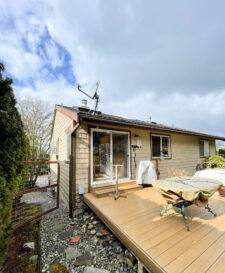
What Barkley's Climate Actually Does to Siding
Three things define the exterior environment around Glenhaven and the Barkley area, and each one demands something specific from a siding system:
- Salt air accelerates corrosion on fasteners, flashing, and any metal trim that isn't rated for coastal exposure. Cheap or mismatched hardware fails faster here than it would fifty miles inland.
- Driving rain — wind-driven rather than gentle vertical rainfall — gets pushed sideways into laps, seams, and penetrations that would stay dry in a calmer climate. Every joint, window, and utility penetration is a place water is actively trying to get behind the cladding.
- Extended moss season keeps north-facing and shaded wall sections damp for months at a stretch. Damp-and-shaded is exactly the condition organic growth needs, and it's exactly the condition that punishes any siding material with poor moisture tolerance.
None of these are exotic problems — they're the normal weather pattern for this part of Whatcom County. But a lot of siding failures we get called out to inspect trace back to a product or an installation that simply wasn't built to handle "normal" here.
Why This Rules Out Some Common Siding Choices
Vinyl siding can warp and gap under repeated wet-dry cycling, and its seams give wind-driven rain more opportunities to find a way behind the panel. Primed wood and cedar need consistent maintenance to keep ahead of moisture absorption, and in a climate with this much sustained dampness, that maintenance window gets narrow fast. Engineered wood products carry their own moisture-sensitivity requirements at every cut edge and penetration — miss one, and the clock starts on hidden damage you won't see until the siding is already failing from behind. We don't install any of those products, not because they're incapable of working somewhere, but because Barkley's climate isn't forgiving of the maintenance gaps or installation mistakes those materials tolerate elsewhere.
What a Correct Siding Installation Involves Here
James Hardie fiber cement is non-combustible, dimensionally stable, and engineered in HZ5 and HZ10 formulations specifically for climates with sustained moisture exposure — which describes the Pacific Northwest generally and this stretch of coastline in particular. But the product is only half the equation. The other half is installation discipline, and that's where most siding jobs actually succeed or fail.
The Details That Matter Most in a Climate Like This
| Detail | Why it matters in Barkley's climate |
|---|---|
| Weather-resistive barrier and rain screen gap | Creates a drainage plane behind the siding so any water that does get past the cladding has somewhere to go instead of sitting against the sheathing. |
| Flashing at every window, door, and penetration | Driving rain finds the smallest gap in a wall; flashing directs water back out instead of letting it track inward. |
| Corrosion-resistant fasteners and trim hardware | Salt air degrades standard hardware faster than inland installs; matched, rated fasteners hold up over the life of the siding. |
| Correct clearance from grade, decks, and roof lines | Keeps the bottom edge of the siding out of splash-back and standing moisture, a common failure point on homes near tree cover or low grading. |
| Factory-primed and painted cut edges (ColorPlus) | Every field cut gets sealed before it goes on the wall, closing off the entry point moisture would otherwise use. |
| Proper panel and joint spacing | Fiber cement expands and contracts with temperature and moisture; correct gaps prevent buckling and let the system perform as engineered. |
Every one of these is a place a rushed or unfamiliar crew cuts a corner that doesn't show up as a problem until a wet winter or two has gone by. That's the whole argument for hiring a crew that's already worked in this specific area, rather than one learning Barkley's conditions on your home.
Our Process for a Barkley Siding Installation
We approach every siding installation in this area the same methodical way, because skipping a step is how the climate finds its way in later.
- On-site assessment. We walk the exterior, check existing siding and sheathing condition, note grading, drainage, shaded/damp zones, and any areas already showing moisture or moss staining.
- Tear-off and sheathing check. Old siding comes off, and we inspect the sheathing underneath for rot or hidden damage before anything new goes up — covering a compromised wall with new siding just delays the same problem.
- Weather barrier and rain screen installation. This is the drainage plane that does the real work of keeping bulk water away from your framing, installed before a single piece of siding goes on.
- Flashing at every opening. Windows, doors, vents, and any other penetration get flashed and integrated with the weather barrier — no exceptions, no shortcuts.
- Hardie panel or plank installation to spec: correct nailing pattern, joint spacing, and clearances, using fasteners and trim rated for coastal, high-moisture conditions.
- Caulking, touch-up, and final inspection. We check every seam, corner, and penetration before calling the job finished, not just the parts visible from the street.
Why a Local Crew Matters More Than It Sounds Like It Should
A crew that already works Barkley and the surrounding Glenhaven area isn't guessing at how much rain-screen gap this climate needs, or which side of a house takes the worst wind-driven rain, or how long moss takes to establish on a shaded wall around here. That's not marketing — it's the difference between a crew that's watched their own installations hold up (or not) through several Whatcom County winters, and one installing to a generic spec sheet without local weather feedback.
It also means faster, more accurate estimates. We're not learning the neighborhood's housing stock, common wall orientations, or typical moisture exposure on your first visit — we already have that context, which lets us focus the assessment on your specific home rather than the area in general.
Maintenance After Installation
A correctly installed James Hardie siding system is genuinely low-maintenance compared to wood, vinyl, or engineered wood alternatives, but "low-maintenance" isn't "no-maintenance" in this climate. A short annual routine keeps it performing the way it's designed to:
- Rinse off accumulated salt residue and grime, especially on sides facing prevailing wind and rain.
- Check for moss or algae starting on shaded, damp-prone wall sections and address it early rather than letting it establish.
- Inspect caulking at trim, window, and door joints yearly — caulk is the one component that wears out well before the siding does.
- Keep gutters clear and confirm downspouts are directing water away from the foundation and siding base, not dumping it against the wall.
- Trim back vegetation and tree cover that keeps a wall section shaded and damp longer than the rest of the house.
What This Costs, and What Drives the Range
Every siding installation is priced around the specifics of the home, but a few factors consistently move the number for Barkley-area projects:
| Factor | How it affects the project |
|---|---|
| Tear-off scope | Full removal of existing siding down to sheathing costs more than installing over a prepped surface, but it's the only way to properly inspect and address hidden moisture damage. |
| Sheathing repair | If tear-off reveals rot or water damage, that repair happens before new siding goes on — it's a necessary add, not an upsell. |
| Home size and wall complexity | More corners, gables, and penetrations mean more flashing detail work, which takes more labor time than a simple rectangular wall. |
| Hardie product line | Lap siding, panel siding, and shingle-style profiles carry different material and labor costs; ColorPlus factory finish versus field paint also affects price. |
| Site access and prevailing exposure | Homes with tighter site access or heavier direct exposure to wind-driven rain may need extra flashing and sequencing care. |
We give straight, itemized estimates rather than a single number pulled from a rough square-footage guess, because the details above genuinely change what a correct job requires.
A Quick Checklist Before You Hire Anyone
Whether you go with us or another contractor, these are worth confirming before signing anything for a siding installation in this area:
- Does the quote specify a rain screen or drainage gap, or just "siding installed over existing wall"?
- Is flashing at windows, doors, and penetrations called out explicitly, or left vague?
- What fastener and trim hardware is specified, and is it rated for coastal/high-moisture exposure?
- Does the crew inspect and address sheathing condition during tear-off, or install straight over whatever is underneath?
- Is the warranty a manufacturer-backed, transferable warranty, or just a short labor guarantee from the installer?
If a quote can't answer these clearly, that's worth a second look before committing.
Ready When You Are
If your Barkley-area home needs new siding, or you want a second opinion on a bid you've already received, we're happy to take a look and walk you through what your home specifically needs. The estimate is free, there's no pressure, and you'll get a straight answer about what a correct installation involves for your property — just fill out the form below to get started.