 Glenhaven Siding
 Deck Repair in Cordata: Why Local Conditions Matter
A deck in Cordata doesn't age the way a deck in a dry inland climate does. Between the salt-laden air blowing in off the water, months of driving rain, and a moss season that can stretch well past what most homeowners expect, the structure underneath your decking takes a slow, steady beating. Most of the damage isn't visible from the top. It's happening in the ledger board, the joists, the post bases, and the fasteners holding it all together.
We repair decks for homeowners throughout Glenhaven and the surrounding Whatcom County area, and Cordata jobs tend to share a common pattern: boards that still look serviceable on the surface while the framing underneath has been quietly absorbing moisture for years. A good repair addresses what's actually failing, not just what's visible.
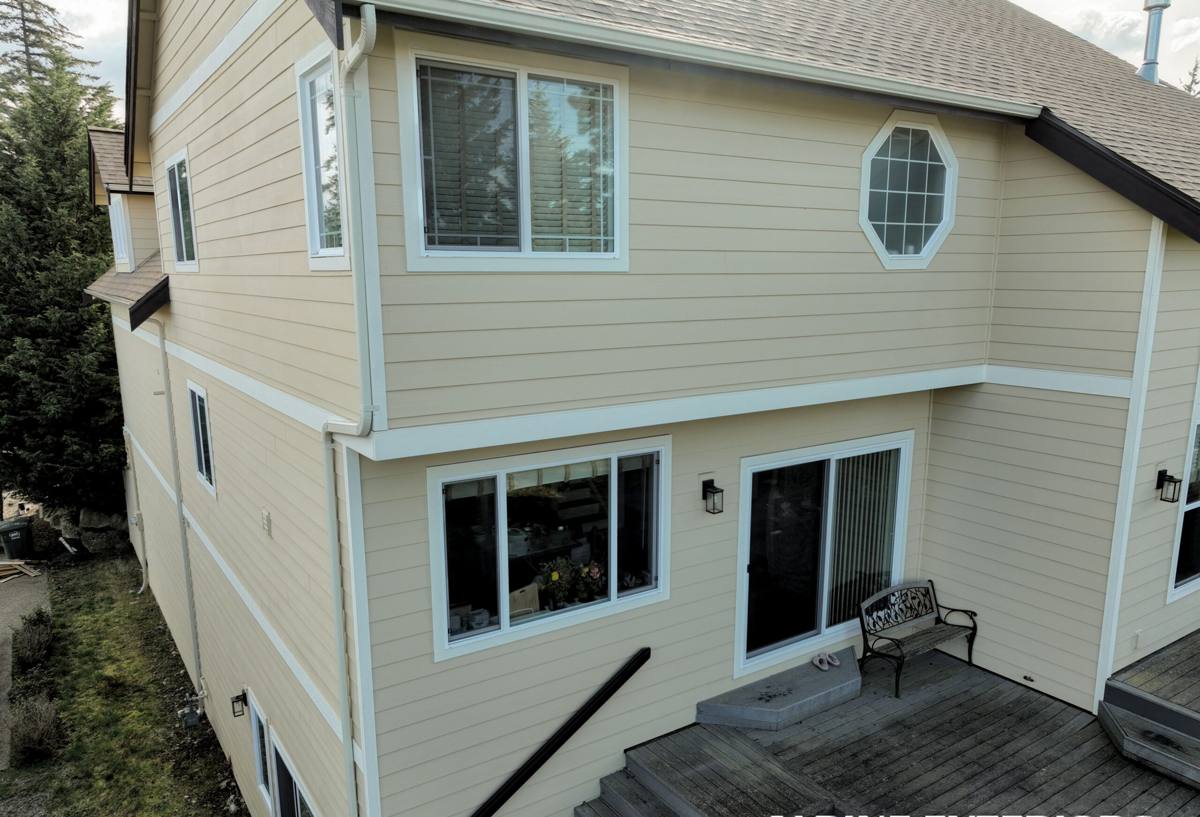
How Salt Air, Rain, and Moss Actually Damage a Deck
Salt Air and Metal Fasteners
Salt in the air accelerates corrosion on any exposed metal — nails, screws, joist hangers, bolts, and railing hardware. Once a fastener starts to corrode, it loses holding strength long before it looks obviously rusted. On older decks we often find the decking boards are fine, but the nails or screws securing them have weakened enough that boards are loose, squeaking, or lifting at the edges.
Driving Rain and Water Intrusion
Wind-driven rain doesn't just fall straight down — it gets pushed sideways into gaps, seams, and the joint where the deck meets the house. The ledger board (the piece bolted to your home that the whole deck hangs from) is the single most common failure point we find, because flashing there is either missing, undersized, or has failed over time. Water that gets behind the ledger board rots the framing from the inside, often invisibly, until a board flexes or a post feels soft underfoot.
The Long Moss Season
Cordata's moss season isn't just a cosmetic nuisance. Moss and algae hold moisture directly against wood and composite surfaces for weeks at a time, well past when the surface would otherwise dry out. On wood decking, that constant dampness feeds rot. On any decking material, a moss-covered surface becomes genuinely slick and dangerous, especially on stairs. Moss also works its way into board seams and fastener heads, holding water exactly where you don't want it.
Signs Your Deck Needs Repair — Not Just a Wash
A pressure wash or a fresh coat of stain can make a tired deck look better without fixing what's actually wrong underneath. Watch for these signs that point to a real repair need:
- Boards that feel spongy, springy, or noticeably softer than surrounding boards
- A screwdriver or awl that sinks into wood easily near the ledger board, posts, or stair stringers
- Visible gaps, rust streaks, or missing flashing where the deck meets the house
- Railings or guardrails that wiggle or flex under moderate pressure
- Stairs that feel uneven, bouncy, or have visibly worn or cracked stringers
- Persistent moss or algae that returns within weeks of cleaning
- Fastener heads that are rusted, popped up, or missing entirely
- Gaps opening up between deck boards wider than when the deck was new
If you're seeing two or more of these at once, it's usually worth a real inspection rather than another cleaning cycle.
What a Correct Deck Repair Actually Involves
Deck repair gets treated as a cosmetic job more often than it should be. A repair that only replaces the boards you can see, without checking what's underneath, tends to fail again within a few seasons in a climate like this one. A correct repair covers:
Structural Framing
Joists, beams, and posts get checked for soft spots, splitting, and rot — particularly anywhere water has a history of collecting or draining slowly. Damaged framing members get sistered or replaced, not just covered over.
Ledger Board and Flashing
Since this is the most common failure point locally, we check the ledger connection and flashing on every repair, even when the visible complaint is somewhere else on the deck. Proper flashing directs water away from the house rather than letting it pool at the connection.
Fasteners and Hardware
Given how salt air degrades standard hardware, repairs get done with corrosion-resistant fasteners and connectors rated for exterior, coastal-influenced conditions — not the mild-climate hardware that might be fine further inland.
Guardrails and Stairs
Railings and stairs take direct wear and carry real safety consequences if they fail. We check post attachment, baluster spacing, and stringer condition against current code, and bring anything out of compliance up to standard as part of the repair.
Decking Surface
Individual boards get replaced where warranted; matched, properly spaced, and fastened so water sheds instead of collecting in the seams.
Repairing Different Deck Materials
What a repair looks like depends heavily on what the deck is built from. Older Cordata homes commonly have pressure-treated lumber decks, sometimes cedar, and increasingly we're repairing early-generation composite decking that's now old enough to be showing its age.
| Material | Common Issue in This Climate | Repair Approach |
|---|---|---|
| Pressure-treated lumber | Rot at fastener points, moss-driven decay, warping | Replace affected boards/framing; upgrade to corrosion-resistant fasteners |
| Cedar | Surface graying, softening from prolonged moisture, splitting | Sand or replace worn boards; reseal; improve drainage/airflow beneath deck |
| Early composite decking | Moisture absorption at cut edges, fading, board-end swelling | Replace failed boards with properly capped edges; check hidden fastener condition |
| Wood-composite hybrid | Inconsistent aging between board and core material | Case-by-case evaluation; often full board replacement is more reliable than patching |
We don't push a full replacement when a targeted repair will hold up. We also won't recommend patching a deck whose framing is genuinely compromised — that's a safety call, not an upsell.
What Drives the Cost of a Deck Repair
Every deck repair is different, so exact pricing depends on what we find once we're actually underneath the deck. In general terms, the biggest cost factors are:
| Factor | Why It Matters |
|---|---|
| Extent of hidden framing damage | Rot found in joists or the ledger board adds structural work beyond surface repair |
| Deck size and accessibility | Larger decks and tight-access sites (fences, landscaping, slope) add labor time |
| Material match | Matching existing decking exactly can cost more than a full-width replacement in some cases |
| Code upgrades needed | Railings, guardrail height, or stair specs that don't meet current code add scope |
| Number of repair zones | Multiple isolated problem areas can cost more in aggregate than one larger contiguous repair |
We give straightforward, itemized estimates after a hands-on inspection — no inflated "while we're at it" add-ons that aren't actually needed.
Our Deck Repair Process
- Inspection: We check the full structure — framing, ledger connection, fasteners, posts, stairs, and railings — not just the decking surface.
- Moisture and soundness check: Suspect areas get probed and checked for rot or softness that isn't visible from the top.
- Written scope and estimate: You get a clear breakdown of what's structural, what's cosmetic, and what's optional.
- Repair or replacement: We fix what's failing with materials and hardware suited to Whatcom County's climate, and bring code items up to standard along the way.
- Final check: Railings, stairs, and fastening get tested for solidity before we call the job done.
After the Repair: Keeping Moss and Moisture From Coming Back
A repaired deck still lives in the same climate that damaged the original one, so a little seasonal upkeep goes a long way toward protecting the work:
- Sweep debris off the deck regularly so moss and algae don't get a foothold in damp corners
- Clean visible moss growth promptly rather than letting it sit through the wet season
- Check that gaps between boards stay clear so water can drain instead of pooling
- Reseal or restain wood decking on the manufacturer's recommended cycle, not just when it looks faded
- Glance at the ledger board area once or twice a year for staining, gaps, or peeling caulk
- Keep gutters and downspouts near the deck clear so runoff isn't dumping directly onto it
Why Hire a Crew That Already Works in Cordata
Deck repair done right depends on recognizing the failure patterns specific to this area — where water tends to collect, how far moss damage typically extends past what's visible, and which fastener and flashing choices actually hold up against salt air and driving rain year after year. A crew that repairs decks across Glenhaven and Whatcom County regularly has already seen how these decks fail here, which means less guesswork and fewer surprises once the boards come up. We're not learning the local climate on your project.
If your Cordata deck has soft spots, loose railings, stubborn moss, or just feels less solid than it used to, we're happy to take a look. Reach out for a free, no-pressure estimate using the form below — we'll tell you honestly what needs fixing and what can wait.