 Glenhaven Siding
 Why Barkley Windows Wear Out Faster Than People Expect
Barkley homes sit in a stretch of Whatcom County where the weather doesn't do anything extreme — it just doesn't let up. Salt-tinged air off the water, long stretches of driving rain, and a moss season that can run most of the year all work on a window's weak points at the same time. None of that shows up overnight. It shows up as a window that used to open smoothly and now sticks, or a sill that stays damp two days after the rain stopped.
Salt Air and Metal Components
Coastal Whatcom County air carries enough salt to accelerate corrosion on the metal parts of a window — hinges, balances, screen frames, and older aluminum sashes. It's slow, but it's steady. A window that's fought this for fifteen or twenty years often still looks fine from the curb while the hardware underneath has quietly given out.
Wind-Driven Rain and Water Intrusion
Rain that falls straight down is easy on a building. Rain that gets pushed sideways by wind is a different problem, because it finds every gap in flashing, caulk, and trim instead of running off harmlessly. Most of the water damage we find around Barkley windows didn't come through the glass — it came in around the frame, where the flashing detail was never right to begin with.
Moss, Shade, and Trapped Moisture
Mature trees and long moss seasons are part of what makes this area attractive, but they also mean shaded, damp conditions that keep wood trim and sills wet longer than they'd be in a drier climate. Moisture that has nowhere to go is what turns a small paint failure into rotted trim, and rotted trim into a window that no longer seals.
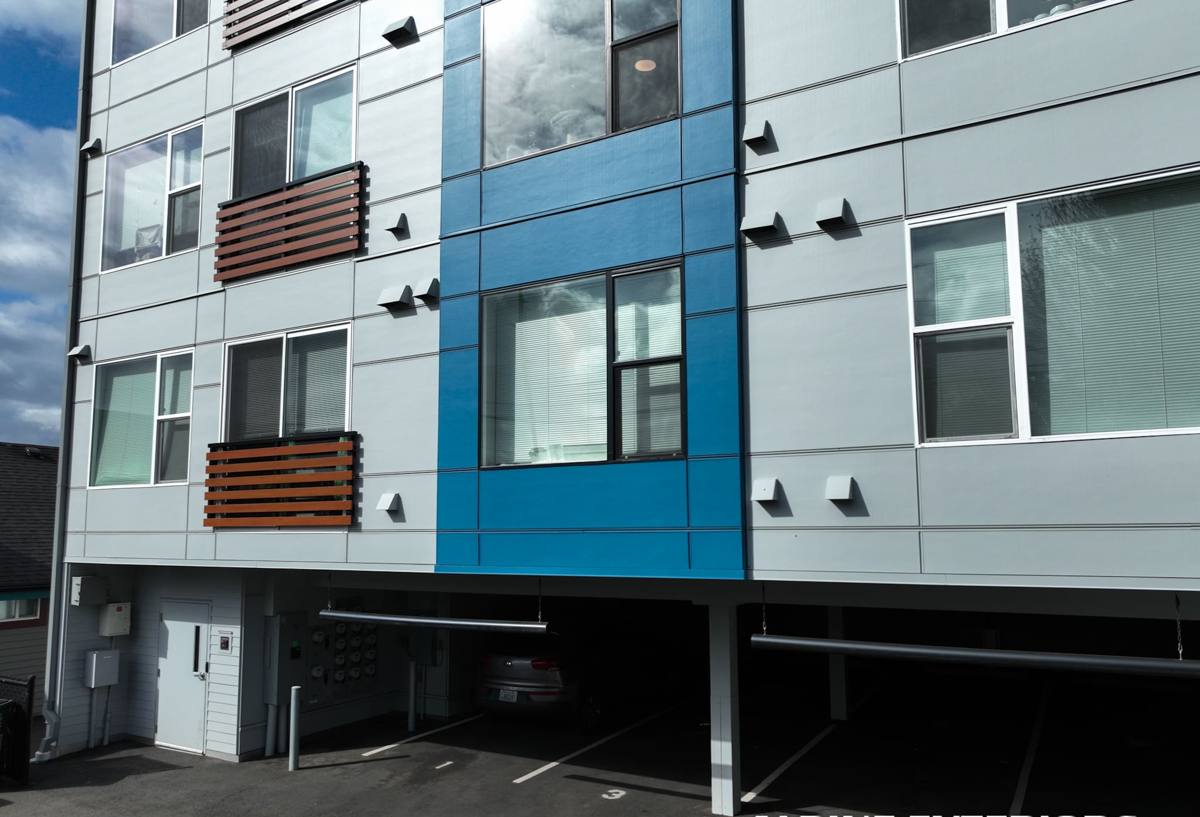
Signs a Barkley Home Needs Window Replacement
Most homeowners don't call us because a window shattered. They call because something's been bugging them for a while and they finally want it fixed for good. Here's what we typically hear about, and what it usually means:
- Windows that are hard to open, won't stay up, or the crank/lock mechanism binds — often a sign the frame has shifted or the hardware has corroded
- Fog or moisture trapped between panes — the seal has failed and the insulated glass unit can't be repaired, only replaced
- Soft, spongy, or discolored trim and sills at the base of the window — a sign water is getting in around the frame, not just condensing on the glass
- Noticeable draft or cold spot near the window even with it fully closed
- Visible daylight or gaps between the sash and frame
- Rising energy bills with no other explanation, especially in older single-pane or early double-pane windows
- Paint that keeps failing on the interior sill no matter how often it's touched up
Any one of these on its own might just need a repair. Two or three together, especially on a window that's original to the house, usually means replacement is the more honest recommendation.
What a Correct Window Replacement Job Actually Involves
Swapping the visible parts of a window is the easy part. What determines whether that window is still performing well in fifteen years happens in the details most homeowners never see.
Removal and Structural Check
Once the old window is out, we check the rough opening — the framing, the sill, and the sheathing around it — for rot or soft wood before anything new goes in. In this climate, it's common to find some degree of hidden water damage even on a window that looked fine from outside. We'd rather find it now and address it properly than cover it up and have it resurface as a bigger problem later.
Flashing and Water Management
This is the step that matters most for wind-driven rain. Every opening gets a proper water-resistive barrier tie-in and flashing sequence — sill pan, side flashing, and head flashing installed in the right order so that any water that does reach the frame is directed back out, not into the wall. This is also the step that's easiest to shortcut, and the one that causes the most callbacks industry-wide when it's skipped or rushed.
Insulation and Air Sealing
The gap between the new window frame and the rough opening needs to be insulated and air-sealed correctly — not overpacked with expanding foam, which can bow the frame, and not left loose, which leaves a draft path. Getting this right is part of why the window performs the way it's supposed to.
Finish Work
Interior and exterior trim, caulking, and touch-up paint or finish work close out the job. This is also where we double-check operation — every sash opens, locks, and seals the way it should before we call it done.
Choosing a Window for Coastal Whatcom County Conditions
There's no single "best" window material — there's a best match for a given house, budget, and exposure. In a salt-air, high-rain climate like Barkley's, the trade-offs are worth understanding before you decide.
| Material | Corrosion / Salt-Air Resistance | Maintenance | Typical Trade-Offs |
|---|---|---|---|
| Vinyl | Very good — no metal hardware to corrode on the frame itself | Low; occasional cleaning | Budget-friendly; limited color/finish options; can't be repainted |
| Fiberglass | Excellent — very stable in moisture and temperature swings | Low | Higher upfront cost; strong long-term value in wet climates |
| Aluminum-clad wood | Good on the exterior clad surface; interior wood needs protection from moisture | Moderate — interior finish needs occasional attention | Attractive interior wood look; more sensitive to installation quality |
| Bare aluminum | Poor to fair without upgraded finishes — most exposed to salt-air corrosion | Higher | We generally steer clients away from this in coastal exposures for that reason |
We don't push one brand or material on every job. What we do insist on is glass and hardware rated for the exposure the window will actually face, and we'll tell you honestly if a product isn't a good fit for a particular wall of a Barkley home rather than sell you something that'll disappoint you in five years.
How We Handle a Barkley Window Replacement Project
The process is straightforward, and we keep it that way on purpose.
- On-site estimate. We look at each window in question, check the framing and trim condition, and talk through what you actually need versus what's optional.
- Measurement and ordering. Every opening gets measured individually — older homes are rarely perfectly square, and window orders are built to the actual opening, not a catalog assumption.
- Install day. Old windows come out, openings are inspected and repaired if needed, new windows go in with proper flashing and insulation, and finish work is completed.
- Cleanup and walkthrough. We clean up the work area and walk every window with you — opening, locking, and checking the seal — before we consider the job finished.
Most single-window jobs are done in a day; multi-window projects are scheduled around weather, since flashing work depends on a dry opening.
Cost Factors for Window Replacement in Barkley
Every home is different, so we won't quote a number without seeing the windows, but these are the main variables that move the price up or down:
| Factor | Why It Matters |
|---|---|
| Window size and style (single-hung, casement, bay/bow, etc.) | Larger and more complex styles cost more in materials and labor |
| Material (vinyl, fiberglass, aluminum-clad) | Directly affects unit cost and long-term maintenance |
| Condition of the rough opening | Hidden rot or framing repair adds time and material before the new window can go in |
| Number of windows done at once | Bundling multiple windows into one project generally lowers the per-window labor cost |
| Trim and finish complexity | Custom or historic trim profiles take more time to match than standard trim |
| Access | Second-story or hard-to-reach windows take longer and may need extra equipment |
As a rough guide, straightforward vinyl replacement windows for an existing opening tend to run in the low-to-mid four figures per window installed, with fiberglass or larger/custom units running higher. Anything with structural repair involved is priced once we've actually opened the wall and can see what's there — we'd rather give you an honest range than a number we have to walk back later.
Why a Crew That Already Works Barkley Matters
A window replacement contractor who works this specific pocket of Whatcom County regularly has already seen how these homes were built, what generation of windows they typically came with, and where water tends to find its way in on this kind of exposure. That's not a small thing — it means fewer surprises during the job and a flashing and sealing approach that's already been proven against this area's rain patterns, not generic advice pulled from a manual written for a drier climate.
It also means we're not driving in from out of the area for a warranty callback. If something needs a second look after the install — a stiff lock that needs adjustment, a bead of caulk that needs attention after the first hard season — we're already working nearby and can get to it without it turning into a scheduling ordeal.
Maintaining New Windows Through Moss Season
A correctly installed window still benefits from a little seasonal attention in this climate:
- Keep gutters and downspouts clear so water isn't sheeting down past window heads during heavy rain
- Trim back vegetation and clear moss or debris from sills and tracks so water can drain instead of pooling
- Check exterior caulking once a year, especially after the first winter, and touch up any cracking before it becomes a leak path
- Operate every window a few times through the year — locks and hardware that sit unused are more prone to sticking in damp conditions
- Wipe down tracks and weep holes so they don't clog with moss spores and organic debris
None of this is heavy maintenance — it's five minutes per window a couple times a year — but skipping it is how a well-installed window still ends up with an avoidable problem down the road.
If you're dealing with a stubborn window, a drafty room, or you just want an honest read on what your Barkley home actually needs, we're happy to take a look. The estimate is free, there's no pressure attached to it, and you'll get a straight answer either way — use the form below to get started.