 Glenhaven Siding
 Building a Deck That Actually Holds Up in Bellingham
A deck in Bellingham does not live the same life as a deck in a dry inland climate. Between Bellingham Bay's salt-laden air, the long stretch of driving rain that runs from fall through spring, and a moss season that can linger for months on shaded north-facing lots, a deck here is under near-constant pressure. Most of the deck problems we get called out to inspect in the Bellingham area were not caused by bad luck. They were caused by a deck that was built for a drier, calmer climate than the one Whatcom County actually has.
This page covers what a deck built for Bellingham conditions actually needs, how our process works from first visit to final walkthrough, and what to expect from us if you hire Glenhaven Siding Company to build or rebuild your deck.
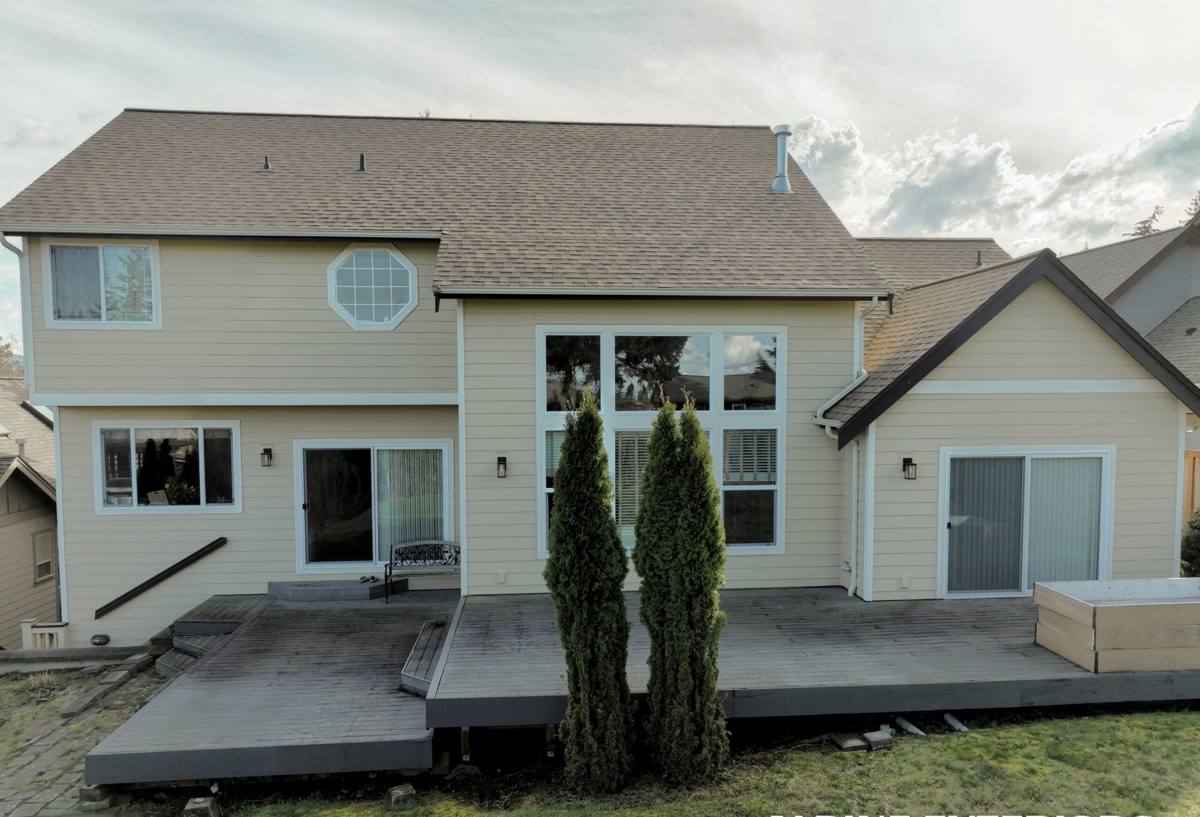
What Salt Air, Rain, and Moss Actually Do to a Deck
These three factors don't act alone, they compound each other, and understanding how each one attacks a deck helps explain why some of our choices differ from what a big-box deck kit or a generic online plan would tell you.
Salt Air
Bellingham's proximity to the water means airborne salt reaches decks even blocks away from the shoreline, especially on exposed or elevated sites. Salt accelerates corrosion in exposed metal fasteners, joist hangers, and railing hardware. A fastener rated for general outdoor use inland can start showing rust streaks within a few seasons near the coast; a fastener rated for coastal or marine exposure will not.
Driving Rain
Rain that falls straight down is far easier to manage than rain that's pushed sideways by wind, and Bellingham gets plenty of the latter off the Sound and the Strait. Driving rain finds its way into gaps that vertical rain never would: under railing post bases, behind ledger boards, into end-grain cuts that weren't sealed, and along fastener heads that were never properly countersunk or capped.
Moss and Sustained Damp
Whatcom County's moss season is long because the conditions that grow moss — shade, moisture, and mild temperatures — persist for much of the year here. Moss doesn't just look bad on decking boards; it holds moisture against the wood surface, keeps that surface from drying between rain events, and creates a slick, slip-hazard film. On composite decking, moss buildup in grain texture is mostly cosmetic, but on real wood it accelerates surface decay.
Choosing Decking Material for a Bellingham Climate
There is no single "best" decking material — there's a best material for your budget, your site's sun and shade exposure, and how much maintenance you're realistically going to do. Here's how the common options actually compare under Whatcom County conditions.
| Material | How It Handles Bellingham Weather | Maintenance Reality | Typical Lifespan Here |
|---|---|---|---|
| Pressure-treated wood | Good rot resistance when installed with proper drainage and gaps; still needs sealing to shed driving rain and resist moss staining | Annual or biennial cleaning and re-sealing recommended | 15-20 years with upkeep |
| Cedar | Naturally decent rot and insect resistance, but softer surface holds moisture longer in shaded, moss-prone spots | Regular cleaning and periodic finish renewal | 15-20 years with upkeep |
| Composite decking | Does not rot or split; moss can grow on the surface film in constant shade but doesn't damage the board itself | Periodic washing to keep moss and algae from building up; no sealing or staining | 25-30+ years, varies by product warranty |
| PVC/capped polymer decking | Fully sealed surface resists moisture and staining well even in low-light, damp corners of a lot | Lowest maintenance of the group; occasional washing | 25-30+ years, varies by product warranty |
We're honest with clients that composite and capped polymer decking cost more upfront than wood, but for a shaded, damp lot — which describes a lot of Bellingham backyards — the reduced maintenance burden and moss resistance often make up the difference over the life of the deck. On sunnier, well-drained sites, a properly sealed wood deck can perform very well and costs less to build. We'll walk your specific site with you rather than push one material as a default.
The Structural Basics That Actually Matter
Decking material gets most of the attention, but the structure underneath is what determines whether a deck is safe and long-lasting. This is also where corner-cutting is hardest to spot after the fact — and most expensive to fix once decking is installed on top.
Footings
Footings need to be sized and set to the depth appropriate for the soil and frost conditions on your specific lot, and they need to bear on undisturbed or properly compacted soil. A footing that's too shallow or poured on loose fill will shift over time, and a shifting footing shows up later as a deck that's gone slightly out of level or a railing post that's started to lean.
Ledger Board Flashing
Where a deck attaches to the house, the ledger board connection is one of the most common failure points we find on older decks in wet climates. Without proper flashing that directs water away from the house band joist, water tracks behind the ledger board and rots both the ledger and the house framing behind it — often invisibly, until the damage is significant. Correct flashing at this joint is not optional in a climate like ours.
Joist Hangers and Fasteners
Structural connectors need to be rated for exterior, and in a coastal-influenced climate like Bellingham's, we lean toward hardware rated for higher corrosion resistance rather than the minimum galvanized spec, particularly on decks closer to the water or in more exposed locations.
Building for Drainage From Day One
Almost every deck problem we see traces back to water that had nowhere to go. Good drainage isn't a single feature, it's a set of decisions made throughout the build.
- Decking boards spaced to allow water to pass through rather than pool on the surface
- A slight slope built into the frame so water sheets off rather than sitting
- Gaps maintained where decking meets the house, posts, and rim boards so trapped moisture can dry out
- Ledger flashing that sheds water away from the house structure, not just into a static gap
- Post bases set above grade or on proper footings so the post end grain isn't sitting in standing water
- End cuts and field-cut lumber sealed before installation, since factory sealant doesn't cover cuts made on site
None of these items are visible once the deck is finished, which is exactly why they matter — they're the difference between a deck that looks fine for three years and then needs major repair, and one that's still solid at fifteen.
How We Approach a Deck Build in Bellingham
- Site walk and assessment. We look at sun exposure, drainage patterns, existing structure (if it's a rebuild), and proximity to the water or open exposure that affects hardware choice.
- Material and layout discussion. We go through decking material trade-offs based on your site's actual shade and moisture pattern, not a generic recommendation.
- Permitting. Deck projects in Whatcom County and the City of Bellingham may require permits depending on size, height, and attachment to the house. We handle this as part of the project scope rather than leaving it to you to sort out.
- Footings and framing. Footings set to proper depth, ledger flashing installed correctly at the house connection, framing built with corrosion-appropriate hardware.
- Decking, railing, and finish work. Installed with the fastening method and spacing appropriate to the chosen material.
- Final walkthrough. We go over the finished deck with you, including what maintenance (if any) the material you chose will need going forward.
Railings and Hardware Near the Water
Railing systems take a lot of abuse in a coastal-influenced climate — they're handled constantly, they're fully exposed to driving rain, and metal components are the first thing salt air attacks. We pay attention to a few things here that get overlooked on lower-bid jobs: post-to-frame connections rated for the actual loads involved, cap rail joints detailed to shed water rather than trap it, and fastener and bracket finishes chosen for the exposure level of your specific site rather than the cheapest available option. A railing system that fails is a safety issue, not just a cosmetic one, so this is not an area where we cut corners to save on materials.
What Maintenance Actually Looks Like Here
Every decking material needs some maintenance in this climate — the question is how much. Here's a realistic annual checklist for a Bellingham-area deck, regardless of material:
- Clear leaves, needles, and organic debris from between boards and along the house ledger before fall rains set in
- Wash the deck surface to remove moss and algae buildup, especially on shaded sections
- Check railing posts and connections for movement or looseness
- Inspect fasteners and visible hardware for rust staining, which can signal a hardware or flashing issue worth addressing early
- For wood decking, re-seal or re-stain on the schedule appropriate to the product used
- Confirm gutters and downspouts near the deck are directing roof water away rather than onto the deck surface
Skipping this list doesn't cause sudden failure, but it does shorten the life of the deck and makes small issues into expensive ones by the time they're noticed.
Why Hire a Crew That Already Works Bellingham
A lot of what separates a deck that lasts from one that doesn't isn't visible in a photo or a sales pitch — it's in the flashing details, the hardware spec, and the drainage decisions made before the decking ever goes down. Those are exactly the details that a crew unfamiliar with Whatcom County's rain patterns, moss season, and salt air exposure is most likely to underspec, because they're building to a generic standard instead of a local one. We build decks in this climate regularly, which means we're not guessing at what holds up here — we're applying what we've already seen work and what we've seen fail.
If you're planning a new deck, replacing an aging one, or want a second opinion on a deck that's showing early signs of trouble, we're happy to take a look and give you a straightforward assessment. Reach out for a free, no-pressure estimate using the form below.