 Glenhaven Siding
 Building New in Sudden Valley Means Building for the Weather You Actually Have
Sudden Valley sits close enough to the water that salt air, driving rain, and a long moss season are just part of owning a home here. When a house is going up from the studs out, the window installation is one of the few chances anyone gets to build moisture protection in correctly the first time — instead of chasing leaks and rot after the siding, trim, and paint are already done. New-construction windows aren't the same product or the same job as a replacement window dropped into an existing opening, and treating them the same is where a lot of long-term problems start.
We install new-construction windows on framed openings before or during the exterior weather barrier and siding phase, working directly with the flashing, house wrap, and sheathing details rather than around them. For Sudden Valley specifically, that means every opening gets sized, flashed, and sealed with the assumption that wind-driven rain will hit that wall at some point — because in Whatcom County, it will.
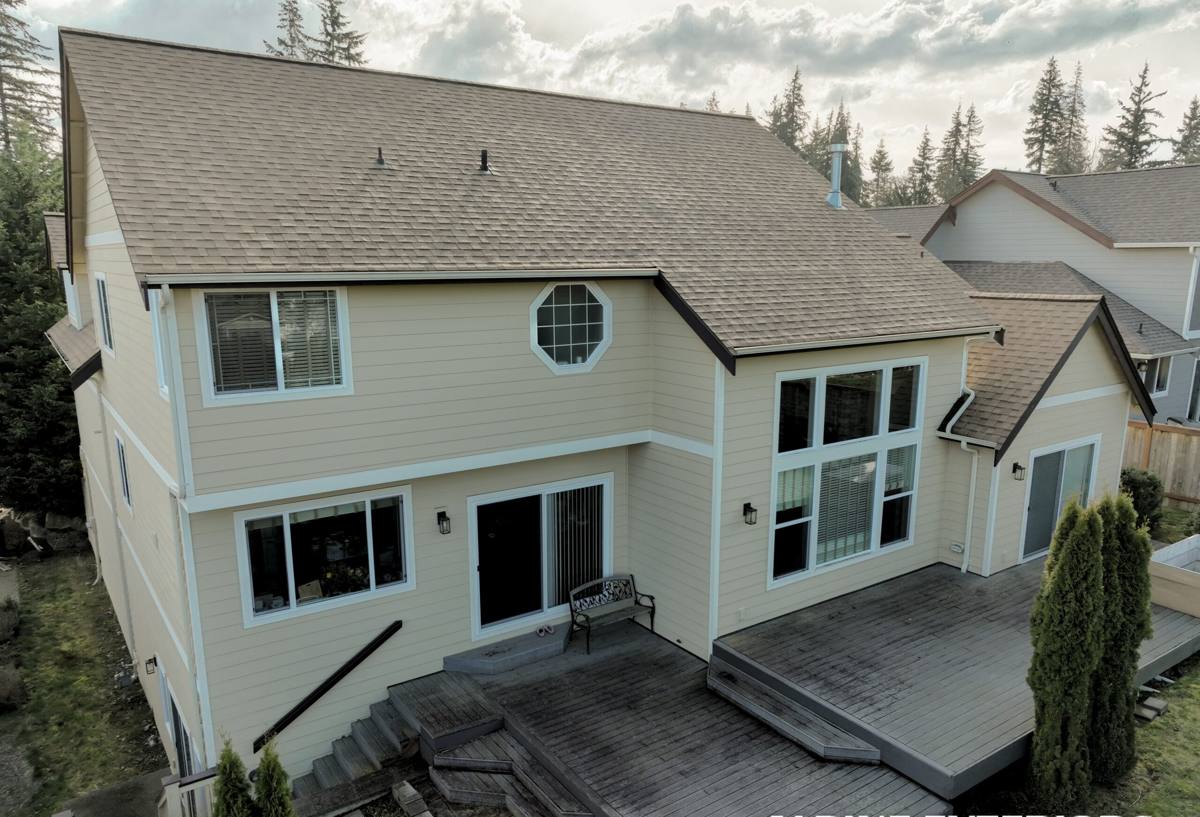
What Whatcom County's Climate Actually Does to a New Window Opening
A few regional realities shape how we approach every new-construction window job out here, and they're worth understanding before framing is even finished:
- Salt-influenced air speeds up corrosion on unprotected fasteners, cheap flashing tape, and lower-grade hardware — small details that don't show up as a problem for a few years, then show up all at once.
- Driving rain off the water doesn't just fall straight down; it gets pushed sideways into wall assemblies, which means flashing has to shed water outward and downward, not just sit there as a barrier.
- A long moss and mildew season means anything that traps moisture against wood — sill pans that don't drain, gaps in house wrap, missing back-dam flashing — turns into hidden rot faster than in a drier climate.
- Temperature swings between damp mornings and cool nights cause condensation inside wall cavities if the window isn't properly air-sealed to the interior side, not just weather-sealed on the exterior.
None of this is exotic. It's the same marine climate that shapes construction practice across Whatcom County, but it does mean a window installer who mostly works drier inland jobs may not default to the flashing sequence a Sudden Valley home actually needs.
Why New Construction Is a Different Job Than Replacement
A replacement window goes into an opening that already has trim, siding, and interior finish around it — the goal is to work within what's there with minimal disruption. New-construction windows are installed into a bare framed opening with a nailing fin, which lets us integrate the window directly into the weather-resistive barrier: house wrap laps over the top flange, flashing tape seals the sides and head, and a sill pan directs any water that gets past the glazing back out to the exterior instead of into the wall cavity. Done right, this is a more durable, more weathertight assembly than most replacement scenarios can achieve — but it only works if the sequence is followed in the correct order, every time, on every opening.
What a Correct New-Construction Window Installation Involves
There's a specific order of operations that makes the difference between a window that sheds water for decades and one that quietly lets moisture into the wall assembly. We follow this sequence on every opening:
- Rough opening check. Confirm the framed opening is square, plumb, and sized correctly with the manufacturer's required clearance — too tight and the window can bind or bow; too loose and shimming becomes a weak point.
- Sill pan flashing. A sloped, back-dammed sill pan goes in first, so any water that reaches the sill drains back outside rather than pooling against the framing.
- Window set and shim. The unit is set into the opening, leveled, plumbed, and shimmed at the manufacturer's specified points — not just at the corners.
- Fastening. Nailing fin or installation clips are fastened per the manufacturer's schedule, with corrosion-resistant fasteners appropriate for a coastal-influenced climate.
- Flashing integration. Side flashing, then head flashing, are lapped in "shingle style" — each layer overlapping the one below it — so water always sheds downward and outward, never into a seam.
- House wrap tie-in. The weather-resistive barrier is cut, lapped, and taped back over the flashing so the window becomes part of one continuous drainage plane, not a separate patch in it.
- Interior air-sealing. A low-expansion foam or sealant is used around the interior perimeter to control air leakage and condensation risk without bowing the frame.
- Exterior trim and sealant. Trim goes on last, with a backer rod and sealant joint sized to move with the building rather than crack over time.
Skipping or reordering any of these steps is how leaks happen — usually not in year one, but three, five, or ten years down the road, after the framing behind the window has already been absorbing moisture the whole time.
Window Types and Materials That Hold Up in a Coastal Climate
New construction gives you a real choice of window type and frame material, and that choice matters more here than in a drier inland climate. The table below reflects general trade knowledge, not a specific brand endorsement.
| Frame Material | How It Handles Salt Air & Rain | Maintenance |
|---|---|---|
| Vinyl | Doesn't corrode; performs consistently in salt-influenced air; seams need quality welds to stay tight | Low — occasional cleaning |
| Fiberglass | Very stable in temperature swings and moisture; strong resistance to warping | Low — very durable finish |
| Aluminum-clad wood | Attractive interior wood look; exterior cladding needs sound seams to keep moisture off the wood core | Moderate — watch cladding seams over time |
| Bare wood | Highest maintenance burden in a wet, moss-prone climate; needs consistent repainting/sealing | High — regular upkeep required |
We don't push homeowners toward one material across the board — a wood-interior clad window can be the right call for the look a homeowner wants, as long as they understand the maintenance commitment that comes with it in this climate. What we do insist on is correct flashing and installation regardless of which material gets chosen, because even the best window frame will fail early if water gets behind it.
Glass and Performance Considerations
Beyond frame material, double- or triple-pane glass with a low-E coating and an appropriate gas fill helps with both energy performance and condensation resistance — relevant in a climate where interior humidity and cool glass surfaces can otherwise lead to fogging or moisture buildup on the inside of the glass during damp months.
Our Process for New-Construction Window Jobs in Sudden Valley
Because we already work in this area, we're not learning the local conditions on your job. Our process for a Sudden Valley new-construction window install typically looks like this:
- Plan review and take-off. We review the window schedule from the plans, confirm sizes and swing/operation types, and flag any openings that need special flashing attention (near rooflines, decks, or grade-level transitions).
- Coordination with framing and siding trades. Window installation has to happen at the right point in the build sequence — after sheathing and house wrap are on, before siding closes in the opening. We coordinate timing so nothing gets rushed or installed out of order.
- Installation following the sequence above, opening by opening, with the same flashing discipline on every unit regardless of size.
- Walkthrough and documentation. Before siding covers the flashing work, we do a check of every opening so problems get caught while they're still easy to fix — not after the wall is closed up.
Why Local Experience Matters for This Specific Job
New-construction window installation is detail work, and the details that matter shift by region. A crew that mostly installs in a dry inland climate may not default to a sloped, back-dammed sill pan on every opening, or may use a flashing tape that isn't rated for the temperature and moisture range we get near the water. In Sudden Valley, those shortcuts show up later as soft framing around a window, moss and staining on trim, or a musty smell that traces back to a wall cavity that's been slowly wet for years.
Working regularly in Whatcom County means we're not guessing at wind-driven rain exposure, salt air effects on hardware, or how long moss season really runs here — it's the baseline we build every job around.
Common Mistakes We See (and Avoid)
A few installation shortcuts cause a disproportionate share of the window-related water problems we get called to look at on other builds:
- Skipping the sill pan or relying on caulk alone to keep water out of the sill area.
- Taping flashing in the wrong order so water gets directed into a seam instead of over it.
- Over-driving fasteners, which can bow the frame and compromise the weather seal even on a brand-new window.
- Foaming the exterior gap instead of the interior, which traps moisture against the frame rather than letting the assembly dry.
- Using standard fasteners instead of corrosion-resistant hardware in a salt-air environment.
None of these mistakes are visible on installation day. They show up years later as the kind of repair that costs far more than doing it right the first time would have.
Planning Considerations Before You Order Windows
If you're still in the planning or framing stage of a Sudden Valley build, a few things are worth settling before windows are ordered:
- Confirm rough opening sizes against the actual window schedule — changes after ordering get expensive fast.
- Decide on frame material with the maintenance trade-offs above in mind, not just up-front cost.
- Ask your builder or window installer what flashing tape and sill pan system will be used, and whether it's rated for coastal/marine exposure.
- Coordinate window delivery timing with the framing schedule so units aren't sitting exposed on site longer than necessary.
Getting these decisions right before installation day starts saves both time and callbacks once the home is closed in.
If you're building new in Sudden Valley and want the window installation handled with the flashing and sealing details this climate actually calls for, we're glad to walk the plans with you and give you a straightforward, no-pressure estimate — just fill out the form below.