 Glenhaven Siding
 Building New in Blaine? Your Windows Need to Be Installed for This Coastline, Not a Catalog Photo
Blaine sits right on the water, tucked against Semiahmoo Bay and Drayton Harbor near the Canadian border, which means new homes here take on a combination of weather stresses that inland Whatcom County builds simply don't see. Salt-laden air off the Strait of Georgia corrodes unprotected hardware and fasteners over time. Wind-driven rain off the water pushes moisture sideways into wall assemblies, not just straight down. And the long grey stretch of fall and winter — Blaine's version of "moss season" — keeps siding, trim, and window perimeters damp for weeks at a stretch. A window that's simply screwed into a rough opening and caulked around the edges will survive a few dry Puget Sound summers. It won't survive ten winters of that combination.
New construction is actually the best time to get this right, because the wall is still open. Every flashing layer, every lap sequence, every fastener choice is visible and correctable before siding closes it all up. Get it right at framing and the windows will perform quietly for decades. Get it wrong and you're looking at rot, stained drywall, or a warranty callback in a wall that's already finished.
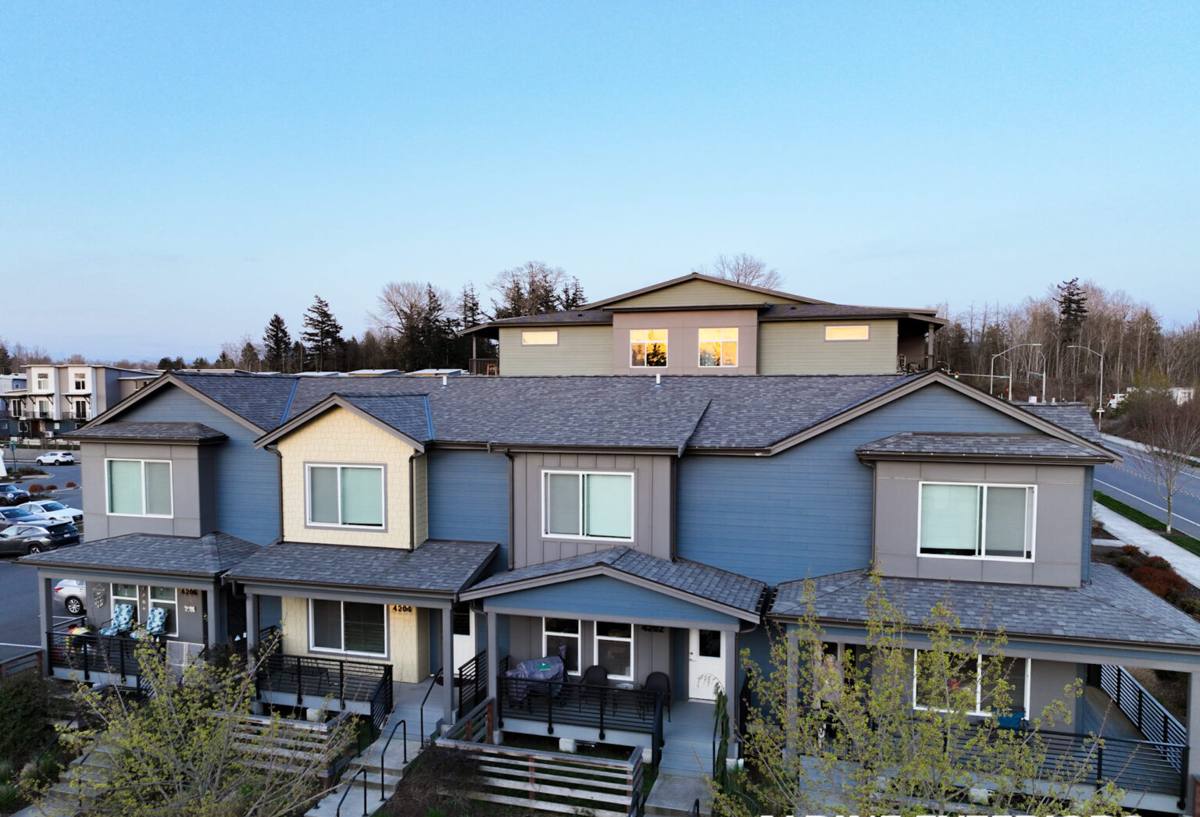
What Blaine's Marine Climate Actually Demands from a Window Install
We treat every new-construction window install in Blaine as a coastal install, not a generic Pacific Northwest install. That distinction matters in three specific ways:
Salt Air and Corrosion
Homes within a mile or two of the water see accelerated corrosion on exposed fasteners, cheap window hardware, and unprotected metal flashing. We spec corrosion-resistant fasteners and flashing metals for anything near the shoreline and avoid galvanic pairings — mixing incompatible metals at flashing laps or fastener contact points — that speed up corrosion instead of preventing it.
Wind-Driven Rain
Storms coming off the water don't just fall on a house, they hit it sideways. That means water finds its way to window flanges and rough openings under pressure, not gravity. A sill pan and a properly shingle-lapped weather-resistive barrier (WRB) aren't optional extras in Blaine — they're the difference between water shedding away from the frame and water finding a path behind it.
Persistent Damp and Moss Season
Whatcom County's long wet season keeps exterior surfaces damp for extended periods, which is exactly the condition mold, mildew, and moss favor. Around windows specifically, that means we pay close attention to drainage — any water that does get past the outer defenses needs a clear path back out, not a place to sit and soak into sheathing.
The Anatomy of a Correct New-Construction Window Install
"New-construction" windows (sometimes called flange or nail-fin windows) are designed to be installed before siding goes on, with the nailing flange integrated directly into the wall's water management system. Done correctly, the sequence looks like this:
- Rough opening check — verify the opening is square, plumb, and sized to the manufacturer's tolerance before the window ever goes in.
- Sill pan flashing — a sloped, sealed pan at the bottom of the opening so any water that reaches the sill drains back outward instead of sitting on the framing.
- Window placement and fastening — set, leveled, and fastened per the manufacturer's schedule, with shims placed to avoid distorting the frame (a distorted frame is a common cause of operable windows that stick or won't seal).
- Flange integration with the WRB — house wrap and flashing tape applied in a strict shingle-lap order (sides, then head, then the WRB itself lapping over the top flange) so water always drains down and over the layer below, never behind it.
- Head flashing — a drip cap or integrated head flashing above the window to break the flow of water running down the wall before it reaches the top of the frame.
- Interior air sealing — a continuous seal on the interior side of the rough opening, separate from the exterior water management, to control drafts and condensation.
Every one of those steps is inspectable at the time it's done and invisible once the siding is up. That's exactly why the crew doing it matters more than the window brand.
Choosing Window Frame Materials for a Blaine Building Site
Frame material affects how a window handles salt air, temperature swings, and years of damp exposure. There's no single "best" choice for every project — it depends on the home's exposure, budget, and the look you're going for — but here's how the common options actually compare in this climate:
| Frame Material | Salt Air / Corrosion | Moisture Behavior | Maintenance |
|---|---|---|---|
| Vinyl | Does not corrode; hardware quality varies by manufacturer | Won't rot; can expand/contract more with temperature swings | Low — occasional cleaning |
| Fiberglass | Excellent — dimensionally stable, resists pitting | Won't rot; holds paint and finishes well over time | Low to moderate |
| Wood-clad (exterior clad, interior wood) | Good if cladding and flashing details are correct | Interior wood needs the exterior seal to stay intact | Moderate — watch clad seams over time |
| Aluminum | Can corrode or pit near salt air without a marine-grade finish | Conducts heat/cold; more prone to interior condensation in this climate | Moderate to high near the water |
We don't push one brand or material as universally correct. What we will tell a homeowner honestly is when a given product's warranty, hardware, or finish isn't built for a shoreline exposure — that's a maintenance and longevity conversation, not a knock on the manufacturer.
Energy Code and Performance for Whatcom County Builds
New construction in Washington has to meet the Washington State Energy Code, which sets minimum performance requirements for fenestration (windows and doors) based on climate zone. Whatcom County falls in a colder climate zone than much of Western Washington, so U-factor and other performance targets are stricter here than in, say, Seattle. On a new build, window selection isn't just an aesthetic or comfort decision — it has to clear code review before occupancy.
Beyond the code minimum, a few performance factors matter specifically for a Blaine site:
- Lower U-factor glass reduces heat loss during the long, damp winter stretch.
- Proper glazing and framing reduce interior condensation, which matters in a climate where humidity sits high for months at a time.
- Good weatherstripping and hardware quality resist the constant flex of wind gusts common on exposed, water-facing lots.
How Our New-Construction Window Process Works
Because we're a siding contractor as much as a window installer, we look at window installation as part of the whole wall assembly, not an isolated task. On a new build in the Blaine area, that typically looks like:
- Coordination with the builder or GC — we confirm rough opening sizes and window schedule before framing is closed in, so there are no surprises at install day.
- Pre-install inspection — checking rough openings for square, level, and proper sheathing before a single window goes in.
- Flashing and sill pan installation — done to the sequence above, matched to the WRB and siding system going over it.
- Window setting and fastening — per manufacturer specification, with attention to shimming so sashes operate correctly for the life of the home.
- Handoff to siding — since we handle both trades, there's no gap between "window guy" and "siding guy" pointing fingers at each other if something doesn't line up later. One crew, one accountable sequence.
Why a Crew That Already Works Blaine Is Worth Choosing
Window flashing details that work fine on a sheltered inland lot can fail on an exposed shoreline lot a few miles away. A crew that's installed windows across Blaine and the rest of Whatcom County has already seen which details hold up against driving rain off the water and which ones cause callbacks two winters later. That's not something you can learn from a spec sheet — it comes from doing the work in this specific climate, on this specific coastline, repeatedly.
It also matters for something more basic: being available. New construction schedules move fast, and a subcontractor who's local and already routes through the area doesn't add days of delay waiting for a crew to drive up from out of town.
A Practical Checklist for Homeowners and Builders
Whether you're a homeowner working with a builder or a GC lining up subs, these are worth confirming before windows go in on a Blaine new build:
- Rough openings are checked for square and level before the window arrives on site.
- Sill pan flashing is specified and installed at every window opening, not just the ones facing the water.
- Flashing tape and WRB are lapped in the correct shingle order — sides, then top, then wrap over the flange.
- Fasteners and flashing metals are corrosion-resistant and compatible with each other.
- Selected windows meet or exceed the Washington State Energy Code fenestration requirements for this climate zone.
- There's a single point of accountability between the window install and the siding that goes over it.
What Affects the Cost of New-Construction Window Installation
Pricing on a new build varies with window count, size, frame material, and access, but these are the main factors that move the number up or down:
| Factor | Why It Affects Cost |
|---|---|
| Frame material | Fiberglass and wood-clad typically cost more than vinyl; performance and finish differ accordingly |
| Window size and count | Larger openings and higher window counts increase both material and labor |
| Flashing and sill pan detailing | Proper water management takes more time than a minimal install, and it's not a place to cut corners on a shoreline lot |
| Building height and access | Second-story or hard-to-access openings take longer to flash and set correctly |
| Coordination complexity | Tight new-construction schedules with multiple trades require more planning time |
We'll always walk through these factors with a specific bid rather than quoting a flat per-window price, since the right approach for an exposed waterfront lot and a sheltered inland lot in the same build can differ.
Let's Talk About Your Blaine New Build
If you're framing a new home in Blaine or coordinating windows for a build in the surrounding Whatcom County area, we're happy to walk the site, review your window schedule, and give you a straightforward estimate — no pressure, no upsell. Use the form below to get in touch and we'll follow up to talk through your project.