 Glenhaven Siding
 Roof Repair in Geneva: A Job Shaped by the Local Climate
Geneva sits in the stretch of Whatcom County where a roof rarely gets an easy year. Salt-tinged marine air moves through constantly, rain arrives driven sideways by wind more often than it falls straight down, and moss season runs long enough that some roofs never fully dry out between storms. For homes in and around Glenhaven, that combination means a roof repair isn't just about patching whatever is leaking today — it's about understanding why that spot failed in this climate, and making sure the fix actually holds through the next several wet seasons.
We work on roofs in this area regularly, which means we're not guessing at how Geneva's weather behaves. We've seen where the moss builds up first, which flashing details tend to fail early, and what kind of repair actually lasts versus one that looks fine on a dry afternoon and fails again by winter.
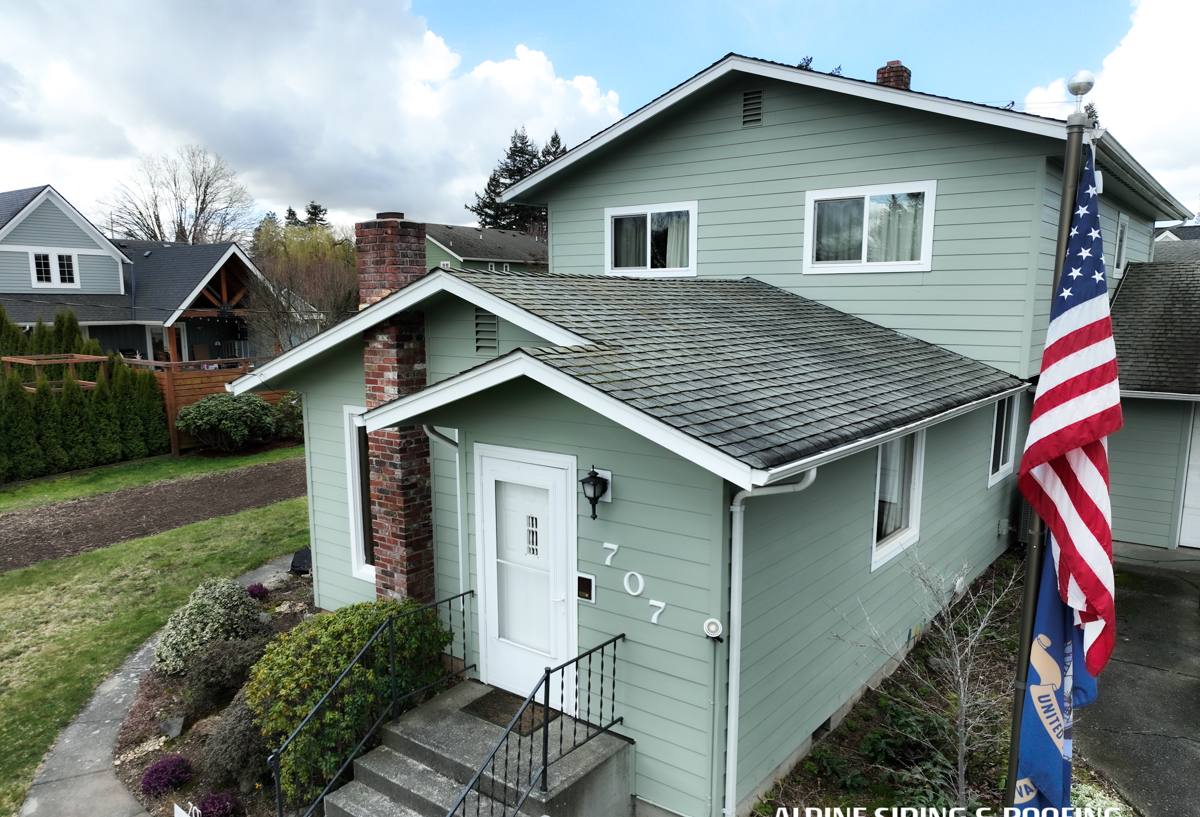
What Driving Rain, Salt Air, and Moss Actually Do to a Roof
Moss and Trapped Moisture
Moss doesn't just sit on top of shingles — it holds water against the roof surface long after the rest of the roof has dried. On shaded, north-facing slopes and anywhere overhung by trees, that trapped moisture works into shingle edges and granule surfaces, and over years it accelerates the same kind of wear a roof would otherwise take decades to show. Left unaddressed, moss can lift shingle tabs enough to let wind-driven rain underneath, which is often how a "just cosmetic" moss problem turns into an actual leak.
Wind-Driven Rain at Flashing Points
Most of Geneva's rain doesn't fall straight down — it gets pushed sideways and upward at eaves, valleys, and anywhere the roof meets a wall, chimney, or vent pipe. Flashing that would hold up fine in a calmer, drier climate can let water track underneath here if it's lapped or sealed even slightly wrong. That's why the large majority of roof leaks we find in this area start at a flashing detail, not out in the open field of the roof.
Salt Air and Fastener Corrosion
Marine air carries enough salt to matter over time, especially on exposed metal — flashing, fasteners, and drip edge. Corroded fasteners lose their grip and can back out or split the material around them, and corroded flashing metal eventually pits and opens seams that used to be watertight. It's a slow process, which is exactly why it often goes unnoticed until a repair job uncovers it.
Signs a Geneva Roof Needs Repair, Not Just a Cleaning
Homeowners often reach out because of a specific symptom, but not every symptom means the same thing. Here's what's actually worth a closer look:
- Dark streaking or thick moss growth concentrated on shaded or north-facing slopes
- Granules collecting in gutters or at downspout outlets, a sign shingles are wearing thin
- Curling, cupping, or lifted shingle tabs, especially near valleys and eaves
- Water stains on interior ceilings, particularly ones that appear or worsen after wind-driven storms
- Visible daylight or gaps around vent pipes, chimneys, or skylights from the attic
- Soft or spongy spots when walking the roof, which can indicate deck damage underneath
- Rust streaks or visibly corroded flashing at valleys, walls, or chimney bases
Any one of these on its own might be minor. Several together, or any sign of interior water intrusion, means it's worth having someone look before the next storm cycle rather than after.
What a Correct Roof Repair Actually Involves
Finding the Real Source, Not Just the Visible Symptom
Water tracks along the underside of roofing material before it ever shows up as a stain inside, so the place a leak becomes visible indoors is often several feet from where it's actually entering the roof. A repair that only patches the visible spot without tracing the water's actual path tends to resurface within a season or two — usually during the next hard wind-driven rain.
Matching Materials to What's Already There
A repair patch needs to match the existing roofing material's type, weight, and, where it matters for appearance, color and profile — not just be "close enough." Mismatched shingles or flashing metal can create their own weak points, either through incompatible expansion behavior or simply by not lapping correctly with what's already on the roof.
Flashing, Underlayment, and Ventilation
Because most leaks in this climate originate at flashing, a repair worth doing usually means pulling back the surrounding shingles enough to properly re-lap or replace flashing and underlayment at the failure point, rather than just caulking over the surface. Where a repair uncovers signs of poor attic ventilation — trapped moisture, deck staining — that's worth addressing at the same time, since ventilation problems will keep degrading roofing material from underneath regardless of how good the surface repair is.
Timing the Repair Around the Weather
A roof repair done in the middle of a driving rainstorm is rarely a good repair — sealants and adhesives need reasonably dry conditions to bond correctly, and a temporary tarp isn't a substitute for a properly finished fix. We watch the forecast and plan repair work for a realistic dry window, even if that means a short delay, rather than rushing a repair that won't actually hold once the next front moves through.
Repair or Replace? How We Help Geneva Homeowners Decide
Not every problem roof needs full replacement, and not every roof that looks rough from the ground is actually a repair candidate. The honest answer depends on a handful of factors:
| Factor | Favors Repair | Favors Replacement |
|---|---|---|
| Roof age | Well within expected material lifespan | At or past the material's expected service life |
| Extent of damage | Isolated to one area — a valley, a vent, a section of slope | Widespread across multiple slopes or repeated past repairs |
| Deck condition | Solid, dry decking under the affected area | Soft, rotted, or water-damaged decking found underneath |
| Moss and granule loss | Localized, surface-level | Widespread granule loss or moss across most slopes |
| Underlying material | Underlayment and flashing still sound elsewhere | Underlayment failing broadly, not just at the repair point |
We'll always tell you honestly which side of that table your roof falls on. A targeted repair that genuinely holds is a better outcome for everyone than talking a homeowner into a replacement that isn't needed yet — and we'd rather earn the next job by being straight with you now.
What Affects the Cost of a Geneva Roof Repair
Cost is one of the first questions homeowners ask, and the honest answer is that it depends on what's actually found once we're on the roof, not just what's visible from the ground. A small, isolated repair — a section of lifted shingles, a single failed flashing point — typically runs from a few hundred dollars into the low thousands. Repairs that turn up damaged decking, extensive flashing replacement, or ventilation work cost more, simply because more material and labor go into doing the job right.
A few factors drive most of that variation:
- How much of the roof is affected versus a single localized area
- Whether decking underneath needs to be replaced, not just the roofing material above it
- How much flashing has to be pulled and re-laid to reach the actual source of a leak
- Roof pitch and accessibility, which affect labor time and staging
- Whether matching the existing material requires a specific product or color match
We won't know exactly where a given roof falls on that range until we've actually looked at it, which is part of why the inspection comes before any number gets discussed.
Our Process for a Geneva Roof Repair Call
1. In-Person Inspection
We walk the roof and the attic where accessible, not just look up from the driveway. That's the only way to actually trace a leak back to its source and check the condition of decking, flashing, and ventilation around it.
2. A Written Scope Before Any Work Starts
You'll get a clear explanation of what we found, what we recommend, and why — in writing, before any work begins. If the roof needs more than a spot repair, we'll say so plainly rather than starting a repair we already suspect won't hold.
3. The Repair Itself
We pull back whatever's necessary to reach the actual source of the problem, replace damaged decking, underlayment, or flashing as needed, and match materials to what's already on the roof. We don't consider a leak repair done until we've addressed the cause, not just the symptom.
4. Cleanup and Follow-Up
The site gets cleaned up — no stray fasteners or debris left in gutters or the yard — and we're available afterward if anything about the repair needs a second look.
Why Hiring a Crew That Already Works Geneva Matters
A roofing crew that mostly works drier, inland climates can still be competent and still miss details that matter here. Knowing which slopes hold moss longest, how far up under an eave wind-driven rain in this area actually reaches, and how salt air changes which fasteners and flashing metals are worth using isn't generic roofing knowledge — it's specific to Whatcom County, and it's built from doing this work here repeatedly, not from a single job.
That local familiarity also shows up in smaller, practical ways — knowing which materials are readily available for a close match instead of requiring a long special-order wait, and having a realistic sense of the local weather windows so a repair isn't rushed between storm fronts and left to fail again.
It matters after the work is done, too. A crew that's local to Glenhaven and the surrounding Geneva area isn't disappearing after the invoice is paid — if something about a repair needs a second look during the next storm season, we're still here.
Keeping a Repaired Roof From Needing Repair Again
A good repair buys you time, but a few habits stretch that further in this climate:
- Have moss physically removed rather than just treated, especially on shaded slopes, since chemical treatment alone doesn't stop the moisture retention that let it establish in the first place
- Keep gutters and downspouts clear so wind-driven rain has somewhere to go instead of backing up under eaves
- Trim back tree cover where it's keeping a section of roof shaded and damp longer than the rest
- Have the roof looked at after any major windstorm, even if nothing looks obviously wrong from the ground
- Address small issues — a lifted shingle tab, a spot of granule loss — while they're still small
None of that eliminates the need for repairs entirely — no roof in this climate gets that luxury — but it does stretch the time between them and keep small issues from becoming deck-level damage.
If you're dealing with a leak, visible moss buildup, or just want an honest read on how much life is left in your roof, we're glad to come take a look. Reach out for a free, no-pressure estimate — there's a form below to get started.