 Glenhaven Siding
 Board & Batten Siding in Lynden: A Style That Has to Earn Its Keep
Board and batten has become one of the most requested looks in Whatcom County — the vertical lines read as clean, modern farmhouse, or classic Pacific Northwest depending on the trim and color you pair it with. In Lynden, that request comes with a catch. The same wide-open, rural character that makes board and batten look so good on a Lynden home also means those walls take a beating: wind-driven rain off the flats, salt-tinged marine air rolling in from the Sound, and long stretches of gray, damp weather that keep moss and mildew active for most of the year. A siding style with more seams, more trim, and more vertical joints than standard lap siding has to be detailed correctly, or it becomes the first thing on the house that fails.
We install board and batten in Lynden regularly, and this page is about what that specific combination — this style, in this climate — actually requires. Not the generic version of the pitch, the real one.
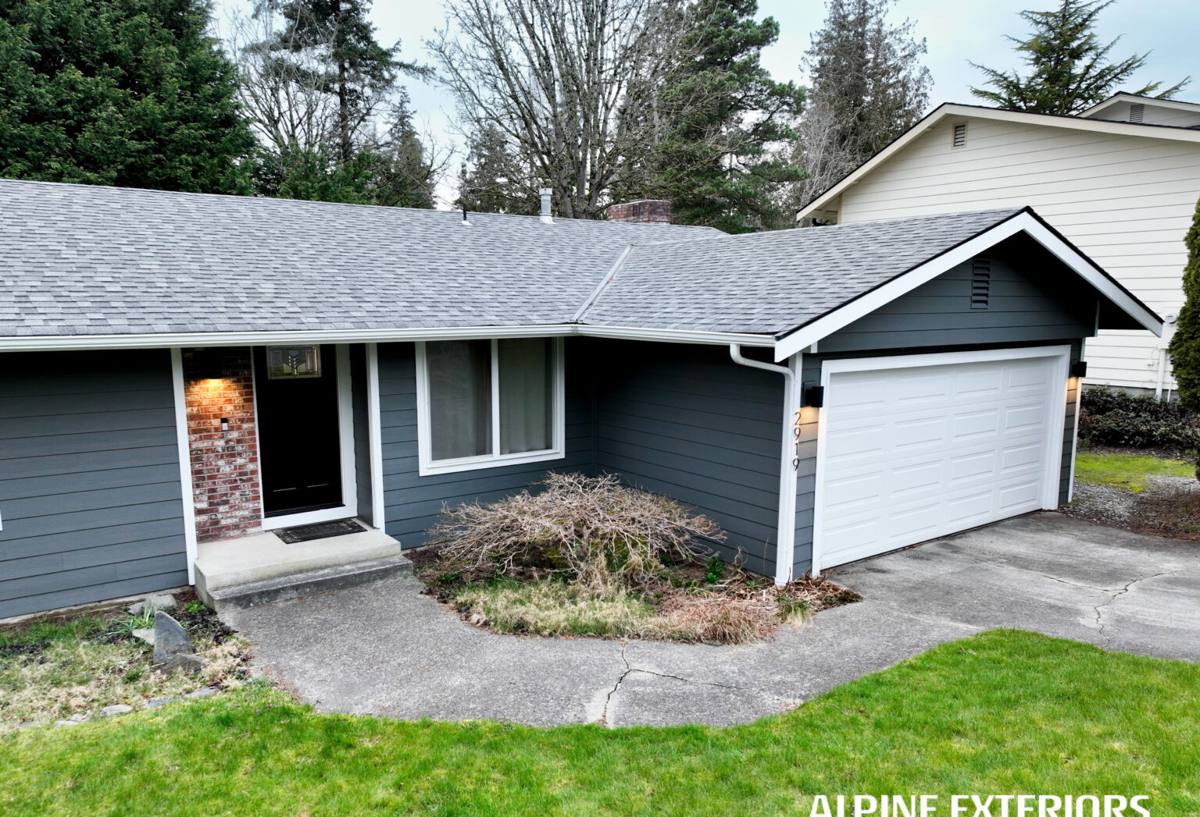
What Lynden's Climate Actually Does to Board & Batten Siding
Driving Rain and Vertical Seams
Vertical board and batten has more linear feet of seam than horizontal lap siding of the same wall area, and every one of those seams is a potential water path. In a climate with mostly gentle, straight-down rain, that's a minor concern. In Whatcom County, where storms frequently come in sideways off the water, those battens and panel joints are under real pressure. Water finds the path of least resistance, and on a poorly installed board and batten wall, that path is straight into the sheathing.
Salt Air and Fastener Corrosion
Proximity to the Sound means airborne salt is a slow, steady presence on exterior surfaces, including the fasteners holding the siding on. Standard fasteners can corrode faster here than they would inland, and a corroded fastener eventually loses its grip — which on a vertical panel system means the whole board can start to work loose. Fastener spec isn't a detail we treat casually on Lynden jobs.
Moss Season and Trapped Moisture
Whatcom County's moss season runs long — cool, damp, low-sun conditions for much of the year are exactly what moss and algae need to take hold. Board and batten's battens create horizontal ledges and shadow lines where organic growth likes to start, especially on north- and west-facing walls that stay shaded and damp longer after a storm. Growth itself is mostly cosmetic, but it holds moisture against the wall longer, which is the real problem.
What a Correctly Installed Board & Batten Job Involves
Board and batten looks simple from the street — vertical boards, evenly spaced battens — but the installation has more failure points than most homeowners realize. A correct job gets these right every time, not most of the time:
- Weather-resistive barrier and rain screen: a continuous water-resistive barrier behind the siding, with a drainage gap so any water that gets past the panels can drain and dry instead of sitting against the sheathing.
- Batten spacing and fastening: battens fastened into framing, not just into the panel, with spacing and fastener patterns that account for wind load and panel expansion.
- Flashing at every horizontal transition: window heads, door heads, and any point where a horizontal surface meets vertical siding needs proper step or head flashing — this is where most board and batten leaks actually start.
- Bottom clearance: siding held up off decks, patios, and grade so the bottom edge isn't sitting in standing water or splash-back.
- Caulking used correctly, not as a substitute for flashing: sealant has a service life and will eventually fail — it should back up good flashing detail, never replace it.
Why We Only Install James Hardie for Board & Batten
We don't install vinyl board and batten, LP SmartSide, or primed wood battens. That's a deliberate standard, not a matter of preference, and it matters more for this style than most because of how many seams and exposed edges vertical siding has.
For board and batten, James Hardie's system is built around HardiePanel Vertical Siding paired with HardieTrim battens — fiber cement panels and trim engineered to work together, not a panel product with generic trim bolted on. A few reasons this matters in a climate like Lynden's:
- Non-combustible material: fiber cement doesn't feed a fire the way wood-based products can, which matters for insurance conversations as much as safety.
- Climate-engineered HZ formulation: James Hardie manufactures different product formulations for different climate zones, including versions engineered for high-moisture, freeze-capable regions like the Pacific Northwest — the product is matched to the weather it has to survive, not a one-size-fits-all mix.
- ColorPlus factory finish: a baked-on finish applied under controlled conditions, with touch-up product and a finish warranty backing it — a meaningfully different proposition than field-painted trim that has to be recoated on a maintenance schedule.
- Dimensional stability: fiber cement doesn't swell, cup, or rot the way engineered wood or solid wood battens can when they take on repeated moisture cycles, which is exactly what Lynden's rain-and-dry pattern puts them through.
- Transferable warranty: a real manufacturer warranty that can pass to the next owner, which matters if you ever sell.
Every alternative has something going for it — vinyl is inexpensive, LP SmartSide is lighter and easier to handle, primed wood gives a traditional look. We're not pretending otherwise. We just don't think any of them hold up to Lynden's weather as reliably as fiber cement does over the 30-plus years a siding job is supposed to last, so we standardized on the one product line we're willing to put our name behind.
Board & Batten Material Comparison
| Material | Moisture & Salt Air Behavior | Maintenance | Typical Lifespan |
|---|---|---|---|
| James Hardie fiber cement | Does not rot, swell, or corrode; engineered for wet climates | Occasional wash; factory finish holds color | 30+ years with correct install |
| Vinyl board & batten | Won't rot, but can warp, crack, or fade in temperature swings; seams can leak | Low, but replacement panels are hard to color-match later | 15–25 years |
| LP SmartSide (engineered wood) | Vulnerable at cut edges and joints if moisture gets in | Field-painted; repainting on a schedule | 15–30 years depending on care |
| Primed wood battens | Prone to swelling, cupping, and rot in prolonged damp conditions | Highest — regular repainting and rot inspection | 10–20 years, shorter in wet climates |
Our Process for Lynden Board & Batten Projects
1. On-Site Assessment
We walk the property and look specifically at how water and wind hit the walls, where moss and staining are already showing up, and what condition the sheathing and framing are in under the existing siding.
2. Tear-Off and Moisture Check
Old siding comes off and we check the sheathing before anything new goes up. If there's hidden water damage from a prior installation — which we do find on older Lynden homes — it gets addressed before siding goes back on, not covered over.
3. Barrier, Battens, and Panels
Weather-resistive barrier and rain screen go on first, then battens fastened into framing, then panels installed to Hardie's fastening and clearance specifications — not shortcuts that happen to look fine from the curb.
4. Flashing and Trim Details
Every window, door, and horizontal transition gets proper flashing before trim is installed around it. This is the step that determines whether the job is still watertight in ten years.
5. Final Walkthrough
We walk the finished job with you, point out anything worth knowing for upkeep, and answer questions before we consider it done.
Cost Factors for Board & Batten Siding in Lynden
Board and batten generally costs somewhat more than standard lap siding to install, mostly due to labor — more trim pieces, more precise layout, and more fastening points. Broad, honest cost drivers to expect on a Lynden project:
| Factor | Why It Affects Cost |
|---|---|
| Wall height and complexity | Two-story walls, gables, and dormers take longer to layout and fasten correctly |
| Existing siding condition | Rot repair or sheathing replacement found during tear-off adds material and labor |
| Batten spacing and reveal width | Tighter spacing means more battens, more fasteners, and more labor hours |
| Trim detail around openings | Window and door casings, corner boards, and fascia detailing add up on a full board-and-batten elevation |
| Color and finish | Factory ColorPlus finishes cost more upfront than field paint but remove a recurring repaint expense |
We give real numbers after we've actually looked at the walls — not a phone estimate based on square footage alone, since so much of the cost on this style depends on trim complexity and what's underneath the old siding.
Why a Crew That Already Works Lynden Matters
Board and batten installed by a crew that hasn't worked this specific climate tends to get the visible parts right and the invisible parts wrong — the flashing detail, the fastener spec, the rain screen gap. Those are the parts that determine whether the siding is still performing in year fifteen, not year one. A crew that's already done this work in Lynden knows which walls take the worst of the wind-driven rain, how aggressively moss shows up on shaded elevations, and what fastener and barrier choices actually hold up against the salt air rolling in off the Sound. That's not something you can fully substitute with a spec sheet — it comes from having done the work here before.
Maintenance Checklist for Board & Batten Owners in Lynden
- Rinse walls annually, focusing on north- and west-facing elevations where moss and algae take hold first
- Check caulking at trim and window transitions every year or two and refresh where it's cracked or pulling away
- Keep gutters clean and downspouts directed away from the wall base to reduce splash-back at the bottom course
- Trim back vegetation and landscaping so walls get airflow and sunlight to dry out between storms
- Have any staining, soft spots, or loose battens looked at promptly — these are cheap fixes early and expensive ones once water gets behind the panel
If you're weighing board and batten for a Lynden home, we're happy to take a look at your walls, talk through what your specific exposure needs, and give you a straightforward, no-pressure estimate — no obligation either way.