 Glenhaven Siding
 Why Board & Batten Fits So Many Nooksack Homes
Board & batten is one of the most requested siding profiles we install in Nooksack, and it's not just a style preference. The vertical boards and raised battens read as a farmhouse or Pacific Northwest look that suits the mix of older farmhouses, newer builds, and outbuildings scattered through this part of Whatcom County. But the profile also does something practical: the vertical lines shed water differently than horizontal lap siding, and when it's built correctly, that can work in a homeowner's favor in a climate that gets as much rain as this one does.
The catch is that "board & batten" describes a look, not a performance standard. You can build a good board & batten wall or a bad one out of almost any material, and the difference between the two shows up on the north and west-facing walls of a Nooksack home within a few wet winters. What matters is the substrate under the boards, the way water is managed behind the battens, and what the boards themselves are made of.
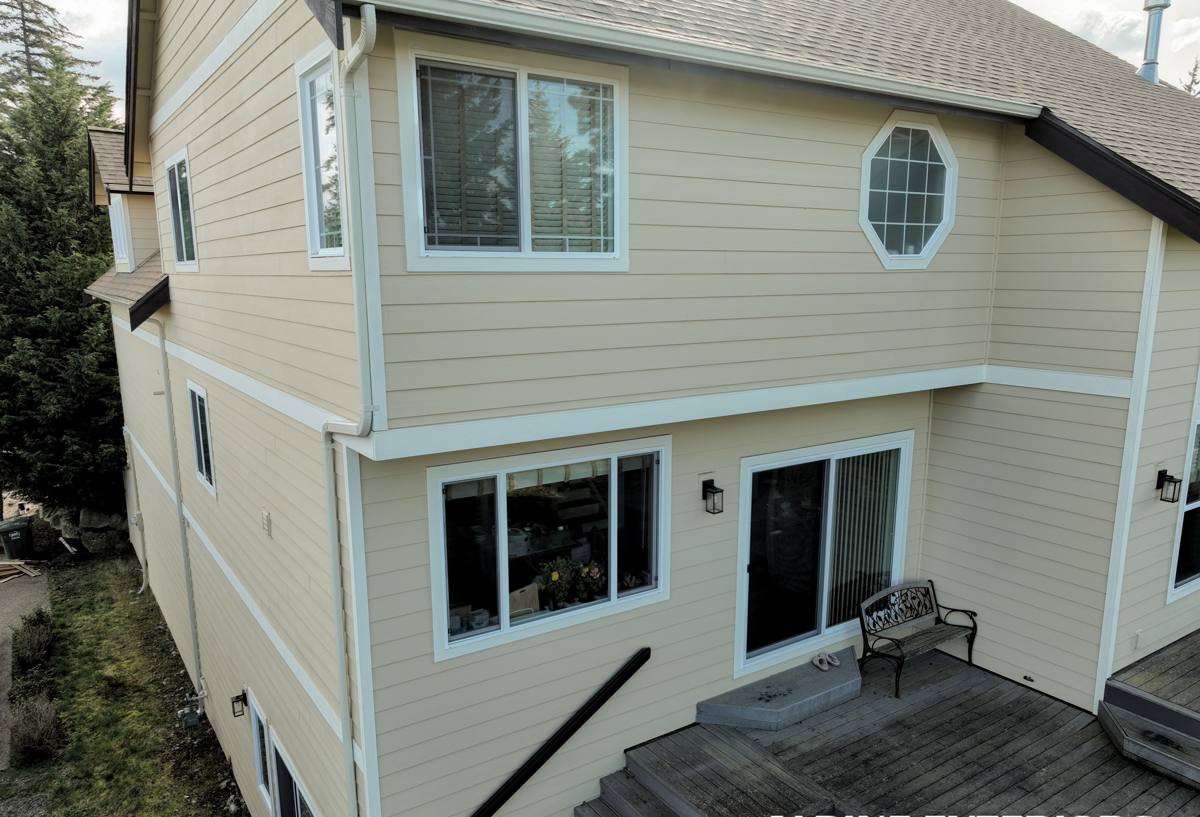
What Whatcom County Weather Does to Vertical Siding
Driving Rain Finds the Seams
Vertical siding has more vertical seams than horizontal lap siding does, and every one of those seams is a place water can travel if it's not detailed correctly. Whatcom County's weather isn't gentle, straight-down rain most of the year — it's driving rain pushed by wind off the water and through the valley, which means it hits siding at an angle and works its way behind trim and battens if there's no drainage plane behind the boards to catch and redirect it.
Salt Air and What It Does to Fasteners and Finishes
Homes closer to the water and the lower valley deal with salt-laden air on top of the rain, and salt air is hard on anything metal or under-protected. Fasteners that aren't corrosion-rated for coastal exposure can streak and weaken years before the siding itself would otherwise need attention, and a paint finish that isn't factory-baked can chalk and fade faster under that combination of salt, UV, and moisture than it would a few miles inland.
A Long Moss Season
Whatcom County's moss season runs long — mild, wet, and shaded conditions for much of the year give moss and mildew plenty of time to establish on any siding surface that stays damp. Board & batten's raised battens create horizontal ledges and shadow lines that, if not flashed and gapped correctly, become exactly the kind of damp, low-airflow spot moss prefers. It's not that board & batten is more prone to moss inherently — it's that a poorly detailed installation gives moss more places to start.
What a Correct Board & Batten Installation Actually Involves
The Weather-Resistive Barrier Comes First
Before a single board goes up, the wall needs a continuous, properly lapped weather-resistive barrier (WRB) over the sheathing. This is the layer that actually keeps bulk water out of the wall assembly if anything gets past the siding — the siding itself is the first line of defense, not the only one. On tear-off jobs we always inspect the sheathing and existing barrier for rot or gaps before covering anything back up, because that's the one point in the project where hidden damage is actually visible.
Rainscreen Gap and Drainage
In a climate this wet, an air gap between the WRB and the back of the siding — a rainscreen — gives any moisture that does get behind the boards a path to drain and dry out instead of sitting against the wall. This detail matters more in Whatcom County than it does in drier parts of the country, and it's one of the first things we discuss with homeowners who are comparing quotes, because it's easy for a bid to leave it out and look cheaper on paper.
Batten Spacing and Fastening
Batten spacing isn't just aesthetic — boards and battens need consistent spacing over structural framing, with fastening patterns that account for expansion and contraction of the material through wet winters and dry summers. Fasteners need to be corrosion-resistant given the salt air in this region, and they need to be placed and countersunk correctly so water doesn't pool at the fastener head.
Flashing and Trim Details
Every window, door, corner, and roofline intersection is a place where water wants to get behind the siding. Correct flashing at these transitions — not just caulk — is what actually keeps a board & batten wall dry over decades. Caulk fails; it's a maintenance item, not a waterproofing strategy on its own.
Why We Install Only James Hardie for Board & Batten
We install James Hardie fiber cement exclusively, and board & batten is one of the products where that choice matters most. Hardie's vertical siding panels and HardieTrim battens are engineered specifically for this look, with a factory ColorPlus finish that's baked on rather than field-applied, which holds up better against the fading and chalking that salt air and long UV exposure cause over time.
Fiber cement is also non-combustible, which matters in a state where wildfire smoke and ember exposure have become a real consideration even outside the immediate fire zones. And Hardie's HZ5 product line is engineered for the Pacific Northwest's moisture-heavy climate specifically — it's not a one-size-fits-all product shipped the same way to every region of the country.
The other piece is the warranty. Hardie backs its ColorPlus products with a transferable finish warranty in addition to the product warranty, which is worth something concrete if the home ever sells. We stopped installing vinyl, engineered wood, and primed spruce or cedar board & batten years ago because we kept seeing the same failure patterns in this climate — vinyl that warps and shows fastener stress in temperature swings, engineered wood that's sensitive to any gap in the moisture barrier or flashing, and cedar and primed wood that demand a maintenance schedule most homeowners don't realize they're signing up for until the paint starts failing.
Board & Batten Material Options Compared
| Material | Moisture Tolerance in This Climate | Moss/Mildew Resistance | Maintenance Burden | Typical Lifespan |
|---|---|---|---|---|
| James Hardie fiber cement | Strong when installed to spec; won't rot or absorb water like wood | Factory finish resists staining; still needs periodic rinsing | Low — occasional wash, no repainting for many years | Multiple decades with correct install |
| Vinyl board & batten panels | Won't rot, but can warp or gap in temperature swings and wind-driven rain | Moderate — seams and channels can trap grime | Low, but panels can't be repaired individually if damaged | Shorter effective lifespan in this climate before warping or fading |
| Engineered wood (LP-type) | Sensitive — any breach in coating or flashing invites swelling | Moderate to poor if moisture gets in | Moderate — coating needs to stay intact | Shorter if moisture management fails |
| Primed spruce or cedar | Absorbs moisture directly; needs an intact paint film at all times | Poor without diligent upkeep — natural wood feeds mildew | High — repainting and caulk inspection on a recurring cycle | Shortest without consistent maintenance |
Our Board & Batten Process for Nooksack Homes
- On-site assessment — we walk the exterior, check current siding and trim condition, and look at drainage, roofline, and any areas already showing moss or water staining.
- Removal and sheathing inspection — old siding comes off and we inspect the sheathing and existing barrier for rot or gaps before anything new goes up.
- Weather-resistive barrier and rainscreen — we install or repair the WRB and build in drainage space behind the new siding.
- Board & batten installation — Hardie vertical panels and HardieTrim battens go up with correct spacing, corrosion-resistant fastening, and attention to expansion allowances.
- Flashing and trim work — windows, doors, corners, and roof intersections get proper flashing, not just caulk.
- Final walk-through — we go over the finished work with the homeowner and point out any maintenance items worth knowing about going forward.
Keeping Board & Batten Looking Right Through Moss Season
Even the right material and a correct install still benefit from some basic upkeep in a climate like this one. None of it is complicated, but skipping it for a few years is how moss and mildew get a foothold.
- Keep gutters clean so water isn't overflowing down the wall face during heavy rain.
- Trim back vegetation and tree cover that shades siding and keeps it damp longer than it needs to be.
- Rinse siding with a garden hose once or twice a year, focusing on north-facing and shaded walls where moss tends to start first.
- Check caulk lines at trim and penetrations periodically — caulk is a maintenance item, not a permanent seal.
- Watch battens and trim for any staining or dark streaking, which is usually the first visible sign moss or mildew is starting.
What Board & Batten Siding Typically Costs
Every home is different, so exact numbers depend on the specifics, but the factors below are what actually move a board & batten quote up or down.
| Cost Factor | Why It Matters |
|---|---|
| Home size and wall complexity | More square footage and more corners, dormers, or trim transitions mean more material and labor. |
| Tear-off vs. install over existing siding | Full removal lets us inspect and correct the sheathing and moisture barrier, which affects long-term performance. |
| Rainscreen/drainage upgrade | Adding proper drainage space behind the siding is worth the cost in this climate, but it does add to the scope. |
| Trim and batten detail level | Wider trim boards, custom batten spacing, and corner details take more time to execute correctly. |
| ColorPlus finish selection | Factory-applied color adds cost up front but removes a future repainting cycle from the maintenance schedule. |
Why Hiring a Crew That Already Works in Nooksack Matters
Board & batten in this climate rewards experience with the specific conditions Whatcom County throws at a wall — wind-driven rain direction, salt air exposure closer to the water, and a moss season that doesn't really end. A crew that already works Nooksack and the surrounding communities has seen where installations elsewhere have failed and knows which details actually matter here versus which ones are just spec-sheet boilerplate written for a different climate. That local pattern recognition is worth more than it sounds like on paper — it's the difference between a crew following a generic install guide and one that's watching for the specific failure points this region produces.
If you're weighing board & batten siding for a home in Nooksack, we're happy to take a look and talk through what your walls actually need. There's no pressure and no cost to get an estimate — just a straightforward look at your home and an honest answer about what it would take to do the job right.