 Glenhaven Siding
 Siding Repair Built for Columbia's Corner of Glenhaven
Homes in the Columbia area of Glenhaven face a specific combination of weather that most siding was never designed to handle gracefully. Salt-laden air moving in off the water accelerates corrosion on fasteners and trim, driving rain finds every gap in flashing and caulk, and a moss season that stretches for months keeps north-facing and shaded walls damp long after the rest of the house has dried out. None of that is unusual for Whatcom County, but it does mean that siding repair here isn't a one-size-fits-all job. A patch that holds up fine in a dry inland climate can fail within a season on a Columbia home that sits closer to the moisture and salt exposure typical of this part of Glenhaven.
This page focuses on one thing: what it actually takes to repair siding correctly on a Columbia-area home, and why the details matter more here than they would somewhere with a milder, drier climate.
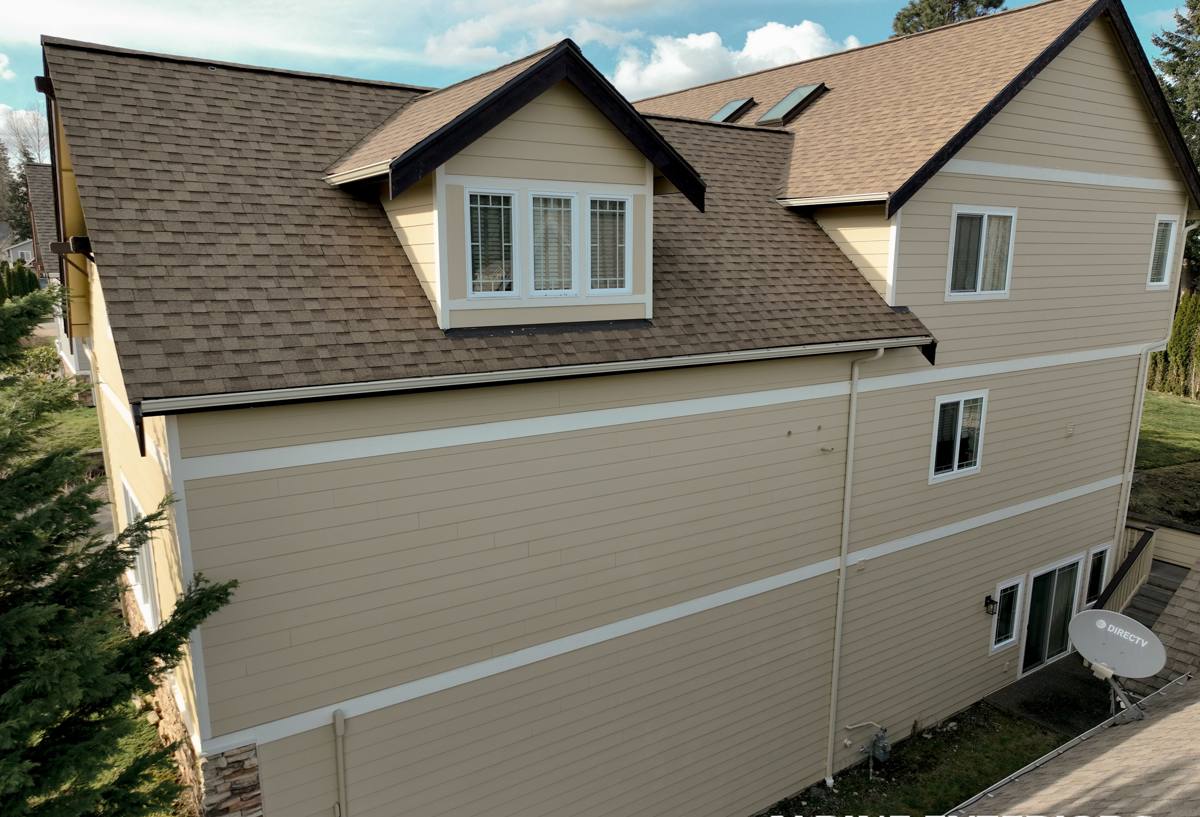
What Columbia's Climate Does to Siding Over Time
Salt Air and Fasteners
Airborne salt doesn't just affect homes right on the waterfront — it travels with the wind and settles on exterior surfaces well inland, including much of Glenhaven. Over years, salt exposure speeds up corrosion on exposed nail heads, staples, and metal trim pieces. Once a fastener starts to corrode, it can back out slightly, loosen the siding panel around it, and open a small gap that rain and moisture use to get behind the cladding.
Driving Rain and Wind-Driven Moisture
Storms that come through this part of Washington often bring rain at an angle rather than straight down. That matters because siding, flashing, and caulking are engineered to shed water moving downward — not water being pushed sideways and upward under laps and around trim. Homes on more exposed lots in Columbia tend to take the brunt of this, and it's usually where we find the worst hidden moisture damage.
Moss, Algae, and the Long Wet Season
Whatcom County's moss season isn't a two-week nuisance — it's a months-long condition on shaded or north-facing walls, under eaves, and anywhere airflow is limited. Moss and algae hold moisture directly against the siding surface, which keeps that section of wall wetter for longer than the surrounding area. On wood-based products, that constant dampness is exactly what leads to soft spots, swelling, and rot. Even on more moisture-resistant materials, moss buildup traps grime and organic matter that breaks down finishes faster than a straightforward wash would suggest.
The Damage We Actually See on Columbia Homes
Not every siding problem looks dramatic from the ground. Some of the most costly damage starts as something a homeowner barely notices.
- Soft or spongy panels near the bottom courses, where splashback and standing moisture concentrate
- Cracked or split boards around window and door trim, where caulk has failed and rain has driven in
- Bubbling or peeling paint, often a sign that moisture is trying to escape from behind the siding, not just weathering from the sun
- Dark streaking or green-black growth on shaded walls — usually moss or algae, sometimes a sign of a deeper moisture problem underneath
- Rust streaks below nail heads or metal trim, a sign that fasteners are corroding
- Gaps or separation at seams and corners, which let wind-driven rain track behind the siding
- A musty smell or visible staining on interior walls that share an exterior wall with damaged siding
Any one of these on its own might be a small fix. Several appearing together, especially on the same wall, usually points to a moisture problem that's been building for a while.
What a Correct Siding Repair Actually Involves
Diagnosing the Real Problem, Not Just the Visible Damage
A repair that only replaces the cracked board you can see, without checking what's behind it, is a repair that's likely to fail again. Given how much moisture Columbia's climate pushes at exterior walls, we treat every repair call as a chance to check the water-resistive barrier, flashing, and sheathing behind the damaged section — not just the siding itself.
Matching Structure Before Matching Appearance
It's tempting to think of siding repair as a cosmetic fix, but the structural side comes first: is the sheathing behind the damaged area still sound, is the house wrap intact, and is flashing directing water away from the repair area rather than into it. Skipping this step to save time is one of the most common reasons a "fixed" section of siding fails again within a year or two.
Flashing and Sealant Details
Given the amount of wind-driven rain this area sees, flashing details around windows, doors, and any wall penetrations need to be right, not approximate. The same goes for sealant — the wrong product, or the right product applied in the wrong conditions, breaks down fast under repeated wet-dry cycling.
Finish and Color Matching
Whether a repair looks seamless or obviously patched usually comes down to how the finish is handled. Factory-finished products have a consistency that field-applied paint struggles to match exactly, especially after a section has weathered for a few years. We're upfront with homeowners about what will and won't blend perfectly before we start.
Repair or Replace? How We Help You Decide
Not every damaged section needs a full re-side, and not every "small" repair should be treated as small. The right call depends on how far the damage has spread and what's driving it.
| Situation | Repair Is Usually Enough | Replacement Should Be Considered |
|---|---|---|
| Extent of damage | Isolated to one or two boards or a single wall section | Recurring damage across multiple walls or the whole exterior |
| Underlying cause | A one-time issue (impact damage, a failed sealant joint) | A systemic moisture or material issue affecting the whole house |
| Age of siding | Siding is otherwise sound and within its useful life | Siding is near or past its expected service life |
| Material condition | Surrounding boards are solid when tested | Surrounding boards are soft, warped, or delaminating |
| Cost over time | Repair cost is modest relative to remaining siding life | Repeated repairs are starting to add up to replacement cost |
We'll always tell you honestly which category your home falls into rather than defaulting to the more expensive option.
Our Process for Columbia Siding Repair Calls
1. On-Site Inspection
We look at the damaged area and the surrounding wall, and we probe for soft spots rather than relying on a visual check alone. Given how often moisture damage in this area extends past what's visible, this step is not optional.
2. A Straightforward Written Quote
You'll get a clear explanation of what's damaged, what's causing it, and what the repair involves — including if we find the scope is larger than the original complaint once we open things up.
3. The Repair Itself
Damaged material comes out, the structure and moisture barrier underneath get checked and corrected if needed, and new material goes in with proper flashing and sealant details — not just a patch over the surface.
4. Cleanup and Walkthrough
We clean up the work area and walk the repair with you so you know exactly what was done and what to watch for going forward.
Why We Repair With James Hardie Fiber Cement
We install and repair exclusively with James Hardie fiber cement siding. That's a deliberate standard, not a default — and it matters even more when the job is a repair rather than a full re-side.
Fiber cement doesn't absorb water the way wood-based products do, which matters directly in a climate where moss and prolonged dampness are a fact of life for months at a time. It's also non-combustible, holds its factory-applied ColorPlus finish far longer than field-applied paint on wood or engineered-wood alternatives, and comes with a strong transferable warranty when installed to manufacturer spec. We've seen what happens to vinyl that warps and pulls away from fasteners in temperature swings, to engineered wood products that swell and lose integrity at cut edges and repair joints once moisture gets in, and to cedar that needs ongoing maintenance to keep pace with a wet climate. For a repair to actually last in Columbia's conditions, the material going into the wall needs to hold up as well as — or better than — what's already there.
When a repair involves patching into existing non-Hardie siding, we'll tell you plainly what to expect from a match and a long-term standpoint, rather than overselling a blend that won't hold up evenly over time.
Preventive Maintenance Checklist for Columbia Homeowners
A lot of siding repair calls are preventable with basic seasonal attention. Here's what we recommend keeping an eye on:
- Walk the exterior once or twice a year and look for cracked caulk around windows, doors, and trim
- Check shaded and north-facing walls for moss or algae buildup before it spreads
- Keep gutters clear so overflow isn't running down the siding face
- Trim back vegetation that keeps a wall shaded and damp longer than it should be
- Look for rust streaking below nail heads or metal trim as an early warning sign
- Address small cracks or gaps promptly, before a wet season gives water time to get behind the siding
- Have any section that stays visibly wet longer than the rest of the house inspected sooner rather than later
Why Hiring a Crew That Already Works in Columbia Matters
Siding repair done right depends on understanding the conditions a specific wall actually faces — which direction it faces, how much wind-driven rain it takes, how long moss season keeps it damp, and how much salt exposure it's dealing with. A crew that regularly works in this part of Glenhaven has already seen how these factors play out on homes with similar exposure, which means less guesswork and fewer callbacks. It also means a faster response when a repair needs to happen ahead of the next storm system, rather than waiting on a crew that has to learn the area's quirks from scratch.
If you're noticing damaged, soft, or discolored siding on your Columbia-area home, we're glad to take a look and give you a straightforward, no-pressure assessment of what's going on and what it would take to fix it right. Use the form below to request a free estimate.