 Glenhaven Siding
 Everson Decks Work Harder Than People Realize
A deck in Everson isn't just outdoor furniture — it's a structure that sits exposed to Whatcom County's weather twelve months a year. Long stretches of driving rain, humid air moving in off the coast, and a moss season that can stretch from October into May all put steady pressure on wood, fasteners, and the framing underneath. Most deck problems we see in this area didn't happen overnight. They built up slowly, hidden under a coat of moss or a board that still looked fine from the top.
That's the tricky part about deck damage here: the surface can look presentable while the structure underneath is quietly losing integrity. Repair work in this climate isn't about cosmetics. It's about catching moisture damage before it turns into a safety issue, and doing the fix in a way that actually holds up to another wet Whatcom County winter.
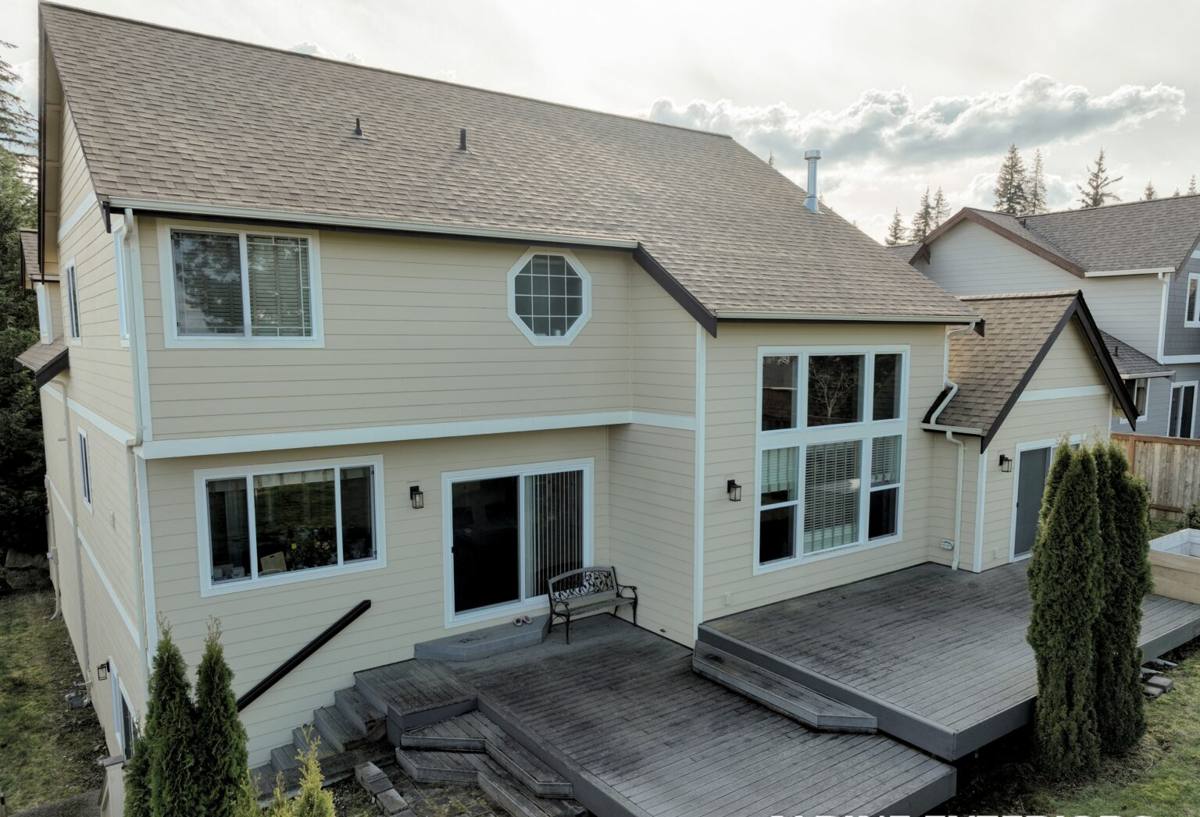
What the Local Climate Does to a Deck
Everson sits in a part of Whatcom County that gets the same marine-influenced weather pattern as the rest of the region — long rainy stretches, heavy morning dew, and salt-tinged coastal air that drifts inland and keeps everything a little damp, a little longer than homeowners expect. That combination is exactly what wood decking, ledger boards, and steel fasteners struggle with.
- Driving rain gets pushed sideways by wind and finds its way under flashing, into end-grain cuts, and around poorly sealed ledger connections.
- Moss and algae hold moisture against the board surface far longer than open air would, which accelerates rot in shaded or north-facing deck sections.
- Freeze-thaw cycles, even mild ones, work water deeper into small cracks each winter, widening them year over year.
- Humid, salt-influenced air corrodes exposed fasteners and hardware faster than a dry inland climate would, especially on older decks built before corrosion-resistant hardware was standard.
None of this means a deck is doomed — it means repairs have to account for how water moves through the structure, not just patch what's visible from the top.
Warning Signs Worth Taking Seriously
Most homeowners call us after noticing one obvious problem, but a proper inspection usually turns up two or three more. Here's what we look for, and what you can check yourself before calling anyone:
- Soft or spongy spots when you walk across the decking, especially near the house or in shaded corners
- Boards that stay damp or mossy long after the rest of the deck has dried out
- Any gap, rust streak, or daylight visible where the deck meets the house (the ledger board connection)
- Railings or posts that wiggle more than a firm push should allow
- Fasteners with rust bleed, cracked heads, or ones that have backed out of the board
- Stair stringers that flex or feel uneven underfoot
- Gaps between decking boards that have closed up completely, trapping debris and moisture
- Visible sagging along the deck's outer edge or between support posts
If you're seeing more than one of these, it's worth having someone look at the whole structure rather than patching the one spot you noticed.
What a Correct Deck Repair Actually Involves
The Substructure Comes First
Framing — joists, beams, posts, and the ledger board attachment to the house — is where real structural risk lives, and it's the part homeowners can't easily see. A repair that replaces surface boards but ignores a rotting joist or a compromised ledger connection is a repair that fails again within a year or two. We check for rot with more than a glance; a screwdriver test into suspect wood tells you more than a visual inspection ever will.
Decking Boards
Not every board needs replacing just because a few do. Part of doing this correctly is figuring out which boards are structurally sound and which have gone soft, cupped, or split. Mixing in new boards means matching spacing and fastening pattern so the repair doesn't stand out or create new water traps.
Railings and Stairs
Railings take constant hand pressure and lateral force, and loose posts are one of the most common safety issues we find on older decks. Stairs get even more wear — foot traffic, weather exposure on every tread, and stringers that are harder to inspect once they're built in. Both get checked for post attachment, baluster spacing, and any rot at ground contact points.
Fasteners and Hardware
A huge share of "mystery" deck problems trace back to the wrong fasteners for the wood or the climate — galvanized screws that were never rated for ground contact, nails that have worked loose, or joist hangers installed without the corrosion-resistant coating this climate calls for. We replace failing hardware with fasteners and connectors rated for wet, coastal-influenced exposure, not whatever was cheapest at the time the deck was originally built.
Repair or Rebuild? How We Make That Call
This is the question every homeowner actually wants answered, and it depends on where the damage is and how far it's spread. Here's the general framework we use:
| Area of Concern | Usually Repairable | Usually Needs Rebuilding |
|---|---|---|
| Decking boards | Isolated soft or cracked boards, moss staining without rot | Widespread cupping, rot in more than a third of the boards |
| Framing (joists/beams) | One or two joists with localized rot near the end | Rot at multiple joists, sagging across the span |
| Ledger connection | Flashing failure caught early, minor surface rust | Water intrusion into the house rim joist, active decay at attachment point |
| Posts and footings | Surface weathering, minor checking | Rot at ground contact, undersized or heaving footings |
| Railings and stairs | Loose balusters, minor wobble | Rotted posts, non-compliant spacing or height |
The honest answer is that most decks over 12-15 years old in this climate have at least one item in the right-hand column. That doesn't always mean starting over — it means being clear-eyed about which sections need full replacement versus targeted repair.
Our Process for Everson Deck Repairs
- On-site inspection. We walk the full structure, check framing from underneath where accessible, and test suspect boards and fasteners directly rather than guessing from the surface.
- Straight explanation of findings. You get a clear picture of what's failing, what's still sound, and why — before any work starts, not after.
- Written scope and estimate. We spell out exactly what's being repaired or replaced so there's no ambiguity about the job.
- Repair work. Framing and structural issues get addressed first, then decking, then railings and stairs, using fasteners and materials suited to Whatcom County's moisture exposure.
- Final walkthrough. We check the repaired areas together before calling the job done.
Materials We Use and Why
Wood and composite decking each have a place, and the right call depends on the deck's exposure, the homeowner's maintenance appetite, and what's already in place. Pressure-treated framing lumber remains the standard for structural components because it's proven and cost-effective when installed and maintained correctly. For decking surfaces, composite materials handle Everson's moss and moisture cycle with less upkeep, though they carry a higher upfront cost and, in some products, more installation sensitivity around expansion gaps and fastening. Solid wood decking costs less initially but needs more consistent cleaning and refinishing to keep moss and moisture from gaining a foothold, particularly on shaded sections of a deck.
We don't push one material as universally "better" — we lay out the real maintenance and moisture trade-offs for your specific deck and let that guide the decision.
Permits and Whatcom County Code
Deck repair work in Everson may or may not require a permit depending on the scope — replacing a few boards is usually different from rebuilding framing, railings, or stairs. Structural repairs, especially anything touching the ledger connection, footings, or railing height and spacing, are the kind of work that should meet current code even on an older deck, since safety requirements have tightened over the years. We handle the permit question as part of scoping the job so there are no surprises partway through.
Why Hire a Crew That Already Works in Everson
Deck repair done right depends on understanding how a specific climate treats wood and hardware over time, not just knowing general carpentry. A crew that regularly works in Everson and the surrounding Whatcom County area has already seen how moss builds on north-facing sections, how driving rain finds gaps in flashing, and which fastener choices hold up versus which ones fail early in this particular mix of rain and humidity. That local pattern recognition is what separates a repair that lasts from one that needs redoing in two years.
It also means straightforward answers. We're not selling a full rebuild when a section can be honestly repaired, and we're not patching over structural problems to keep a bid low. We tell you what we find and what it actually needs.
Get a Free, No-Pressure Estimate
If your Everson deck has soft spots, loose railings, moss buildup, or you just want an honest read on its condition after another wet Whatcom County season, we're glad to take a look. The estimate is free, and there's no pressure to commit to anything beyond an honest assessment of what your deck actually needs.