 Glenhaven Siding
 Decking Built for Geneva's Weather, Not Just Its Looks
Geneva homes sit close enough to the water and the tree line that a deck here works harder than a deck in a drier part of Whatcom County. Salt-laden air corrodes fasteners and fades finishes faster than inland weather does. Driving rain off the water finds every gap in a poorly built ledger connection. And the long, wet moss season here — often stretching from October well into April — means anything horizontal that doesn't shed water and dry out will grow a green film that's not just ugly, it's a slip hazard. A composite deck built for Geneva has to answer all three of those problems at once, not just look good in a showroom.
We've built and repaired decks throughout Glenhaven and the surrounding Geneva area long enough to know which details matter here specifically. This page covers what a correctly built composite deck looks like for this microclimate, what our install process involves, and what questions to ask before you hire anyone for the job.
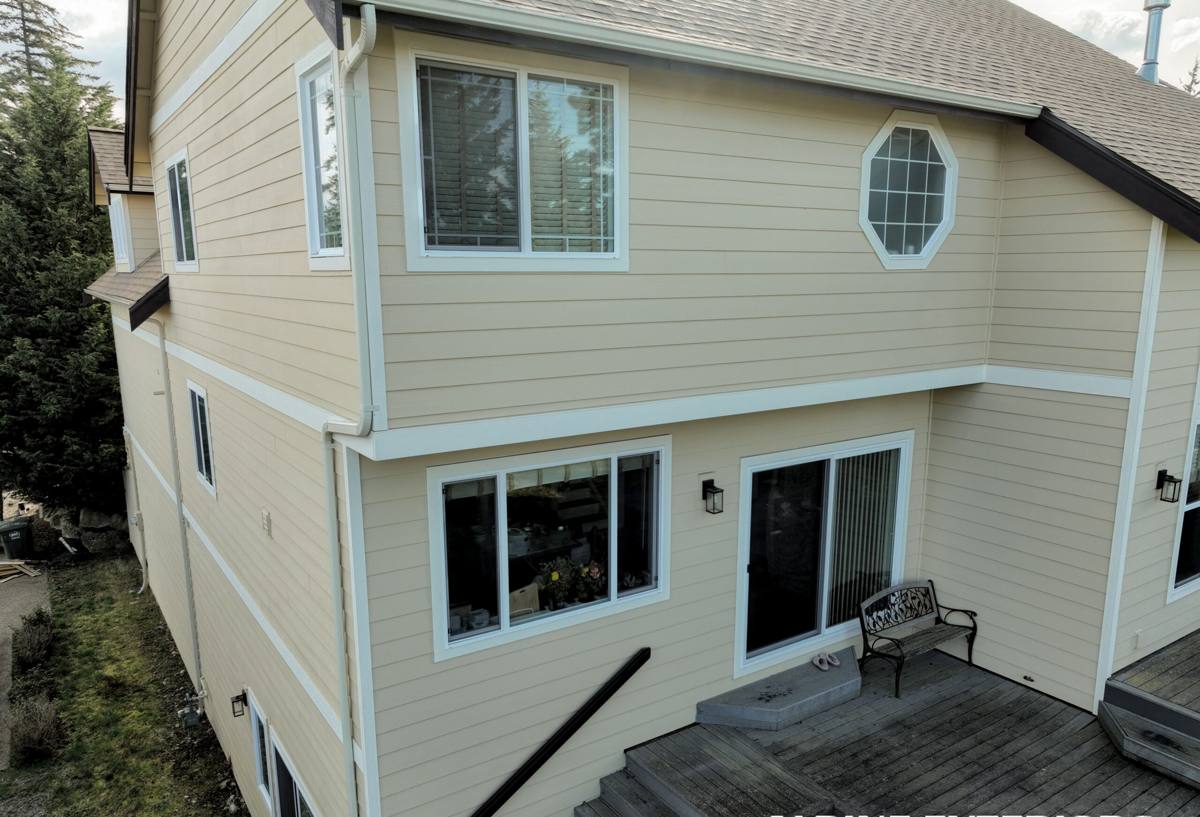
Why Geneva's Climate Changes the Deck-Building Math
Salt Air and Metal Fatigue
Even a few miles from open water, airborne salt accelerates corrosion on any exposed metal — hidden fasteners, joist hangers, ledger bolts, railing brackets. Standard zinc-coated hardware can start showing rust streaks on composite boards within a couple of seasons in a salt-exposed spot. We spec stainless or heavy-duty coated fasteners rated for coastal exposure on every Geneva job, because a fastener failure under a deck board is a problem you don't see until it's already expensive.
Driving Rain and Wind-Driven Water
Whatcom County storms don't always come straight down. Wind-driven rain gets pushed sideways into ledger boards, rim joists, and any spot where the deck meets the house. If the ledger flashing isn't detailed correctly, water tracks behind it and rots the band joist or sheathing from the inside — a failure that's invisible until siding comes off or a deck starts to feel spongy near the house wall. This is the single most common structural problem we find when we're called out to fix an older deck in this area.
The Long Moss Season
Geneva's tree cover and marine humidity mean moss and algae have a long runway to establish themselves — longer than most of the county sees. Composite decking resists rot the way wood can't, but moss and algae will still grow on any composite surface that stays damp and shaded, especially where debris collects in board gaps. Board spacing, airflow underneath the deck, and picking a board's surface texture all affect how much moss you'll actually deal with year to year.
What a Correct Composite Deck Build Actually Involves
A composite deck is only as good as the framing and drainage underneath it. The composite boards themselves are the most visible part, but they're the last thing we install, not the first thing that determines whether the deck lasts.
Framing and Ledger Attachment
- Ledger board properly flashed and fastened to the house structure — never nailed over existing siding
- Joists spaced to the composite manufacturer's spec (often tighter than dimensional lumber spacing, especially near stairs or diagonal board patterns)
- Pressure-treated or coated framing lumber rated for ground contact where posts meet grade
- Joist tape or flashing on top of every joist to keep moisture from wicking into the framing under the boards
Drainage and Airflow
Composite boards don't rot, but the framing under them can if water pools and airflow is blocked. We grade the substrate or ledger connection so water sheds away from the house, and we keep skirting vented rather than sealed tight, so damp air under the deck can actually dry out between storms instead of sitting there all winter.
Fastening and Fascia
Hidden fastener systems keep the deck surface clean and reduce the number of exposed metal points that salt air can attack. Fascia boards get color-matched composite trim rather than painted wood, which would need repainting within a few years in this exposure.
Comparing Decking Materials for This Climate
| Material | Moisture/Salt Resistance | Moss Resistance | Maintenance |
|---|---|---|---|
| Pressure-treated wood | Moderate; fasteners and cut ends are vulnerable points | Low — absorbs moisture, feeds moss and mildew | Annual cleaning, periodic staining/sealing |
| Cedar | Good naturally, but finish breaks down fast in salt air | Low to moderate | Refinishing every 2-3 years to hold color and protection |
| Standard composite | High — doesn't absorb water or rot | Moderate; surface texture matters | Periodic washing, no staining or sealing |
| Capped composite | Very high — solid polymer shell resists staining and moisture | Moderate to good, depending on brand's surface finish | Occasional rinse; lowest upkeep of the group |
We install capped composite on most Geneva jobs specifically because the polymer cap sheds moisture and salt residue instead of absorbing it. Uncapped composite still performs better than wood here, but it's more prone to surface staining near the water than the capped versions are.
Picking Board Style and Color for a Damp, Shaded Lot
A lot of Geneva properties have partial shade from mature trees, which changes what board finish makes sense. Darker boards show less algae staining but run hotter in direct summer sun; lighter, streaked woodgrain finishes hide the early stages of moss or pollen buildup better between cleanings. Deeply grooved or heavily textured board faces can trap moisture and organic debris in the grooves, which gives moss more to hold onto — a smoother or lightly brushed texture is easier to keep clean on a shaded lot without sacrificing slip resistance.
Railing choice matters too. Aluminum or composite railing systems hold up better than wood balusters in salt-exposed spots, since they don't need repainting and won't check or split the way painted wood railing does after a couple of wet winters.
Our Process for a Geneva Composite Deck Project
- On-site assessment: we look at grade, drainage, existing structure (if replacing a deck), sun/shade exposure, and how close the site is to salt air influence.
- Design and material selection: board brand, color, railing system, and layout, sized to the house and matched to budget.
- Permitting: most deck rebuilds and many new builds in Whatcom County require a permit — we handle the application and inspection scheduling.
- Demo (if applicable): removal of old decking and inspection of framing underneath before anything new goes up.
- Framing and flashing: ledger, joists, flashing, and joist tape installed to spec before any composite goes down.
- Composite installation: hidden fastener system, fascia, stairs, and railing.
- Final walkthrough: we check board spacing, fastener finish, and drainage with you before calling the job done.
Maintenance That Actually Matters Here
Composite decking is low-maintenance, not no-maintenance, especially in a moss-prone spot like Geneva. A short seasonal routine keeps a composite deck looking new for its full warranty life:
- Rinse or sweep debris out of board gaps a few times a year — trapped leaves and needles hold moisture against the board and feed algae growth
- Wash the surface with a mild soap and soft-bristle brush once or twice a year; avoid pressure washers on the highest settings, which can damage the cap surface
- Check railing posts and stair stringers annually for any movement, especially after a hard winter storm
- Keep gutters and downspouts near the deck clear so runoff isn't dumping extra water onto or under the deck
- Trim back overhanging branches where practical to cut down on shade and moss-feeding debris
Warranty and Product Considerations
Composite decking warranties are usually split between the structural board warranty (often 25-50 years against rot and structural failure) and a shorter fade/stain warranty (commonly 25 years, sometimes less on uncapped boards). Salt air exposure doesn't void these warranties, but it does make it more important that installation followed the manufacturer's fastening and spacing specs exactly — improper installation is the most common reason a warranty claim gets denied, regardless of climate. We follow manufacturer install guides to the letter for this reason, and we keep records of what was installed and when so warranty claims are straightforward if you ever need one.
Why Hire a Crew That Already Works Geneva
A contractor who mainly builds decks in drier inland parts of the county may not think twice about fastener grade, ledger flashing detail, or board texture — because it hasn't bitten them yet. Working Geneva and the rest of Glenhaven regularly means we've already seen what standard specs miss in this exposure: the corroded hardware, the rotted band joist behind an unflashed ledger, the moss-slick boards that were graded wrong from day one. That's not marketing — it's just what shows up when you get called back to fix someone else's deck a few years in. We'd rather get it right the first time.
If you're planning a new deck or replacing an aging one in Geneva, we're happy to walk the site, look at your specific sun exposure and drainage situation, and put together a straightforward estimate — no pressure, no hard sell, just what the job actually needs and what it costs.