 Glenhaven Siding
 Why Cordata Roofs Wear Differently Than Roofs Inland
Cordata sits close enough to the water and far enough into Whatcom County's wet season that roofs here take a specific kind of beating. It's not one dramatic storm that does the damage — it's the accumulation of small, repeated exposures: months of low-angle driving rain that finds its way under poorly lapped shingles, salt-laden air that speeds up corrosion on fasteners and flashing, and a moss season that can stretch from early fall through spring. A roof designed and installed without those three factors in mind will look fine for a few years and then fail faster than the homeowner expects.
When we talk about a "new roof installation" for a Cordata property, we're not just talking about stripping old shingles and nailing down new ones. We're talking about a system — deck, underlayment, ventilation, flashing, and surface material — built to handle this specific climate for the long haul.
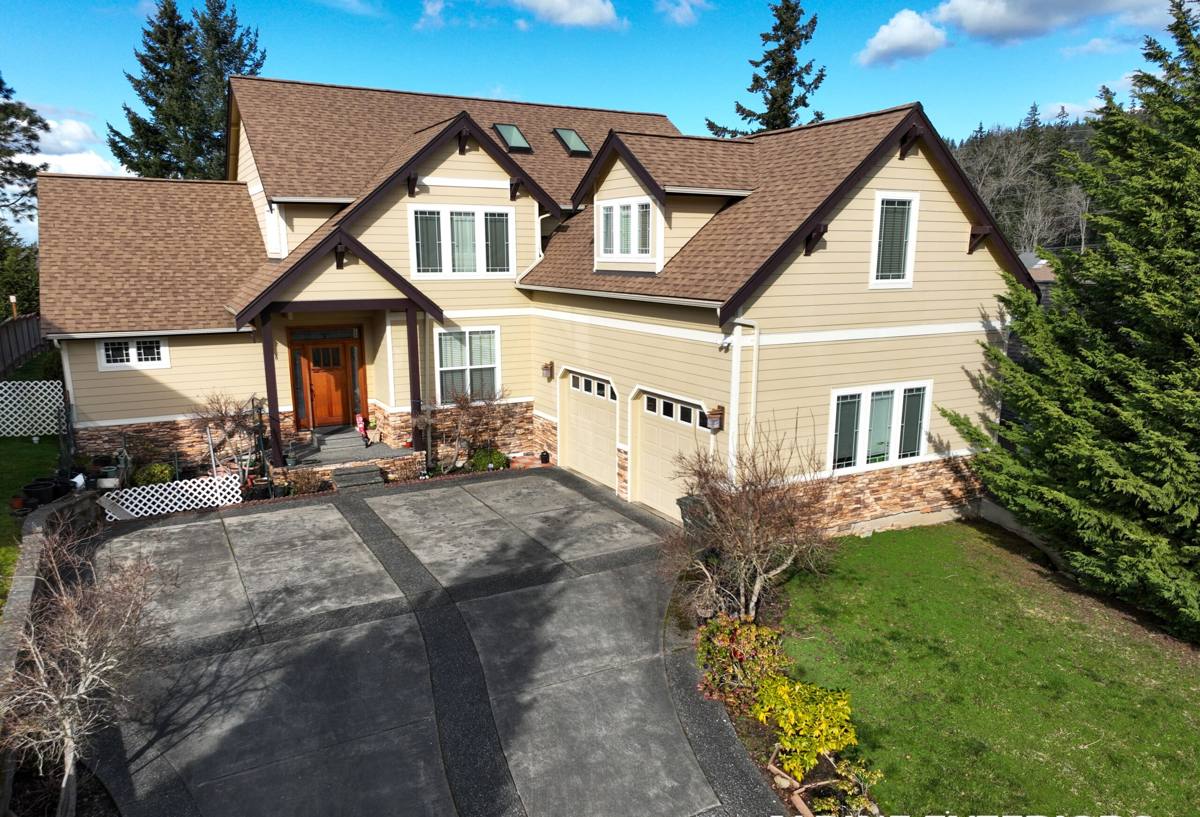
What This Climate Actually Demands From a Roof
Driving Rain, Not Just Rain
Whatcom County doesn't just get a lot of rain — it gets a lot of wind-driven rain, which behaves differently than a straight-down downpour. Wind pushes water sideways and upward under laps, seams, and around penetrations like vent pipes and chimneys. A roof built for a drier climate, with minimal underlayment or loosely sealed flashing, gets exposed here in ways it wouldn't somewhere calmer.
Moss, Almost Year-Round
Shaded, north-facing slopes and roofs under tree cover in Cordata can stay damp for days after a storm passes. That moisture, combined with mild temperatures, is exactly what moss needs. Moss doesn't just look bad — it lifts shingle edges, holds water against the roofing material, and accelerates granule loss on asphalt shingles.
Salt Air and Metal Fatigue
Proximity to Puget Sound means airborne salt reaches further inland than most homeowners assume. Salt exposure corrodes exposed fasteners, cheap flashing, and unprotected metal components faster than in a dry inland climate. Over a 20-plus year roof life, that difference matters.
Signs a Cordata Home Needs a New Roof — Not Just a Repair
Not every roofing problem calls for full replacement, but there's a point where patching becomes a waste of money. Homeowners in this area should watch for:
- Granules collecting in gutters or at downspout outlets, indicating the shingle surface is wearing thin
- Shingles that are curling, cupping, or cracking, especially on south- and west-facing slopes
- Persistent moss growth that returns within a season or two of cleaning
- Daylight visible through the roof deck from inside the attic
- Soft or spongy spots on the roof surface, which usually mean deck rot underneath
- Interior water stains on ceilings or near chimneys and skylights after heavy rain
- A roof that's 20+ years old (for asphalt) and has never had a full tear-off
If two or more of these apply, it's worth having someone look at the whole roof system rather than chasing individual leaks.
What a Correct New Roof Installation Involves
Tear-Off and Deck Inspection
We remove the old roofing down to the deck rather than layering over it. Layering hides problems and voids most manufacturer warranties. Once the deck is exposed, we check for soft spots, rot, and delamination — anything compromised gets replaced before a single new shingle goes down.
Underlayment and Ice-and-Water Protection
Given how much wind-driven rain this area sees, underlayment choice isn't a place to cut corners. We use synthetic underlayment across the field and self-adhered ice-and-water barrier at vulnerable points — eaves, valleys, around chimneys and skylights, and low-slope transitions — where wind-driven water is most likely to work its way under the surface layer.
Ventilation
A roof that can't breathe traps moisture in the attic, which shortens the life of the deck and the shingles from underneath. Proper intake at the eaves and exhaust at the ridge keeps air moving and helps prevent the kind of condensation that rots decking from the inside — a problem that's easy to miss until it's expensive.
Flashing Details
Flashing is where most roof leaks actually start, not in the open field of shingles. Chimneys, skylights, sidewalls, and valleys all need properly formed and lapped metal flashing, not just sealant. In a salt-air environment, we pay attention to the flashing material itself, since cheap or unprotected metal corrodes faster here than it would inland.
Material Installation
Whatever surface material is chosen, it has to be installed to the manufacturer's specification for wind exposure and nailing pattern — not just "close enough." Under-nailing or mis-nailing is one of the most common causes of premature shingle failure in windy coastal-adjacent areas.
Roofing Material Options for Cordata Homes
There's no single "best" roofing material — the right choice depends on the home's exposure, budget, and how much maintenance the homeowner wants to take on. Here's how the common options compare for this climate specifically:
| Material | Typical Lifespan | Moss Resistance | Wind/Rain Performance | Maintenance |
|---|---|---|---|---|
| Architectural asphalt shingle | 25–30 years | Moderate (better with zinc/copper strips) | Good when properly nailed and sealed | Periodic moss treatment recommended |
| Standing seam metal | 40–50+ years | High | Excellent in driving rain and wind | Low, but fastener quality matters near salt air |
| Synthetic/composite shingle | 30–50 years | Good | Good, engineered for wind uplift resistance | Low |
| Basic 3-tab asphalt shingle | 15–20 years | Lower | Adequate, but wears faster in this climate | Higher long-term upkeep |
For most Cordata homes, we steer people toward architectural shingles or standing seam metal — both hold up well against the combination of moss and wind-driven rain this area sees. Basic 3-tab shingles cost less up front but tend to show their age faster here than in a milder climate, which shows up as more frequent repairs down the road rather than savings.
Our Installation Process
- On-site assessment — we inspect the current roof, attic ventilation, and any trouble spots before quoting anything.
- Written estimate — a clear scope of work and material selection, no vague line items.
- Permitting — we handle the local permit process so the homeowner doesn't have to chase paperwork.
- Tear-off and deck repair — old material removed, deck inspected and repaired as needed.
- Underlayment and flashing installation — including targeted ice-and-water protection at vulnerable areas.
- Roofing material installation — installed to manufacturer spec for wind exposure.
- Cleanup and final walkthrough — magnetic sweep for nails, debris hauled off, and a final inspection with the homeowner.
Why Hiring a Crew That Already Works in Cordata Matters
A roofing crew that works this specific area regularly already knows which slopes tend to hold moss, how local wind patterns move rain up under eaves, and what the county's inspection process expects. That's not something you get from a crew that mostly works drier, calmer climates and treats Whatcom County jobs as an exception.
It also matters for warranty support. If a flashing detail or ventilation issue shows up two or three years after installation, a local crew is the one that's still around, still reachable, and still familiar with the job. That continuity is worth more than a slightly lower bid from a company that isn't consistently working in this part of the county.
What Affects the Cost of a New Roof in Cordata
Every roof is priced based on its own specifics, but the main cost drivers are consistent:
| Factor | Why It Matters |
|---|---|
| Roof size and pitch | Steeper, larger roofs take more material and labor time |
| Material choice | Metal and composite cost more upfront than basic asphalt but last longer |
| Deck condition | Rot or soft decking found during tear-off adds repair cost |
| Number of penetrations | Chimneys, skylights, and vents each need individual flashing work |
| Access and layout | Steep slopes, multiple stories, or limited access affect labor and safety equipment needs |
Rather than quoting a number without seeing the roof, we walk the property, note the specifics above, and put together a written estimate so the homeowner knows exactly what they're paying for and why.
Keeping a New Roof Performing After Installation
- Clean gutters at least twice a year so water isn't backing up under the roof edge
- Address moss growth early, before it lifts shingle edges
- Trim back overhanging branches that keep shaded areas of the roof damp
- Have flashing and sealant points checked every few years, especially around chimneys and skylights
- Don't ignore small leaks — in this climate, they rarely stay small
A well-installed roof in this climate should need very little beyond routine cleaning and the occasional inspection. If it's demanding more than that, something in the original installation likely wasn't done right.
If your roof in Cordata is showing its age or you're planning ahead for a replacement, we're glad to take a look and walk you through what your home actually needs — no pressure, no upsell. Use the form below to request a free estimate.