 Glenhaven Siding
 Windows Built for Whatcom Falls Conditions
Whatcom Falls homes sit in one of the more demanding window environments in Glenhaven. The combination of salt-laden air moving in off the water, long stretches of driving rain, and a moss season that can run half the year means windows here work harder than windows almost anywhere else in Whatcom County. A window that performs fine in a drier inland climate can start showing seal failure, frame staining, or hardware corrosion within a few years out here if it wasn't specified and installed with this exposure in mind.
When we talk about "custom windows" for this neighborhood, we don't mean custom in the sense of unusual shapes or one-off architectural statements (though we do that too). We mean windows sized, glazed, and flashed specifically for the openings in your home and the conditions those openings face — north-facing walls that stay damp longer, south and west exposures that take the brunt of wind-driven rain, and anywhere moss and organic buildup collect against trim and sills.
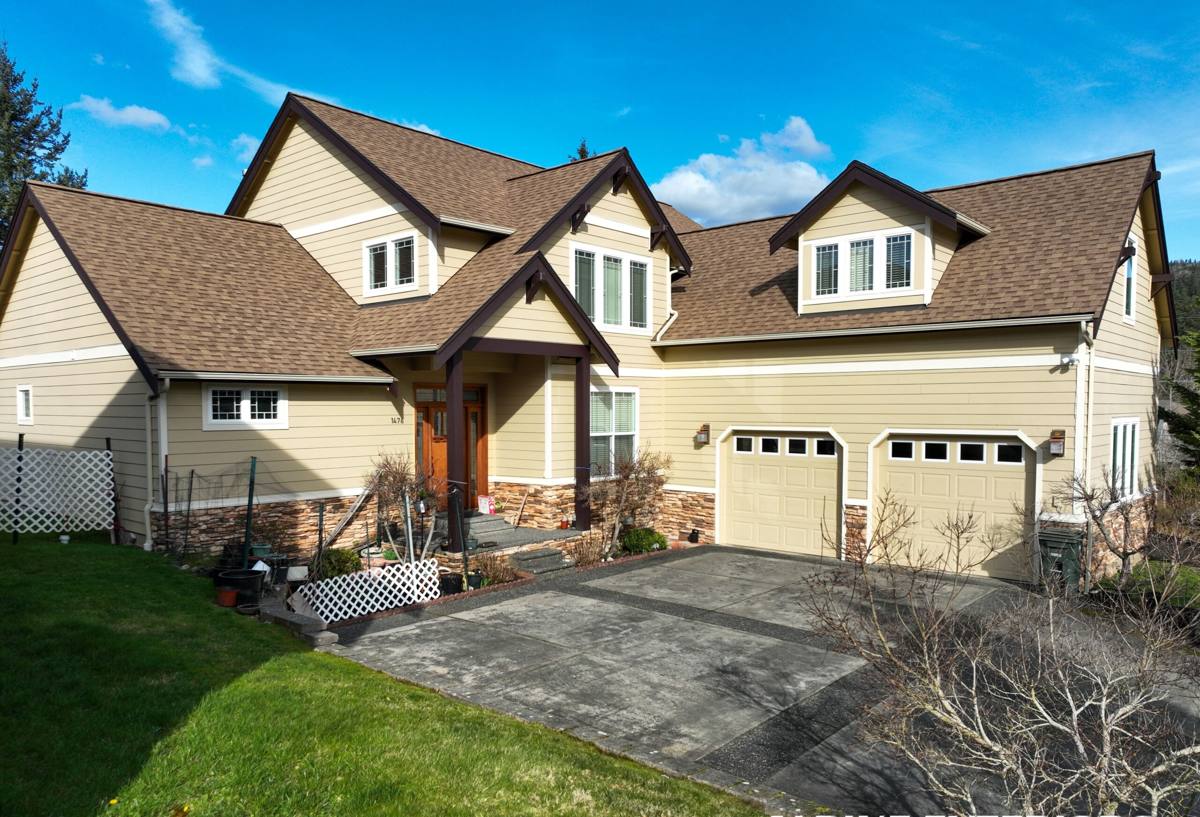
What Salt Air and Moisture Do to the Wrong Window
Hardware and Frame Corrosion
Salt air accelerates corrosion on exposed hardware — hinges, locks, cranks, and especially any fasteners that aren't rated for coastal exposure. Cheaper window lines often use standard steel or low-grade aluminum components that weren't designed for this. Within a handful of years you'll see white or rust-colored staining at the corners, stiff or seized hardware, and in some cases hardware that fails outright.
Moss and Organic Growth
Moss doesn't just grow on roofs. In Whatcom Falls' shaded, damp pockets, it takes hold in window sill channels, weep holes, and anywhere organic debris can settle and hold moisture against the frame. Once moss or algae blocks a weep hole, water that should drain out of the frame instead sits there — which is exactly how rot and seal failure start, even on a window that was installed correctly.
Driving Rain and Water Intrusion
Wind-driven rain doesn't fall straight down — it gets pushed sideways and upward into gaps that a calm-day install would never expose. This is a flashing and detailing issue as much as a product issue. A window can carry a great warranty and still leak if the flashing, sill pan, and sealant details weren't done correctly for this kind of weather.
What a Correct Window Job Actually Involves Here
A lot of window problems we get called out to fix in this area aren't product failures — they're installation shortcuts. For Whatcom Falls specifically, a correct job means:
- A sill pan flashing system that gives water a way out even if it gets past the exterior seal
- Corrosion-resistant fasteners and hardware rated for coastal/marine-adjacent exposure, not just standard-grade parts
- Properly lapped house wrap and flashing tape so water sheds down and out, never behind the barrier
- Weep holes and drainage paths kept clear and positioned so moss and debris don't block them over time
- Sealant products rated for sustained moisture exposure, not general-purpose caulk that hardens and cracks within a season or two
- Frame materials and finishes chosen for how they hold up to salt air, not just how they look on install day
Skip any one of these and the window itself becomes almost irrelevant — water will find the gap in the installation before it ever tests the product.
Choosing Materials for This Climate
We steer homeowners in this area toward vinyl and fiberglass window frames over bare or mill-finish aluminum for most applications. Aluminum conducts cold and can be prone to condensation and corrosion issues in coastal-adjacent, high-moisture settings unless it's a thermally broken, marine-grade product — and even then it's a higher-maintenance choice. Vinyl and fiberglass frames don't corrode, hold paint or finish better in salt air, and generally need less upkeep over the life of the window.
Glass package matters too. In a marine climate, a quality low-E, argon-filled double-pane unit is the practical standard — it cuts condensation risk, helps with the temperature swings common near the water, and holds up to UV exposure. We don't push glass upgrades homeowners don't need, but we also won't put a builder-grade glass package into a home that's going to take this much weather.
Frame Material Comparison for Whatcom Falls Exposure
| Frame Material | Corrosion Resistance | Maintenance | Best Fit |
|---|---|---|---|
| Vinyl | Excellent — won't corrode or rust | Low — occasional cleaning | Most homes, best value for coastal exposure |
| Fiberglass | Excellent | Low | Larger openings, higher-end finish, dimensional stability |
| Wood (clad exterior) | Good if exterior clad, poor if bare | Higher — finish upkeep on interior wood | Homes wanting a wood interior look with protected exterior |
| Standard aluminum | Poor in salt air unless marine-grade | Higher — corrosion and condensation issues over time | Not generally recommended for this exposure |
Signs Your Current Windows Are Losing the Fight
- Fogging or moisture between panes — the seal has failed and the insulating gas has escaped
- Visible staining, streaking, or discoloration at corners and sills
- Hardware that's stiff, sticks, or has visible rust or white corrosion
- Soft or discolored trim and sill wood around the frame
- Moss or green growth building up in the sill track or weep areas
- Noticeable draft or temperature difference near the window on a windy, rainy day
- Difficulty opening or closing that wasn't there a year or two ago
None of these mean you need a full window replacement immediately, but they're worth a look before another wet season goes by. Sometimes it's a resealing or hardware fix; sometimes the frame itself has taken on water and replacement is the honest answer.
Our Process for Whatcom Falls Homes
1. On-Site Assessment
We look at each opening individually — sun and wind exposure, existing flashing condition, sill and trim condition, and any signs of past water intrusion. Whatcom Falls homes vary enough in exposure from one side of the house to another that a blanket recommendation rarely fits every window.
2. Product and Detail Recommendation
We walk through frame material, glass package, and hardware options based on what that specific opening faces, plus what the home's style calls for. We're straightforward about cost versus long-term maintenance trade-offs — a cheaper window that needs attention every couple years isn't actually cheaper.
3. Removal and Flashing Correction
Old windows come out carefully so we can inspect the framing and sill underneath — this is often where hidden rot or old flashing mistakes turn up. We correct those before anything new goes in; installing a new window over a bad flashing detail just resets the clock on the same problem.
4. Installation and Sealing
New sill pan, properly lapped flashing tape, correct fastener spacing, and climate-appropriate sealant. We test operation and check for square and level before we consider the opening done.
5. Final Walkthrough
We go over what was done, what to expect from the new windows, and any basic maintenance — like keeping weep holes and sill tracks clear of moss — that helps them last.
Cost Factors Worth Understanding
Window replacement pricing varies a lot by opening size, frame material, glass package, and how much flashing or framing correction is needed once the old window comes out. Rather than quote a number that won't reflect your actual home, here's what actually drives the cost up or down:
| Factor | Effect on Cost |
|---|---|
| Standard vinyl vs. fiberglass or clad-wood frame | Fiberglass and clad-wood run higher than standard vinyl |
| Existing rot or flashing damage found on removal | Adds labor and material to correct before install |
| Number of openings replaced at once | Per-window cost usually drops with a full-house project vs. one-off |
| Glass upgrades (impact-resistant, extra low-E coatings) | Increases material cost, may reduce long-term maintenance |
| Unusual shapes or large custom openings | Custom-sized units cost more than standard stock sizes |
Why Local Experience in This Neighborhood Matters
Whatcom Falls isn't a generic install location — it's a specific set of exposure conditions within Glenhaven and Whatcom County that we've worked in repeatedly. That matters because the right call on flashing detail, sealant choice, or which side of a house needs extra drainage attention isn't something you get right by following a manufacturer's generic install manual. It comes from having actually dealt with what salt air, driving rain, and moss do to windows in this specific pocket of the county over time.
We're not interested in overselling upgrades homeowners don't need, and we're honest when a window issue is a $150 reseal job rather than a full replacement. Our job is to get the water managed correctly and the window performing the way it should for this climate — not to make every visit into a bigger sale.
Get a Straight Answer on Your Windows
If you're noticing drafts, staining, fogged glass, or moss buildup around your windows in Whatcom Falls, it's worth having someone look before another wet season passes. We'll give you a straightforward assessment of what's actually going on and what it would take to fix it — no pressure, no inflated recommendations. Use the form below to request a free estimate.