 Glenhaven Siding
 Building a Deck That Actually Holds Up on Lake Whatcom
A deck around Lake Whatcom lives a harder life than a deck in a dry inland subdivision. Between the lake's own humidity, the shade thrown by mature evergreens, and the general dampness of a Whatcom County winter, the wood, fasteners, and footings on a lakeside deck are under near-constant moisture pressure for eight or nine months of the year. That doesn't mean a deck here can't last decades — it means the build has to account for the climate from the ground up, not just the finish coat.
This page is about one thing: building or rebuilding a deck for a home in the Lake Whatcom / Glenhaven area, and what that actually takes given the local conditions. If you're comparing bids or just trying to understand what a correct job looks like, this is written for you.
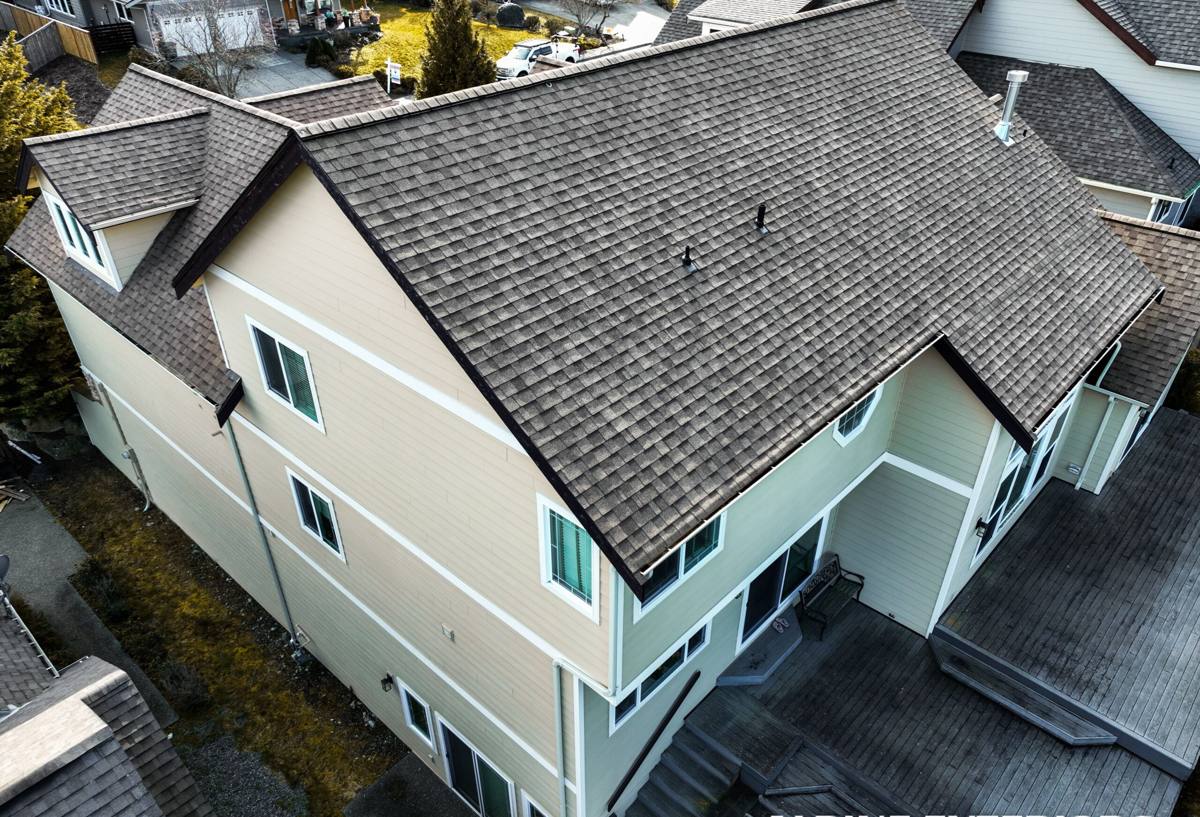
What the Lake Whatcom Climate Does to a Deck Over Time
Whatcom County's marine-influenced climate — damp, salt-tinged air moving in off the Sound, long stretches of driving rain, and short winter daylight — is hard enough on exterior wood on its own. Add a deck sitting next to open water, often under tree canopy, and you get a few specific failure patterns we see over and over:
- Moss and algae growth on shaded boards, especially the north or lake-facing side of a deck, which holds moisture against the wood surface and makes footing slick.
- Ledger board rot where the deck attaches to the house — the single most common structural failure point on decks in this region, almost always caused by missing or improperly lapped flashing.
- Fastener corrosion from cheap or mismatched hardware, which streaks the decking and eventually loses its grip on the board.
- Cupping and splitting in lumber that wasn't given room to dry and shed water between boards.
- Slick, mossy stairs and landings — a real safety issue on a lakeside property where people are moving between the house, the yard, and the water.
None of this is unusual or a sign of a "bad" property — it's just what a long moss season and driving rain do to any deck that wasn't detailed for it. The fix is in the materials and the details, not in avoiding a deck altogether.
Decking Material Options for This Climate
There's no single "best" decking material — there's a right trade-off for your budget, how much maintenance you want to do, and how much shade and moisture your specific site sees. Here's how the common options actually perform around a lake environment like this one:
| Material | How it handles moss & moisture | Maintenance | Typical lifespan |
|---|---|---|---|
| Pressure-treated lumber | Resists rot with proper treatment, but surface still grows moss/mildew in shade | Needs cleaning and re-sealing every 1-2 years | 15-25 years with upkeep |
| Cedar | Naturally rot- and insect-resistant, but greys and can go slick if left unsealed | Sealing or staining every 2-3 years | 20-25 years with upkeep |
| Composite decking | Doesn't rot; capped boards resist moss staining much better than uncapped | Occasional wash-down, no sealing | 25-30+ year warranties, common |
| Tropical hardwood (e.g. ipe) | Extremely dense and rot-resistant, sheds water well | Oiling to keep color, or left to grey naturally | 30+ years |
For a deck that's going to sit under trees near the water, we generally steer homeowners toward capped composite or a naturally rot-resistant wood like cedar or a hardwood, simply because the maintenance math works out better over a decade of this climate. That said, a well-built pressure-treated deck with a real maintenance routine is a perfectly honest choice too — it's a lower upfront cost in exchange for more of your own time and attention. We'll lay out the real trade-offs for your site rather than push whatever's easiest for us to install.
Substructure Material Matters Too
Whatever decking you choose on top, the framing underneath should be pressure-treated lumber rated for ground contact where it's near soil, with all field cuts re-treated with a copper-based sealant before they're installed. This is a step that gets skipped more often than it should — an untreated cut end is an open door for rot, and on a shaded, damp lot it doesn't take long to matter.
The Structural Details That Actually Matter
Decking material gets all the attention, but the details underneath are what actually determine whether a deck lasts 10 years or 30 in this climate.
Ledger Flashing
Where the deck attaches to the house, the ledger board needs proper flashing — typically a metal flashing cap with self-adhered waterproof membrane behind it, integrated with the house's existing weather barrier — so water is directed out and away from the house framing rather than trapped behind the ledger. This is the single most important detail on the whole structure, and it's also the one most commonly done wrong or skipped on older decks we're asked to repair.
Joist Protection
Joist tape (a self-adhering waterproof strip) over the top of every joist keeps water from sitting in the fastener holes where deck screws penetrate the wood — a small detail that meaningfully slows rot at the exact points where the structure is weakest.
Board Spacing and Airflow
Consistent gapping between boards, and enough clearance underneath the whole structure, lets air move and water drain rather than pool. In a climate with this much year-round moisture, airflow underneath the deck is not optional — it's one of the biggest factors in how fast moss and mildew take hold on the underside and how quickly framing dries out after a rain.
Fasteners and Hardware
Stainless steel or high-quality coated fasteners, matched to whatever decking material is being used, prevent the corrosion streaking and loosening that cheap hardware causes within a few wet seasons. Structural connectors (joist hangers, post bases) should be corrosion-rated for the same reason.
Footings
Footings need to be set below the frost line and sized for the soil conditions on your specific lot. Ground near the lake can hold more moisture and shift more than well-drained inland soil, so footing depth and diameter aren't a place to guess — they should be sized to your site, not to a generic minimum.
Permits and the Lake Whatcom Watershed
Lake Whatcom is the primary drinking water source for a large part of the surrounding area, and building activity near its shoreline is treated accordingly by Whatcom County. Depending on where your property sits relative to the lake, a deck project may involve:
- A standard building permit through Whatcom County for the deck structure itself.
- Additional review if your lot falls within the lake's watershed protection area, which can affect stormwater runoff, erosion control, and buffer requirements during construction.
- Setback rules from the shoreline that vary by parcel and zoning.
We're not going to pretend to know the exact rules for every parcel from a webpage — watershed and shoreline regulations are property-specific and worth confirming with the county directly. What we can tell you is that a crew that's pulled permits for decks in this specific watershed before knows what the county is going to ask for, which saves you the back-and-forth of a plan getting kicked back for a missing erosion control note or a setback question nobody thought to check upfront.
Our Deck-Building Process
- Site visit. We walk your specific lot — slope, shade pattern, soil, existing structure if there is one — and talk through what you actually want to use the deck for.
- Material and design conversation. Honest trade-offs on decking material, railing style, and layout based on your budget and how much maintenance you want going forward.
- Permitting. We handle the Whatcom County permit application, including any watershed or shoreline review your parcel requires.
- Build. Footings, framing with treated and sealed lumber, ledger flashing, joist protection, decking, and railing — built to the details above, not shortcut around them.
- Final walkthrough. We go over the finished deck with you, including what maintenance it will actually need and how often, before we call the job done.
Why a Crew That Already Works Lake Whatcom Matters
A deck built by a crew that's never worked this specific area tends to make the same mistakes: generic flashing details that don't account for how much moisture this climate really moves, footing depths borrowed from a drier region, or a permit application that stalls because nobody flagged the watershed review early. A crew that already builds decks around Glenhaven and Lake Whatcom knows the county's process, knows what this climate does to a deck over five and ten years — not just the first summer — and builds accordingly from day one.
Maintenance Checklist for a Lake Whatcom Deck
Whatever material you choose, a little seasonal attention goes a long way in this climate:
- Sweep debris and standing leaves off the deck surface regularly, especially in fall — trapped organic matter is what feeds moss growth.
- Wash the deck surface at least once a year with a deck-safe cleaner to knock back algae and moss before it gets a foothold.
- Check and clear the gaps between boards so water keeps draining instead of pooling.
- Inspect the ledger flashing and the area where the deck meets the house once a year for any sign of water staining.
- Re-seal or re-stain wood decking on the schedule appropriate to that material — don't wait until it's visibly grey and dry.
- Check fasteners and railing connections annually for looseness or corrosion.
- Keep overhanging branches trimmed back where practical to reduce shade and debris on the deck surface.
If you're planning a new deck or need to replace one that's showing its age around Lake Whatcom, we're glad to come take a look. We'll walk the site, talk through materials and layout honestly, and give you a straightforward, no-pressure estimate — just fill out the form below.