 Glenhaven Siding
 Why Decks Around Lake Whatcom Wear Out Faster Than People Expect
A deck in Glenhaven doesn't fail the way a deck in a dry climate fails. Out here, the enemy isn't sun bleaching or heat cracking — it's water that never fully leaves. Lake Whatcom sits in a bowl of trees and hillside that holds humidity close to the ground long after a storm has passed, and homes near the water pick up a steady drift of moisture-laden, salt-tinged marine air off Bellingham Bay and the Sound. Add Whatcom County's long, gray moss season — often eight months a year of the kind of damp shade moss and algae love — and you've got a structure that's under constant low-grade attack even when nothing looks obviously wrong.
Driving rain doesn't just fall straight down here; wind off the lake pushes it sideways into ledger connections, under railing caps, and into any seam where end grain is exposed. None of this means a deck is doomed — it means a deck needs to be built and repaired with that reality in mind, not with generic techniques borrowed from a drier region.
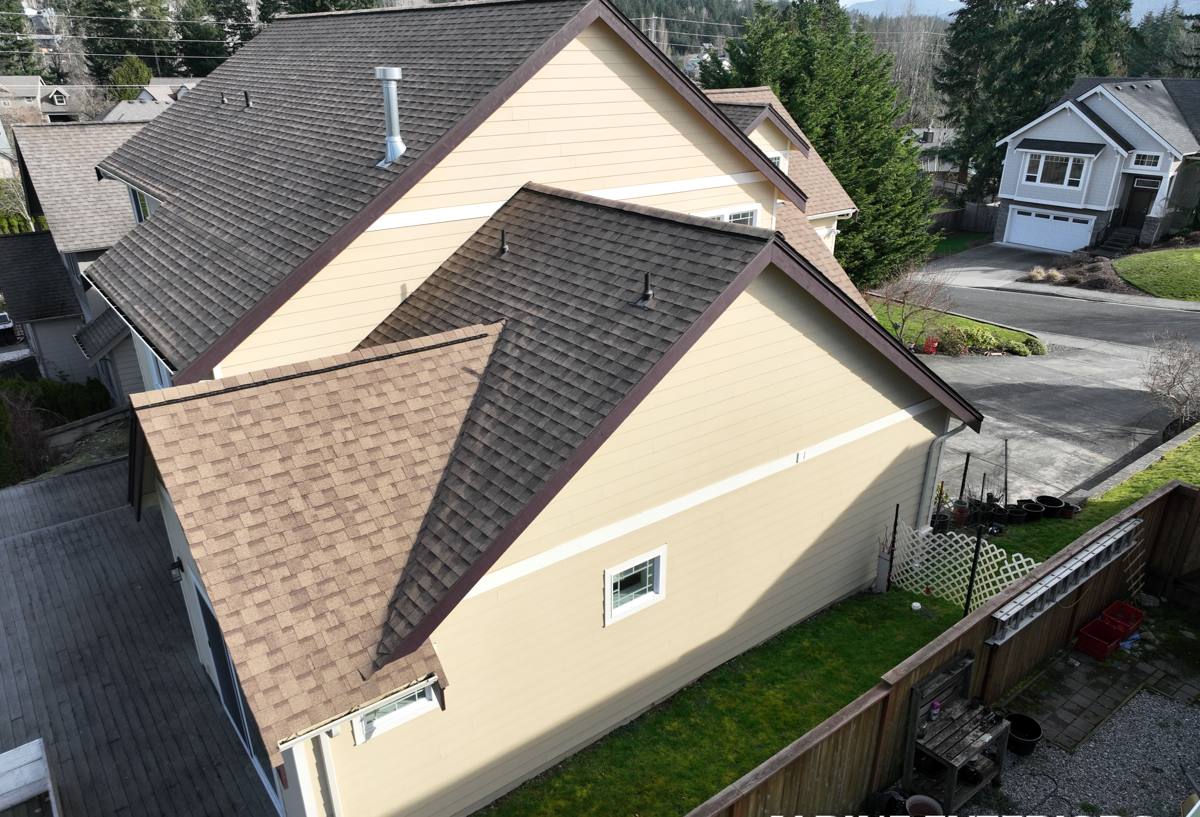
Signs Your Deck Needs Repair — and Signs It Needs More Than That
Repair-level problems
- Soft or spongy spots in a few decking boards, while the framing underneath is still solid
- Loose or wobbly railings and posts that have worked free from their connections
- Surface moss, algae, or black staining that's cosmetic and hasn't reached the wood fiber
- Rusted or popped fasteners leaving dark streaks on the boards around them
- A ledger board flashing detail that's failing, but the ledger itself hasn't rotted through yet
Signs you're past repair and into replacement
- A screwdriver sinks easily into a joist or the ledger board with light pressure
- Multiple support posts show soft, crumbling wood at or near ground contact
- The deck has a noticeable bounce or sag when walked on, not just a squeak
- Rot has traveled from the surface into the structural framing in more than one area
Part of an honest deck evaluation is telling you which category your deck is in before any work starts — not defaulting to "replace it all" because that's the easier sell, and not patching over a structural problem because that's the cheaper one.
What a Correct Deck Repair Actually Involves
The ledger connection
The ledger board — where the deck attaches to the house — is the single most common failure point on decks in this climate, because it's the hardest spot to keep water out of. Proper repair means checking the flashing behind and above the ledger, confirming there's a gap or drainage path so water isn't trapped against the house band board, and replacing corroded structural screws or bolts with fasteners rated for ground contact and moisture exposure.
Joists and framing
Any joist showing soft wood, delamination, or fastener corrosion gets sistered with new lumber or replaced outright — never just covered up with new decking on top. We also check joist hangers, which corrode from the inside out in damp climates and can look fine from underneath while the hanger nails have already lost their grip.
Decking boards
Individual boards can usually be replaced without touching the whole surface, as long as the framing they're fastened to is sound. Board spacing matters more here than in dry climates — gaps that are too tight trap moss-feeding moisture and debris between boards, while gaps that are too wide let more rain through to the framing below.
Railings and guardrails
Loose railing posts are almost always a sign of a fastening or rot problem at the connection point, not just "needs tightening." We rebuild the connection properly rather than adding a longer screw to a post that's already splitting.
The Deck Problems We See Most Often in This Area
| Problem | Typical Cause Around Lake Whatcom | What Repair Involves |
|---|---|---|
| Green or black moss film on decking | Shade, standing moisture, long wet season | Clean, treat, improve drainage/airflow; not always a repair, sometimes a maintenance visit |
| Rot at the ledger board | Failed or missing flashing where deck meets house | Reflash the connection, replace rotted wood, re-fasten with corrosion-rated hardware |
| Rusted fastener heads staining boards | Standard fasteners not rated for wet, salt-influenced air | Remove and replace with stainless or hot-dip galvanized fasteners |
| Wobbly railing posts | Water intrusion at the post base or a weak original connection | Rebuild the post connection with proper blocking and hardware |
| Soft joists near the house or ground | Trapped moisture, poor original ventilation under the deck | Sister or replace affected joists, improve under-deck airflow where possible |
Repair vs. Full Rebuild: What Drives the Decision
| Factor | Leans Toward Repair | Leans Toward Rebuild |
|---|---|---|
| Age of the deck | Under 12-15 years | Original construction is much older or unknown |
| Extent of rot | Isolated to a few boards or one connection | Found in multiple framing members throughout |
| Original construction quality | Ledger flashing and hardware were done right originally | No flashing was ever installed, or fasteners are undersized |
| Code compliance | Guardrail height and spacing already meet current code | Railings, stairs, or ledger attachment don't meet current code |
| Budget goal | Extend the deck's life a number of years affordably | Want a long-term reset and possibly a different layout or material |
Most decks we look at in Glenhaven and around the lake fall somewhere in the middle — sound framing with a handful of real problems — which is exactly the case repair is meant for. We won't recommend a rebuild just because it's a bigger job.
Our Deck Repair Process
- On-site inspection. We check the ledger, framing, posts, footings where visible, and decking board by board — probing suspect wood rather than guessing from the surface.
- Written scope. You get a clear list of what's failing, what's sound, and what repair actually involves before any work starts — no vague "we'll see once we open it up" pricing on the parts we can already assess.
- Structural repair first. Ledger, joists, and posts get addressed before anything cosmetic, since a good-looking deck on bad framing is just a problem waiting to resurface.
- Correct flashing and fasteners. Every connection we open up gets flashed and fastened to hold up against this region's rain and humidity — not just to match what was there before if what was there before is why it failed.
- Decking and railing work. Damaged boards and railing components are replaced and matched as closely as possible to the existing deck.
- Walkthrough. We show you what was found and what was done, including anything worth keeping an eye on going forward.
Materials and Fasteners We Use, and Why
In a climate that stays damp most of the year, the fasteners often matter as much as the lumber. Standard coated deck screws can start showing corrosion within a few seasons here, especially in areas that get salt-influenced air off the water. For structural connections and anything near the ledger, we use stainless steel or hot-dip galvanized hardware rated for wet, corrosive exposure — it costs more up front and saves a repeat repair down the line.
For decking material, pressure-treated lumber, cedar, and composite boards all have a place, and the right choice depends on your budget and how much upkeep you want to do:
- Pressure-treated lumber: affordable and strong, but needs regular cleaning and refinishing to resist moss and moisture in this climate
- Cedar: naturally more rot-resistant and a good visual match for existing wood decks, still benefits from periodic sealing
- Composite decking: higher upfront cost, resists rot and moss growth better, but still needs proper ventilation underneath — composite over a poorly ventilated frame just moves the moisture problem to the framing
Maintenance Checklist for Lake Whatcom Homeowners
A few habits go a long way toward stretching the life of a repair in this climate:
- Sweep leaves and needles off the deck regularly — trapped debris holds moisture against the boards
- Clean moss and algae off the surface at least once a year, ideally before the wettest months
- Check railings and stair connections for looseness each spring
- Look at the ledger flashing line where the deck meets the house for gaps, cracking, or staining
- Keep gutters and downspouts near the deck clear so runoff isn't dumping extra water onto it
- Reseal wood decking on the manufacturer's recommended schedule, not just when it looks faded
Why It Matters That We Already Work in This Area
A deck repaired without accounting for Whatcom County's specific mix of humidity, driving rain, and moss growth tends to develop the same failure again in a few years, just in a slightly different spot. Working regularly around Lake Whatcom and Glenhaven means we've already seen which ledger details fail first, which fastener grades actually hold up to the local air, and which shaded, low-airflow deck layouts need extra attention to drainage. That's not a marketing point — it changes what we check first and what we refuse to skip.
If your deck has soft spots, loose railings, moss buildup, or you just want an honest read on what shape it's really in, we're glad to take a look. Fill out the form below for a free, no-pressure estimate.