 Glenhaven Siding
 Why Decks in Blaine Wear Out Faster Than You'd Expect
Blaine sits close to open water at the northern edge of Whatcom County, and that location shapes everything about how a deck ages here. Salt-laden air moves through the area constantly, driving rain comes in sideways more often than straight down, and the long, damp shoulder seasons keep moss and mildew active for most of the year. A deck built to a generic national standard, or repaired with whatever material was on hand, tends to show its age in Blaine years before it would somewhere drier and further inland.
That's not a reason to avoid building or replacing a deck — it just means the details matter more here than they do elsewhere. The framing, the fasteners, the flashing, and the decking material all need to be chosen with this specific climate in mind, not just picked off a shelf.
Salt Air and Metal Fasteners
Airborne salt accelerates corrosion on any exposed metal — nails, screws, joist hangers, bolts. Once a fastener starts to rust, it loses holding strength long before it looks obviously bad, and a deck's structural integrity depends on hundreds of small connections doing their job quietly for years. On homes close to the water, this is one of the first things we check when we're asked to look at an aging deck.
Moss, Shade, and Trapped Moisture
Whatcom County's wet, mild winters and shoulder seasons give moss a long window to establish itself, especially on decks that sit in shade for part of the day or under tree cover. Moss holds moisture against wood and composite surfaces alike, and that trapped dampness is what eventually leads to soft spots, splitting, and hidden rot in framing members that never get a chance to fully dry out.
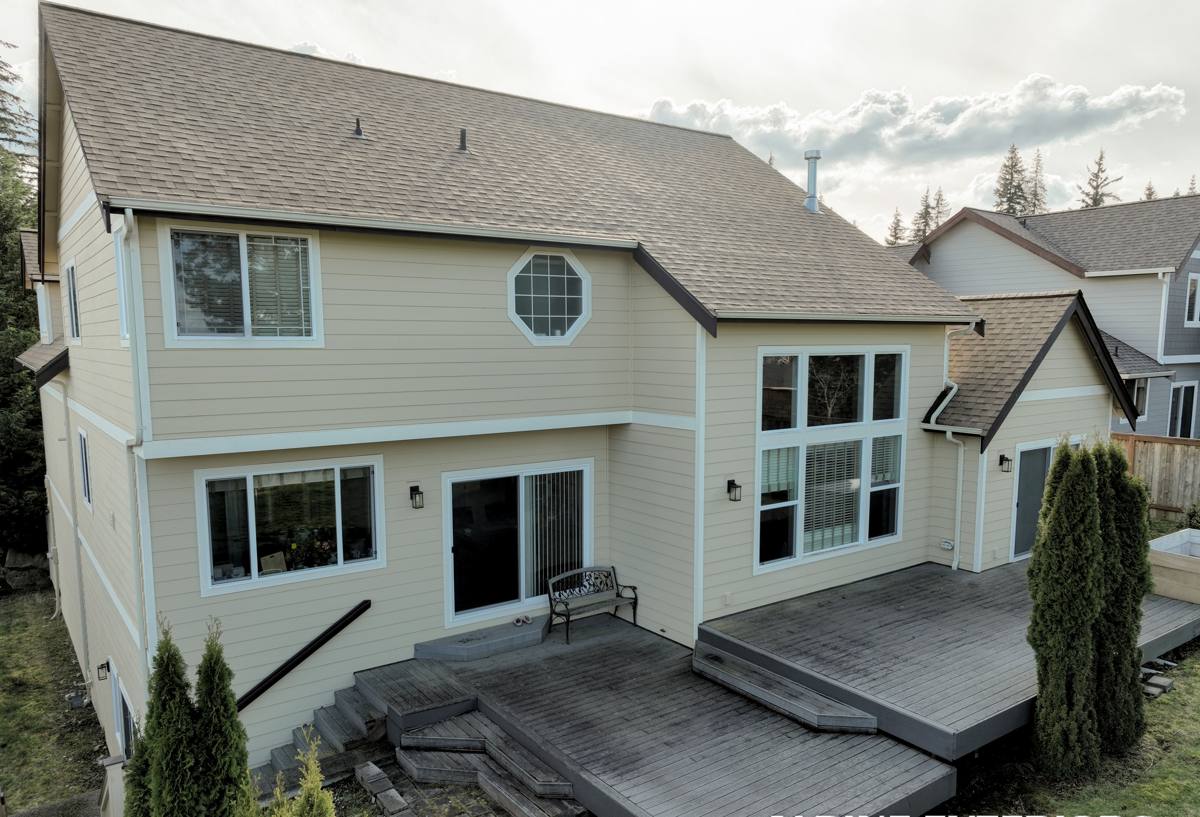
Signs a Blaine Deck Needs Replacement, Not Just Repair
Not every aging deck needs to be torn out. But there's a point where patching individual boards or re-tightening fasteners stops being a real fix and starts being a way to delay an inevitable, larger job — often at higher cost once framing is involved. Here's what we look for when deciding which side of that line a deck is on:
- Soft, spongy, or spring-back decking boards, especially near the house or in shaded corners
- Visible rust streaking from fasteners or metal connectors onto the wood surface
- Persistent moss or dark staining that returns within weeks of cleaning
- Gaps, cracks, or checking that run through the full thickness of a board, not just the surface
- A ledger board connection (where the deck meets the house) that shows staining, gaps, or gives when pushed
- Railings or posts that flex or wobble under normal pressure
- A deck more than 20-25 years old that has never had framing inspected or replaced
If you're seeing two or more of these, it's worth having someone look at the framing underneath before spending more money on surface repairs.
What a Correct Deck Replacement Actually Involves
A deck replacement isn't just swapping old boards for new ones. Done right, it starts from the ground up, and every layer gets evaluated on its own — because the surface boards can look fine while the framing underneath is the part actually failing.
Framing and Structural Work
Posts, beams, and joists take the brunt of moisture exposure because they're often shaded by the decking above and get less sun to dry out between rain events. On a proper replacement, we check post bases for rot at ground contact, confirm joist spacing meets current code, and replace any framing member that shows soft spots, splitting, or fastener corrosion — not just the boards someone can see from the yard.
Decking Material Choices
There's no single "right" decking material for every home, but in a climate like Blaine's, the trade-offs matter more than they would in a drier region. Here's how the common options compare for local conditions:
| Material | Moisture & Salt Air Behavior | Moss/Mildew Resistance | Maintenance |
|---|---|---|---|
| Pressure-treated wood | Resists rot when properly maintained, but end grain and fastener holes are vulnerable points | Needs regular cleaning and sealing to resist moss buildup | Annual cleaning, periodic re-sealing |
| Cedar | Naturally moisture-resistant, but softens over time without upkeep | Better natural resistance, still benefits from cleaning | Periodic sealing/staining to maintain appearance and protection |
| Composite decking | Doesn't rot or absorb moisture the way wood does; core material varies by brand | Surface can still grow moss/mildew in shaded, damp spots and needs occasional washing | Low — occasional cleaning, no sealing or staining |
| PVC/capped polymer | Fully sealed surface handles driving rain and salt air well | Smooth cap sheds moss and mildew more easily than wood grain | Lowest — mostly rinsing as needed |
We'll talk through what fits your home, your budget, and how much upkeep you actually want to do — there's an honest case for each of these depending on the situation, and we're not going to push one brand over another without explaining the trade-off.
Ledger Boards, Flashing, and Water Management
The single most common point of failure we see on older decks in this area isn't the decking surface — it's the ledger board, the framing member that attaches the deck directly to the house. Driving rain off the water pushes moisture into any gap in the flashing at that connection, and once water gets behind the ledger, it can sit against both the deck framing and the house's own wall framing without anyone noticing until damage is significant.
A correct replacement includes proper flashing at the ledger, correct fastening (not just nails toenailed in), and a small gap or drainage path so water sheds away from the house rather than pooling against it. This is invisible once the job is finished, but it's the difference between a deck that lasts and one that quietly rots the wall behind it.
Fasteners and Hardware Built for Salt Air
Given how much airborne salt affects metal in this area, we use fasteners and structural hardware rated for corrosion resistance in coastal-type exposure — not the standard interior-grade hardware that's fine further inland. This includes joist hangers, structural screws, and post connectors. It costs a little more up front than using whatever's cheapest at the hardware store, but replacing a handful of corroded hangers ten years early is far more expensive than getting it right the first time.
Our Deck Replacement Process
- On-site assessment — we inspect the existing deck's framing, ledger connection, and posts, not just the visible surface, to determine what actually needs replacing.
- Honest scope and estimate — you get a clear breakdown of what's being replaced and why, with material options and their trade-offs explained in plain terms.
- Permitting — where required, we handle the permit application so the work is documented and inspected properly.
- Demolition and disposal — old decking, framing, and hardware are removed and hauled off; we check for any hidden rot at the house connection before rebuilding.
- Framing rebuild — posts, beams, and joists go in to current code, with corrosion-resistant hardware throughout.
- Decking and railing installation — installed to manufacturer spec, with attention to fastening patterns and spacing that account for our wet climate's expansion and contraction.
- Final walkthrough — we go over the finished deck with you, including basic care and cleaning guidance suited to your chosen material.
Permits and Code Requirements
Most deck replacement work in Whatcom County requires a building permit, particularly when framing, footings, or railings are being rebuilt rather than just resurfaced. Requirements can include guardrail height, baluster spacing, and footing depth, and they exist to make sure the structure is actually safe to stand on. We handle this as part of the job rather than treating it as an afterthought — a deck that isn't permitted and inspected can also create problems later if you go to sell the home.
Why Hiring a Crew That Already Works in Blaine Matters
A contractor who mostly works inland doesn't run into salt air corrosion or moss-driven rot often enough to build habits around it. Someone who regularly works on homes in this part of Whatcom County knows to check the ledger flashing first, knows which fastener grades hold up here, and knows how much shade and moisture a given deck orientation is likely to see through the year. None of that is exotic knowledge — it's just familiarity that comes from doing this work repeatedly in this specific climate, rather than treating every deck the same regardless of where it sits.
If your deck is showing its age, or you're just not sure whether it needs repair or full replacement, we're happy to take a look and give you a straight answer. Reach out for a free, no-pressure estimate using the form below.