 Glenhaven Siding
 Deck Replacement Built for Sudden Valley's Lake Whatcom Climate
Sudden Valley sits right on Lake Whatcom, and that lakeside setting is exactly what makes decks age faster here than almost anywhere else in Whatcom County. Between the lake's own humidity, the long stretch of driving rain we get from fall through spring, and the moss that colonizes anything shaded or north-facing, a deck in this neighborhood works harder than a deck in a drier, sunnier subdivision. If yours is cupping, springy underfoot, growing green film between the boards, or showing soft spots around the ledger, that's not bad luck — it's the normal wear pattern for this exact location, and it means the structure underneath deserves a real look, not just new boards on top.
We build and replace decks throughout Glenhaven and the surrounding Whatcom County lake and coastal communities, and Sudden Valley's combination of tree cover, lake humidity, and steep, wooded lots is a recurring theme in the decks we're called out to fix or replace. This page walks through what actually causes deck failure here, what a correct replacement involves, and how we run the job from first look to final walkthrough.
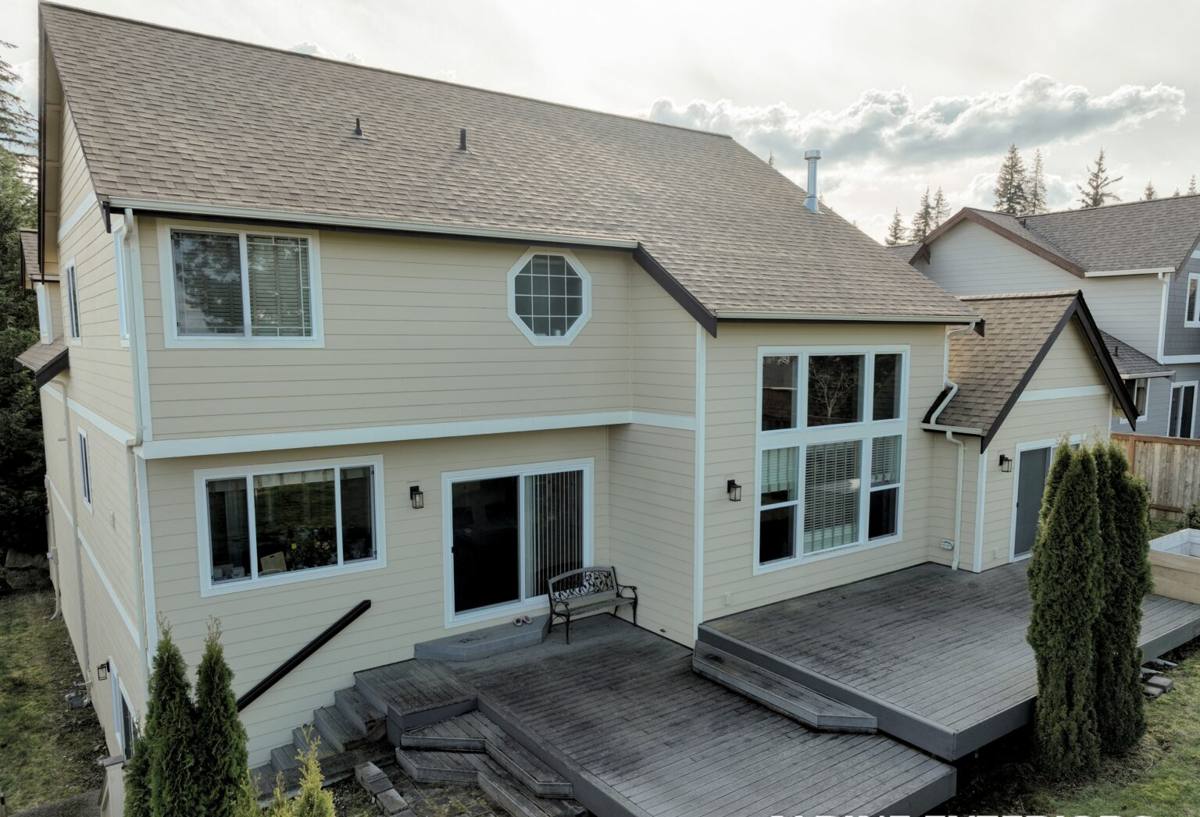
Why Decks Wear Out Faster Around the Lake
Moisture that never fully dries
A deck near open water spends more hours per day at high relative humidity than one a few miles inland. Add tree canopy — common on Sudden Valley's wooded lots — and you get boards that stay damp long after the rain stops. Wood and composite decking both need dry-out time between wet cycles; when that window shrinks, rot, mold, and moss set in faster, especially on the shaded side of the house or under overhangs where the sun never quite reaches.
Driving rain and wind-driven water intrusion
Storms coming off the lake don't just fall straight down — wind pushes rain sideways into ledger boards, stair stringers, and the point where the deck meets the house. That's the single most common failure point we find: water getting behind the ledger flashing (or finding a deck with none at all) and rotting the rim joist from the inside, invisible from the surface until the deck starts to feel spongy.
Moss and organic buildup
Whatcom County's moss season runs long — realistically most of the year on shaded, damp surfaces. Moss holds moisture against the wood surface constantly, which accelerates rot underneath even when the top of the board still looks intact. It also makes stairs and walking surfaces genuinely slick, which is a safety issue as much as a cosmetic one.
What we typically find on a Sudden Valley deck inspection
- Rot at the ledger-to-house connection, often hidden behind trim or siding
- Rusted or corroded joist hangers and fasteners from years of damp exposure
- Soft or delaminating rim joists and beams, especially on the shaded side
- Moss and algae buildup on decking boards, stairs, and railings
- Undersized or missing flashing where the deck meets the house wall
- Footings that have shifted or settled on sloped, wooded lots
- Railing posts that wiggle because the blocking or fasteners have failed
Repair vs. Full Replacement — How We Decide
Not every deck needs to come out entirely. But on lakeside lots with real moisture exposure, patch repairs often just delay the same failure a year or two later. Here's the honest breakdown we use when we're standing on your deck:
| Condition | Repair may be enough | Full replacement recommended |
|---|---|---|
| Surface boards worn/greying but solid underneath | Yes — resurface or spot-replace | No |
| Rot found at ledger or rim joist | No | Yes — structure is compromised |
| Deck is 20+ years old, original fasteners | Rarely — hardware has usually reached end of life | Yes, in most cases |
| Footings undersized or shifted | No | Yes — this is a structural issue |
| Isolated board damage, structure sound | Yes | No |
| No flashing at ledger, water staining on siding above deck | No | Yes — ongoing water intrusion path |
The short version: if the problem is in the boards, we can often repair. If the problem is in the framing, the ledger connection, or the footings, replacement is the only fix that actually holds up through another Whatcom County wet season.
What a Correct Deck Replacement Actually Involves
Structure first
The framing is what carries the load and what fails first near the lake, so it gets the most attention. That means properly sized joists and beams for your deck's span and use, hot-dipped galvanized or stainless hardware (not bare steel, which corrodes quickly in this humidity), and joist hangers rated for the lumber and load involved.
The ledger connection — where most failures start
A correctly built ledger board is bolted (not just nailed) to the house framing, with proper flashing that directs water away from the house rather than behind the ledger. This single detail is responsible for more deck rot than anything else we see, and it's the detail most likely to be shortcut on older or lower-bid decks.
Footings sized for the site
Sudden Valley's terrain includes plenty of sloped, wooded lots. Footings need to reach proper frost depth and bear on solid soil, which sometimes means going deeper or wider than a flat-lot deck would require. We size footings to your site conditions, not a generic template.
Decking material that matches how the deck will be used and shaded
For a shaded, lake-humidity lot, the decking surface itself matters as much as the frame underneath. We'll walk you through the honest tradeoffs for your specific deck rather than pushing one product for every job.
| Decking option | Moisture/moss resistance | Maintenance | Upfront cost |
|---|---|---|---|
| Pressure-treated wood | Moderate — needs sealing to perform | Annual cleaning/staining | Lowest |
| Cedar | Naturally decent, but still needs upkeep in shade | Regular sealing to prevent greying and rot | Mid |
| Composite decking | High — doesn't absorb water like wood | Occasional washing to keep moss/algae off the surface | Higher |
| PVC decking | Highest — fully synthetic, no wood fiber to rot | Lowest — mainly periodic washing | Highest |
Composite and PVC decking have become popular on shaded, lake-adjacent lots specifically because they don't feed moss and mildew the way wood fiber does. That said, even composite decking needs a properly built, well-ventilated frame underneath — the best decking surface in the world won't save a deck with a rotting ledger or undersized joists.
Railings and stairs
Railing posts need solid blocking in the frame, not just a lag bolt into a rim joist — that's another common shortcut we correct on replacement jobs. Stair stringers should be sized for the run and treated or capped to resist the same moisture exposure as the deck itself.
Our Process, Start to Finish
- On-site assessment: We inspect the existing deck from underneath as well as on top, checking the ledger connection, joists, footings, and any water staining on the house wall above the deck.
- Honest scope and estimate: You get a clear breakdown of what's structural, what's cosmetic, and what your material options actually cost and require over time — no pressure toward the most expensive option.
- Demo and disposal: We remove the old deck down to what's being reused (if anything) and haul away debris.
- Framing and flashing: New or corrected footings, joists, ledger bolting, and flashing go in first, built to current code for your span and load.
- Decking, railing, and stairs installed: Per the material you've chosen, with attention to drainage gaps and airflow underneath to reduce future moisture buildup.
- Final walkthrough: We check the deck with you before we consider the job done — fastener spacing, railing solidity, stair safety, and drainage.
Timing the Job Around Whatcom County Weather
Deck replacement can happen most of the year here, but scheduling around the wettest stretches makes for a cleaner build — concrete footings and framing cure better with a few dry days, and it's easier to get flashing details right when the ledger area isn't actively wet. Late spring through early fall tends to give the most workable windows, though we do plan and quote jobs year-round and can work around the realities of a Pacific Northwest schedule.
Maintaining a New Deck in a Moss-Prone, Lakeside Yard
- Rinse or sweep debris and moss spores off the surface a few times a year, especially in shaded areas
- Keep gutters and downspouts near the deck clear so runoff isn't dumping extra water onto or under it
- Trim back overhanging branches where practical to let more light and air reach the deck surface
- Reseal wood decking on the manufacturer's recommended schedule — don't wait until it's visibly greying
- Check railing posts and stair connections annually for looseness before it becomes a safety issue
- Address any new water staining on the house wall above the deck right away — it usually means a flashing problem
Why Local Experience on This Specific Lake Matters
A deck built for a dry inland lot and a deck built for a shaded Sudden Valley lot facing Lake Whatcom aren't the same project, even if they look similar on paper. The framing details, the flashing at the ledger, the decking material choice, and the footing depth all shift based on how much moisture and shade a given lot actually sees. A crew that's replaced decks around this lake before already knows where the shortcuts on the last deck are likely to be hiding and what actually holds up through a full Whatcom County wet season — not just what looks good on installation day.
If your deck feels soft, springy, or is showing moss and water staining, we're happy to take a look and give you a straightforward assessment — no pressure, no hard sell. Fill out the form below for a free estimate on your Sudden Valley deck replacement.