 Glenhaven Siding
 Deming Roofs Wear Differently Than Roofs Inland
Deming sits in a stretch of Whatcom County where three things converge on every roof, every year: salt-laden air moving in off the coast, long stretches of driving rain, and a moss season that can run eight months or more under heavy tree cover. None of those three is unusual on its own. Together, on the same roof, year after year, they shorten the life of materials that would last much longer in a drier or more open part of the state. A roof replacement here isn't just "put new shingles on" — it's a decision about which materials, fasteners, and underlayment details will actually hold up to this specific combination of conditions.
We work on roofs in and around Deming regularly, which matters more than it sounds like. A crew that only sees this kind of exposure occasionally tends to spec roofs the same way they would for a subdivision forty miles inland. A crew that works Deming roofs all the time knows where the moss builds up first, which north-facing slopes never fully dry out, and which valleys take the worst of the wind-driven rain.
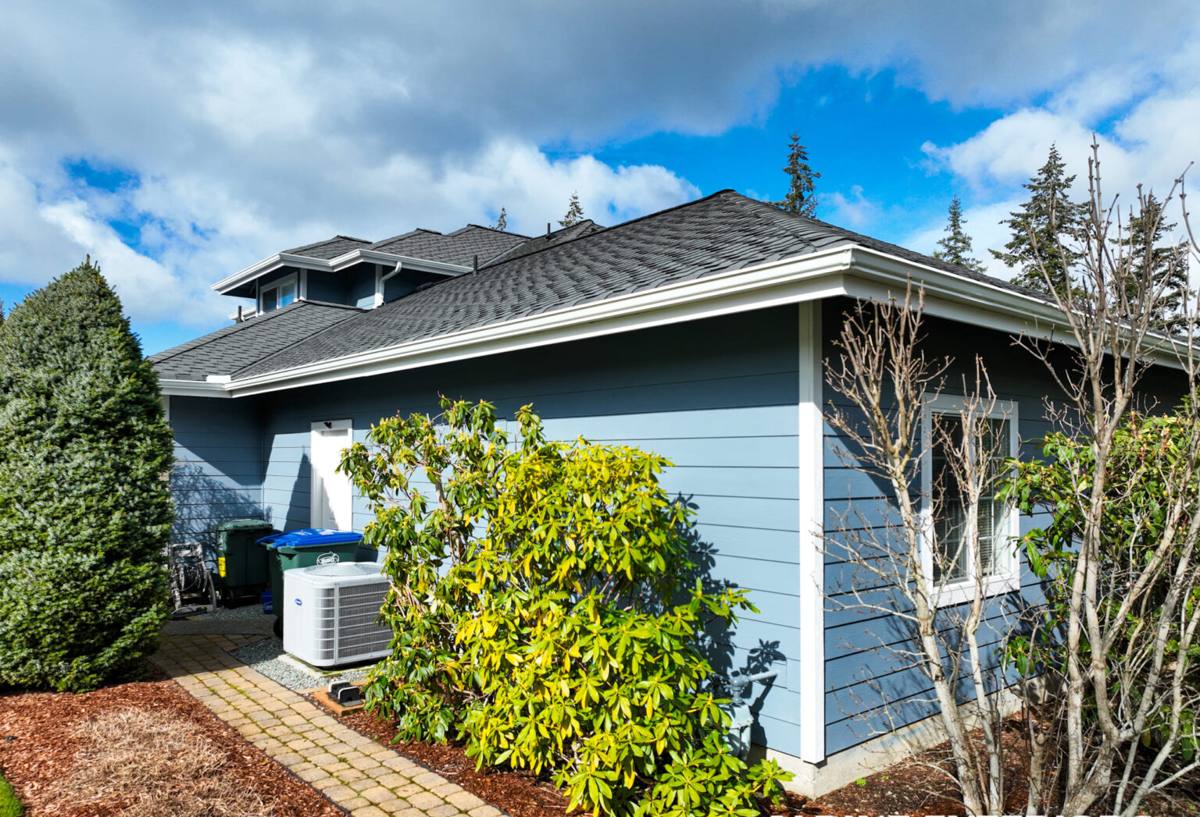
What Salt Air, Rain, and Moss Actually Do to a Roof
Salt Air and Corrosion
Salt in the air accelerates corrosion on anything metal — nails, flashing, drip edge, valley metal, and the fasteners holding shingles or metal panels down. Standard electro-galvanized fasteners can start showing rust streaks and weakening well before a roof's expected lifespan is up in a coastal-influenced area. This is a fastener and flashing spec issue as much as a shingle issue, and it's one of the first things we adjust for on a Deming job.
Driving Rain
Rain that comes in mostly straight down is one thing. Rain that comes in sideways during a windstorm is another. Wind-driven rain finds every gap in flashing, every under-lapped shingle course, and every place where underlayment coverage was skimped to save time. It also means valleys, roof-to-wall transitions, and penetrations (vents, chimneys, skylights) take disproportionate abuse compared to open field areas of the roof.
Moss
Moss needs shade, moisture, and time — Deming's tree cover and rainfall pattern give it plenty of both. Moss doesn't just sit on top of shingles looking bad. It holds moisture against the roofing material, works its way under shingle tabs and granule surfaces, and over years can lift edges enough for wind and rain to get underneath. Roofs on shaded, north-facing slopes or under conifer cover are almost always the first to need attention.
Signs a Deming Roof Needs Replacement, Not Just Repair
Not every problem roof needs a full tear-off. But there are signs that point toward replacement being the more honest recommendation than another round of patching:
- Granule loss heavy enough that you can see bare asphalt in multiple spots, not just one worn patch
- Moss or moss staining that returns within a season or two of cleaning, especially on shaded slopes
- Soft or spongy decking felt underfoot when walking the roof, a sign moisture has already gotten past the surface layer
- Curling, cupping, or cracked shingles across large sections rather than isolated spots
- Repeated leaks in different locations each winter, rather than one recurring spot
- Flashing that's visibly rusted, pulled loose, or was never properly integrated with the roofing material
- A roof already past or close to its expected material lifespan, especially if it's never had algae-resistant shingles or proper ventilation
If a roof is showing one or two of these in isolation, repair is often still the right call, and we'll say so. Replacement makes sense when the underlying material and flashing system are broadly compromised rather than the exception.
What a Correct Roof Replacement Includes
A roof replacement done right for this climate isn't just swapping old shingles for new ones. The components underneath and around the visible surface matter as much as the shingle itself.
Tear-Off and Deck Inspection
Full tear-off lets us actually see the decking condition, which matters a lot in a wet climate — soft, delaminated, or water-stained sheathing needs to be replaced before anything new goes down, not covered over.
Underlayment
Underlayment is the roof's real waterproofing backup, and it's where a lot of corner-cutting happens on cheap jobs. In a driving-rain climate we lean toward synthetic underlayment with full coverage, and ice-and-water shield membrane at eaves, valleys, and penetrations where wind-driven rain is most likely to find a way in.
Flashing
Given the salt-air corrosion issue, flashing material selection matters. We use flashing and fasteners rated to hold up better against corrosion than bare galvanized steel, particularly at valleys, chimneys, skylights, and roof-to-wall transitions — the spots that fail first when wind-driven rain is involved.
Ventilation
Proper intake and exhaust ventilation keeps the attic space drier and more temperature-stable, which slows moss growth on the underside and helps shingles last closer to their rated lifespan. A roof replacement that doesn't address ventilation is only solving half the moisture problem.
Shingle or Panel Selection
For asphalt roofs, algae-resistant (moss-resistant) shingles with copper or zinc granules are worth the modest upcharge in a moss-heavy area like Deming — they slow regrowth meaningfully compared to standard shingles, though they don't eliminate the need for occasional cleaning.
Comparing Roofing Options for Deming's Climate
| Material | Moss Resistance | Wind-Driven Rain Performance | Maintenance Burden |
|---|---|---|---|
| Standard architectural asphalt shingle | Moderate — moss returns without regular cleaning | Good with proper underlayment and flashing | Periodic moss removal, gutter clearing |
| Algae/moss-resistant asphalt shingle | Better — copper/zinc granules slow regrowth | Good with proper underlayment and flashing | Lower, but not zero cleaning |
| Standing seam metal | High — smooth surface sheds moss more easily | Very good when seams and flashing are done correctly | Low, but flashing detail work is more demanding to install right |
| Cedar shake | Low without treatment — holds moisture, needs regular maintenance | Fair — depends heavily on underlayment quality | High — regular treatment and inspection needed |
We'll walk through the honest trade-offs for a given roof rather than push one product across the board. A heavily shaded, low-slope section under conifers is a different conversation than an open, steep-pitch south-facing roof on the same house.
How Our Process Works on a Deming Roof Replacement
- On-site assessment. We walk the roof (weather permitting) and inspect decking, flashing, ventilation, and any problem areas from inside the attic, not just from the ground.
- Written scope and estimate. You get a clear breakdown of materials, labor, and what's included — no vague allowances that turn into surprise change orders.
- Material selection. We talk through options based on your roof's actual sun/shade exposure, slope, and how long you plan to be in the home, not just a one-size product pitch.
- Scheduling around weather. Whatcom County rain patterns mean timing matters — we plan tear-off and dry-in around forecast windows rather than leaving a roof exposed longer than necessary.
- Tear-off, deck repair, and dry-in. Old material comes off, decking issues get fixed, and the roof gets underlayment coverage before anything is left overnight if we can help it.
- Installation. Shingles or panels, flashing, and ventilation components go in to manufacturer specification and to the corrosion-resistant standard we hold for coastal-influenced jobs.
- Final walkthrough. We review the finished roof with you, including gutters and any moss-prevention details like zinc strips if that's part of the plan.
Ongoing Care That Extends a New Roof's Life
A correctly installed roof still benefits from basic upkeep in this climate, especially the first few years while trees, shading, and drainage patterns settle in around the property.
- Clear gutters and downspouts at least twice a year — clogged gutters back water up under the roof edge
- Trim back overhanging branches where practical to reduce shade and debris buildup on north-facing slopes
- Have moss growth removed professionally rather than pressure-washed, which can strip granules and shorten shingle life
- Watch for granule buildup in gutters, which signals accelerated shingle wear
- Schedule a roof check after any major windstorm, not just on a fixed annual schedule
Why a Crew That Already Works Deming Matters
Roofing specs that work fine in a dry, low-wind part of the state can under-perform here. A crew that regularly works Deming and the surrounding Whatcom County area already knows which slopes hold moisture longest, where wind tends to drive rain hardest during a fall storm, and which flashing and fastener choices actually hold up against salt-air corrosion over time — because we've seen what happens when they don't. That local pattern recognition is hard to get from a crew that's mostly worked drier, more sheltered territory and treats every roof the same way.
It also means we're a known, reachable local contractor if something needs a look after the job is done — not a crew that worked through the area once and moved on.
Get a Straightforward Estimate
If your roof in Deming is showing moss that keeps coming back, granule loss, or signs of water getting past the surface, it's worth having someone look at it before another wet season passes. We offer free, no-pressure estimates — walk us through what you're seeing, and we'll give you an honest read on whether it's a repair or a replacement, and what a correct job would involve. Use the form below to get started.