 Glenhaven Siding
 Siding Built for Deming's Weather, Not Just Its Curb Appeal
Deming homes take a beating that homeowners further inland rarely have to think about. Between salt-laden air moving in off the water, driving rain that hits siding sideways during winter storms, and a moss season that seems to stretch longer every year, exterior materials here are under constant pressure. Siding that looks fine on a spec sheet can fail early in this specific combination of conditions if it isn't installed with those conditions in mind.
This page is about one job done right: siding installation for Deming homes, in Whatcom County, Washington. Not a generic overview of siding in general — the specific choices, prep work, and installation details that matter for this climate and this community.
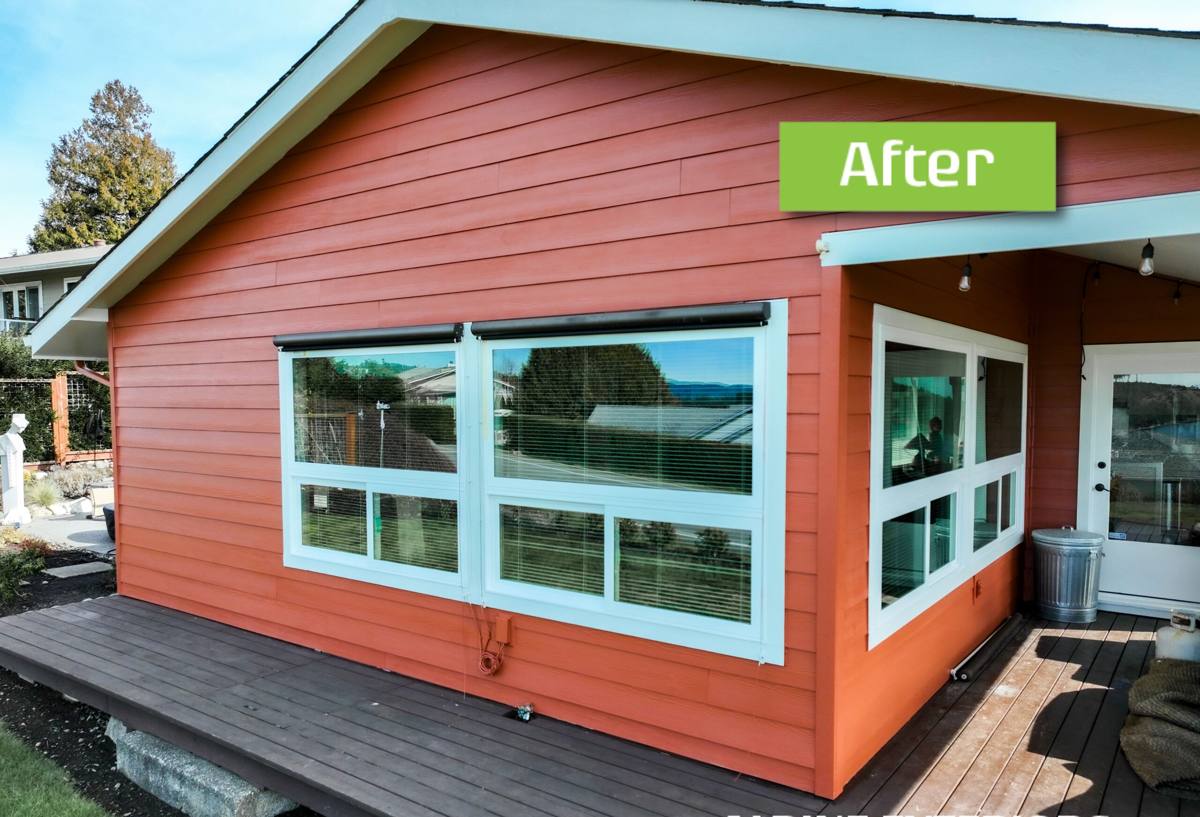
What Deming's Climate Actually Does to Siding
It helps to be specific about the mechanisms at work, because they drive nearly every decision in a correct installation.
Salt Air
Airborne salt accelerates corrosion on fasteners, flashing, and any exposed metal trim. It also breaks down cheaper paint films and coatings faster than inland exposure would, leading to chalking, fading, and premature peeling on materials that aren't factory-finished to resist it.
Driving Rain
Wind-driven rain doesn't just run down a wall — it gets pushed sideways and upward into laps, joints, and penetrations. A siding system with generous overlaps, correctly flashed openings, and a functioning drainage plane behind it sheds that water. A system installed with tight or reversed laps, missing flashing, or a compromised weather-resistive barrier lets it in, where it causes rot and mold long before anything looks wrong from the curb.
Moss Season
Extended damp, shaded conditions on north-facing and tree-covered walls create ideal moss and algae growth. Moss holds moisture against the siding surface far longer than open air would, and its root structure can work into seams and coatings over time. Materials that don't resist moisture absorption are especially vulnerable to this slow, patient kind of damage.
What Correct Installation Actually Involves
Most siding failures aren't material failures — they're installation failures. The product on the truck matters less than what happens in the two or three weeks it takes to get it on the wall.
The Moisture Management System
Behind every properly installed siding job is a weather-resistive barrier, correctly lapped and taped, with flashing integrated at every window, door, and penetration so water is directed out and down, never trapped behind the cladding. This is the part of the job nobody sees once it's finished, and it's the part that determines whether the wall assembly survives 20 years of Whatcom County storms or starts rotting from the inside in year six.
Fastening and Clearances
Fiber cement siding has manufacturer-specified fastener patterns, nailing zones, and minimum clearances from grade, roofing, and decks. Skipping these specs to save time is one of the most common causes of early siding failure — water finds the gap, and once it's behind the siding, it stays there.
Caulking and Sealant Discipline
Sealant belongs at specific joints, not everywhere. Over-caulking can trap moisture inside the wall assembly just as easily as skipping it can let moisture in. Knowing which joints get sealed and which are designed to drain is part of doing the job correctly, not a matter of preference.
Why We Install Only James Hardie Fiber Cement
We standardized on James Hardie fiber cement siding and don't install vinyl, LP SmartSide, or other fiber cement brands. That's a deliberate professional standard, not a sales pitch. Fiber cement is non-combustible, dimensionally stable in wet climates, and holds a factory-applied ColorPlus finish that's engineered to resist exactly the kind of salt exposure and UV fading that Deming homes deal with. Hardie also builds region-specific HZ product lines, engineered for different moisture and temperature exposures, which matters in a climate that swings between soaking wet winters and dry, hot summer stretches.
We'd rather install one product system correctly, back it with a strong transferable warranty, and stand behind our workmanship on every job, than spread across multiple product lines with different failure modes and different maintenance demands.
Choosing the Right Hardie Product for Deming's Exposure
Not every wall on a home faces the same conditions. A south-facing wall dealing with UV and heat needs different consideration than a shaded, moss-prone north wall or a low-clearance wall near grade. Part of a correct installation is applying the right product and detailing to each exposure, not treating every elevation identically.
| Consideration | Why It Matters in Deming |
|---|---|
| Lap siding vs. panel siding | Lap siding sheds driving rain well on most walls; panel systems can suit specific architectural styles but need extra attention to seams and trim in wind-driven rain |
| ColorPlus factory finish | Resists salt-air fading and chalking better than field-applied paint, and reduces repainting frequency |
| HZ5 engineered formulation | Built for colder, wetter climate zones like Western Washington rather than hot, dry regions |
| Trim and fascia material | Should match the siding's moisture resistance — mismatched trim is a common weak point in coastal-influenced climates |
Our Process, Start to Finish
Site Assessment
We walk the exterior, check for existing moisture damage, evaluate drainage around the foundation, and note which walls face the harshest exposure — sun, prevailing wind, or shade and moss buildup.
Removal and Prep
Old siding comes off and the sheathing underneath gets inspected. Any rot or water damage found at this stage gets addressed before anything new goes up — covering damaged sheathing is how small problems turn into structural ones.
Weather Barrier and Flashing
A new weather-resistive barrier goes on correctly lapped, with flashing integrated at every opening and penetration before the first piece of siding is hung.
Installation
Hardie siding is installed to manufacturer fastening specs, with proper clearances from grade, roof lines, and decks — the details covered above.
Final Walkthrough
We walk the finished job with the homeowner, cover care and maintenance basics, and make sure everything meets the standard we'd expect on our own home.
Signs Your Current Siding Is Already Failing
Because moisture damage from siding failure develops behind the wall, homeowners often don't see it until it's advanced. Watch for these signs:
- Soft or spongy spots when you press on the siding
- Persistent moss or algae staining that returns quickly after cleaning
- Paint that's peeling, bubbling, or chalking heavily, especially on south or west walls
- Visible gaps, warping, or buckling at seams and corners
- Musty odors near exterior walls inside the home
- Rust streaking from fasteners or trim
- Rising energy bills that suggest a compromised building envelope
Why a Crew That Already Works in Deming Matters
Crews unfamiliar with Whatcom County's driving-rain and moss conditions sometimes install siding correctly by a general standard but miss the local-exposure details — the extra flashing attention on a shaded north wall, the clearance adjustment near a low-lying yard that stays damp longer, the fastener choice that resists salt-air corrosion. A crew that regularly works in and around Deming has already made those adjustments dozens of times and knows which details matter most on this specific stretch of coastline-influenced climate.
What Drives Cost on a Deming Siding Project
| Cost Factor | Why It Matters |
|---|---|
| Extent of existing damage | Rotted sheathing found during removal adds repair work before new siding can go on |
| Home size and wall complexity | More corners, gables, and penetrations mean more flashing and cutting labor |
| Product line and profile | Panel width, texture, and trim choices affect material cost |
| Accessibility | Tree cover, slopes, and tight lot lines affect labor time and staging |
| Full tear-off vs. overlay | Removing old siding to inspect and repair sheathing costs more upfront but avoids covering hidden problems |
We won't quote a price without seeing the home, but we're upfront that in a climate like this, paying for correct moisture detailing up front is almost always cheaper than repairing rot damage later.
Maintenance After Installation
Correctly installed Hardie siding is low-maintenance, not no-maintenance. In Deming's climate, that means an annual rinse to keep moss and algae from establishing, a periodic check of caulked joints for cracking, and prompt attention to any impact damage before moisture can work its way in. ColorPlus finishes hold their color far longer than field-applied paint, but no exterior finish is maintenance-free in a wet coastal climate.
If your Deming home's siding is showing its age, or you're planning ahead of a full replacement, we're happy to take a look and walk you through what your home specifically needs. Request a free, no-pressure estimate using the form below.