 Glenhaven Siding
 Why Silver Beach Homes Put Extra Demands on Windows
Homes in Silver Beach deal with a combination of conditions that a lot of window installers simply aren't set up to handle correctly. Between the salt-laden air coming off the water, long stretches of driving rain, and tree cover that keeps siding and trim shaded and damp for much of the year, windows here are under near-constant environmental stress. A window that performs fine in a drier inland part of Whatcom County can fail early on a Silver Beach property if it wasn't chosen and installed with these specific conditions in mind.
"Energy-efficient" gets used as a marketing term a lot, but for this neighborhood it has to mean something more practical than a sticker on the glass. It has to mean a window and installation that keeps water out, resists corrosion, sheds moisture instead of trapping it, and still cuts your heating bill through our long, damp winters. That's the standard we hold every Silver Beach window project to.
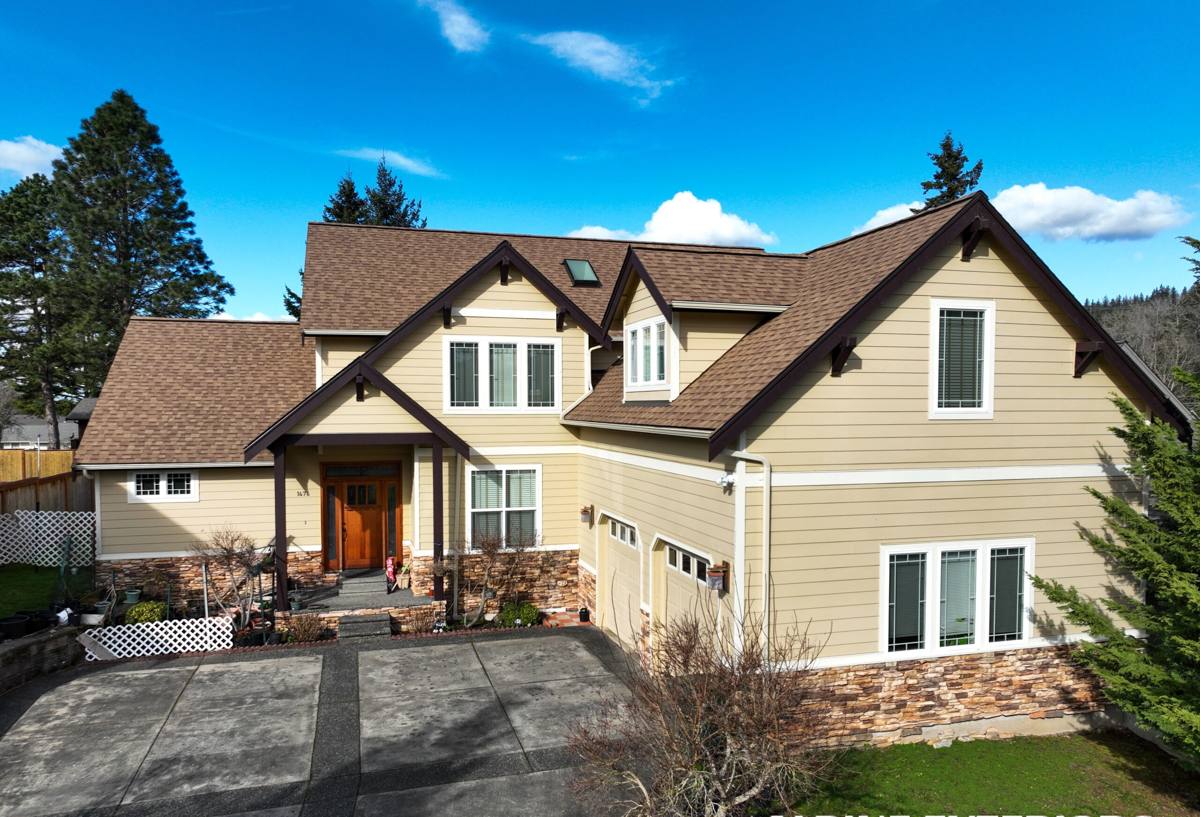
What Coastal Moisture and Moss Season Actually Do to Windows
Before talking about products, it helps to understand what's actually working against your windows year-round in this part of Washington.
Salt Air and Metal Components
Salt in the air accelerates corrosion on anything metal — hinges, balance systems, screws, and cheaper aluminum cladding. Once corrosion starts on a window's moving parts, it doesn't stop; it spreads, seizes hardware, and eventually lets seals fail. Windows closer to open water take the brunt of this, but even homes set back from the shoreline get enough salt drift over a few years to matter.
Driving Rain and Water Intrusion
Wind-driven rain doesn't just fall on a window — it gets pushed sideways and upward into any gap in the flashing or sealant. Most window failures we see aren't the glass unit failing; they're water finding a path around the frame because the flashing detail was skipped or done wrong the first time. Once water gets behind the trim, it doesn't dry out quickly in this climate, and rot follows.
Shade, Moss, and Trapped Moisture
Mature tree cover, common throughout Silver Beach, keeps window trim, sills, and the siding around openings shaded and slow to dry after every rain. That's exactly the environment moss and mildew need to take hold. Moss on a roof is a maintenance issue; moss and organic buildup around a window's exterior trim is a moisture problem that can hide rot until it's advanced.
What "Energy-Efficient" Should Mean in This Climate
Efficiency ratings matter, but in a marine climate like ours, the frame material and installation quality determine whether that efficiency lasts ten years or thirty.
Frame Material
We steer Silver Beach customers toward materials that handle sustained moisture exposure without warping, rotting, or corroding. Solid wood frames without cladding are the hardest sell here — they look great on day one but require more upkeep than most homeowners want to keep up with given how often this area stays wet.
Glass Package
Double-pane, low-E glass with argon fill is the practical baseline for this region — it manages our heat-loss and condensation concerns without the added cost of triple-pane, which mostly pays off in colder climates than ours. Where a home has a lot of west or water-facing glass, we'll talk through upgraded glass coatings that cut glare and heat gain without darkening the view.
| Frame Material | Moisture Resistance | Maintenance Needed | Best Fit for Silver Beach |
|---|---|---|---|
| Vinyl | Very good — won't rot or corrode | Low; occasional cleaning | Strong default choice for most homes |
| Fiberglass | Excellent; very stable in wet/dry cycling | Low | Good for larger openings or high sun exposure |
| Aluminum-clad wood | Good if cladding and seals are intact | Moderate; watch cladding seams | Works where wood interior look matters |
| Uncladded wood | Poor without diligent upkeep | High; regular repainting/sealing | Not recommended for shaded, damp lots |
What a Correct Installation Actually Involves
The window unit itself is only part of the job. In this climate, the installation detailing is what determines whether the window performs for 25 years or starts leaking in five. A correct installation for a Silver Beach home includes:
- Removing old flashing and inspecting the rough opening for hidden rot before anything new goes in
- Installing sloped sill pans so any water that does get past the exterior sheds outward, not into the wall
- Layering flashing tape and building paper in the correct shingle-style order so water always drains down and out
- Using sealants rated for sustained wet exposure, not general-purpose caulk that hardens and cracks within a couple of seasons
- Properly integrating the new window flashing with the existing siding's weather-resistive barrier, not just caulking the gap
- Shimming and fastening the frame square and true so weatherstripping seals evenly for the life of the window
- Insulating the gap between frame and rough opening without overpacking, which can bow the frame
Skip any one of these steps and you can end up with a window that's efficient on paper but still lets water into the wall cavity — which is a far more expensive problem than the window itself.
Our Process for Silver Beach Window Projects
- On-site assessment. We look at each opening individually — sun exposure, shade, proximity to water, and the condition of the existing trim and sheathing — rather than quoting a blanket price for the whole house.
- Product selection. We walk through frame material, glass package, and grille or hardware options based on that specific opening's exposure, not a one-size-fits-all recommendation.
- Prep and protection. Work areas, landscaping, and interior floors are protected before any removal starts.
- Removal and inspection. Old windows come out carefully so we can check the rough opening for hidden moisture damage before it's covered back up.
- Flashing and installation. New sill pans, flashing, and sealants go in per the sequence above, then the window is set, shimmed, and fastened.
- Exterior integration. Trim and siding are tied back in cleanly so the whole assembly sheds water the way it's supposed to.
- Walkthrough. We test operation, check seals, and go over care basics with you before calling the job done.
Signs Your Current Windows Are Working Against You
Not every window problem is obvious from inside the house. Watch for:
- Condensation forming between the panes, which means the seal has already failed
- Soft or discolored trim or sill wood around the window frame
- Visible moss, algae, or dark streaking on exterior trim near the window
- Drafts you can feel near the frame even when the window is fully latched
- Difficulty opening, closing, or locking — often an early sign of hardware corrosion
- A noticeable jump in heating costs without any change in usage
Any one of these on its own is worth a look. Several together usually mean the window and its flashing both need attention, not just the glass.
What Affects the Cost of a Window Project Here
Every Silver Beach home is different, so we quote per project rather than per square foot. That said, these are the main factors that move the number up or down:
| Factor | Why It Matters |
|---|---|
| Number and size of openings | More or larger windows means more material and labor |
| Frame material chosen | Vinyl is typically the most budget-friendly; fiberglass and clad-wood cost more upfront |
| Condition of the rough opening | Hidden rot found during removal adds repair work before the new window goes in |
| Access and exposure | Second-story or hard-to-reach openings near water can take more time to flash correctly |
| Trim and siding tie-in | Full trim replacement costs more than reusing sound existing trim |
As a general reference point, most full-frame residential window replacements in our region run in the low-to-mid thousands per window installed once quality flashing and trim work are included — but the only way to get a real number for your home is a site visit, since exposure and existing condition vary so much house to house.
Why Local Experience in Silver Beach Matters
A crew that only occasionally works this neighborhood is guessing at how much weather exposure a given opening actually gets. A crew that works Silver Beach regularly already knows which orientations take the worst of the driving rain, which lots hold shade and moisture longest, and which older homes in the area tend to have flashing or sheathing issues behind the trim. That familiarity shows up in fewer surprises during the job and windows that hold up rather than needing attention again in a few years. It's the same reason we build every quote around a real look at your specific home instead of a generic estimate.
If you're weighing whether your current windows are worth repairing or replacing, or you just want an honest read on what a project like this would involve for your home, we're happy to take a look. The estimate is free, there's no pressure, and you'll get a straight answer about what your windows actually need — just fill out the form below to get started.