 Glenhaven Siding
 Everson sits close enough to Bellingham Bay and the Nooksack River lowlands that its houses take a steady beating from moisture year-round — driving rain off the Sound, salt-laden air working its way inland, and a moss season that can run from October well into May. Board and batten siding is one of the most popular looks for homes in this part of Whatcom County, but it's also one of the least forgiving styles if it's installed with the wrong material or the wrong technique. Get it right and you have a siding system that sheds water, resists moss, and holds its lines for decades. Get it wrong and you're looking at swollen battens, cracked caulk joints, and moisture trapped behind the boards within a few winters.
This page covers what board and batten siding actually needs to hold up on an Everson home, what a correct installation involves, and why we only install it in James Hardie fiber cement.
Why Board & Batten Is a Good Fit for Everson — If It's Built Right
Board and batten gives a home strong vertical lines, deep shadow lines at every batten strip, and a look that reads as both traditional farmhouse and modern craftsman depending on the trim and color choices around it. It's a natural match for the mix of rural acreage homes, newer builds, and remodeled older farmhouses you see around Everson.
The style also happens to be more exposed to weather than lap siding. Every vertical seam is a potential water path, and every batten strip creates a shadow line where moisture, pollen, and organic debris collect. In a climate that stays damp for most of the year, that combination means the material underneath the boards matters more here than almost anywhere else in the state.
What Whatcom County Weather Actually Does to Siding
- Driving rain: Wind-driven storms off the water push water sideways into vertical seams and batten joints, not just straight down the face of the wall.
- Salt air: Proximity to Bellingham Bay means airborne salt settles on siding and accelerates corrosion of fasteners, flashing, and any exposed metal trim.
- Moss and algae season: Shaded walls and north-facing elevations stay damp for months, and moss roots love the horizontal ledges that battens create.
- Temperature swings: Even mild coastal swings cause repeated expansion and contraction, which is hardest on materials that swell when wet.
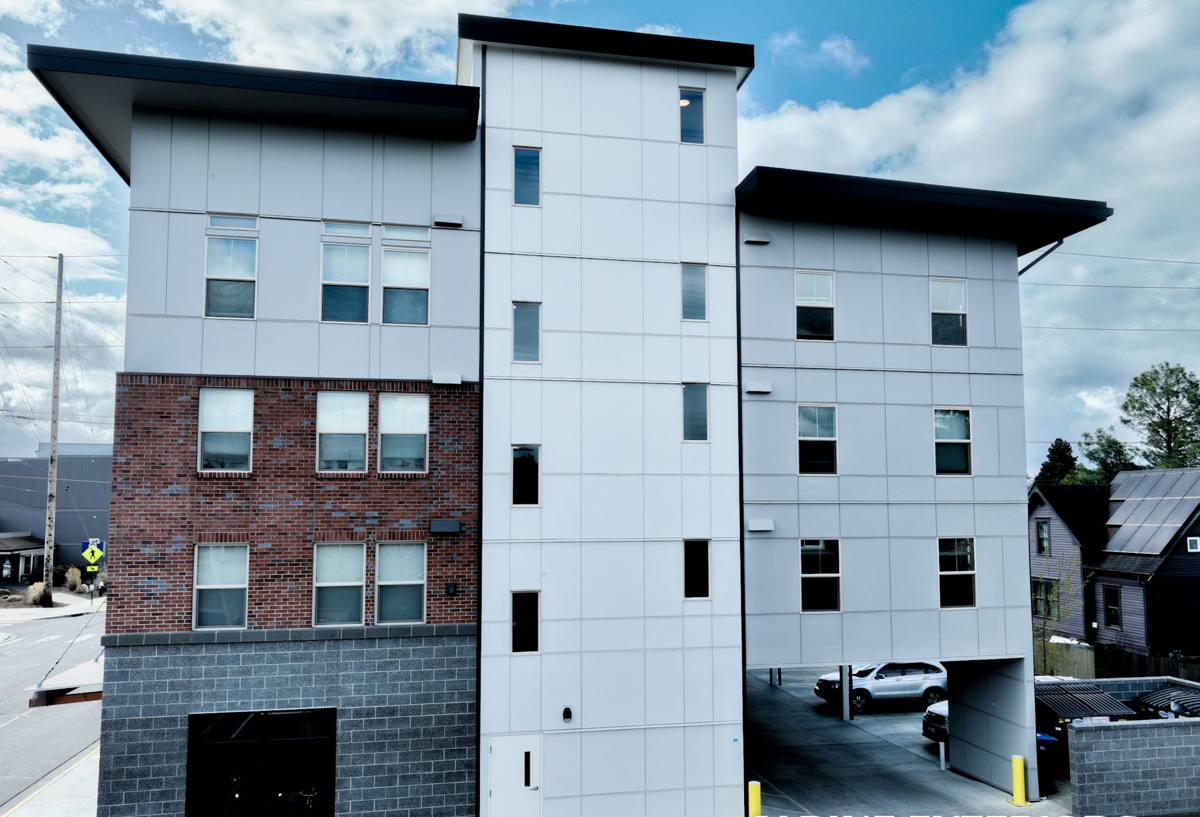
What Goes Wrong With the Wrong Material
Board and batten is often sold as a budget-friendly look using vinyl panels or engineered wood products, and we understand the appeal — it's less expensive up front and quick to install. But we don't install it in either material, and it's worth explaining why in plain terms rather than vague warnings.
| Material | Common issue in Everson's climate | Long-term result |
|---|---|---|
| Vinyl board & batten | Panels expand and contract with temperature swings; battens can bow or pull loose at fasteners over time | Visible waviness, gaps that let wind-driven rain behind the panel |
| Engineered wood (OSB-core) | Cut edges and batten joints are vulnerable if caulking isn't maintained; wood-based cores swell when moisture gets in | Swelling, soft spots, and paint failure at seams within a handful of winters |
| Cedar | Natural wood needs ongoing sealing/staining, and moss/algae take hold quickly on damp, shaded faces | High maintenance burden; cupping and checking if upkeep lapses |
| James Hardie fiber cement | Non-combustible, dimensionally stable, factory-cured finish resists moss and moisture cycling | Holds paint and shape for decades with normal washing |
None of these products are "bad" in every application — they each have a place. But board and batten's exposed seams and shadow lines punish any material that moves, absorbs water, or needs regular resealing. That's exactly the profile of Whatcom County's wet season, and it's why we standardized on fiber cement for this style specifically.
What Correct Board & Batten Installation Involves
The style is simple to look at, but the installation details are what determine whether it lasts 10 years or 40. On every Everson project we build the wall assembly the same way, regardless of how small or large the job is.
The Assembly, Layer by Layer
- Weather-resistant barrier: A continuous house wrap or building paper behind the siding, lapped correctly at every seam so water sheds outward, not inward.
- Rainscreen gap where called for: A drainage plane behind the siding lets any moisture that does get past the face dry out instead of sitting against the sheathing — important given how long Everson stays damp through the fall and winter.
- Flashing at every penetration: Windows, doors, hose bibs, and light fixtures all get proper flashing before siding goes on, not caulk-only fixes after the fact.
- Vertical boards fastened per manufacturer spec: Correct fastener type, spacing, and penetration depth into framing — not just into sheathing.
- Batten strips set over the seams: Battens are spaced and fastened to shed water down and off the wall, not trap it against the board joint underneath.
- Factory-finished paint: James Hardie's ColorPlus finish is baked on at the factory, so the cut ends and battens go up with a consistent, moisture-resistant finish rather than field-applied paint that weathers unevenly.
Where Everson Installations Go Wrong
- Skipping or shortcutting the weather-resistant barrier behind the boards
- Caulking seams instead of properly lapping and flashing them
- Under-fastening battens, leaving them to work loose in wind
- Cutting boards without sealing exposed edges, inviting moisture into the material itself
- Ignoring roof-to-wall transitions and letting runoff dump directly onto a batten seam
Moss, Algae, and North-Facing Walls
Board and batten's shadow lines are part of its appeal, but they're also where moss gets a foothold first — especially on shaded, north-facing elevations that are common on wooded Everson lots. Fiber cement doesn't feed moss growth the way wood-based products can, and its factory finish holds up to routine washing without the paint lifting or fading unevenly the way field-applied coatings do. That doesn't mean a home is maintenance-free — periodic gentle washing is still worth doing — but it means the siding itself isn't contributing to the problem.
Our Process for Everson Board & Batten Projects
We've worked enough properties in and around Everson to know the wall orientations, exposure patterns, and moisture challenges that come with rural Whatcom County lots — long driveways with tree cover, open pasture-facing walls that take the brunt of storms, and older farmhouses being updated with a more current exterior. A crew that's already familiar with those conditions doesn't have to relearn them on your home.
What to Expect
- On-site assessment: We walk the exterior, check current siding and sheathing condition, and note exposure on each elevation.
- Product and color selection: We go through James Hardie board and batten profiles and ColorPlus finish options that fit the home and its surroundings.
- Written estimate: A clear scope covering removal (if applicable), barrier and flashing work, installation, and finish details — no vague allowances.
- Installation to manufacturer spec: Every layer of the assembly above, done in the sequence it's designed for.
- Final walkthrough: We review the finished work with you before calling the job complete.
Why We Only Install James Hardie
We stopped installing vinyl, engineered wood, and unfinished cedar for exterior siding because we were seeing the same failure patterns repeat in this climate — swelling, moss, paint failure, and seam problems that showed up years after the crew that installed them had moved on. James Hardie fiber cement is non-combustible, dimensionally stable in the wet-dry cycling that defines a Whatcom County winter, and backed by a strong transferable warranty when installed to spec. For a style like board and batten, where every seam and shadow line is exposed to the weather, that stability is the difference between a wall that looks sharp for decades and one that needs attention every few years.
Cost Factors for Everson Board & Batten Projects
| Factor | Why it matters |
|---|---|
| Home size and wall complexity | More corners, dormers, and transitions mean more cutting, flashing, and batten layout work |
| Existing siding removal | Tear-off and disposal of old material adds labor versus building over a compliant surface |
| Sheathing/moisture repair | Any rot or damage found once old siding comes off needs to be addressed before new siding goes up |
| Board width and batten spacing | Wider reveals and custom spacing patterns take more layout time than standard patterns |
| Trim and color complexity | Multiple ColorPlus colors or extensive trim detail add material and labor |
We don't quote a job without walking the property first — every Everson home has a different exposure profile and a different starting condition behind the existing siding.
A Simple Checklist Before You Hire
- Ask what weather-resistant barrier and flashing details are included, not just the visible siding material
- Confirm whether a rainscreen/drainage gap is part of the assembly
- Get the fastening spec in writing — batten spacing and fastener type matter
- Ask which James Hardie board and batten profile and ColorPlus color options are available
- Check that the estimate separates removal, repair, and installation so you know what you're paying for
If your Everson home is due for new siding or you're planning a board and batten update, we're happy to walk the property, look at your exposure and existing conditions, and put together a straightforward estimate — no pressure, no obligation. Use the form below to get started.