 Glenhaven Siding
 Siding Repair in Everson: What Whatcom County Weather Does to a Wall System
Everson sits in a part of Whatcom County that stays wet for most of the year. Even this far inland, the same marine air that moves off the Sound keeps humidity high, rainfall steady, and drying time short. Add a long stretch of overcast, low-sun months and you get conditions that are hard on any exterior wall covering — wood absorbs and swells, seams stay damp longer than they should, and anything shaded by trees or a north-facing wall grows moss almost year-round. Siding repair here isn't just about fixing what's visibly broken. It's about understanding why that section failed in the first place, because in this climate the same mistake will happen again in the same spot if it isn't corrected, not just patched over.
We've repaired enough siding around Everson and the rest of Whatcom County to know the failure patterns repeat: water gets behind siding at a bad seam or a missed flashing detail, sits there because the wall can't dry out fast enough between storms, and by the time it shows on the surface the damage underneath is already worse than it looks. A repair done right addresses the water path, not just the cosmetic crack or stain.
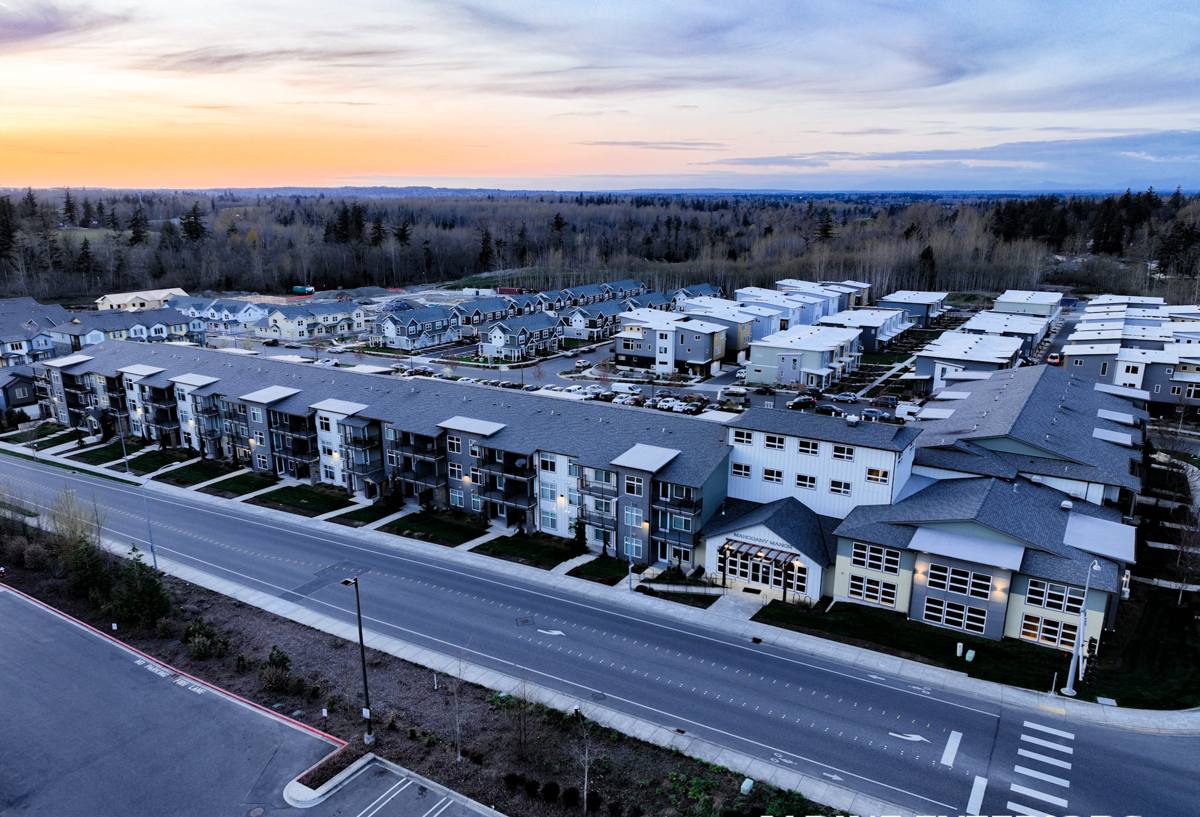
Common Types of Siding Damage We See Around Everson
Moisture intrusion and hidden rot
This is the damage that costs homeowners the most because it's invisible until it isn't. Water works its way behind siding through a gap in caulking, a poorly lapped seam, or trim that was never properly flashed. In a drier climate that moisture might evaporate before it does harm. In Everson's wet season, it often doesn't get the chance. By the time siding feels soft, paint is bubbling, or you notice a musty smell near an exterior wall indoors, the sheathing or framing behind the siding may already be compromised.
Moss, algae, and mildew staining
Shaded walls, north-facing elevations, and anything near overhanging trees pick up green and black staining fast in this region. On its own, surface growth is mostly cosmetic — but moss holds moisture against the siding surface, extending the time the material stays wet after every rain. On wood-based products especially, that constant dampness accelerates rot at seams and butt joints long before the rest of the wall shows any wear.
Impact damage and cracking
Storm debris, ladders, landscaping equipment, and simple age-related brittleness all cause cracked or chipped siding. A crack that seems minor is still an entry point for water, and in a climate that gets as much rain as this one, an unrepaired crack rarely stays small for long.
Failed caulking and open seams
Caulk is not a permanent material. It shrinks, cracks, and pulls away from siding edges, window trim, and corner boards over years of freeze-thaw cycling and UV exposure. Once a seam opens, it becomes the easiest path for wind-driven rain to get behind the siding — and driving rain off the Sound is a regular part of the weather pattern here, not an occasional event.
What a Correct Siding Repair Actually Involves
Diagnosing before patching
A repair that only replaces the damaged board without finding out why it failed is a temporary fix. Before we touch a wall, we check the surrounding area for the actual moisture source — a flashing gap, a caulk failure, grade sloped toward the foundation, a downspout dumping water against the wall — because replacing siding without correcting the cause means the same repair is needed again in a few years.
Matching material and finish
Repairing a section of siding on an occupied home means the new piece has to match the old, both in profile and in color. This is one of the reasons we only work with James Hardie fiber cement: its ColorPlus factory finish is manufactured to a consistent standard, and Hardie's product lines and lap profiles are well documented, which makes sourcing an accurate match for a repair section realistic. Field-painted materials and discontinued vinyl profiles are much harder to match cleanly, and a visibly mismatched patch is its own kind of failure.
Flashing and moisture barrier detail
Every repair that opens up a wall section is a chance to correct what caused the damage. That means proper head flashing above windows and trim, correctly lapped water-resistive barrier, and sealant used only where it's supposed to carry the load — never as a substitute for flashing that should be doing the actual work of shedding water.
Signs Your Everson Home Needs a Siding Repair
- Soft, spongy, or crumbling siding when pressed near the bottom edge or around seams
- Paint that's bubbling, peeling, or failing in one localized area rather than uniformly
- Visible cracks, holes, or chips, especially near corners and trim
- Persistent moss or algae staining that returns quickly after cleaning
- Gaps opening up at seams, corner boards, or where siding meets window and door trim
- A musty or damp smell along an interior wall that backs up to exterior siding
- Visible warping or waviness in the siding surface
- Staining or discoloration that tracks downward from a specific point, suggesting a leak above
Repair or Replace? How We Help You Decide
Not every damaged section needs a full re-side, and not every repair is worth doing on its own. The honest answer depends on how much of the wall is affected, what's causing the damage, and what material is already on the house.
| Factor | Leans toward repair | Leans toward replacement |
|---|---|---|
| Extent of damage | Isolated to one or two sections | Spread across multiple walls or elevations |
| Age of existing siding | Newer material, still within its expected life | Original siding is decades old or already past typical lifespan |
| Underlying cause | One-time event (impact, isolated seam failure) | Systemic moisture issue affecting the whole wall assembly |
| Material match | Matching material is available or close enough | Original product is discontinued or won't match |
| Sheathing condition | Sound once exposed | Soft, delaminated, or rotted framing found behind siding |
When we open up a damaged section and find the sheathing or framing compromised, we'll tell you plainly rather than covering it up with a patch. Sometimes that means the repair scope grows to a wall section or an elevation instead of a single board — and sometimes it means a full re-side genuinely is the more cost-effective long-term answer. We'd rather give you that information upfront than have you pay for a repair that fails again in two years.
Our Repair Process, Start to Finish
- On-site assessment. We inspect the damaged area and the surrounding wall, checking flashing, caulking, grade, and drainage — not just the section that looks bad.
- Diagnosis and scope. We identify the actual cause of the damage and give you a clear, written explanation of what needs to happen and why, including what we find once material is removed.
- Material sourcing and match. For Hardie siding repairs, we source matching profile and ColorPlus finish so the repaired section blends with the rest of the wall.
- Correction of the underlying issue. Flashing, moisture barrier, and sealant details are corrected as part of the repair — not just siding replacement over the same unresolved problem.
- Installation to manufacturer spec. Fastening, clearances, and joint treatment follow James Hardie's installation requirements, which is also what preserves warranty coverage.
- Final walkthrough. We review the completed repair with you and explain what was found and fixed, so you know exactly what your home received.
Why We Only Use James Hardie Fiber Cement for Repairs
We standardized on James Hardie for new installs and repairs alike because it holds up to exactly the conditions Everson deals with. It's a fiber cement product engineered for moisture and doesn't rot, swell, or feed mold and algae growth the way wood-based sidings can. Hardie's HZ5 product line is climate-engineered for regions with wet, freeze-thaw-prone weather, which describes Whatcom County's winters well. The factory-applied ColorPlus finish holds its color far longer than field-applied paint, which matters directly for repairs — a strong factory finish standard is what makes a patched section actually blendable years after the original install, instead of a visibly different shade.
We don't install LP SmartSide, vinyl, Cemplank, Allura, or unfinished wood siding, and that standard applies to repair work too. When a repair calls for new material, we use Hardie because it's what we trust to perform the way we tell homeowners it will, backed by a strong transferable warranty when installed to spec.
Why a Crew That Already Works in Everson Matters
Siding repair is a trade where local familiarity actually changes the outcome. A crew that regularly works Whatcom County's wet, moss-prone conditions recognizes moisture damage patterns faster, knows which details fail first in this climate, and doesn't have to relearn regional weather behavior on your home. That translates into a more accurate diagnosis on day one, not a guess that gets corrected on a second visit. It also means we're positioned to stand behind the work — a repair company that treats Everson as a real, ongoing part of its service area has every reason to make sure the fix holds, not just look right on the day we leave.
If you're seeing signs of siding damage on your Everson home — soft boards, persistent moss staining, cracked or gapped seams — we're happy to take a look and give you an honest read on what's actually going on. Reach out for a free, no-pressure estimate using the form below.