 Glenhaven Siding
 Why Fairhaven Homes Need Windows Built for This Climate
Fairhaven sits close enough to the water that salt air, wind-driven rain, and a long damp moss season all work against a house year-round. Windows take the brunt of it. They're the weak point in an otherwise well-built wall, and in Whatcom County they're asked to do more than just look good and keep heat in — they have to shrug off salt-laden air, resist water intrusion during sideways rain, and hold up through months of gray, wet weather when things rarely get a chance to dry out completely between storms.
A window that would be perfectly fine in a drier inland climate can fail early here. Seals degrade faster. Hardware corrodes. Frames that aren't detailed correctly let moisture track behind the trim and into the wall cavity, where it can sit for months before anyone notices a soft spot or a musty smell. Energy-efficient windows done right for Fairhaven aren't just about a lower heating bill — they're about keeping water out of a house that gets tested by weather more often than most.
Salt Air and Coastal Exposure
Homes closer to the water deal with airborne salt settling on glass, frames, and especially hardware — hinges, locks, and cranks. Over years, that accelerates corrosion on lower-grade fasteners and finishes. It's not usually dramatic; it's a slow wearing-down that shows up as a window that used to latch smoothly and now sticks, or a frame finish that's chalking and pitting well before it should.
Driving Rain and Wind-Driven Moisture
Whatcom County storms don't always come straight down. When rain comes in sideways against an exterior wall, the window's flashing and sealing details matter more than the glass package. A well-insulated window installed with sloppy flashing will still let water in behind the siding. This is one of the most common failure points we see on older installs — the window itself was fine, but the water management around it wasn't.
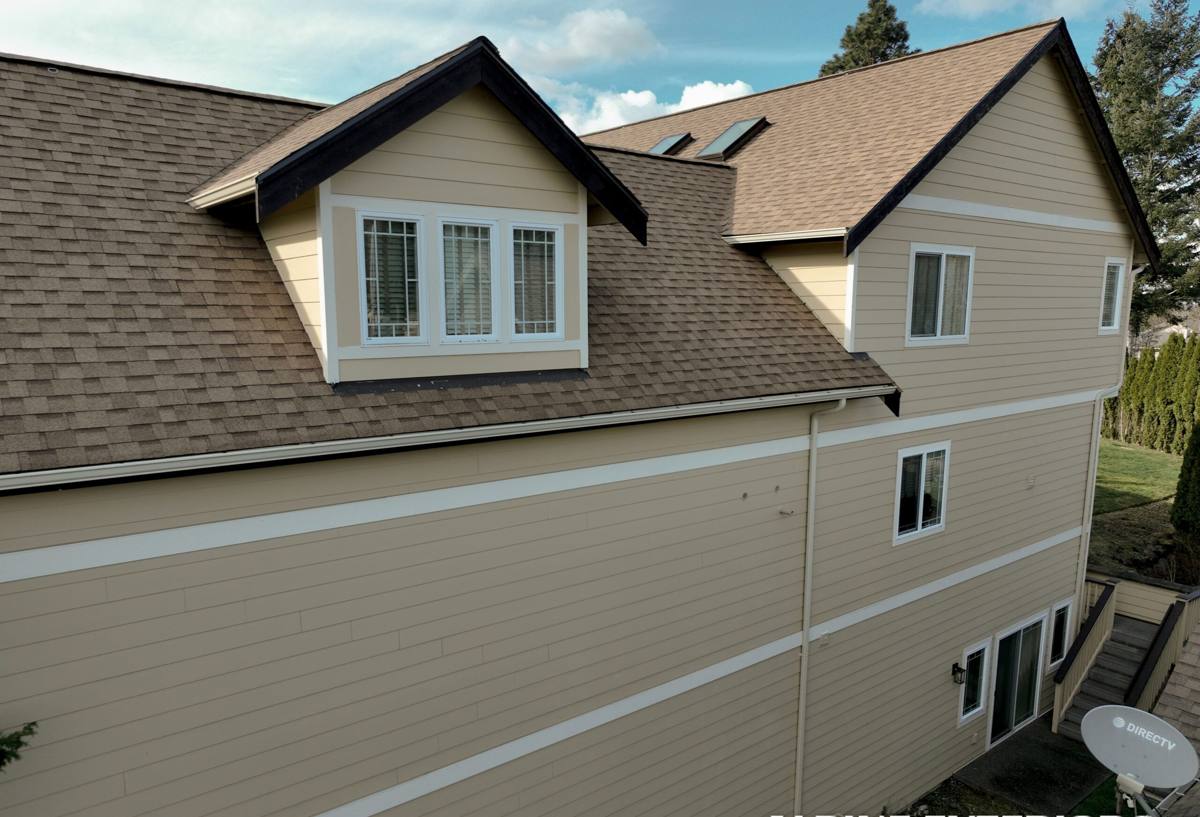
What "Energy-Efficient" Actually Means for a Whatcom County Home
"Energy-efficient" gets used loosely in this industry. For a Fairhaven home, it should mean a specific combination of glazing, frame material, and installation quality working together — not just a sticker on the glass.
Glazing and Gas Fills
Double-pane windows with a low-E coating and an inert gas fill (typically argon) are the baseline for this climate. Low-E coatings reduce heat loss through the glass without meaningfully darkening the room, and they also cut down on UV transmission, which helps floors and furniture fade less over time. Triple-pane glass adds more insulating value and a bit more sound dampening, which is worth considering on a busy street or near the water where wind noise is more constant, but it comes at a real cost premium and added weight that not every frame or opening handles well.
Frame Material Trade-offs
Frame choice affects both energy performance and how the window holds up to salt air and moisture over the long run. None of these are "wrong" — they're trade-offs, and the right one depends on the house, the budget, and how exposed the opening is.
| Frame Material | Energy Performance | Coastal/Moisture Behavior | Maintenance |
|---|---|---|---|
| Vinyl | Good insulator, multi-chambered frames perform well | Won't rot or corrode; seams and welds are the watch point | Low — occasional cleaning |
| Fiberglass | Very good; low thermal expansion helps seals last | Excellent — stable in wet, salty conditions | Low, higher upfront cost |
| Wood-clad | Good with proper cladding | Cladding protects the wood, but any breach lets moisture reach the core | Higher — cladding seams need periodic inspection |
| Aluminum | Weaker on its own without thermal breaks | Prone to corrosion in salt air without upgraded finishes | Moderate |
We steer most Fairhaven customers toward vinyl or fiberglass for standard replacements. It's not that wood-clad or aluminum can't work — it's that they demand more upkeep and more careful detailing to hold up to salt air and driving rain over 20-plus years, and we'd rather set that expectation up front than have a homeowner surprised by cladding maintenance five years in.
Signs Your Current Windows Are Costing You Money
Before recommending replacement, we look for the actual signs of failure rather than just age. A lot of older windows are still doing their job. Here's what tells us a window has genuinely reached the end of its useful life:
- Visible fogging or a haze between the panes — the seal has failed and the gas fill is gone
- Cold air noticeably moving past the frame even with the window latched shut
- Wood trim or sill that's soft, discolored, or shows mold near the window
- Frames that have warped enough that the sash doesn't sit flush anymore
- Condensation forming on the inside of the glass regularly during cold, wet weeks
- Hardware that's corroded, stuck, or won't latch securely
- A noticeable draft you can feel by holding a hand near the frame on a windy day
If you're only seeing one or two of these on a single window, a repair or resealing might be enough. When it's several windows or the damage has reached the framing, replacement is usually the more honest recommendation.
Our Installation Process in Fairhaven
The window unit itself is only part of the job. How it's installed determines whether it performs for 20 years or starts leaking in three. Here's how we approach it.
Assessment and Measurement
We start by looking at each opening individually — not just measuring for the new unit, but checking the condition of the existing framing, sill, and any water staining or soft wood that points to a pre-existing leak. On a house this close to the water, we're also looking at wall orientation, since south and west-facing walls typically take the worst of the driving rain and sun exposure.
Removal and Flashing
This is the step that gets rushed on cheap installs and it's the one that matters most in this climate. Once the old window is out, we inspect the rough opening, address any rot or moisture damage we find rather than building over it, and install flashing that directs water out and away from the wall assembly — not just around the window, but layered correctly with the house wrap so water sheds downward and outward the way it's supposed to.
Installation and Sealing
The new window gets set plumb and level, shimmed correctly so it's not relying on the fasteners to hold its shape, and insulated around the frame without overpacking, which can bow vinyl frames inward. Exterior sealant goes on with attention to the specific points where wind-driven rain tends to find gaps — the bottom corners and the sill pan in particular.
Final Inspection
We check operation, latch and lock function, and do a visual water-management check before calling the job done. On a coastal property, a rushed final check is how small flashing mistakes turn into a callback a year later.
Cost Factors to Expect
We're not going to quote a number here because it depends on too many specifics — opening size, frame material, glass package, and how much, if any, rot repair is needed once the old window comes out. What we can tell you is what actually moves the price up or down.
| Factor | Effect on Cost |
|---|---|
| Frame material (vinyl vs. fiberglass vs. wood-clad) | Fiberglass and wood-clad run higher than standard vinyl |
| Double vs. triple pane | Triple pane adds cost and weight; worth it on noisy or highly exposed walls |
| Rot or water damage found at removal | Framing repair is priced separately once we see the actual condition |
| Number of openings done at once | Doing multiple windows in one visit is more efficient than one-offs |
| Custom sizes or shapes | Non-standard openings cost more than stock sizes |
We'll always tell you honestly if we find something in the wall that changes the scope — that's more useful to a homeowner than a lowball number that doesn't survive the actual job.
Why Local Experience in Fairhaven Matters
A crew that works this specific stretch of Whatcom County regularly has already seen how these houses age — which wall orientations take the worst weather, which older window brands tend to fail early in salt air, and where moss and moisture tend to collect on trim and sills. That's not something you get from a general contractor who does one job in the area and moves on. It shows up in small decisions: how much flashing overlap to use, which sealant actually holds up to this much rain exposure, and knowing to check for rot in specific spots before we even open up the wall.
It also matters for accountability. A local crew is still around next year if a question comes up, and that tends to keep the work more honest from the start.
Maintenance for a Long Coastal Life
Even a well-installed window benefits from a bit of upkeep in this climate, especially given how long the moss season runs here.
- Rinse salt residue off glass and frames periodically, especially on wind-exposed walls
- Keep gutters and nearby roof valleys clear so runoff isn't sheeting directly across window heads
- Check and clear moss buildup on sills and trim before it holds moisture against the frame
- Operate hardware a few times through the year so hinges and locks don't seize up
- Re-caulk exterior joints if you notice cracking or gaps developing over time
- Watch for soft or discolored trim near the frame — catch small rot early, before it spreads
Getting a Straight Answer About Your Windows
Not every window that looks tired needs full replacement, and not every window that looks fine is actually performing well. We'd rather walk your home, look at the actual openings, and tell you honestly what's worth fixing versus replacing than push a full-house job you don't need. If you're in Fairhaven or elsewhere around Glenhaven and want a straightforward look at your windows, we offer a free, no-pressure estimate — use the form below to get started.