 Glenhaven Siding
 Everson's Climate Is Harder on Siding Than It Looks
Everson sits inland along the Nooksack River in Whatcom County, but inland doesn't mean dry. Marine air off the Salish Sea and Bellingham Bay pushes up the river valley all winter, and it arrives loaded with moisture. Add driving rain that comes in sideways during a Pacific storm, months of overcast skies, and shaded north-facing walls that barely see the sun from November through March, and you get a long moss season that can start in October and not fully let go until May. Siding here isn't just a weather barrier — it's fighting a slow, steady battle against standing moisture for most of the year.
That combination is exactly why so many Everson homes we look at have soft trim boards, streaked and stained wall sections, or paint that's failed years ahead of schedule. It's rarely one bad storm. It's cumulative — years of moisture sitting against the wrong material, or getting behind siding that was never detailed to shed it.
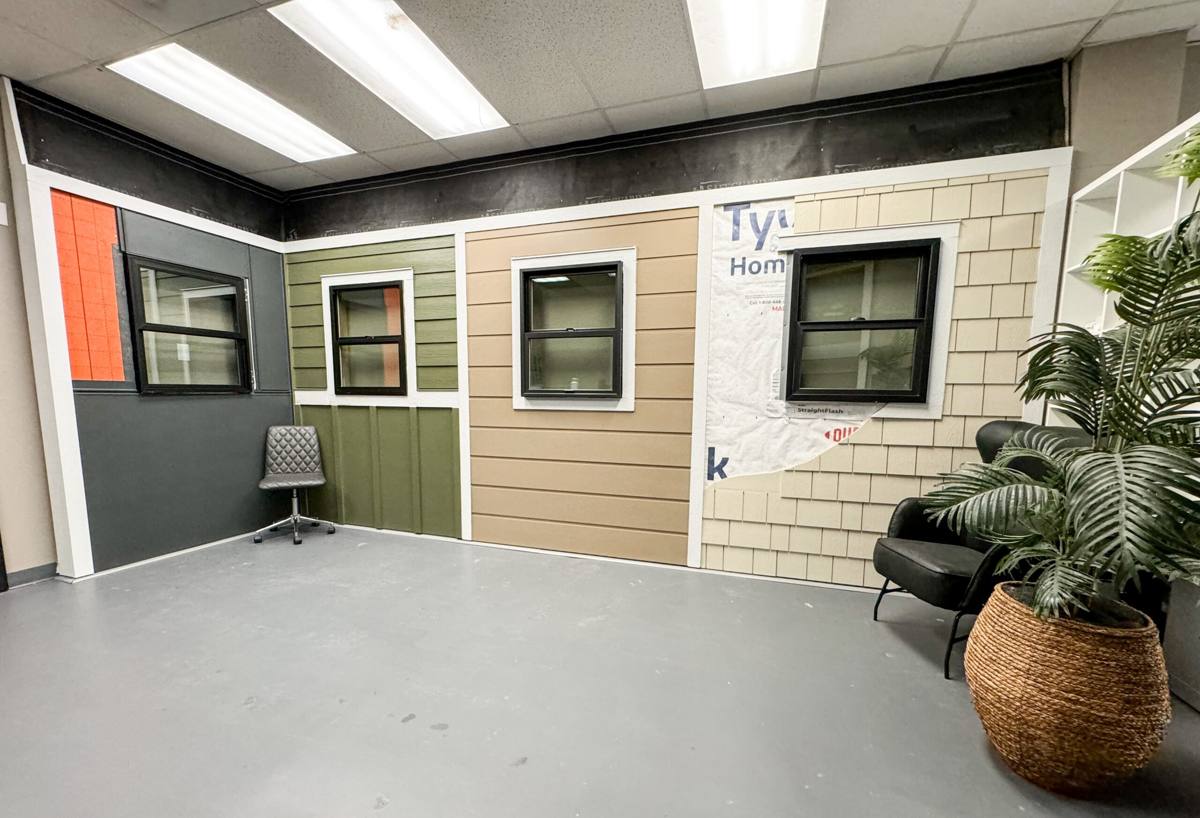
What Correct Fiber Cement Installation Actually Means Here
Fiber cement siding is only as good as the installation behind it. In a climate like this, a handful of details separate a wall system that lasts thirty-plus years from one that's showing problems in five.
Rain Screen Gap and Drainage
Fiber cement should never sit flat against the weather-resistive barrier. A drainage gap — created with a rain screen product or furring strips — lets bulk water that gets past the siding drain back out and lets the wall cavity dry between storms. Skip this step and you're trapping the exact moisture Whatcom County winters keep throwing at the house.
Flashing at Every Penetration
Windows, doors, deck ledgers, hose bibs, light fixtures — every penetration through the siding is a place water can work its way in. Proper head flashing, kick-out flashing at roof-to-wall intersections, and correctly lapped house wrap matter more here than in a dry climate, simply because there's more water looking for a way in, more often.
Fastener Pattern and Caulk Discipline
James Hardie publishes specific fastener spacing, nailing zones, and gapping requirements for its lap siding and panel products. Over-driven nails, missed studs, and butt joints without the right gap or sealant are the most common causes of early failure we find when we're asked to look at someone else's installation. None of it is complicated — it just has to actually get followed, every course, every day, including the days it's raining.
Trim and Transitions
Water finds the weak point, and the weak point is almost always a transition — where siding meets trim, where a horizontal surface meets a vertical wall, where two different materials butt together. Back-priming cut edges, using the correct trim profile, and properly sealing the transitions that need it are what keep moss and moisture from getting a foothold at exactly those spots.
Why We Install Only James Hardie Fiber Cement
We standardized on James Hardie products and we don't install vinyl, LP SmartSide, or other fiber cement brands. That's a deliberate call, not a sales pitch. Hardie's fiber cement is non-combustible, engineered for specific climate zones, and backed by a factory finish — ColorPlus — that's baked on under controlled conditions rather than applied in the field. In a place where siding sits under damp shade for months at a stretch, a consistent factory finish and a material that doesn't rely on field-applied paint alone to stay sealed makes a real difference in how long the job holds up. We'd rather stand behind one system we know cold than stock several we install occasionally.
Matching the Right Hardie Line to an Everson Home
James Hardie makes region-specific formulations, and homes in Whatcom County fall into the HZ5 climate zone — engineered for freeze-thaw cycling and sustained moisture exposure rather than the drier formulation sold in the Southwest. Within that, most Everson projects come down to a handful of product choices:
- HardiePlank lap siding — the standard horizontal look, available in several exposure widths and textures such as smooth or cedarmill.
- HardiePanel vertical siding — used on its own for a board-and-batten look or paired with lap siding to break up larger wall planes.
- HardieTrim — matching trim boards for corners, window and door surrounds, and fascia, so the whole system, not just the field siding, is fiber cement.
- HardieSoffit — vented or non-vented panels for eaves, which matter more than most homeowners expect in a climate where soffit ventilation affects how much moisture builds up in the attic.
ColorPlus finishes matter more here than in drier regions too — the factory-applied, baked-on coating resists the fading and moisture penetration that field-applied paint struggles with under Whatcom County's long wet season.
Our Process, Start to Finish
We work Everson and the surrounding Whatcom County communities on a regular basis, which means we're not learning local weather windows or drainage patterns on your project.
- Walk-through and assessment — we look at the existing siding, sheathing condition, trim, and any moisture or moss patterns already showing on the walls.
- Written scope and estimate — what's being removed, what's being replaced, which Hardie products and colors, and what the drainage and flashing details will be.
- Tear-off and sheathing check — once the old siding is off, we check for hidden rot or moisture damage before anything new goes up. This is the point where whatever caused the original failure gets fixed, not covered over.
- Rain screen, flashing, and weather barrier — the parts nobody sees but that determine whether the job lasts.
- Siding, trim, and soffit installation — to Hardie's published fastening and gapping specs, not shortcuts.
- Final walk-through — caulking, touch-up, and a plain review of what maintenance, if any, the specific product and color will need going forward.
Cost Factors for a Fiber Cement Project in Everson
Every home is different, so we don't quote a price without seeing the walls, but the same handful of factors drive cost on nearly every project we scope in this area:
| Factor | Why It Matters | Typical Cost Impact |
|---|---|---|
| Tear-off vs. installing over existing siding | Removing old siding, usually necessary once there's moisture damage, adds labor | Medium–High |
| Hidden sheathing or framing damage | Common on older homes with a moss or moisture history; only found after tear-off | Variable |
| Home size and number of stories | More wall area and height affects labor, staging, and material | High |
| Trim complexity | Multiple gables, dormers, and window surrounds add labor time | Medium |
| Product line and texture | Panel vs. lap, smooth vs. cedarmill, ColorPlus vs. field-painted trim | Low–Medium |
| Soffit and fascia scope | Whether ventilation and trim are being replaced along with the wall siding | Medium |
As a rough guide, correctly installed fiber cement siding generally falls in the same broad cost range across western Washington as it does in Whatcom County — the walk-through is what turns that range into an actual number for your home.
Maintenance Checklist for Whatcom County's Wet Season
Even well-installed fiber cement isn't maintenance-free. A short annual routine catches problems before Everson's moss season turns them into repairs:
- Check north- and west-facing walls each fall for early moss or algae growth, especially under overhangs and near tree cover
- Clear gutters and downspouts before the wet season starts — overflow is one of the most common causes of siding damage we see
- Look at caulk joints around windows, doors, and trim once a year for cracking or separation
- Keep sprinklers and plantings from spraying or crowding directly against the siding
- Rinse visible mildew or moss with a garden hose and soft brush rather than a pressure washer, which can force water behind the siding
- Watch for soft spots or discoloration at the bottom few courses, where splash-back and standing moisture do the most damage
Why Hiring a Crew That Already Works in Everson Matters
Fiber cement installation isn't exotic, but installing it correctly for this specific climate takes local repetition. A crew that mostly works drier inland climates may not default to a rain screen gap, may not think twice about kick-out flashing on a roof-to-wall transition, or may not recognize early moss staining as a drainage problem rather than a cosmetic one. A crew that works Whatcom County regularly has already seen what happens when those details get skipped, and builds around avoiding it every time, without being told to.
If your Everson home's siding is showing early signs of moss, staining, or failing paint, we're glad to take a look. Reach out for a free, no-pressure estimate — we'll walk the property with you and tell you plainly what we're seeing and what it would take to fix it right.