 Glenhaven Siding
 Building a Deck That Actually Holds Up in Geneva
Geneva homes sit close enough to the water and the weather patterns that roll through Whatcom County that a deck built the way it might be built inland just won't last. Salt-laden air works into fasteners and metal connectors. Driving rain finds every gap in flashing and decking. And the long stretch of gray, damp months every year gives moss and algae months at a time to take hold on any surface that doesn't drain and dry properly. A deck that's framed, fastened, and finished with all of that in mind will outlast one that isn't by years, sometimes decades.
We build decks for Geneva homeowners with those conditions as the starting point, not an afterthought. That shapes almost every decision on the project — the hardware we use, how we frame around ledger connections, how we slope decking for drainage, and which surface materials we recommend and which ones we steer people away from.
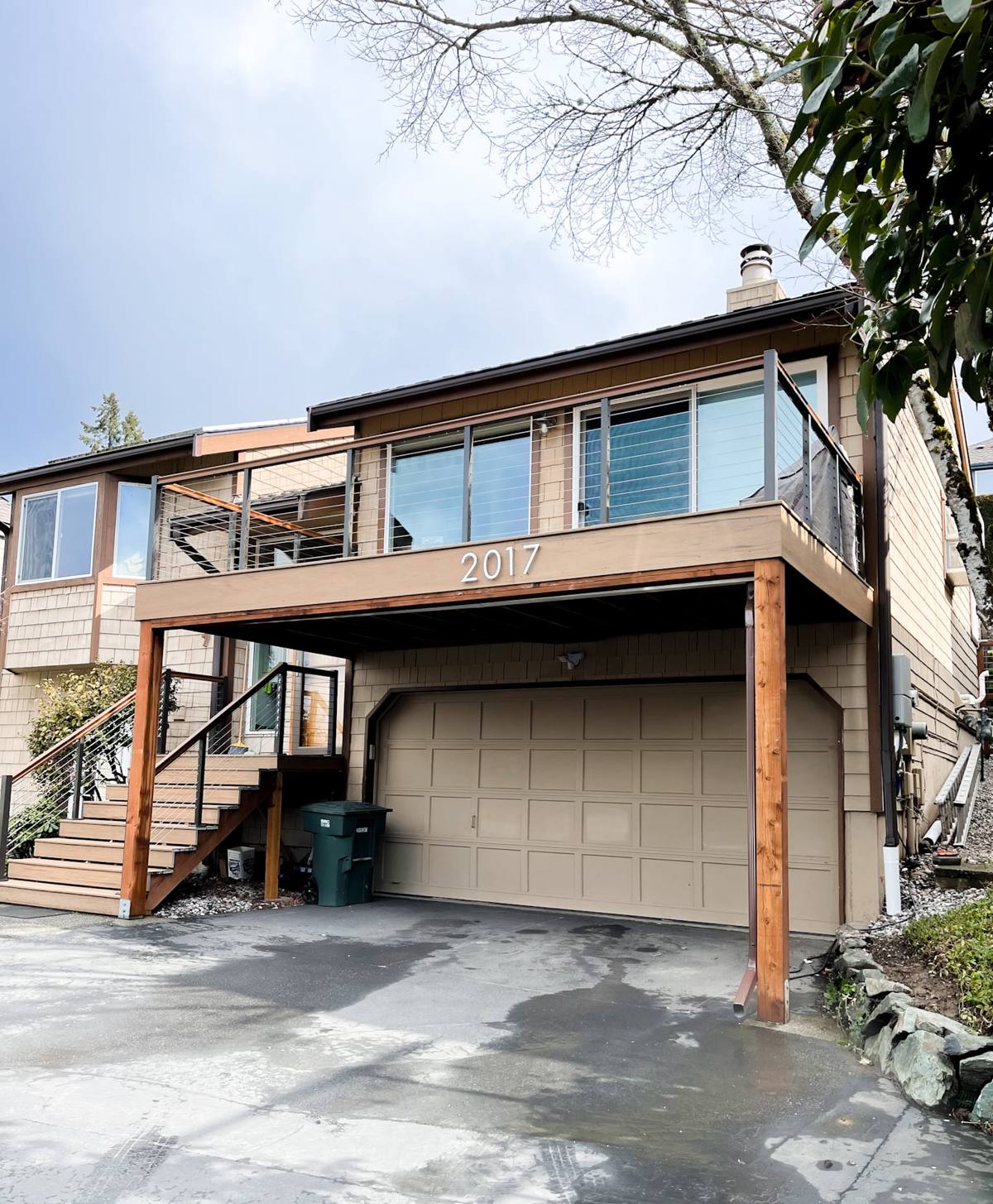
What Salt Air, Rain, and Moss Actually Do to a Deck
It helps to understand the specific ways Glenhaven's climate wears on a deck, because it explains why certain shortcuts that work fine in drier parts of the state cause real problems here.
Salt Air and Corrosion
Homes closer to the water deal with airborne salt that settles on exposed metal — nails, screws, joist hangers, post bases, railing brackets. Standard galvanized hardware can start showing rust and pitting well before a deck's structural life is up. Once fasteners corrode, they lose holding strength, and that's a structural issue, not just a cosmetic one.
Driving Rain and Water Intrusion
Rain that comes in sideways, which is common through fall and winter here, doesn't just fall straight down onto a deck surface — it drives against ledger boards, railing posts, and any point where the deck attaches to the house. Any gap in flashing or any fastener that isn't sealed properly becomes an entry point for water, and water that gets trapped behind a ledger board or inside a post base is one of the most common causes of hidden rot.
Moss and the Long Wet Season
Whatcom County's damp season runs long, and any deck surface that holds moisture — low spots, tight-grained wood, boards installed without gaps for airflow — will grow moss and algae. Beyond looking bad, a mossy deck surface gets slick and dangerous underfoot, and moss holds moisture against the board itself, accelerating rot in wood decking.
Choosing Decking Material for a Geneva Deck
There's no single "best" decking material — the right choice depends on budget, how much maintenance a homeowner wants to take on, and how close the home is to salt air exposure. Here's how the common options actually perform under Geneva conditions.
| Material | Moisture & Salt Air Performance | Moss Resistance | Maintenance |
|---|---|---|---|
| Pressure-treated wood | Good if properly sealed and re-sealed; end grain is the weak point | Needs regular cleaning to stay ahead of it | Annual cleaning and re-sealing every 1-2 years |
| Cedar | Naturally moisture-resistant, but softer and can show wear near the water | Better than pressure-treated but still needs cleaning | Periodic cleaning and oiling to hold color and resist checking |
| Composite decking | Handles moisture and salt air well; doesn't absorb water like wood | Better resistance, though can still develop surface film in shaded, damp spots | Low — periodic washing, no sealing or staining |
| PVC decking | Excellent — fully synthetic, doesn't absorb moisture | Best resistance of the group; smooth surfaces shed moss more easily | Lowest — occasional washing |
We're honest with Geneva homeowners about the trade-offs here: composite and PVC cost more up front but save real money and effort over a couple of decades of Whatcom County weather. Wood costs less initially but only performs as well as the maintenance schedule behind it — skip a year of sealing and you can lose ground fast in a climate this wet.
Why We're Careful About Certain Wood Products
Some lower-grade treated lumber and thin-profile composite products aren't built with this kind of sustained moisture exposure in mind. It's not that the products are worthless everywhere — they can be fine in drier climates — but installing them on a deck that's going to take driving rain and salt air for years isn't something we're willing to warranty without being upfront about the maintenance burden that comes with it. We'd rather steer a homeowner toward a product that matches the site than install something that looks fine on day one and causes problems in year three.
What's Underneath the Decking Matters More Than the Surface
The decking boards are what everyone notices, but the framing underneath is what determines whether the deck is still safe and sound in fifteen years. A few details we treat as non-negotiable on every Geneva deck:
Ledger Board Flashing
The ledger board — where the deck attaches to the house — is the single most common failure point on residential decks anywhere, and it's especially unforgiving in a climate with driving rain. We flash it properly with a drainage plane that directs water away from the house structure, not just a bead of caulk that will fail in a few seasons.
Corrosion-Resistant Hardware
Given the salt air exposure common around Glenhaven, we use hardware rated for coastal or high-corrosion environments rather than standard galvanized fasteners — stainless steel or heavy hot-dip galvanized connectors, joist hangers, and structural screws, depending on the application.
Joist Protection
Wrapping joists and beams with a protective tape barrier at cut ends and fastener points keeps water from wicking into the wood grain, which is where rot typically starts even on treated lumber.
Footings Sized for Wet Ground
Whatcom County's wet season can leave soil saturated for extended stretches. We size and set footings with that in mind rather than assuming dry-season soil conditions year-round.
Drainage and Slope: The Detail Most Decks Get Wrong
A deck surface needs a slight slope — usually a small fraction of an inch per foot — so water runs off instead of pooling. It's a small detail that's easy to skip, and it's one of the biggest reasons decks develop moss patches, cupped boards, and premature wear in specific spots. We also pay attention to gaps between boards, since too tight a gap traps debris and moisture, while too wide a gap wastes material and can be uncomfortable underfoot. Getting both the slope and the spacing right is what keeps a Geneva deck drying out fully between rain events instead of staying damp for days at a time.
Our Deck Building Process
- On-site assessment — we look at sun exposure, drainage patterns, proximity to salt air, and how the deck will connect to the house.
- Design and material selection — we walk through decking, railing, and hardware options with honest trade-offs for the site.
- Permitting — we handle the permit application and inspection scheduling required for the project.
- Demolition or site prep — removing an old deck or clearing the build site as needed.
- Framing — ledger flashing, corrosion-resistant hardware, footings, and structural framing built to code and to the site's conditions.
- Decking and railing installation — proper spacing and slope, secure railing per code height and load requirements.
- Final walkthrough — we go over the finished deck and maintenance expectations with the homeowner.
Deck Maintenance Checklist for Geneva Homeowners
Whatever material a deck is built with, a little seasonal attention goes a long way in this climate. A basic checklist we give Geneva clients:
- Sweep and wash the deck surface at least twice a year to clear moss spores and organic debris before they take hold
- Check railing posts and connections annually for looseness — a sign hardware may be corroding
- Inspect the ledger board area yearly for any staining or soft spots that suggest water intrusion
- Re-seal or re-stain wood decking on the schedule recommended for the specific product, typically every 1-2 years
- Trim back overhanging vegetation that keeps sections of the deck shaded and slow to dry
- Clear debris from between boards and off any drainage points beneath the deck each fall
Permits and Building Requirements
Most deck projects in Whatcom County require a building permit, particularly for decks attached to the house, decks above a certain height, or any project involving structural framing changes. Requirements can vary depending on the specific jurisdiction and the scope of the project. We handle the permit process as part of the job so homeowners don't have to navigate it themselves, and we build to the structural and railing code requirements that apply to the project.
Why Hire a Crew That Already Works in Geneva
A deck builder who hasn't worked in this specific stretch of Whatcom County can still build a technically sound deck, but they're often making material and hardware choices based on general best practices rather than what this particular combination of salt air, driving rain, and moss season actually demands over time. Crews who work Geneva regularly have seen which hardware holds up, which decking surfaces stay slip-resistant through the wet months, and which framing details prevent the callbacks that show up two or three winters later. That local pattern recognition is hard to replace with a generic spec sheet.
If you're planning a new deck or replacing one that's showing its age, we're happy to take a look and talk through what makes sense for your home and budget — no pressure, no obligation. Reach out using the form below for a free estimate.