 Glenhaven Siding
 Storm Damage Roof Repair for Geneva Homes in Glenhaven
When a storm rolls through the Geneva area, the damage isn't always obvious from the ground. A few shingles might be missing, a strip of flashing might be bent back, or water might already be finding its way into the attic without a single visible sign from the driveway. We repair storm-damaged roofs for homes in and around Geneva, and we build every repair around the conditions this part of Glenhaven actually deals with — not a generic checklist written for a drier, calmer climate.
This page covers what storm damage really looks like on a roof out here, how we handle a repair from the first phone call to the final inspection, and why it matters that the crew doing the work already knows this neighborhood's weather patterns and roofing quirks.
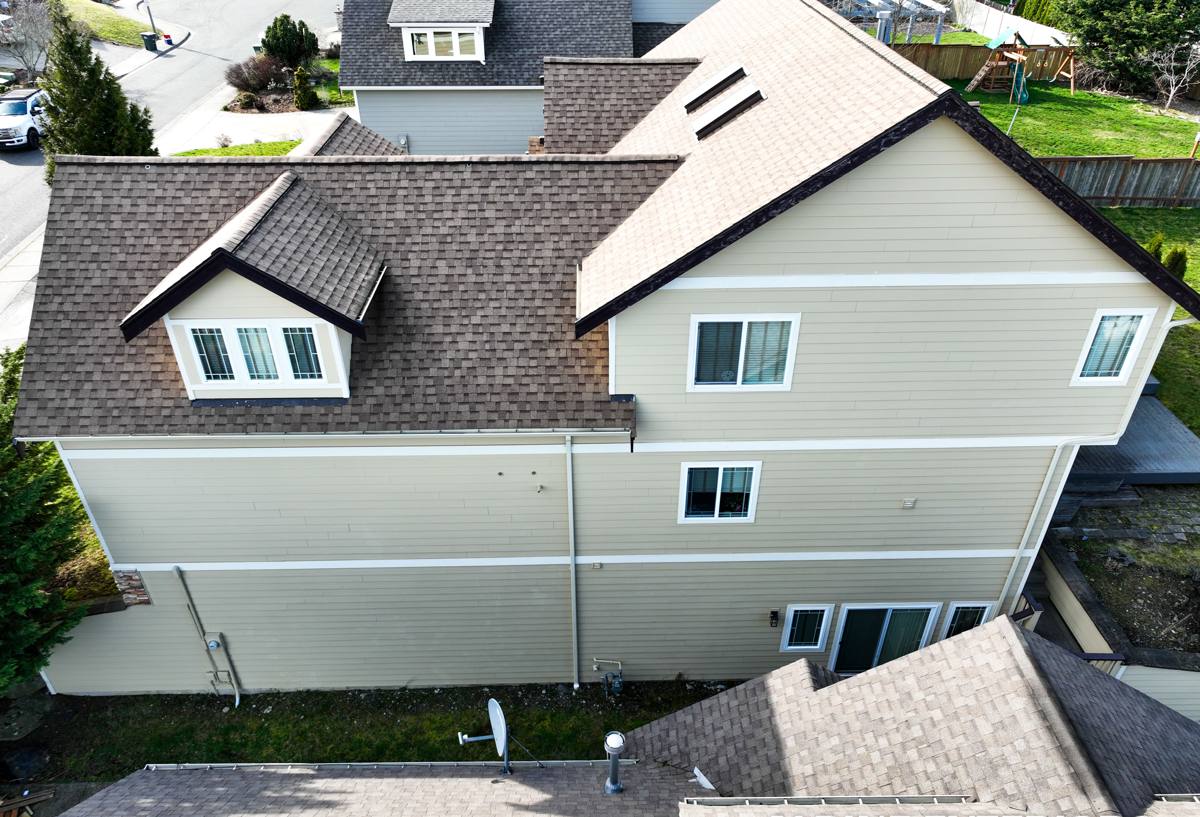
Why Geneva Roofs Wear Differently in This Climate
Whatcom County weather isn't dramatic in the way a hurricane zone is, but it's relentless in its own way, and that steady pressure is what breaks roofs down faster than homeowners expect.
Salt Air and Metal Fatigue
Homes closer to open water deal with a fine mist of salt-laden air that settles on flashing, gutters, vents, and any exposed fasteners. Over time it accelerates corrosion on lower-grade metal components, which is exactly where storm leaks tend to start — a rusted-through flashing seam or a corroded nail head gives wind-driven rain a way in long before the shingles themselves fail.
Driving Rain and Wind-Driven Leaks
Storms here rarely come straight down. Rain driven sideways by wind gets pushed up under shingle edges, around chimney flashing, and into any gap a calmer rain would never reach. A roof that's watertight in a normal shower can still leak during a wind-driven storm if the underlying details — flashing laps, valley construction, ridge caps — aren't built for that kind of pressure.
A Long Moss Season
Cool, damp stretches that last for months give moss and algae plenty of time to establish themselves, especially on north-facing slopes and anywhere shaded by trees. Moss doesn't just look bad — it holds moisture against the shingle surface, lifts shingle edges as it grows, and creates channels that funnel water sideways instead of down and off the roof. A storm hitting a roof that already has moss buildup tends to do more damage than the same storm on a clean roof.
What Storm Damage Actually Looks Like
Most storm damage falls into a few categories, and knowing what to look for helps you catch problems before they turn into a bigger repair.
Wind Damage
Lifted, creased, or missing shingles are the most visible sign. Wind can also loosen shingles without fully removing them — they may look fine from the ground but have broken their seal, which means the next rain gets underneath them even if nothing appears out of place.
Water Intrusion
This is often the damage you don't see until it's inside the house — a stain on a ceiling, a musty smell in the attic, or soft spots in roof decking found during inspection. Water intrusion after a storm is frequently the result of flashing failure rather than shingle failure, which is why a proper inspection checks both.
Debris Impact
Branches and windblown debris can bruise or puncture shingles, especially older or already-brittle ones. Impact damage is sometimes minor cosmetically but can crack the shingle's protective layer in a way that only shows up as a leak weeks or months later.
Our Storm Repair Process
Storm repair isn't just patching what's visible — it's a sequence that protects the house first, documents the damage properly, and then fixes the actual problem rather than just the symptom.
Emergency Stabilization
If a roof is actively leaking or has open decking exposed, the first priority is a temporary, weather-tight tarp or cover to stop further water intrusion. This buys time to do the repair right instead of rushing it.
Full Roof Assessment
We inspect the whole roof, not just the obvious damage point. A storm strong enough to cause one visible problem is often strong enough to loosen shingles or flashing elsewhere that hasn't failed yet. We check flashing, valleys, vents, gutters, and decking condition, not just the shingle field.
Insurance Documentation
If you're filing a claim, we document the damage clearly — photos, notes on cause and extent, and a written scope of repair — so your adjuster has what they need. We can walk you through what's typically covered and what questions to ask your carrier, though the coverage decision itself is always between you and your insurance company.
The Repair Itself
We replace damaged shingles, resecure or replace failed flashing, and check that the repaired section ties into the surrounding roof correctly — same nailing pattern, same water-shedding logic as the rest of the roof, not just a patch stuck on top. We finish with a walk-through so you know exactly what was done and why.
Repair or Replace? How We Make That Call
Not every storm-damaged roof needs a full replacement, and not every repair is a good long-term answer. The right call depends on the roof's age, how widespread the damage is, and what condition the rest of the roof is in.
| Situation | Repair usually makes sense | Replacement is often the better call |
|---|---|---|
| Roof age | Under 12-15 years, good overall condition | Near or past the end of its expected service life |
| Damage extent | Isolated to one slope or a small area | Scattered across multiple slopes or repeated storm hits |
| Decking condition | Solid, no rot found during inspection | Soft, water-stained, or damaged decking discovered |
| Moss/algae history | Minor, treatable buildup | Heavy, longstanding moss that's already degraded the surface |
| Underlying material | Newer shingle line still in reasonable supply | Discontinued or badly mismatched shingle line |
We'll always tell you honestly which side of that line your roof falls on. A repair that's likely to fail again in a year or two isn't a good use of your money, and we won't sell you a full replacement when a proper repair will hold.
Materials We Use for Storm Repairs Here
Given the salt air and moss exposure in this area, we lean toward materials and details that hold up to both, not just whatever's cheapest to source.
- Corrosion-resistant flashing in valleys, around chimneys, and at wall intersections — the areas that take the brunt of wind-driven rain.
- Algae-resistant shingles on repairs where moss and algae have historically been an issue, so the patched section doesn't green up faster than the rest of the roof.
- Proper underlayment at repair points, not just a shingle swap, so the repair has the same water-shedding backup as the original installation.
- Matched fasteners rated for coastal exposure rather than standard interior-grade nails, which corrode faster under salt air.
We try to match your existing shingle color and line as closely as the manufacturer's current stock allows. Exact matches aren't always possible on older roofs, and we'll tell you upfront if a perfect match isn't realistic rather than let you assume it will be seamless.
Why a Crew That Already Works Geneva Matters
A roofer who's worked storm damage across the Geneva area has already seen how wind moves through this terrain, which slopes take the worst of the driving rain, and which flashing details tend to fail first on the roof styles common out here. That's not something you can fully replicate by reading a manual — it comes from doing the work locally, storm after storm.
Local familiarity also speeds up the practical side: knowing typical permitting requirements in Whatcom County, understanding what materials hold up in this specific combination of salt exposure and moisture, and being able to respond quickly after a storm instead of scheduling around a long drive from somewhere else. When a roof is actively leaking, a fast, informed response matters more than almost anything else in the process.
Reducing Storm Damage Risk Going Forward
Once your storm repair is done, a few maintenance habits go a long way toward keeping the next storm from causing the same kind of damage.
- Clean gutters at least twice a year so storm runoff has somewhere to go instead of backing up under the roof edge.
- Treat or remove moss buildup before it spreads across a full slope, especially on shaded, north-facing areas.
- Trim back branches that overhang the roof, since they're a common source of impact damage during high wind.
- Have flashing and vent boots checked periodically — they fail years before shingles usually do.
- Walk the attic after major storms and look for daylight, water staining, or a musty smell, which often show up before a ceiling stain does.
- Address small leaks quickly — a minor drip left through one more storm season is how a repair turns into a replacement.
If you've had storm damage — or you're not sure whether what you're seeing on your roof is storm-related or just wear — we're happy to take a look and give you a straight answer. The estimate is free, there's no pressure to move forward, and you'll know exactly what we found and why before you decide anything.