 Glenhaven Siding
 What Nooksack Homes Are Actually Up Against
Houses in the Nooksack area take a steady beating that a lot of siding products simply aren't built to handle. Marine-influenced air carries salt and moisture inland across Whatcom County, wind-driven rain finds every gap and seam during fall and winter storms, and a mild, wet climate means moss and algae get a long runway to establish themselves on anything that stays damp for more than a day or two. Add in temperature swings between summer heat and cold, wet winters, and you have a climate that punishes weak siding systems year after year until the damage finally shows up as cupping, soft spots, or paint that won't hold.
This isn't a theoretical problem. It's the reason so many homes in this part of Whatcom County need siding work sooner than homeowners expect, and it's why the material you choose matters as much as the crew that installs it.
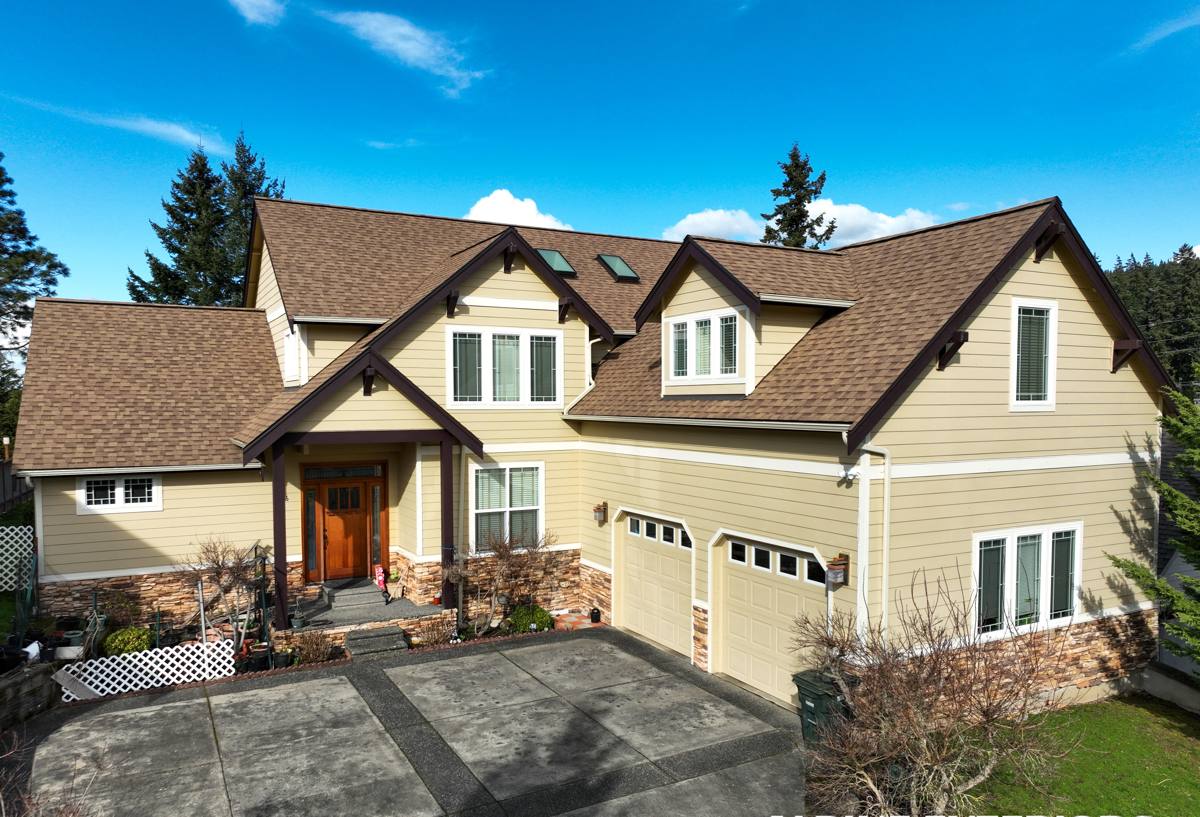
Why We Install Only James Hardie Siding in Nooksack
Glenhaven Siding Company doesn't install vinyl, LP SmartSide, Cemplank, Allura, primed spruce, or cedar. We install James Hardie fiber cement siding, exclusively. That's not a marketing angle — it's a standard we set because of what we've seen happen to other products in exactly this kind of climate.
Wood and engineered-wood products depend on an unbroken paint film and diligent maintenance to keep moisture out. Once that film fails at a cut edge, a fastener hole, or a joint that wasn't sealed correctly, water gets into the substrate and the clock starts on rot. Vinyl doesn't rot, but it flexes and gaps with temperature changes, fades under UV exposure, and can crack in sustained cold snaps. None of these are defects exactly — they're trade-offs baked into what those materials are. In a climate with this much sustained moisture and this long a moss season, those trade-offs add up to more callbacks, more repainting, and shorter real-world lifespans than homeowners are told to expect.
James Hardie fiber cement is cement, sand, and cellulose fiber. It doesn't rot, it doesn't feed insects, and it's non-combustible. With a factory-applied ColorPlus finish, the color and the protective coating are baked on under controlled conditions rather than rolled on in the field, which is a meaningfully different level of durability against the kind of driving rain and salt-laden air this area sees. That's the whole reason we standardized on it: it's the one product line we're comfortable telling a Nooksack homeowner will still be doing its job in twenty years if it's installed correctly.
The Product Lines We Use Here
James Hardie makes climate-engineered product lines (the HZ5 line is built for the wetter, cooler regions of the country, including the Pacific Northwest), and we spec accordingly for this area rather than defaulting to a one-size-fits-all product:
- HardiePlank lap siding — the most common choice for Nooksack homes, available in several exposures and textures, and the workhorse for standard single-family exteriors.
- HardiePanel vertical siding — often used for accent gables, shop buildings, or a board-and-batten look on a rural or semi-rural property.
- HardieTrim — matched trim boards so the whole envelope, not just the field siding, is fiber cement rather than a wood product that will weather differently than the siding around it.
- ColorPlus Technology finish — factory-cured color coat that resists fading, chipping, and the streaking that raw or field-painted siding can show after a few wet seasons.
Where Moss and Moisture Actually Cause Damage
Most siding failure in this region doesn't start with a dramatic storm — it starts small and quiet. A few of the patterns we see repeatedly on homes throughout Whatcom County:
- North- and west-facing walls that stay shaded and damp longer after rain, giving moss and algae a head start.
- Bottom courses near grade or landscaping beds where splash-back keeps siding wet long after a storm passes.
- Butt joints and corner boards where old caulking has failed and water has been quietly working its way behind the siding for one or more seasons.
- Areas under gutters or downspouts that overflow during heavy rain events and dump concentrated water onto one section of wall.
On wood-based products, these are the spots where soft, spongy siding and paint failure show up first. On fiber cement installed correctly, these same conditions are manageable — the material itself doesn't absorb and swell the way wood-based siding does, but the installation details around water management still matter enormously, which is the next thing worth understanding.
What a Correct Installation Actually Involves
James Hardie siding is only as good as the installation behind it. The material is engineered to perform in wet climates, but a rushed or careless install can undercut all of that engineering. A correct job on a Nooksack home includes:
Water Management Behind the Siding
A weather-resistant barrier (house wrap) installed and lapped correctly, with proper flashing at every window, door, and roofline intersection. This is the layer that actually stops bulk water from reaching your sheathing — the siding itself is the second line of defense, not the only one.
Correct Fastening and Clearances
Hardie siding has specific fastener spacing, penetration depth, and clearance requirements — including minimum clearance from grade, roofing, and decks — that James Hardie publishes and that installers are expected to follow to keep the warranty valid. Skipping these is one of the most common ways a "Hardie job" ends up performing worse than it should.
Joint and Seam Treatment
Butt joints, corner treatments, and penetrations (hose bibs, vents, light fixtures) all need to be sealed and detailed correctly. This is where a huge share of long-term moisture problems originate on any siding job, regardless of material.
Painting and Touch-Up Standards
Cut edges need to be primed and sealed before installation, and any field touch-up should use products compatible with the ColorPlus finish so color and sheen match over time instead of weathering unevenly.
James Hardie vs. Other Siding Options for This Climate
| Factor | James Hardie Fiber Cement | Vinyl | Wood / LP SmartSide / Primed Spruce |
|---|---|---|---|
| Moisture resistance | Excellent — doesn't rot or swell | Doesn't rot, but seams and gaps can let water behind panels | Vulnerable once paint film or seal fails |
| Moss/algae resistance | Doesn't feed organic growth; cleans up well | Can trap moisture behind panels where growth thrives unseen | Organic material can support growth directly |
| Fire resistance | Non-combustible | Combustible, can melt/deform near heat sources | Combustible |
| Finish durability | Factory-baked ColorPlus finish, long fade resistance | Color molded in but can fade/chalk over time | Depends entirely on paint maintenance schedule |
| Typical maintenance | Periodic wash, minimal repainting | Low, but repairs can be hard to color-match | Regular repainting and caulk inspection required |
Cost is a fair question too, and it's worth answering honestly: James Hardie siding usually costs more up front than vinyl and is competitive with or sometimes higher than engineered wood products. Where it earns that back is in reduced repainting, fewer moisture-related repairs, and a longer functional lifespan — which matters more in a climate that actively works against weaker materials than it does in a milder one.
Our Process for a Nooksack Siding Job
- On-site assessment — we walk the exterior, check for existing moisture damage, evaluate flashing and drainage, and identify problem areas specific to your home's orientation and exposure.
- Product and color selection — we help you choose the right HardiePlank profile, exposure, and ColorPlus color for your home and the neighborhood context.
- Written scope and estimate — a clear breakdown of materials, prep work, and what's included, no vague line items.
- Tear-off and prep — removal of old siding, inspection and repair of sheathing, and correct installation of the weather-resistant barrier and flashing.
- Installation to manufacturer spec — fastening, clearances, and joint treatment done to James Hardie's published installation requirements, not shortcuts.
- Final walkthrough — we review the finished work with you before calling the job complete.
Why a Crew That Already Works Nooksack Matters
Siding work in this part of Whatcom County isn't identical to siding work in a drier inland climate, and it isn't identical to coastal projects further out either. A crew that regularly works Nooksack and the surrounding Glenhaven area already knows which wall orientations tend to hold moisture longest, how local permitting and inspection process works, and what drainage and flashing details actually hold up through a full wet season here rather than just looking right on installation day. That local repetition is what turns a correct-on-paper install into one that's still performing well five and ten years out.
It also matters for accountability. A local, established crew has a reputation in the area to protect and is easy to reach if a question comes up after the job is done — not a name you found for a one-time bid that's hard to track down a year later.
Maintenance Checklist for Nooksack Homeowners
James Hardie siding is low-maintenance, not no-maintenance. A little seasonal attention goes a long way in this climate:
- Rinse siding annually (garden hose pressure is enough) to remove pollen, dust, and early moss or algae growth before it takes hold.
- Walk the exterior each fall and check caulking around windows, doors, and trim for cracking or gaps.
- Keep gutters clear so overflow doesn't concentrate water on one section of wall.
- Trim back landscaping and shrubs so siding gets airflow and isn't held wet by foliage.
- Check grade and mulch levels near the foundation — siding needs proper clearance from soil and hardscaping to stay dry.
- Look at north- and west-facing walls specifically each year, since they tend to hold moisture longest in this climate.
Ready to Talk About Your Home
If your Nooksack home's siding is showing moss buildup, paint failure, soft spots, or you're simply planning ahead of a needed replacement, we're happy to take a look and give you a straight assessment — no pressure, no upsell to a product we don't stand behind. Request a free estimate below and we'll walk your property, answer your questions, and give you a clear, written picture of what the job actually involves.