 Glenhaven Siding
 Composite Decking Built for Lake Whatcom Living
Lake Whatcom homes get some of the best outdoor living in Whatcom County — tree-lined lots, water views, and decks that get used ten months out of the year. That same setting is hard on a deck. Marine-influenced air drifting in off the Sound, long stretches of driving rain, and heavy tree cover around the lake add up to a moss season that can run from October well into spring. A deck built for a drier climate, or built without the details that matter here, shows it fast: stains, slick spots, soft boards, and a surface that never quite looks clean no matter how often you sweep it.
Composite decking, installed correctly, is one of the better answers to that problem. It doesn't mean no maintenance — nothing outdoors in this climate is maintenance-free — but it means a lot less of it, and a deck that stays solid and safe underfoot for decades instead of years. This page covers what Lake Whatcom conditions actually do to a deck, what a correct composite installation looks like, and how we approach the work.
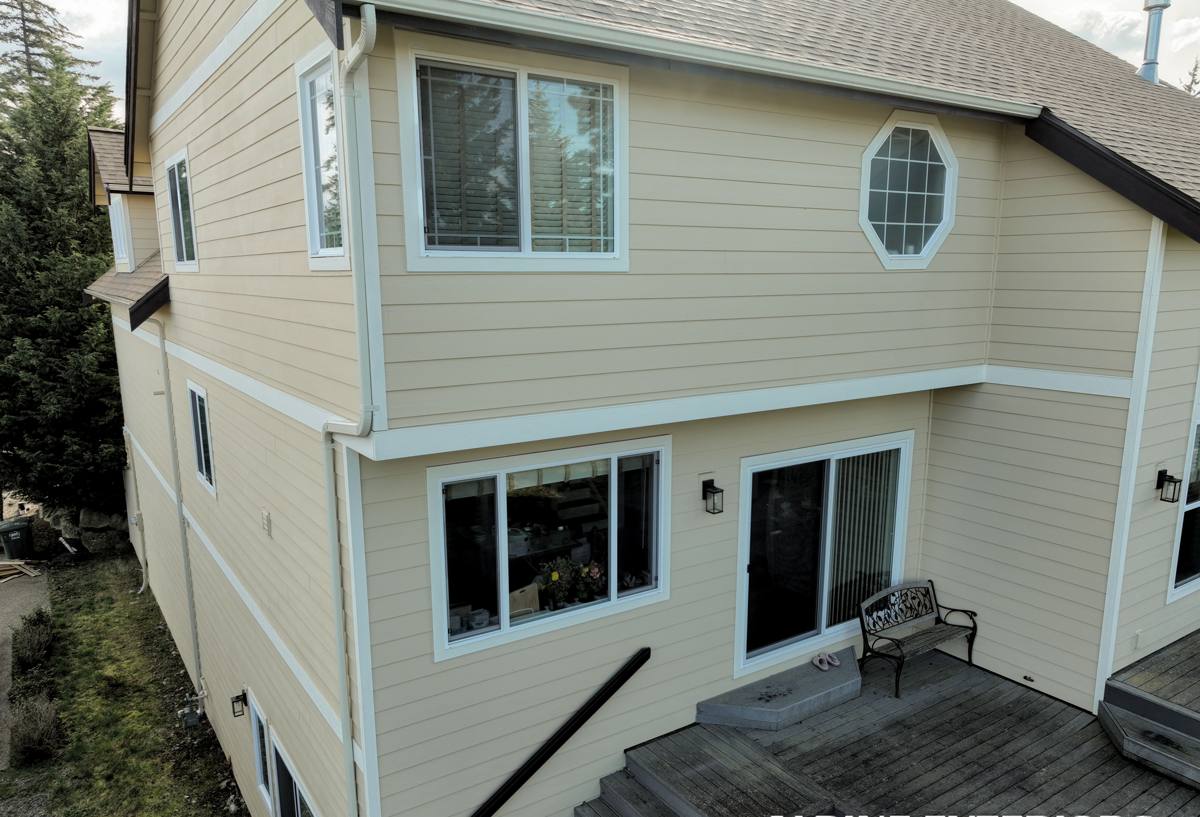
What This Climate Does to a Deck
Before talking about materials, it's worth being specific about what's working against a deck here, because it shapes every decision that follows.
Moisture That Doesn't Let Up
Whatcom County gets a long wet season, and lakefront and near-lake properties tend to hold humidity longer than lots further from the water. Boards that stay damp for days at a time are where rot, mold, and mildew take hold — especially on the underside and at fastener points where water collects and doesn't dry.
Shade and Tree Cover
Many Lake Whatcom lots have mature tree cover, which is part of the appeal but also means less direct sun to dry a deck surface between rains. Shaded decks stay damp longer, grow moss and algae faster, and need boards and fasteners that don't feed that growth.
Debris and Organic Buildup
Needles, leaves, and pollen from surrounding trees settle into board gaps and against the house. Left alone, that organic material holds moisture against the deck surface and structure — a big part of why moss season feels like it never fully ends around the lake.
Freeze-Thaw Cycling
It doesn't get brutally cold here, but Whatcom County does see enough freeze-thaw swings each winter to stress any decking material that absorbs water. Boards or hardware that take on moisture and then freeze are more likely to crack, warp, or loosen over a few seasons.
Why Composite Fits Lake Whatcom Conditions
Composite decking is engineered from wood fiber and plastic, and most quality lines today are fully capped — meaning the board has a protective outer shell on all sides rather than exposed wood fiber. That capping is the part that matters most in this climate: it's what keeps moisture from soaking into the board, feeding mold, or causing the swelling and splintering that plague untreated or poorly maintained wood decks near the lake.
That doesn't mean composite is a "set it and forget it" material. It still needs airflow underneath, proper drainage, and periodic cleaning to keep organic buildup from sitting on the surface. What it doesn't need is annual sanding, staining, or sealing — jobs that are hard to keep up with on a lake schedule and easy to fall behind on through a wet Whatcom winter.
Composite vs. Other Decking Materials
| Material | Moisture & Moss Resistance | Maintenance | Typical Lifespan |
|---|---|---|---|
| Capped Composite | Strong — sealed surface resists absorption | Periodic rinsing/cleaning, no staining | 25–30+ years |
| Pressure-Treated Wood | Weak to moderate — absorbs moisture, feeds mold if untreated | Annual cleaning, sealing/staining | 10–15 years with upkeep |
| Cedar | Moderate — naturally rot-resistant but still absorbs water | Regular sealing, more frequent in shade | 15–20 years with upkeep |
| PVC (cellular) | Strong — fully synthetic, no wood fiber | Low, similar to composite | 25–30+ years |
PVC decking performs similarly to composite on moisture resistance and is a reasonable option in a few situations, but composite generally gives a more natural wood look and a wider range of color and grain options, which is why most Lake Whatcom homeowners land on it. We'll talk through the honest trade-offs for your project rather than push one product line.
What a Correct Composite Deck Installation Involves
The board itself is only part of what makes a composite deck last in this climate. Most of the failures we get called about — soft spots, sagging, boards that hold water — trace back to installation shortcuts, not the material.
Substructure First
The framing underneath a composite deck has to be built to the load and joist spacing the manufacturer specifies for that particular board — composite typically needs tighter joist spacing than wood, especially on stairs, angles, and picture-frame borders. Ledger board attachment to the house needs proper flashing so water is directed away from the structure, not into it.
Drainage and Airflow
A deck that traps water underneath is a deck that stays damp, which is exactly what feeds mold and rot in the framing even if the boards on top are moisture-resistant. Correct grading, gaps, and ventilation under the deck matter more here than in a drier climate, because there are fewer dry stretches to let things air out.
Fastening
Hidden fastener clip systems attach boards from the side, leaving no exposed screw heads and a small gap between boards for water and debris to clear instead of collecting. Face-screwed boards are cheaper and faster to install but create more points where water can sit against the board.
Board Layout and Cuts
End cuts need to be properly capped or treated per manufacturer instructions — an exposed, uncapped edge is one of the few places composite can still take on moisture over time. Board runs should be planned to minimize seams in high-traffic areas and to keep drainage paths clear rather than trapped between boards and the house.
Cost Factors on a Lake Whatcom Deck Project
Every deck is different, but the same handful of factors drive most of the cost swing between projects. Rough, general ranges only — your quote will reflect your actual site and material choice.
| Factor | Why It Matters |
|---|---|
| Board tier | Entry-level capped composite vs. premium multi-tone lines carries a real price difference per square foot |
| Existing structure condition | Reusing sound framing costs less than rebuilding a rotted or undersized substructure |
| Height and railing | Elevated decks near steep lake lots need more substantial railing and support, which adds labor |
| Site access | Many Lake Whatcom lots are sloped or have limited equipment access, which affects labor time |
| Deck size and layout | Cuts, borders, stairs, and multiple levels add labor beyond simple square footage |
Our Process for Composite Decking Around Lake Whatcom
We treat a deck replacement or new build the same way regardless of size, because skipping steps is where problems start.
- Site visit: We look at sun exposure, tree cover, slope, and drainage on your specific lot — a shaded, sloped Lake Whatcom lot gets a different plan than a flat, open one.
- Structural assessment: If we're replacing an existing deck, we check the framing, ledger attachment, and any rot before deciding what can be reused.
- Material selection: We walk through composite lines and profiles that hold up well in wet, shaded Pacific Northwest conditions, and give you honest pros and cons for your situation.
- Permitting: We handle the paperwork with the county, including any additional review that applies to lots near the lake's shoreline.
- Installation: Proper joist spacing, flashing, drainage, and fastening per manufacturer spec — not shortcuts to save a day of labor.
- Walkthrough and cleanup: We go over the finished deck with you, including what maintenance to expect given your specific sun and shade exposure.
Maintaining Composite Decking in a Wet, Mossy Climate
Composite cuts the maintenance load dramatically compared to wood, but "low maintenance" isn't "no maintenance" here. A little seasonal attention keeps a composite deck looking and performing the way it should through Whatcom County's long wet stretch.
- Sweep debris — needles, leaves, pollen — off the deck regularly, especially under tree cover, so it doesn't sit against the boards
- Rinse the deck surface a few times a year with water and a mild cleaner made for composite; avoid pressure washers on high settings, which can damage the cap
- Check that board gaps and drainage paths under the deck stay clear of buildup so water keeps moving through
- Inspect railing posts and stair connections once a year for looseness, which shows up faster in a climate with this much moisture and freeze-thaw cycling
- Address any moss or algae film as soon as you notice it, before it has a chance to build up over a full wet season
- Keep gutters and downspouts near the deck clear so runoff isn't dumping directly onto or under it
Why Hire a Crew That Already Works This Lake
Lake Whatcom isn't a generic Whatcom County address — the lots around it come with their own quirks: slope, limited access for equipment, tree cover that shifts sun exposure through the day, and, depending on proximity to the shoreline, additional permitting review. A crew that hasn't worked lake-adjacent lots before is learning those constraints on your project. We've built and replaced decks around Lake Whatcom and the surrounding area enough to know what a given lot is likely to need before we ever put a shovel in the ground — where drainage tends to be a problem, which spots hold shade and moss longest, and what the county actually asks for near the water.
That local knowledge shows up in small decisions that add up over the life of the deck: how we frame for drainage on a shaded, sloped lot, which board profiles hold up best under heavy tree cover, and how we sequence a project around a property with tight access. It's the difference between a deck that's built to spec on paper and one that's actually built for how this lake behaves.
Get a Free Estimate
If you're planning a new composite deck or replacing one that hasn't held up to the Lake Whatcom weather, we're happy to take a look and walk you through what your specific lot needs. Use the form below to request a free, no-pressure estimate.