 Glenhaven Siding
 Why Lynden Decks Wear Out Faster Than Homeowners Expect
A deck in Lynden lives a harder life than most people realize. Whatcom County sits in a stretch of the Pacific Northwest where moisture is a near-constant presence — rain that drives in sideways during fall and winter storms, morning dew that lingers under tree cover, and a moss season that can stretch from October well into spring. Add in the salt-tinged marine air that moves through this part of Washington, and you've got a combination that attacks wood, fasteners, and even some composite products in ways that drier climates never see.
The damage rarely shows up all at once. It starts small: a slightly spongy board here, a dark stain around a screw head there, a patch of moss creeping across a north-facing corner that never gets direct sun. By the time most homeowners notice a real problem, the deck has usually been quietly failing underneath for a year or two. That's why deck replacement in this area isn't just about swapping old boards for new ones — it's about building something that's actually matched to what Whatcom County weather does to a structure year after year.
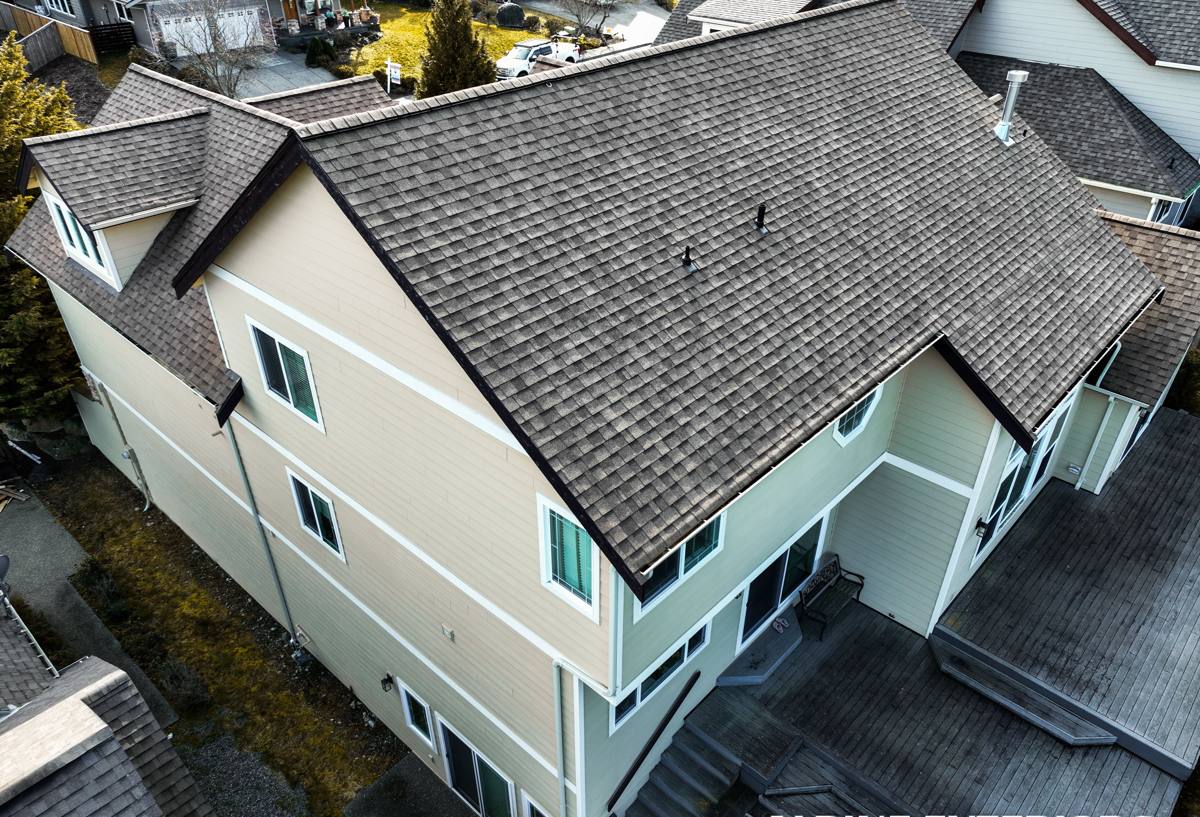
Signs Your Deck Needs Replacement, Not Just Repair
Not every tired-looking deck needs to be torn out. But there's a point where patching individual boards stops being a real fix and starts being a way to delay the inevitable while spending money twice. Here's how we tell the difference when we walk a Lynden property.
- Soft or spongy spots when you press on the decking, especially near the house or along the rim joist
- Rust streaking or crumbling around fastener heads, which usually means moisture has been sitting in the wood fibers
- Visible gaps or separation where the deck ledger meets the house — a common failure point when flashing was never installed correctly
- Persistent moss or algae growth that comes back within weeks of cleaning, even in the same spots every year
- Noticeable bounce, sway, or movement when multiple people are standing on the deck at once
- Posts or footings that have shifted, cracked, or show signs of rot at the base
If you're only seeing one or two isolated boards affected and the framing underneath is sound, targeted repair can be the right call. If the problems are spread across the structure or tied to the framing itself, replacement is almost always the more honest recommendation — and the more cost-effective one over time.
What a Correct Deck Replacement Actually Involves
A deck replacement done right goes well beyond the visible surface. Most of the decisions that determine whether a deck lasts 10 years or 25 happen in parts of the structure you'll never see once the project is finished.
Ledger Board and Flashing
The ledger board — where the deck attaches to the house — is the single most common source of long-term failure we find on older decks in this area. If it isn't flashed correctly to shed water away from the house band joist, moisture gets trapped against the structure and rot sets in from the inside out, often long before it's visible from underneath. Every replacement we do treats this connection as the most critical detail on the job, not an afterthought.
Footings and Framing
Footings need to sit below frost depth and bear on undisturbed, stable soil — something that matters on properties with the kind of wet, clay-heavy ground common around Whatcom County. Framing lumber should be rated for ground contact or exterior exposure where it's close to soil or moisture, and joist spacing needs to match the actual decking material being installed, since composite and wood products often carry different span requirements.
Fasteners and Hardware
In a climate this wet, standard fasteners corrode faster than most homeowners expect. Structural connectors, joist hangers, and screws should all be rated for the moisture and, where relevant, the tannins in the wood species being used. Mismatched hardware is a small detail that causes a disproportionate amount of long-term damage.
Decking Surface
The visible decking is what everyone notices, but it's the last decision in the sequence — not the first. It should be chosen based on how the deck is used, how much direct sun and shade it gets, and how much maintenance the homeowner actually wants to keep up with season after season.
Choosing a Decking Material for Whatcom County Weather
There's no single "best" decking material — there's the material that fits your maintenance tolerance, budget, and how much sun versus shade and moss exposure your specific deck deals with. Here's how the common options compare under the conditions we see in this region.
| Material | Moisture & Moss Resistance | Maintenance | Typical Lifespan |
|---|---|---|---|
| Pressure-treated wood | Good if sealed regularly; moss-prone in shaded areas | Annual cleaning and resealing | 10–15 years |
| Cedar | Naturally moisture-resistant but softens over time without upkeep | Regular sealing to hold color and resist moss | 15–20 years |
| Capped composite | Very good; the cap layer resists moss and staining well | Occasional washing, no sealing or staining | 25–30 years |
| PVC decking | Excellent; fully synthetic and doesn't absorb moisture | Occasional washing | 25–30+ years |
Wood costs less upfront but asks for consistent upkeep to hold up in a climate like this — skip a season of sealing and moss gets a foothold fast. Composite and PVC cost more initially but largely remove the moss-and-rot equation from the equation, which matters a lot on shaded lots or decks tucked under overhangs where sun never really dries the surface out.
Our Deck Replacement Process
Every project runs through the same sequence, whether it's a small back deck or a large multi-level structure.
- On-site assessment — we inspect the existing structure, ledger connection, footings, and framing to confirm replacement is the right call and identify any hidden damage
- Design and material selection — we walk through decking, railing, and fastener options based on your budget, sun exposure, and how the space gets used
- Permitting — we handle the paperwork required for the scope of work, including any structural or guardrail requirements
- Demolition — the old deck is removed carefully, with attention to protecting landscaping and the house exterior
- Framing and flashing — footings, posts, joists, and ledger flashing are installed to current code, built for the moisture load this area sees
- Decking and railing installation — surface material and railing system are installed per manufacturer specifications
- Final inspection and walkthrough — we confirm everything meets code and walk the finished deck with you before calling the job complete
Permits, Codes, and Structural Considerations
Most deck replacements in Washington require a permit, particularly when framing, footings, or guardrails are involved — even if the footprint stays the same as the old deck. Guardrail height, baluster spacing, and stair rail requirements are all governed by code and get checked during inspection, not just at the homeowner's discretion. Footing depth requirements exist specifically because of freeze conditions and soil movement, and skipping or shortcutting them is one of the most common reasons older decks in this region end up with sagging or shifting structures years down the road. We pull the appropriate permits and build to the code requirements that apply, rather than treating them as optional.
Keeping Your New Deck Ahead of the Moss and Rain
A well-built deck still needs a little seasonal attention to get its full lifespan out of a climate that stays wet for so much of the year. None of this is complicated, but skipping it is how moss and moisture damage get a head start.
- Sweep leaves and debris off the surface regularly through fall — trapped organic matter holds moisture against the decking
- Rinse or wash the deck surface at least once or twice a year to interrupt moss and algae growth before it takes hold
- Check and clear gaps between boards where debris can build up and trap water
- Inspect the ledger flashing and house connection annually for any signs of gapping or water staining
- Reseal wood decking on the manufacturer's recommended schedule — don't wait until it looks gray and dry
- Trim back vegetation that keeps sections of the deck shaded and damp longer than the rest
- Watch for soft spots or movement each spring after the wettest months have passed
Why Hiring a Crew That Already Works in Lynden Matters
A deck built to a generic national standard isn't necessarily built for what this specific region does to a structure over time. A crew that already works throughout Lynden and the rest of Whatcom County knows which details matter most here — the ledger flashing that has to be right the first time, the footing depth that accounts for this area's soil and moisture conditions, and the decking choices that actually hold up against a moss season that outlasts most other parts of the state. That local experience shows up in fewer callbacks, fewer surprises, and a deck that's still solid well past the point where a rushed or out-of-town job would already be showing problems.
It also means scheduling that accounts for local weather windows rather than fighting them, and a crew that's still reachable down the road if a question comes up after the project wraps — not a name you only see once.
If your deck is showing its age or you're just not sure whether repair or replacement makes sense for your situation, we're happy to take a look. Reach out for a free, no-pressure estimate using the form below, and we'll give you a straight answer about what your deck actually needs.