 Glenhaven Siding
 Lynden's Siding Wears Differently Than Siding Ten Miles Inland
Lynden sits close enough to Puget Sound and the marine air corridor that homes here take on a specific combination of punishment: salt-laden moisture in the air, driving wind-blown rain that hits siding at an angle instead of straight down, and a moss season that can stretch from late fall through spring. None of these alone is unusual for Western Washington. Together, on a wall that's approaching the end of its service life, they accelerate problems that would take much longer to show up in a drier, calmer climate.
We work on homes throughout the Glenhaven area, and Lynden's siding calls come with a recognizable pattern: paint failing years before it should, moss establishing itself in shaded north and east walls, and moisture finding its way behind siding through old or failed flashing details. A siding replacement here isn't just a cosmetic swap — done right, it's a chance to fix the water-management details that got the old siding into trouble in the first place.
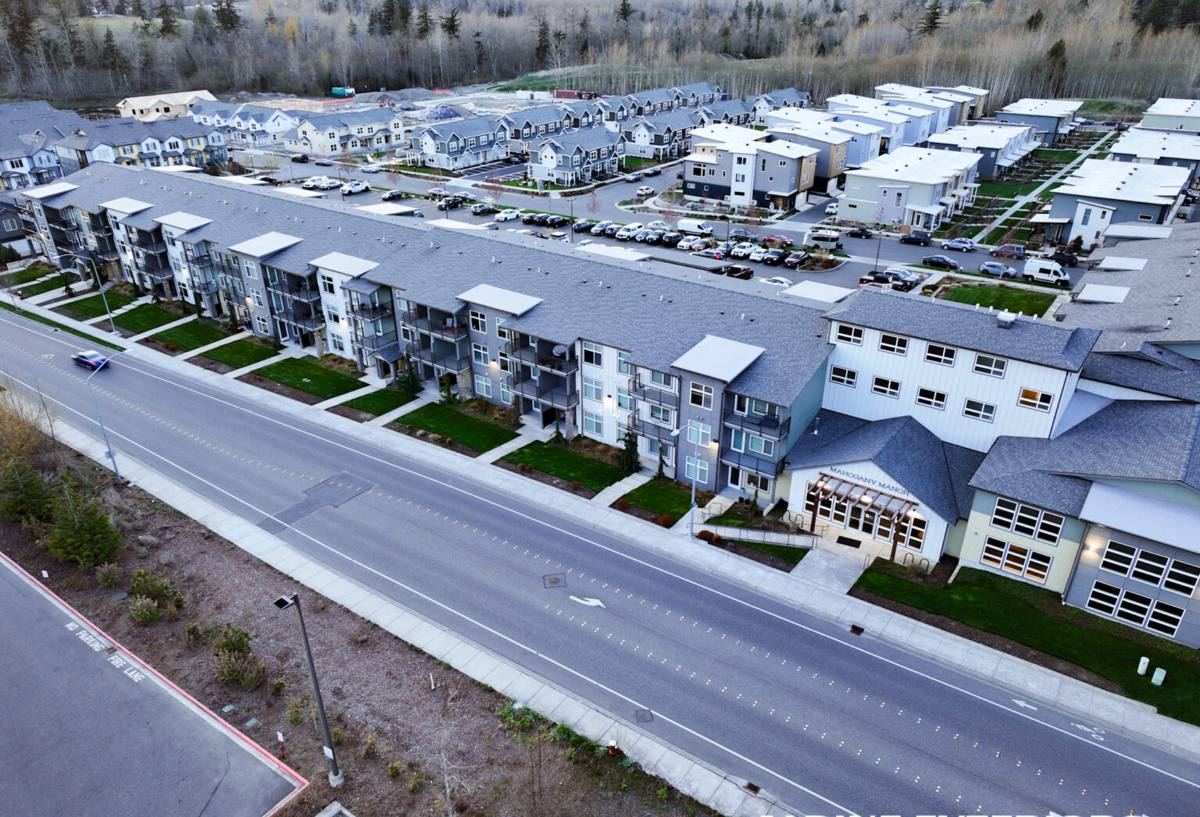
Signs a Lynden Home Is Ready for Siding Replacement
Siding rarely fails all at once. It's usually a combination of smaller signs that, together, tell you patching isn't going to cut it anymore.
- Paint that's peeling, bubbling, or chalking heavily within a few years of the last paint job
- Soft, spongy, or crumbling spots when you press on the siding, especially near the bottom courses
- Persistent moss or algae growth that comes back within weeks of cleaning
- Visible warping, cupping, or gaps between boards or panels
- Cracking at butt joints or corners that keeps reappearing after caulk repairs
- Rising utility bills or noticeably drafty rooms along exterior walls
- Staining or discoloration below window sills and at wall penetrations, which usually points to water tracking behind the siding rather than sitting on top of it
If you're seeing two or three of these at once, it's worth having someone look at the wall assembly, not just the visible siding — because in a climate like Lynden's, the damage is often further along underneath than it looks from the driveway.
What a Correct Siding Replacement Actually Involves
Siding replacement is not just pulling off old boards and nailing up new ones. The siding itself is the last layer of a system, and in a wet, salt-exposed climate, the layers underneath matter as much as what's visible.
Tear-Off and Inspection
Once the old siding comes off, we can actually see the sheathing, framing, and existing weather barrier. This is the point where hidden rot, soft sheathing, or old failed flashing gets found — and it needs to get fixed before anything new goes back up. Covering damaged sheathing with new siding just hides the problem for a few more years.
Weather-Resistive Barrier
A continuous, properly lapped weather-resistive barrier (WRB) is what actually keeps bulk water out of the wall cavity. In a driving-rain climate, lap direction and overlap at seams aren't a formality — they're the difference between water shedding down and out, or water finding a seam to work its way in.
Flashing at Every Penetration
Windows, doors, hose bibs, light fixtures, vents — every penetration through the wall is a place water wants to get in. Correct flashing, integrated with the WRB in the right order (not just caulked over), is one of the details that separates a siding job that lasts 30+ years from one that starts failing at year eight.
Rainscreen / Drainage Gap
Where conditions call for it, a drainage gap behind the siding lets any moisture that does get past the cladding drain and dry out instead of sitting against the wall. In a climate with Lynden's rainfall and humidity, this detail matters more than it does in drier parts of the state.
Fastening and Clearances
Fiber cement siding has specific fastening patterns and minimum clearances from grade, roof lines, and decks. Getting these wrong is one of the most common causes of premature siding failure — and it's invisible until moisture damage shows up years later.
Why We Only Install James Hardie Fiber Cement
We get asked why we don't offer vinyl, LP SmartSide, or cedar as options. The honest answer is that for a climate like this one — salt air, sustained moisture, moss pressure — those products ask homeowners to accept trade-offs we're not willing to install and then walk away from.
Vinyl is inexpensive and low-maintenance in the sense that it doesn't need paint, but it's a thin plastic product that can warp in heat, crack in cold, and fade over time with no real path to refinishing — you replace panels, you don't restore them. Cedar looks great and plenty of people love it, but it's an organic material in a wet climate, which means an ongoing commitment to sealing, staining, and moisture vigilance that most homeowners underestimate when they buy the house. LP SmartSide is an engineered wood product — better moisture resistance than raw wood, but it's still wood-based, meaning the cut edges and any breach in the factory coating are vulnerable points that need to be sealed and maintained correctly for the warranty to mean anything.
James Hardie fiber cement is non-combustible, dimensionally stable (it doesn't expand and contract with moisture the way wood-based products do), and comes pre-finished with ColorPlus Technology — a factory-baked finish that holds color far longer than field-applied paint and comes with its own finish warranty. Hardie also engineers specific product lines (HZ5 and HZ10) for different climate zones, which is directly relevant here — a product engineered for Whatcom County's moisture and temperature swings behaves differently over 20 years than one that wasn't. That's the whole reason we standardized on it: it's the product we can install and stand behind without asking a homeowner to manage trade-offs we don't think they should have to think about.
How Hardie Compares to the Alternatives We Don't Install
| Material | Moisture Behavior in This Climate | Long-Term Finish | Fire Rating |
|---|---|---|---|
| James Hardie fiber cement | Dimensionally stable; engineered HZ lines for moisture/temperature swings | Factory ColorPlus finish, long fade resistance, separately warranted | Non-combustible |
| Vinyl | Doesn't absorb water, but can warp/distort with heat and age | Color molded in; fades over time with no refinish option | Combustible, can melt/deform near heat |
| Cedar | Absorbs moisture; needs consistent sealing to resist rot and moss | Requires repeated staining/sealing to maintain | Combustible |
| LP SmartSide (engineered wood) | Better than raw wood but still wood-based; cut edges/joints need careful sealing | Factory primed or coated; still needs field maintenance at seams | Combustible |
Our Process for a Lynden Siding Replacement
- On-site assessment — we look at the existing siding, the wall assembly where we can access it, drainage and grading around the foundation, and any known trouble spots you've noticed.
- Written scope and product selection — HZ5 panel or lap siding, trim, and ColorPlus color selection, with the reasoning behind each choice explained, not just a line item.
- Tear-off and sheathing inspection — old siding comes off, damaged sheathing or framing gets identified and repaired before anything new goes up.
- Weather barrier and flashing installation — WRB, flashing at every penetration, and drainage detailing done to manufacturer and code specification, not shortcuts.
- Hardie installation — correct fastening pattern, clearances from grade and roofline, and joint treatment per James Hardie's installation instructions, which is what keeps the transferable warranty valid.
- Final walkthrough — we go over the finished work with you, including what maintenance (if any) to expect and how to spot early warning signs going forward.
What Drives Cost on a Lynden Siding Replacement
Every home is different, but the same handful of factors move the price up or down on most jobs we quote in this area.
| Factor | Why It Matters |
|---|---|
| Extent of hidden damage found at tear-off | Rotted sheathing or framing found underneath old siding needs to be repaired before new siding goes on |
| Home size and wall complexity | More corners, dormers, and penetrations mean more flashing detail and labor time |
| Siding profile and trim selection | Lap width, panel style, and trim detailing affect material and installation time |
| Current siding removal | Multiple layers of old siding, or siding with lead paint or asbestos concerns, add disposal and handling steps |
| Access and site conditions | Steep grades, tight lot lines, and landscaping near the walls affect staging and scaffolding needs |
We'd rather walk your home and give you real numbers than guess at a range that doesn't mean anything for your specific house.
Why a Crew That Already Works Lynden Is Worth Choosing
Siding failure patterns in Lynden aren't the same as siding failure patterns forty miles away. A crew that regularly works this part of Whatcom County has already seen how moss establishes on local roof and wall orientations, how driving rain off the water finds its way into poorly flashed details, and which product lines actually hold up here versus on paper. That experience shows up in the small decisions — where to add extra flashing, which clearances to be strict about, how to sequence work around our wet-season windows — that don't show up on a spec sheet but determine whether the siding is still doing its job in year 25.
It also means straightforward accountability. A local crew is going to be around to answer questions, address a warranty issue, or take a look at something that concerns you five years down the road — not a name on an invoice from a company that worked the area once and moved on.
What to Expect After Installation
One advantage of switching to Hardie fiber cement with a factory ColorPlus finish is how little ongoing maintenance it asks for compared to wood or field-painted siding. You're not on a repaint cycle the way you would be with cedar. That said, no siding is maintenance-free in this climate:
- Rinse siding periodically to keep salt residue and organic buildup from accumulating, especially on north- and east-facing walls
- Keep gutters clear so overflow doesn't run down the wall face
- Trim back vegetation that shades siding and traps moisture against it
- Have caulking at trim and penetrations checked every few years and refreshed as needed
- Address any impact damage promptly rather than letting a small crack become a water entry point
Done right, a Hardie siding replacement on a Lynden home is meant to be a once-in-a-generation project, not something you're revisiting every decade.
If your siding is showing wear or you're just not sure whether it's time, we're happy to take a look and give you an honest, no-pressure assessment. Fill out the form below to request a free estimate.