 Glenhaven Siding
 Why Columbia Roofs Take More Abuse Than People Expect
Columbia sits close enough to the water and the tree line that its roofs deal with a combination most inland homes never see: salt-laden air, long stretches of driving rain off the coast, and a moss season that can run most of the year in the shade. Any one of those is manageable. All three together, on the same roof, year after year, is what actually shortens a roof's life in this part of Whatcom County.
A roof that would hold up fine forty miles inland can start showing granule loss, algae streaking, and soft spots within a decade here. Metal roofing doesn't erase those conditions, but it responds to them differently than asphalt shingles do, and that difference is why we get asked about it so often on Columbia homes specifically.
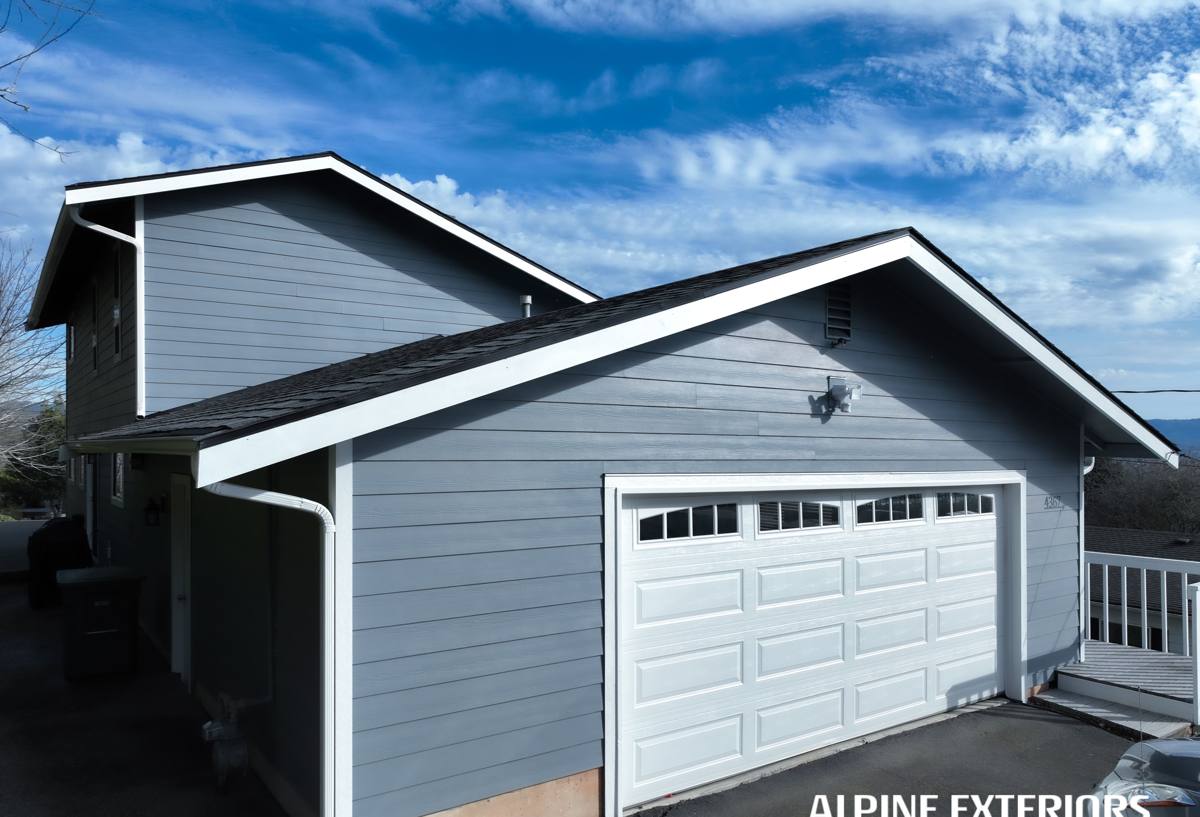
What Salt Air, Rain, and Moss Actually Do to a Roof
Salt Air and Coastal Exposure
Airborne salt accelerates corrosion on anything with exposed steel — fasteners, flashing edges, gutter hangers. It also breaks down asphalt shingle mats faster than inland weathering does, and it eats at cheap or mismatched metal components long before the field of the roof shows a problem. The fix isn't avoiding metal near the coast; it's using the right coatings and fastener grades for it, which we'll get into below.
Driving Rain
Rain that comes in at an angle, pushed by wind off open water, finds every weak seam, lap, and fastener a roof has. On a standard shingle roof, that means wind-driven water working sideways under tabs. On a poorly installed metal roof, it means water finding its way past a lap that wasn't sealed or fastened correctly. Either way, the failure point is almost always a detail, not the material itself.
Moss and Standing Moisture
Shaded, north-facing, and tree-covered sections of Columbia roofs stay damp longer after every rain, which is exactly what moss needs to take hold. Moss holds moisture against the roof surface, works into laps and granules, and on shingle roofs it can lift edges enough to let water underneath. It's less a cosmetic issue than people assume — it's a moisture-retention problem that never really stops working against the roof.
Why Metal Roofing Holds Up Better in This Climate
Shedding Moisture Instead of Holding It
Metal panels are smooth and non-porous, so they don't give moss the same foothold that granulated shingles do. Water runs off faster, surfaces dry out sooner after a storm, and there's no mat of asphalt fiber underneath to absorb and hold moisture. Moss can still grow on metal in constant shade, but it doesn't root into the surface the way it does on shingles, so it's easier to keep off with routine cleaning.
Fewer Points for Wind-Driven Rain to Exploit
A correctly installed metal roof has far fewer horizontal laps than a shingle roof, and the laps it does have are mechanically fastened or seamed rather than just overlapped. That matters directly for driving rain — there's simply less opportunity for wind to push water backward under an edge.
Coatings Built for Coastal Air
Not all metal roofing handles salt air equally well. We spec panels and fasteners with coatings rated for coastal exposure, and we don't mix metals that corrode each other galvanically (for example, letting the wrong fastener touch the wrong panel alloy). This is a detail that's invisible on install day and very visible ten years later if it's ignored.
Comparing Metal Roofing Options for a Columbia Home
| Option | Best For | Coastal Durability | Trade-offs |
|---|---|---|---|
| Standing seam steel | Homes wanting the longest service life and cleanest look | Excellent — concealed fasteners, fully seamed laps | Higher upfront cost, needs an experienced crew |
| Exposed-fastener metal panel | Budget-conscious projects, outbuildings, additions | Good, if fasteners and washers are coastal-rated and re-checked over time | Fasteners are a maintenance item; gaskets wear |
| Stone-coated steel | Homes wanting a shingle or shake look with metal's durability | Good — coating protects the steel, laps still matter | More installation detail at cuts and edges |
For most Columbia homes with real coastal exposure, we lean toward standing seam because it has the fewest long-term maintenance items. Exposed-fastener panels can still be the right call on a budget, garage, or shop roof where the slightly higher upkeep is an acceptable trade.
What a Correct Metal Roof Installation Actually Involves
Underlayment That Matches the Exposure
Metal roofing still needs a proper underlayment system underneath it — a self-adhered ice-and-water membrane at eaves, valleys, and penetrations, and a high-temp synthetic underlayment across the field. In a driving-rain climate, we don't cut corners here; the underlayment is the backup plan if wind ever pushes water past the panel laps.
Flashing Details
Most metal roof leaks that we get called to diagnose trace back to flashing, not the panels themselves — valleys, chimney saddles, wall transitions, and pipe boots. Every one of those needs to be formed and sequenced correctly with the panels, not just caulked afterward. Caulk is a backup, never the primary seal.
Fastening and Panel Layout
Panel spacing, fastener pattern, and expansion allowance all affect how a metal roof performs in temperature swings and wind. Panels need room to expand and contract without oil-canning or working fasteners loose over time, especially on longer runs.
Ventilation
A metal roof over an under-ventilated attic can trap moisture just as easily as any other roof type. We check and correct intake and exhaust ventilation as part of the job, not as an afterthought, since trapped attic moisture undermines even a well-installed roof from underneath.
Our Process on Columbia Jobs
- On-site inspection of the existing roof, decking condition, and ventilation — not just a measurement from the ground.
- A written estimate that spells out panel type, underlayment, flashing scope, and fastener specification, so there's no guessing what's included.
- Tear-off and deck inspection, with any soft or damaged decking replaced before anything goes back down.
- Underlayment, flashing, and panel installation in the sequence that actually sheds water correctly.
- Final walk-through and cleanup, including a magnetic sweep for stray fasteners.
How Your Roof and Siding Work Together
As a siding contractor, we look at roofing edges the same way we look at siding terminations — as part of one connected water-management system. A metal roof with correctly flashed drip edges and kickout flashing protects the siding and trim below it; a roof edge that dumps water behind the fascia will damage siding no matter how good the roof itself is. When we quote a metal roof, we check how it meets your existing siding, soffit, and trim so those transitions don't become the next problem.
What Affects the Cost
- Panel type — exposed-fastener panel versus standing seam versus stone-coated steel
- Roof complexity — number of valleys, dormers, penetrations, and roof planes
- Tear-off scope — one layer of existing roofing versus multiple layers
- Decking condition — whether sheathing needs partial or full replacement
- Ventilation upgrades needed to bring the attic system up to standard
- Access — steep pitch, height, or limited staging area around the home
We give a written, itemized estimate before any work starts, so you can see exactly what's driving the number rather than a single lump figure.
Maintenance in a Moss-Heavy Climate
Metal roofing needs less maintenance than shingles, but "less" isn't "none," especially in Columbia's shaded, damp microclimates. A yearly check for debris buildup in valleys, a soft wash of shaded sections that start growing moss, and a look at flashing sealant condition go a long way toward getting the full service life out of the roof. We're glad to walk homeowners through what to watch for, or handle that maintenance directly if that's easier.
Why Hiring a Crew That Already Works in Columbia Matters
Metal roofing rewards correct installation and punishes shortcuts — and the shortcuts that fail first are exactly the ones tied to local conditions: the wrong fastener grade for salt air, underlayment that's fine inland but undersized for driving rain, flashing sequencing that ignores how much moss and debris a shaded valley collects here. A crew that already works Columbia roofs regularly has already seen what fails locally and builds around it from the start, instead of learning it on your roof.
If you're weighing metal roofing for a home in Columbia, we're happy to take a look and put together a free, no-pressure estimate — just fill out the form below and we'll go from there.